Have you ever been in a job interview where the people hiring you just asked you for your opinions instead about your knowledge and experience? Imagine that. I’m a software engineer so in interviews, I get asked software engineering questions about what I know and what I’ve done. Employers never ask me “do you believe in testing your code?” and “do you like continuous integration?” and “how do you feel about design patterns?”. They always ask me about what I know, and what I’ve done with what I know. They ask me what I’ve studied and what skills I’ve put into practice previously. And they call my past employers and make certain that what I’ve told them is true.
Why do they do this? Well, employers do this because they have a specific goal in mind for me – roles that they expect me to fill with specific duties that they need me to help them with. In exchange, they offer me a salary. It would be a very strange thing if they offered me a salary just for having opinions about things that I didn’t know and had never put into practice.
My work consists of creating software for a client. I am used to asking the client about his or her needs are, and helping them to be specific about their needs. I work with the client in order to design a piece of software that will meet their needs. In software engineering, the customer’s needs come first, and the whole process is designed to produce functional code that satisfies the customer. I have a lot of fun working together with people on software and it can be very fulfilling, but the feelings I have about my job don’t matter as much as what I produce for my client. Often, it can mean a lot of self-sacrificial work that is very hard on me. But since the client has paid the bill, I make those sacrifices in order to achieve the client’s goals.
Now consider marriage. In marriage the client of the marriage enterprise is God. His goals are that each of the grown-ups and any children they produce will know him and make him known to others. He expects that the marriage will last a long time and be faithful and loyal. He expects that the marriage will conform to his specifications, not to the specifications on any other ideology – like feminism. He has requirements that are different than any engineer’s desire to be happy. The happiness of the engineers is not God’s primary goal. The happiness that the engineer has comes from achieving the goals of the client. And each engineer does his or her best to make sure other engineers stay focused on those goals and feel good about working for the client. The success of the marriage does not depend primarily on making anyone in the marriage happy, because it is not God’s plan for us to be “happy” in a worldly way. Our model is Jesus, and his example of obedience to God was self-sacrificial love for others, even at the point of suffering and dying for others.
So, when I am considering marriage to a woman, I want to make sure that she understands that the marriage will serve God and to assess how much knowledge and experience she has with the sorts of things that a God-serving marriage will involve. In particular, I am focused on making sure that she knows whether God exists. I want to see whether she has acted on that knowledge in a self-sacrificial, competent way in the past. I want to make sure that she is able to do hard things and bear with evil and suffering while remaining committed to serving God. I want to make sure that she believes in doing her job no matter how hard it gets. I want to see whether she has reasons to believe that morality is real and whether she grounds her convictions about morality in evidence as well as in the Bible. I want to see how much she has been influenced by the society’s descent into postmodernism and moral relativism. I also want her to understand the mechanics of marriage: what are her duties? what are my needs? how do we build faith in children that will last? why do people divorce? why do people cheat? what laws and policies make it easier to do a marriage and to raise Christian children?
So in view of all of that, I’ve written a list of questions below that are the ones I use to discuss marriage with a woman. My goal here is not to see that she already knows about all of these things. My goal is to know whether she sees marriage as a project to serve God, and whether she takes her obligations to serve God seriously and put her happiness second. Very often, the response I get is to these questions is rebellion and refusal to learn or answer. But people generally agree that these questions do what they are intended to do – they check to make sure that God’s goals will be the focus of the marriage. Women who think that the marriage is there to make them happy will not be interested in learning how to answer these questions and then trying to put what they’ve learned into practice.
QUESTIONS
1. Cosmology
What scientific evidence would you point to to show that God created the universe OR that God fine-tuned the universe, or parts of the universe, for intelligent life?
SAMPLE ANSWER: The big bang theory, the fine-tuning argument, galactic habitability, stellar habitability, or terrestrial habitability.
BONUS POINTS: referencing hard evidence like light element abundances, cosmic microwave background radiation, or specific instances of fine-tuning.
WHY IT MATTERS: She can’t be a Christian unless she knows God exists, and that can’t just be based on feelings and community. An awareness of the scientific evidence shows a seriousness about spiritual things – that her belief is rooted in objective reality, not in subjective feelings, culture, community, etc. It’s not “her truth”, it’s “the truth”. If she doesn’t know why she believes, then she can’t be relied upon to make decisions as a Christian, especially in stressful situations. There is always going to be a conflict between doing what one feels like and doing what is consistent with reality. Having scientific facts helps a person to do what they ought to do.
2. Intelligent Design
Explain the concept of intelligent design and explain how it applies to the i) origin of life OR ii) to the fossil record.
SAMPLE ANSWER: Explain the concept of specified complexity and Dembski’s explanatory filter, then explain how it applies to (i) amino acid sequencing or the double helix, OR (ii) to the sudden origin of animal phyla in the Cambrian explosion.
BONUS POINTS: Ideally, for the origin of life question, she’s going to mention things like UV radiation, chirality, cross-reactions and peptide bonds, then calculate the approximate probabilities for generating a protein by chance. For the Cambrian explosion, she should graph out the introduction of phyla over time, and explain the Ediacaran fauna and why they are not precursors to the Cambrian fauna. Bonus points for bashing theistic evolution, or talking about the early earth environment and the problems with forming amino acids.
WHY IT MATTERS: Darwinian evolution is bad science because it is really just philosophy (naturalism) masquerading as science. You can’t marry anyone who pre-supposes a materialist view of metaphysics like naturalists do, and then allows that philosophical assumption to overrule the scientific evidence. You don’t want to be paired up with someone who lets their prejudices overturn data.
3. The problems of evil and suffering
Assuming that Christianity is true, why do you think that God would allow suffering and evil in the world? Distinguish between human evil and natural evil in your answer. Also explain what role you think God’s permission of evil and suffering has in maturing Christians.
SAMPLE ANSWER: Define the deductive and inductive problems of evil, explains several different responses to them, such as free will, character formation, natural law, the ripple effect, etc. Mention the burden of proof for claims that certain evils are gratuitous, i.e. – noseeums.
BONUS POINTS: explaining how evil relates to Christian theology and God’s purposes for humans being knowledge of him and not just happiness, talking about Jesus’ own suffering and the meaning and purpose of it. More bonus points for pointing out how atheists cannot even complain about evil without assuming objective morality, which requires a moral lawgiver.
WHY IT MATTERS: Lots of nasty things can happen in a marriage. Children can get sick or die, jobs can be lost, and so on. It helps when you are dealing with a person who expects it and will not jettison their responsibilities and belief in Christ in order to pursue happiness unencumbered. The main thing is that the woman thinks that the purpose of life is to know God, and that suffering and evil play a role in gaining knowledge of God. You definitely do not want to marry someone who thinks that the purpose of life is happiness, and that God is some big bearded grandfather in the sky who just wants to hand out goodies to people and make sure they are having a good time regardless of what they choose to do.
4. The moral argument
What is the is-ought fallacy? What is the difference between moral objectivism and moral relativism? Give one reason why moral relativism is false. Give one reason why an atheist cannot rationally ground prescriptive morality. Explain why objective morality relates to God’s existence.
SAMPLE ANSWER: Explain the is-ought fallacy. Explain objective and subjective morality. Discuss the reformer’s dilemma and how it refutes relativism. Explain that atheism requires materialism, and materialism denies free will – so moral choices are impossible. Outline the moral argument.
BONUS POINTS: Give more than one reason where only one was asked for, refute attempts to assert objective morality on atheism, explain how moral obligations are related to God’s design for humans.
WHY IT MATTERS: You can’t marry a person who thinks that the moral law is not a brake on their desire to be happy. There are going to be times in the marriage when self-sacrifice is required by the moral law – either for you, for God, or for the children. It will not be easy to be moral then, so you are looking for someone who thinks that morality is real, and not subject to their feelings and whims. It might be worth asking the person when she has had to do the right thing when it was against her self-interest, like those valedictorians who name Jesus in their speeches and then get censored.
5. The resurrection of Jesus
Assume you are talking to a non-Christian. Explain how you would make a case for the bodily resurrection of Jesus on historical grounds. This person does not accept the Bible as inspired and/or inerrant.
SAMPLE ANSWER: Explain the criteria for establishing minimal facts / historical bedrock, list a set of minimal facts, explain why they pass the criteria, propose at least two naturalistic alternatives to the resurrection, and disprove them. MUST mention 1 Corinthians 15:3-7 in order to pass.
BONUS POINTS: listing atheist scholars who support each minimal fact, discussing N.T. Wright’s work on the Jewish concept of resurrection, referencing Richard Bauckham’s work on the gospels as eyewitness testimony, mentioning the pre-suppositions (naturalism, relativism) of liberal scholars like Crossan and Borg.
WHY IT MATTERS: The resurrection is the cornerstone of Christian belief. A person cannot encounter skeptics and not be able to defend the resurrection on historical grounds to them. The resurrection matters to how people act: they act completely differently depending on whether they believe that this life is all there is, or that this life is just a precursor to eternal life with God. You want someone who takes the long-term perspective.
6. World religions
Name two major world religions and argue against them using either the laws of logic, scientific evidence or historical evidence. Explain the concept of middle knowledge, and why it is relevant to the problem of religious pluralism.
SAMPLE ANSWER: Refute Theravada Buddhism with the big bang, or refute Islam with the crucifixion of Jesus, etc. MUST mention specific beliefs of that religion that are testable, and not just argue that they reject Christianity and are therefore false. Explain how middle knowledge reconciles free will and divine sovereignty, and that it also helps to solve the problem of people who have never heard the gospel.
BONUS POINTS: Using evidence that is universally accepted by people outside of that religion. Using scientific evidence. Referencing Acts 17:27 or other Bible passages when explaining middle knowledge. Mentioning objections to middle knowledge, such as the grounding objection.
WHY IT MATTERS: Many younger Christians today believe that Christianity is moralistic therapeutic deism. They think that the purpose of religion is to have good feelings and to be nice to other people and to make other people feel good. It’s all about feelings. You need to make sure that she knows how to make people feel bad and is comfortable doing it, with evidence. Middle knowledge also grounds the person’s willingness to see people as being responsible for their acceptance or rejection of Christ. Instead of taking a hands-off fatalistic approach to salvation, someone who accepts middle knowledge is going to take persuasion seriously and expend effort to try to change the people around them.
7. Abortion
How would you establish that the unborn are fully human and deserve protection? Explain three pro-abortion arguments and then show why they are false. Name three incremental pro-life policies that you would introduce if you were a legislator.
SAMPLE ANSWER: Use the SLED test and the law of biogenesis. Talk about the DNA signature of the unborn being distinct from the mother. Explain and refute the back-alley abortions argument, the it’s the woman’s body argument, the Judith Jarvis Thompson violinist argument, etc. Legislation would be parental notification, banning funding for abortion providers, mandatory sonograms, etc.
BONUS POINTS: Refute more pro-abortion arguments, reference specific legislation that is in-flight or was recently signed into law. Experiences protesting abortion or debating abortion with pro-abortionists. Experience counseling a post-abortive or crisis pregnancy woman. Mentioning biological details of foetus development.
WHY IT MATTERS: Basically, because people who think that sex is for recreation, and that it is ok to kill children to avoid any limits on the pursuit of happiness are not qualified for marriage. You can’t enter into an intimate commitment with someone who is willing to commit murder in order to get out of the consequences of their own selfish pursuit of pleasure. That is not going to work in a marriage – you need someone who makes good decisions, avoids harming others, is chaste and self-controlled, and takes responsibility for her actions when they go awry.
8. Marriage
Explain the public purposes of marriage, and then outline three threats to marriage and explain what legislation you would propose to neutralize these threats. What choices should people make before marriage to make sure they will have a stable, loving marriage?
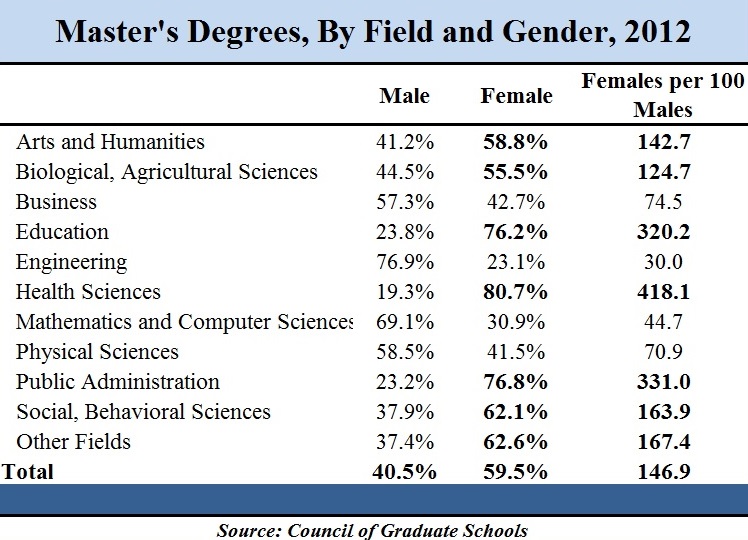
SAMPLE ANSWER: Some public purposes of marriage are i) to force moral constraints on sexual activity, ii) to produce the next generation of humans, iii) to provide children with a stable, loving environment in which to grow up. Three threats to marriage are i) cohabitation, ii) no-fault divorce – which leads to fatherlessness, and iii) same-sex marriage. There are others, too. For legislation, there are things like tax incentives, shared parenting laws, school choice to de-monopolize politicized public schools, etc. Pre-marriage behaviors are things like chastity, experience with children, having lots of savings, being physically fit, etc. Having a degree in experimental science, math or economics is excellent for a woman. Avoid artsy degrees, especially English.
BONUS POINTS: Name more threats to marriage, explain the effects of fatherlessness on children, explain how divorce courts work, explain how socialism impacts the family through taxation and wealth redistribution, explain what happens to women and children after a divorce.
WHY IT MATTERS: It’s important for people who want to get married that they understand that marriage takes time and effort, and it requires both spouses to prepare for marriage, to be diligent at choosing a good spouse, and to understand what spouses and children need in order to stay engaged.
9. Children
Explain a person you admire and then tell me what you would do as a mother in order to produce that person from one of your children. What are some policies and laws that you would change to make your job easier?
SAMPLE ANSWER: Jay Richards. Jay Richards is one of the most well-rounded Christian scholars operating today. He has knowledge of multiple areas, including economics and science. To make a Jay Richards, you need to be very careful about his education – which could mean homeschooling and saving money for later university tuition, as well as exposing him to apologetics and debates at an earlier age. He would need to have the dedicated attention of his mother for the first two years of his life, at least. Some laws that would help would be lower taxes, school choice, and academic freedom laws.
BONUS POINTS: Explaining how different things like day care, public schools, divorce, etc. harm children. Explaining how mother and fathers contribute to the child’s moral, cognitive, spiritual, etc. development at different times. Explain how the child is harmed if both parents are not present and engaged to play these roles.
WHY IT MATTERS: Marriage is an enormous sacrifice for a man. Not only is there the risk of divorce, but wives and children are very expensive. A man can serve God fine as a bachelor. He has to have compelling reasons why getting married would serve God more than staying single. Producing influential children seems to be one of the major reasons for a man to get married, and he needs to see evidence that his wife is on board with that.
10. Husbands
Explain the roles of a man in a marriage, and tell me some of the things you would do in order to help your man to achieve those roles. What groups would oppose your husband from fulfilling those roles, and what have you done in your life to prepare yourself to help your husband in his roles? What are some of the most important things that a man needs from a woman, and what specific things should a wife do to provide them?
SAMPLE ANSWER: Men are supposed to be protectors, providers and moral/spiritual leaders. In order to help men to be protectors, women have to give them time to study to discern truth from lie, and support their ability to be physically strong, and to own firearms. It is also a good idea for women to have a positive view of good men who use force to restrain evil, as with the American military. Women should support the use of force against radical Islam and terrorists, as well. In order to help men to be providers, women have to advocate for fiscal conservatism in the public square. That would mean advocating for lower taxes, less government spending and smaller government. It would also mean being frugal in the home and helping the man to move ahead at work. If the children are up and out of the house, it could mean going back to work or starting a business to help make ends meet – or monitoring investments. For a man to be a moral and spiritual leader, a woman has to be supporting of him making moral judgments in the home, disciplining the children, holding her accountable for moral errors, and for making exclusive truth claims when it comes to spiritual things. She should not censor him when he gets into debates about spiritual things, even if other people who disagree feel bad – so long as he is not being a jerk. Her goal is not to be popular or liked, but to support her husband in his roles. The most important thing a man needs is respect, and that means treating him as important and significant, being grateful for his contributions, soliciting his opinion on things, being mindful of his male nature, which is more visual and sexual.
BONUS POINTS: Having read “The Proper Care and Feeding of Husbands”, “Men and Marriage”, “Love and Economics” and “Taken Into Custody”. More bonus points for having written about what she learned about men and marriage from books like that. The goal here is for her to have a real awareness and sympathy for what men are facing as husbands and fathers, and to have an idea of what women can do to support them in their roles.
WHY IT MATTERS: As a man, you have certain needs – the biggest need is for respect. If you are thinking of marrying a woman who cannot define respect, and doesn’t know how to give you respect, then you are going to be in for a world of hurt. The more she views marriage as a joint project with specific goals and external challenges, the more understanding and support you will get. No one wants to fly a plane with someone who doesn’t know how to fly a plane, fix a plane or navigate a plane. The more she knows about men and marriage, the better it will go for you – and the children.
Parting thoughts
This list is not exhaustive, it’s just to give you an idea of the kinds of things you should be looking for. A lot of it is the attitude. You are looking for a woman who does not shift blame onto you, who takes responsibility when she is wrong, who argues using logic and evidence, who loses arguments gracefully, and wins arguments gracefully, and who loves you and cares for you even if you are fighting. If the woman is resentful and doesn’t want to learn anything to deepen her faith, then drop her and find someone who will learn – it will be much better for you to partner with someone lovable and helpful, instead of a selfish lazy feminist.
If I were making a list for women, I would emphasize different things more centered around the specific roles that men play in the marriage – asking for his resume, work history, savings, investments, past relationships with women, parenting ability, self-defense ability, mentoring ability, and especially on moral issues and Christian truth claims.The most important thing that a woman needs is love, and the man should be ready to speak about love at length, and explain how he is going to provide her with love during the courtship and during the marriage. Women need to know that they are significant and desired by the man.
Be effective and influential:

 WINTERY KNIGHT