Tag Archives: Christianity

Should government recognize and legalize same-sex marriage?

Earlier in the week, I posted a case against same-sex marriage that was restricted to non-religious arguments. Here’s an article written by famous Christian apologist J Warner Wallace that does the same thing, but it is  packed with even more evidence than mine!

In his article, he considers the following questions:

  • What is the aim of the same-sex marriage movement?
  • What percentage of people are gay in the United States?
  • What is the role of government?
  • Why should government promote traditional marriage?
  • Are heterosexual and homosexual relationships the same with respect to domestic violence?
  • Are heterosexual and homosexual relationships the same with respect to healthiness?
  • Are heterosexual and homosexual relationships the same with respect to spousal fidelity?
  • Are heterosexual and homosexual relationships the same with respect to stability?
  • Does it matter to children whether their two biological parents raise them or not?

Here’s an excerpt:

It’s clear that that traditional heterosexual two parent family units are far more enduring, monogamous, non-abusive and healthy. On these standards alone, it’s reasonable for us to value and promote traditional two parent marriages as the ‘ideal’ form of family in our culture. But as it turns out, a number of studies confirm that two ‘biological’ parents are actually required if we want to best assure success and well-being in our children.

Many studies come to this conclusion, including studies that are conducted by liberal advocacy groups who also recognize the fact that “children do best when raised by their two married biological parents…” (Mary Parke, “Are Married Parents Really Better for Children?”, Center for Law and Social Policy Policy Brief, May 2003, p.1). This reality is confirmed by a number of additional studies demonstrating that “an extensive body of research tells us that children do best when they grow up with both biological parents…” (Kristin Anderson Moore, et al., “Marriage From a Child’s Perspective: How Does Family Structure Affect Children, and What Can We Do about It?”, Child Trends Research Brief, June 2002, p.1).

We know, for example, that children raised in two biological parent families are far less likely to become sexually active at a young age compared to every other form of family unit, including stepfamilies. (Dawn Upchurch, et al., “Neighborhood and Family Contexts of Adolescent Sexual Activity”, Journal of Marriage and the Family, 61, 1999, 920-930). Children who are not living with both biological parents are 50 to 150% more likely to abuse drugs that kids who are raised in other types of family units, including stepfamilies like those formed in same sex unions. (Substance Abuse and Mental Health Services Administration, “The Relationship Between Family Structure and Adolescent Substance Use”, Rockville, MD, National Clearinghouse for Alcohol and Drug Information, 1996).

In a similar way, studies indicate that “children residing in households with adults unrelated to them were 8 times more likely to die of maltreatment than children in households with 2 biological parents. Risk of maltreatment death was elevated for children residing with step, foster, or adoptive parents.” (Michael Stiffman, et al., “Household Composition and Risk of Fatal Child Maltreatment,” Pediatrics, 109, 2002, pp.615-621). Over and over again, studies confirm the same reality: children do better when raised not only in two parent family units, but in two biological parent family units!

This conclusion is not limited to heterosexual studies. Even those who advocate and support same sex parenting recognize that there are inherent difficulties for children raised n these settings. The homosexual parenting literature continues to recognize this:

“The Lesbian and Gay Parenting Handbook: Creating and Raising Our Families” (April Martin):

“Some children do express an intense longing for the other biological parent, talking about it frequently and emotionally…. Adolescents take particular interest in both their heredity and in gender-specific role models.”

“The Lesbian Parenting Book: A Guide to Creating Families and Raising Children” (D. Merilee Clunis, G. Dorsey Green):

“It is very normal for children to long about and ask for a father…. It is natural to feel defensive when your child longs for a father. We encourage you to remain patient while she asks questions, sorts out information and comes to terms without knowing her father’s identity, or not having her biological father in her life. She needs to do it…. [Artificially Inseminated] children of lesbian parents may grieve never knowing their biological father.”

“Gay Men Choosing Parenthood” (Gerald P. Mallon):

“(The majority of children being raised in gay male households) sometimes verbalized a desire for a mother at one time or another.”

“For Lesbian Parents: Your Guide to Helping Your Family Grow Up Happy, Healthy, and Proud” (Suzanne M. Johnson, Elizabeth O’Connor):

“(Lesbian mothers should ask their daughters) if it’s hard sometimes not having a father. Let her know that you understand that sometimes it is hard.”

Please consider giving this article a read. It is very comprehensive, and cites a huge number of sources. I think that this topic mattered a lot more to the author than it did to me. I grew up in a marriage home and my parents are still married. I only write about the issues of single motherhood, divorce and same-sex marriage because I  have friends in these situations, and because I have read the research. But J Warner Wallace grew up in a single parent home. So he is writing about this topic based on his personal experience.

Further study

For a more academic case against SSM, see this peer-reviewed paper on traditional marriage and same-sex marriage, authored by two guys from Princeton University and one guy from the University of Notredame. One of those guys is the famous Robert P. George. For some simple, practical tips on defending traditional marriage, check out this tip sheet from the National Organization for Marriage.

You can also watch the videos from a formal academic debate on same-sex marriage held at the University of Central Florida, featuring Dr. Michael Brown. Dr. Jennifer Roback Morse also debated same-sex marriage at Columbia University in a formal academic debate. You can see her give a lecture on same-sex marriage at Houston Baptist University here, as well.

Why do some people not believe in God?

An analysis of the common causes of atheism. (H/T The Poached Egg)

Excerpt:

Most atheists would have us think they arrived at their view through cool, rational inquiry. But are other factors involved? Consider the candid remarks of contemporary philosopher Thomas Nagel: “I want atheism to be true …. It isn’t just that I don’t believe in God, and, naturally, hope that I’m right about my belief. It’s that I hope there is no God! I don’t want there to be a God; I don’t want the universe to be like that.” Could Nagel’s attitude—albeit in a more subtle form—actually be common among atheists?

[…]The 20th-century ethics philosopher Mortimer Adler (who was baptized quietly at age 81) confessed to rejecting religious commitment for most of his life because it “would require a radical change in my way of life, a basic alteration in the direction of my day-to-day choices as well as in the ultimate objectives to be sought or hoped for …. The simple truth of the matter is that I did not wish to live up to being a genuinely religious person.”

Historian Paul Johnson’s fascinating if disturbing book Intellectuals exposed this pattern in the lives of some of the most celebrated thinkers in the modern period, including Rousseau, Shelley, Marx, Ibsen, Hemingway, Russell, and Sartre. In their private (and often public) lives, these Western intellectual stars were moral wrecks.

[…]As children of the Enlightenment, we tend to heavily emphasize the impact of belief on behavior. But it also works the other way around. Our conduct affects the way we think. On the positive side, as Scripture’s wisdom literature tells us, obedience and humility lead to insight and understanding. Negatively, as we indulge in immoral behavior, our judgment will be skewed.

[…]External factors may also hamper the natural awareness of God and contribute to a descent into atheism. In his book Faith of the Fatherless: The Psychology of Atheism, New York University psychologist Paul Vitz, a onetime atheist, examines the lives of the major atheists of the modern period, including Hobbes, Hume, Voltaire, Feuerbach, Nietzsche, Sartre, Camus, Russell, and Freud. He found they had something in common: a broken relationship with their father. Whether by death, departure, abuse, or some other factor, the father relationships of all these well-known atheists were defective. Vitz also examined the lives of prominent theists during the same period (Pascal, Reid, Burke, Berkeley, Paley, Wilberforce, Kierkegaard, Schleiermacher, Newman, Chesterton, and Bonhoeffer, among others). In every case, he found a good relationship with the father or at least a strong father figure.

One more quick quote on the argument that immorality leads to an atheistic worldview:

“I had motives for not wanting the world to have a meaning; consequently assumed that it had none, and was able without any difficulty to find satisfying reasons for this assumption. The philosopher who finds no meaning in the world is not concerned exclusively with a problem in metaphysics, he is also concerned to prove that there is no valid reason why he personally should not do as he wants to do, or why his friends should not seize political power and govern in the way that they find most advantegous to themselves… For myself, the philosophy of meaningless was essentially an instrument of liberation, sexual and political.” — Aldous Huxley in Ends and Means, 1937

This rejection of morality is widely acknowledged by prominent atheists as being a selling point of atheism. People become atheists because they know that atheism will free them from having to do anything simply because it’s “good”.

Consider these prominent atheists:

The idea of political or legal obligation is clear enough… Similarly, the idea of an obligation higher than this, referred to as moral obligation, is clear enough, provided reference to some lawgiver higher…than those of the state is understood. In other words, our moral obligations can…be understood as those that are imposed by God…. But what if this higher-than-human lawgiver is no longer taken into account? Does the concept of moral obligation…still make sense? …The concept of moral obligation [is] unintelligible apart from the idea of God. The words remain but their meaning is gone. (Richard Taylor, Ethics, Faith, and Reason (Englewood Cliffs, N. J.: Prentice-Hall, 1985), p. 83-84)

The position of the modern evolutionist is that humans have an awareness of morality because such an awareness of biological worth. Morality is a biological adaptation no less than are hands and feet and teeth. Considered as a rationally justifiable set of claims about an objective something, ethics is illusory. I appreciate when someone says, ‘Love thy neighbor as thyself,’ they think they are referring above and beyond themselves. Nevertheless, such reference is truly without foundation. Morality is just an aid to survival and reproduction, . . . and any deeper meaning is illusory. (Michael Ruse, “Evolutionary Theory and Christian Ethics,” in The Darwinian Paradigm (London: Routledge, 1989), pp. 262-269).

In a universe of blind physical forces and genetic replication, some people are going to get hurt, other people are going to get lucky, and you won’t find any rhyme or reason in it, or any justice. The universe that we observe has precisely the properties we should expect if there is, at bottom, no design, no purpose, no evil and no good, nothing but blind, pitiless indifference… DNA neither knows nor cares. DNA just is. And we dance to its music. (Richard Dawkins)
http://www.simonyi.ox.ac.uk/dawkins/WorldOfDawkins-archive/Dawkins/Work/Articles/1995-05-10nomercy.shtml

And it works in reverse. When I was a young man, one of my reasons for becoming a Christian was precisely because I did not want to be like atheists. I could plainly see the harm they were causing others with their rejection of prescriptive morality, and when I put that together with the cosmological argument and the Big Bang theory, which I learned about in grade 1, the case was sealed. It helped that I had not done anything really wrong at that time, or it would have been harder for me to accept that I was guilty. The more bad stuff you are into, the harder it is to accept that you are wrong, and to turn away from it. Some clean-living atheists are going to have no problem being fair with the evidence. – switching to Christianity would be much easier for them to do.

As for his second point, consider this article that talks about how important fathers are in passing along religious convictions to children.

Excerpt:

In 1994 the Swiss carried out an extra survey that the researchers for our masters in Europe (I write from England) were happy to record. The question was asked to determine whether a person’s religion carried through to the next generation, and if so, why, or if not, why not. The result is dynamite. There is one critical factor. It is overwhelming, and it is this: It is the religious practice of the father of the family that, above all, determines the future attendance at or absence from church of the children.

If both father and mother attend regularly, 33 percent of their children will end up as regular churchgoers, and 41 percent will end up attending irregularly. Only a quarter of their children will end up not practicing at all. If the father is irregular and mother regular, only 3 percent of the children will subsequently become regulars themselves, while a further 59 percent will become irregulars. Thirty-eight percent will be lost.

If the father is non-practicing and mother regular, only 2 percent of children will become regular worshippers, and 37 percent will attend irregularly. Over 60 percent of their children will be lost completely to the church.

Let us look at the figures the other way round. What happens if the father is regular but the mother irregular or non-practicing? Extraordinarily, the percentage of children becoming regular goes up from 33 percent to 38 percent with the irregular mother and to 44 percent with the non-practicing, as if loyalty to father’s commitment grows in proportion to mother’s laxity, indifference, or hostility.

That is why I find it so odd that so many “Christians” insist on voting more and more wealth redistribution from rich to poor. The more that government programs are seen as a replacement from the protecting, providing and moral/spiritual leading that fathers do in the home, the more atheists we are going to be producing. Fathers are vital for passing on spiritual and moral convictions to children. Fathers are the ones who show that setting moral boundaries is a way to love someone – that love is not incompatible with rules. It is very important that young people see that it is loving for a person in authority to set up rules and boundaries – and that there are reasons for those rules. It’s very similar to the way that boys raised by single mothers are aggressively sexually – because they haven’t seen men loving their wives up close, and getting respect and approval for that love. And girls raised fatherless are similar – they haven’t seen men loving their wives up close, so they aren’t in a position to judge men and hold them accountable. The family is needed to model all kinds of good behaviors at a pre-cognitive level.

You can order Jim Spiegel’s book “The Making of an Atheist” here from Amazon:

And you can also read a sample chapter for free here.

A secular case against abortion rights

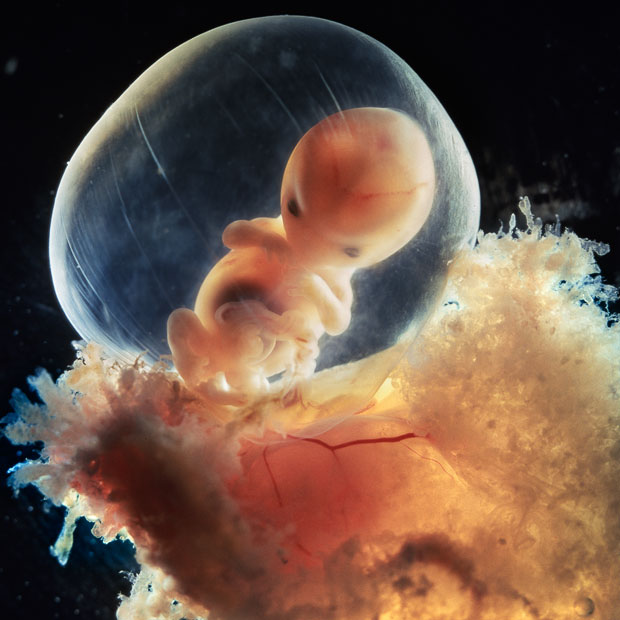
Unborn baby scheming about being only two months old

Note: this post has a twin! Its companion post on a secular case against gay marriage is here.

Now, you may think that the view that the unborn deserve protection during pregnancy is something that you either take on faith or not. But I want to explain how you can make a case for the right to life of the unborn, just by using reason and evidence.

To defend the pro-life position, I think you need to sustain 3 arguments:

  1. The unborn is a living being with human DNA, and is therefore human.
  2. There is no morally-relevant difference between an unborn baby, and one already born.
  3. None of the justifications given for terminating an unborn baby are morally adequate.

Now, the pro-abortion debater may object to point 1, perhaps by claiming that the unborn baby is either not living, or not human, or not distinct from the mother.

Defending point 1: Well, it is pretty obvious that the unborn child is not inanimate matter. It is definitely living and growing through all 9 months of pregnancy. (Click here for a video that shows what a baby looks like through all 9 months of pregnancy). Since it has human DNA, that makes it a human. And its DNA is different from either its mother or father, so it clearly not just a tissue growth of the father or the mother. More on this point at Christian Cadre, here. An unborn child cannot be the woman’s own body, because then the woman would have four arms, four legs, two heads, four eyes and two different DNA signatures. When you have two different human DNA signatures, you have two different humans.

Secondly, the pro-abortion debater may try to identify a characteristic of the unborn that is not yet present or developed while it is still in the womb, and then argue that because the unborn does not have that characteristic, it does not deserve the protection of the law.

Defending point 2: You need to show that the unborn are not different from the already-born in any meaningful way. The main differences between them are: size, level of development, environment and degree of dependence. Once these characteristics are identified, you can explain that none of these differences provide moral justification for terminating a life. For example, babies inside and outside the womb have the same value, because location does not change a human’s intrinsic value. More at Stand to Reason, here.

Additionally, the pro-abortion debater may try to identify a characteristic of the already-born that is not yet present or developed in the unborn, and then argue that because the unborn does not have that characteristic, that it does not deserve protection, (e.g. – sentience). Most of the these objections that you may encounter are refuted in this essay by Francis Beckwith. Usually these objections fall apart because they assume the thing they are trying to prove, namely, that the unborn deserves less protection than the already born.

Finally, the pro-abortion debater may conceded your points 1 and 2, and admit that the unborn is fully human. But they may then try to provide a moral justification for terminating the life of the unborn, regardless.

Defending point 3: I fully grant that it is sometimes justifiable to terminate an innocent human life, if there is a moral justification. One of the best known justifications is Judith Jarvis Thomson’s “violinist” argument. This argument is summarized by Paul Manata, one of the experts over at Triablogue:

Briefly, this argument goes like this: Say a world-famous violinist developed a fatal kidney ailment and the Society of Music Lovers found that only you had the right blood-type to help. So, they therefore have you kidnapped and then attach you to the violinist’s circulatory system so that your kidneys can be used to extract the poison from his. To unplug yourself from the violinist would be to kill him; therefore, pro-lifers would say a person has to stay attached against her will to the violinist for 9 months. Thompson says that it would be morally virtuous to stay plugged-in. But she asks, “Do you have to?” She appeals to our intuitions and answers, “No.”

Manata then goes on to defeat Thomson’s proposal here, with a short, memorable illustration, which I highly recommend that you check out. More info on how to respond to similar arguments is here.

The best book for beginners on the pro-life view is this book:

For those looking for advanced resources, Francis Beckwith, a professor at Baylor University, published the book Defending Life, with Cambridge University Press, 2007.

Learn about the pro-life case

And some posts motivating Christians and conservatives to take abortion seriously: