Tag Archives: Lecture

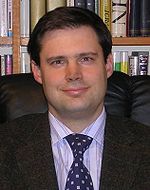
Michael Strauss lectures on scientific evidence for God at UT Dallas 2013

Mysterious Chris S. posted this and I have provided a summary of the lecture below.

About Michael Strauss:

His full biography is here. (I removed his links from my excerpt text below)

Excerpt:

I had an interest in science and theology, so in 1977 I chose to go to Biola University where I could study both subjects in detail. I thoroughly enjoyed college and participated in intramural sports, was elected to student government, served as a resident assistant, competed in forensics, and studied a lot. As I neared college graduation my dual interest continued so I applied to seminary and to graduate school. After graduating summa cum laude from Biola, I decided to pursue a graduate degree in physics at UCLA.

During my first few years of graduate school, I developed an increased interest in quantum mechanics and subatomic physics and decided to do research in a field that dealt with these subjects. I joined a High Energy Physics experimental group doing research at the Stanford Linear Accelerator Center (SLAC) and moved to the San Francisco Bay Area to actively participate in research at SLAC. I graduated in 1988 with my Ph.D in High Energy Physics (a.k.a. Elementary Particle Physics). If you would like to know more about High Energy Physics, the Particle Data Group at Lawrence Berkeley Laboratory has a very nice interactive adventure that teaches you all about the subject. My research advisor was professor Charles Buchanan and my disertation was titled “A Study of Lambda Polarization and Phi Spin Alignment in Electron-Positron Annihilation at 29 GeV as a Probe of Color Field Behavior.”

After graduation, I accepted a post-doctoral research position with the University of Massachusetts at Amherst. I continued to do research at SLAC where I joined the SLD experiment. My research interests centered on the SLD silicon pixel vertex detector. I wrote most of the offline software for this device, and did physics analysis which used the vertex detector, including tagging b quark events for flavor specific QCD (Quantum Chromodynamics) analysis. In the seven years I was employed by UMASS, I only spent 3 days on the Amherst campus. The rest of the time was spent in California.

[…]In August 1995, I accepted a job as an Assistant Professor of Physics at the University of Oklahoma (OU) in Norman, Oklahoma. The University of Oklahoma has a vibrant high energy physics research group involved in experiments at the Fermi National Accelerator Center (Fermilab), and CERN. I joined the DØ experiment at Fermilab where I continue to do research in elementary particle physics. As a member of the DØ collaboration I have made contributions to the testing of silicon sensors for the upgraded vertex detector, to the track finding algorithms, to a measurement of the photon production cross section which probes the gluon content of protons, and to other QCD measurements. I am currently studying properties ofB mesons that contain a b-quark, the production cross section of jets coming from quarks and gluons, and other QCD analyses. At CERN, I am a collaborator on the ATLAS detector.

I received tenure in 2001 and was promoted to the rank of Professor in the summer of 2010. Most of the time at OU I have taught introductory physics classes to physics majors, engineers, and life science majors. In these classes I have used a number of interactive techniques to facilitate student participation and learning. I have been privileged to win a few awards for my teaching. In 1999, the Associated Students selected me as the Outstanding Professor in the College of Arts and Science, and in 2000 I was awarded the BP AMOCO Foundation Good Teaching Award. In 2002, I was given the Regents Award for Superior Teaching. I received the Carlisle Mabrey and Lurine Mabrey Presidential Professorship in 2006 which is given to “faculty members who excel in all their professional activities and who relate those activities to the students they teach and mentor.”

He seems to have done a fine job of integrating his faith with a solid career in physics research. It would be nice if we were churning out more Christian scholars who are experts in experimental science.

Note: there is a period of 19 minutes of Q&A at the end of the lecture.

The lecture:

Summary:

It used to be true that most of the great scientists were believers in God
But now science has advanced and we have better instruments – is it still true?
Today, many people believe that science has shows that the universe and Earth are not special
We used to believe that the Earth was the center of the universe, and Darwin showed we are not designed
The problem with this view is that it is based on old science, not modern science
Three topics: origin of the universe, fine-tuning of the universe, the Rare Earth hypothesis

Experimental evidence for the origin of the universe:

  • #1: Hubble discovered that the universe expands because of redshifting of light from distant galaxies
  • #2: Measurements of the cosmic microwave background radiation show the universe had a beginnning
  • #3: Measurements of the light element (hydrogen and helium) abundances confirm an origin of the universe
  • The best explanation for an absolute origin of space, time, matter and energy is a supernatural cause

Experimental evidence for the design of the universe:

  • #1: The amount of matter: a bit less = no stars and galaxies, a bit more = universe recollapses
  • #2: The strong force: a bit more = only hydrogen, a bit more = little or no hydrogen
  • #3: Carbon resonance level: a bit higher = no carbon, a bit lower = no carbon

Experimental evidence for galactic, stellar and planetary habitability:

  • #1: Galaxy: produces high number of heavy elements and low radiation
  • #2: Star: long stable lifetime, burns bright, bachelor star, third generation star (10 billion years must elapsed),
  • #3: Planet: mass of planet, stable orbit, liquid water, tectonic activity, tilt, moon

Naturalistic explanations:

  • Humans evolve to the point where they reach back in time and create finely-tuned universe
  • Eternally existing multiverse

Hawking and Mlodinow response to Rare Earth:

  • There are lots of planets so one must support life
  • Odds of a planet that supports life are low even with 10^22 planets

Hawking and Mlodinow proposal of M-theory multiverse:

  • There is no experimental evidence for M-theory being true
  • M-theory is not testable now and is not likely to be testable in the future
  • But science is about making testable predictions, not about blind speculation

Hawking and Mlodinow no-boundary proposal:

  • This theory requires the laws of physics to exist prior to the universe
  • But where do you get laws of physics before there is any physical world?
  • There is no experimental evidence for no-boundary proposal
  • All the evidence we have now (redshift, CMBR, H-He abundances) is for Big Bang

What science has revealed provide abundant evidence for a transcendent Creator and Designer

Related posts

Peter J. Williams lectures on the historical reliability of the gospel narratives

Peter J. Williams
Peter J. Williams

This is a lecture I found from British historian Dr. Peter J. Williams.

Here’s the main lecture: (54 minutes)

And here’s the Q&A: (9 minutes)

About Peter Williams:

Peter J. Williams is the Warden (CEO) of Tyndale House and a member of the Faculty of Divinity in the University of Cambridge. He received his MA, MPhil and PhD, in the study of ancient languages related to the Bible from Cambridge University. After his PhD, he was on staff in the Faculty of Divinity, Cambridge University (1997–1998), and thereafter taught Hebrew and Old Testament there as Affiliated Lecturer in Hebrew and Aramaic and as Research Fellow in Old Testament at Tyndale House, Cambridge (1998–2003). From 2003 to 2007 he was on the faculty of the University of Aberdeen, Scotland, where he became a Senior Lecturer in New Testament and Deputy Head of the School of Divinity, History and Philosophy. In July 2007 he became the youngest Warden in the history of Tyndale House. He also retains his position as an honorary Senior Lecturer in Biblical Studies at the University of Aberdeen.

Summary of the lecture:

  • What if the stories about Jesus are legendary?
  • were the gospels transmitted accurately?
  • were the gospels written in the same place as where the events happened?
  • do the gospel authors know the customs and locations where the events happened?
  • do the gospels use the right names for the time and place where the events took place?
  • do the gospels disambiguate people’s names depending on how common those names were?
  • how do the New Testament gospels compare to the later gnostic gospels?
  • how do the gospels refer to the main character? How non-Biblical sources refer to Jesus?
  • how does Jesus refer to himself in the gospels? do the later Christians refer to him that way?
  • how does Jesus teach? do later Christians teach the same way?
  • why didn’t Jesus say anything about early conflicts in the church (the Gentiles, church services)?
  • did the writers of the gospels know the places where the events took place?
  • how many places are named in the gospels? how about in the later gnostic gospels?
  • are the botanical details mentioned in the gospels accurate? how about the later gnostic gospels?

And here are the questions from the audience:

  • how what about the discrepancies in the resurrection narratives that Bart Ehrman is obsessed with?
  • what do you think of the new 2011 NIV translation (Peter is on the ESV translation committee)?
  • how did untrained, ordinary men produce complex, sophisticated documents like the gospels?
  • is oral tradition a strong enough bridge between the events and the writers who interviewed the eyewitnesses?
  • what does the name John mean?
  • why did the gospel writers wait so long before writing their gospels?
  • do you think that Matthew and Luke used a hypothetical source which historians call “Q”?
  • which gospel do critical historians trust the least and why?

I really enjoyed watching this lecture. He’s getting some of this material from Richard Bauckham’s awesome book “Jesus and the Eyewitnesses”, so if you aren’t familiar with it, you can get an idea of what’s in it. Peter Williams is a lot of fun to listen to – an excellent speaker.

You can read an interview with Peter Williams here on Between Two Worlds.

And you can listen to the Peter Williams vs Bart Ehrman debate. That link contains a link to the audio of the debate as well as my snarky summary. It’s very snarky.

And Apologetics 315 also posted Peter Williams’ assessment of Bart Ehrman’s “Misquoting Jesus”.

Ryan T. Anderson defends traditional marriage at Boston College

Marriage and family
Marriage and family

The Boston College student newspaper reports. I won’t go over Anderson’s case for traditional marriage, because you all know that from reading my previous posts. I want to highlight what went on at the lecture itself.

Excerpt:

Students sat on the floor, wedged between backpacks and pressed back against the walls. Brightly colored “Support Love” t-shirts were sprinkled liberally throughout the audience in Cushing 001 on Thursday night, as students gathered to hear—and question—Ryan T. Anderson, the William E. Simon Fellow in Religion and a Free Society at the Heritage Foundation.

Titled “A Case Against Gay Marriage,” Anderson’s presentation was arranged by the St. Thomas More Society (STM), a student-run group at Boston College. Rev. Ronald Tacelli, S.J., the group’s faculty advisor and a professor in the philosophy department, introduced Anderson, stating that the event would be more question-and-answer based, as opposed to the panel that had originally been planned. “When I see the size of the crowd, I think it was a better idea,” he said, eliciting laughter.

The large turnout for the talk can be attributed in part to a Facebook event created earlier in the week by BC Students for Sexual Health (BCSSH). The event, formed in opposition to Anderson’s talk after an email about it was sent out to students on the philosophy and theology departments’ listservs, encouraged students to show up wearing Support Love shirts and to participate in the discussion. “This is not the type of programming that fosters an accepting environment for students,” the event description read. “This event is going to have to rely on the audience for any hope of a balancing opinion presence.”

After Tacelli’s introduction, Anderson began by running down a list of things upon which he would not be basing his argument: morality, sexual orientation/homosexuality, religion, tradition. “I think frequently people have an expectation of what they’re going to hear,” he said. “I make a philosophical and policy argument about marriage.”

He then asked a question of the crowd. “From the looks of the t-shirts, this is probably a challenge for most of the audience,” he said. “I want to know what you think marriage is … that’s actually the question that people in favor of redefining marriage refuse to answer. And they refuse to answer that question by hiding behind what I think is a rather sloppy slogan: marriage equality.”

Anderson said that everyone involved in the debate over marriage is ultimately in favor of equality. “We all want the government to treat all real marriages in the same way. The question is, what type of relationship is a marriage?”

Eventually, they had to move to a bigger room and then they continued:

Tacelli interrupted to inform the crowd that BCPD had requested that the event be moved to a larger auditorium, McGuinn 121. The audience left Cushing slightly before 8 p.m., and Anderson resumed his point on government interest in marriage less than 10 minutes later.

[…]Anderson then concluded his talk and commenced nearly an hour of question and answer, with Tacellimoderating.

Nine students asked questions, with many challenging Anderson on various aspects of his argument, to applause from much of the audience. Most questions focused on his central point—that children who were raised by a heterosexual, married couple were better off than those raised by same-sex couples.

And the Q&A was interesting – it shows that even liberal Boston College students could be civil:

“If further studies came out that show these children are fine—they’re healthy, they grow up to be responsible adults and members of society—would you change your mind?” asked one student

Anderson replied that if the studies showed that there was no difference based on family arrangement, then he would not think that government should be in the marriage business. “I don’t think the government should be recognizing consenting adult love if ultimately it doesn’t make a difference one way or another to the common good,” he said. “If the science came back saying, actually, it’s a wash … then yeah, I wouldn’t care what the law or public policy would be about marriage. I would be surprised—and let me say that it wouldn’t change my opinion about what marriage is, that would just be a study of parenting arrangements.”

Brandon Stone, A&S ’14, asked whether, if the end goal was providing the best environment in which to raise children, that would also necessitate defining marriage along economic or class lines.

“The idea here is not that we should only recognize marriages that are socially valuable,” Anderson said. “The idea here is that marriage as an institution is a socially valuable institution, therefore the state tries to promote it. But when the state promotes marriage, it has to promote the truth about marriage. Poor people can get married, right—they can form the reality of that comprehensive unit. So it would be unjust to deny poor people the opportunity if they’re actually capable of forming a marriage.”

Further questions centered around legal rights, such as the transferal of property after death; the specific definitions of  “mothering” and “fathering”; and whether a non-child-producing heterosexual relationship could be considered a marriage.

Post-lecture discussion organized by the campus gay student group:

After Tacelli ended the question and answer period, Alex Taratuta, chair of the GLBTQ Leadership Council (GLC) and A&S ’14, stood up to announce that GLC would be hosting an after-event discussion for any students who wanted to keep talking.

“Going into the event, GLC’s main priority was the mental health and safety of the students,” Taratuta said in an email. “This is one of the reasons that we held a post-event discussion afterwards; we wanted people to have some time to digest the conversation before going back to their dorms … I think it went better than I expected. I knew it would be well attended, but the amount of support from the student body for the GLBTQ community on campus and even the community as a whole, exceeded my expectations.”

Mike Villafranca, co-president of STM and A&S ’14, stopped by the GLC discussion to speak with the students there.

“I was concerned going into tonight’s talk because I knew nothing about Mr. Anderson, and I was worried that the student reaction would be visceral and angry,” Villafranca said later in an email. “Instead of that, I was impressed by the way that the students from GLC and BCSSH reacted to what Mr. Anderson said. It was clear that they came with ideas about what they wanted to ask, but that they listened to what he had to say, and they challenged him in terms of what he said rather than what they came expecting to hear. I’m glad that the Q&A stayed on an intellectual level and didn’t descend into emotional outbursts, which it easily and justifiably could have done.”

I think if you are going to discuss marriage face-to-face with people who are pro-SSM, then it’s probably a good idea to just stick with the Anderson script. I don’t think it’s safe to discuss this issue unless you are careful about who you talk to and how you talk to them. That’s why I am posting about this lecture – to show you how it’s done in hostile environments. We’ve had a whole slew of people from photographers, to sportscasters, to bakers getting into trouble for telling gay peope directly that they disagree with gay marriage. I don’t think you want to take a chance on that approach of “The Bible says…” because it doesn’t work. Ryan Anderson’s approach seems to work a lot better. The people who get hammered are the ones who don’t take the time to study anything except the Bible, who discriminate by appealing to the Bible, and who are not talking to people who have chosen to hear what they have to say – especially in an academic setting where they are there to learn. “The Bible says” ought to be perfectly legitimate in the United States, but thanks to the people in government, it’s not working any more, and we have to adapt.

If you’re going to discuss marriage with a pro-SSM person, then you should do it like Ryan Anderson does it. An academic setting is best. Talking about principles and policies instead of specific people is best. And a secular case for marriage is best. It’s better if your employer won’t be pressured to fire you. It’s best to stick with public policy and secular reasons for marriage, instead of quoting the Bible to non-Christians – that just makes them angry. When you base your position in facts and arguments, they are less likely to get angry because they can disagree with you more easily by arguing against your facts and arguments. Be ready to show  the public, peer-reviewed data that supports your view of marriage. So again, if you insist on doing it, do it like Ryan.

Warning: your comment is probably not going to be approved, so don’t even bother, regardless of what side you’re on.

Related posts