
Tag Archives: Feminist

Abortion debate: a secular case against legalized abortion

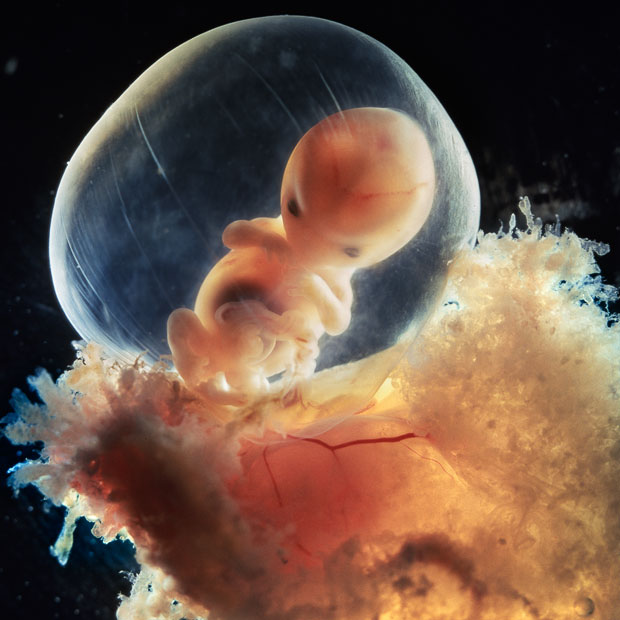
Unborn baby scheming about being only two months old

Note: this post has a twin! Its companion post on a secular case against gay marriage is here.

Now, you may think that the view that the unborn deserve protection during pregnancy is something that you either take on faith or not. But I want to explain how you can make a case for the right to life of the unborn, just by using reason and evidence.

To defend the pro-life position, I think you need to sustain 3 arguments:

  1. The unborn is a living being with human DNA, and is therefore human.
  2. There is no morally-relevant difference between an unborn baby, and one already born.
  3. None of the justifications given for terminating an unborn baby are morally adequate.

Now, the pro-abortion debater may object to point 1, perhaps by claiming that the unborn baby is either not living, or not human, or not distinct from the mother.

Defending point 1: Well, it is pretty obvious that the unborn child is not inanimate matter. It is definitely living and growing through all 9 months of pregnancy. (Click here for a video that shows what a baby looks like through all 9 months of pregnancy). Since it has human DNA, that makes it a human. And its DNA is different from either its mother or father, so it clearly not just a tissue growth of the father or the mother. More on this point at Christian Cadre, here. An unborn child cannot be the woman’s own body, because then the woman would have four arms, four legs, two heads, four eyes and two different DNA signatures. When you have two different human DNA signatures, you have two different humans.

Secondly, the pro-abortion debater may try to identify a characteristic of the unborn that is not yet present or developed while it is still in the womb, and then argue that because the unborn does not have that characteristic, it does not deserve the protection of the law.

Defending point 2: You need to show that the unborn are not different from the already-born in any meaningful way. The main differences between them are: size, level of development, environment and degree of dependence. Once these characteristics are identified, you can explain that none of these differences provide moral justification for terminating a life. For example, babies inside and outside the womb have the same value, because location does not change a human’s intrinsic value. More at Stand to Reason, here.

Additionally, the pro-abortion debater may try to identify a characteristic of the already-born that is not yet present or developed in the unborn, and then argue that because the unborn does not have that characteristic, that it does not deserve protection, (e.g. – sentience). Most of the these objections that you may encounter are refuted in this essay by Francis Beckwith. Usually these objections fall apart because they assume the thing they are trying to prove, namely, that the unborn deserves less protection than the already born.

Finally, the pro-abortion debater may conceded your points 1 and 2, and admit that the unborn is fully human. But they may then try to provide a moral justification for terminating the life of the unborn, regardless.

Defending point 3: I fully grant that it is sometimes justifiable to terminate an innocent human life, if there is a moral justification. Is there such a justification for abortion? One of the best known attempts to justify abortion is Judith Jarvis Thomson’s “violinist” argument. This argument is summarized by Paul Manata, one of the experts over at Triablogue:

Briefly, this argument goes like this: Say a world-famous violinist developed a fatal kidney ailment and the Society of Music Lovers found that only you had the right blood-type to help. So, they therefore have you kidnapped and then attach you to the violinist’s circulatory system so that your kidneys can be used to extract the poison from his. To unplug yourself from the violinist would be to kill him; therefore, pro-lifers would say a person has to stay attached against her will to the violinist for 9 months. Thompson says that it would be morally virtuous to stay plugged-in. But she asks, “Do you have to?” She appeals to our intuitions and answers, “No.”

Manata then goes on to defeat Thomson’s proposal here, with a short, memorable illustration, which I highly recommend that you check out. More info on how to respond to similar arguments is here.

The best book for beginners on the pro-life view is this book:

For those looking for advanced resources, Francis Beckwith, a professor at Baylor University, published the book Defending Life, with Cambridge University Press, 2007.

Learn about the pro-life case

And some posts motivating Christians and conservatives to take abortion seriously:

New study: higher risk of divorce when men do housework

Atheist commenter Jerry sent me this story about a Norwegian study that affirms traditional roles within the marriage.

Excerpt:

Couples who share housework duties run a higher risk of divorce than couples where the woman does most of the chores, a Norwegian study sure to get tongues wagging has shown.

The divorce rate among couples who shared housework equally was around 50 per cent higher than among those where the woman did most of the work.

“The more a man does in the home, the higher the divorce rate,” Thomas Hansen, co-author of the study entitled Equality in the Home, said.

Researchers found no, or very little, cause-and-effect. Rather, they saw in the correlation a sign of “modern” attitudes.

“Modern couples are just that, both in the way they divide up the chores and in their perception of marriage” as being less sacred, Mr Hansen said, stressing it was all about values.

“In these modern couples, women also have a high level of education and a well-paid job, which makes them less dependent on their spouse financially. They can manage much easier if they divorce,” he said.

There were only some marginal aspects where researchers said there may be cause-and-effect.

“Maybe it’s sometimes seen as a good thing to have very clear roles with lots of clarity … where one person is not stepping on the other’s toes,” Mr Hansen suggested.

“There could be less quarrels, since you can easily get into squabbles if both have the same roles and one has the feeling that the other is not pulling his or her own weight,” he added.

I think that this article is basically correct – men like having clearly defined roles. A man has the traditional roles of protector, provider and moral/spiritual leader. He has the responsibility to lead in those areas. He doesn’t want to have the woman’s role, he doesn’t want to be forced to perform it. Men don’t like to be nagged. He doesn’t want to be micromanaged. He doesn’t want the government telling him how to do his roles, either. I think that one of the reasons why men are so unwilling to marry is because they sense that they could be dominated by their wives and by the state – a state that is not very interested in promoting the interests of men.

In my case, I am a bachelor, so I have to do all my own cleaning, cooking and nurturing. I like learning more about cooking and cleaning and anything else practical. But I hope that if I did get married, then my wife would take the lead in those areas, and push me to be better at my special male roles. I would also hope that she would vote to protect my ability to perform my roles. For example, lower taxes and less regulation, so that I can easily find a job to provide for the family. And concealed carry, so that I can always protect my family. And school choice, so that the schools do not undermine our values and teaching. I think that women should be focused on supporting their husbands, and raising effective, influential children. Once the children are old enough, she can focus having an influence outside the home through engagement in the church, the university and in the political sphere. I think someone like Michele Bachmann has done everything right at the right times, for example.

Related posts

Study explains why college women abandon courtship for hook-ups

This study is from the Institute for American Values. It was done by Elizabeth Marquardt.

The PDF of study is here.

If you download the 88 page PDF, the first few pages are an executive summary.

I’d been exposed to this research before when I read Dr. Miriam Grossmann’s book “Unprotected”. (Boundless review here) I just got Dr. Miriam Grossmann’s new book “You’re Teaching My Child What?” and I also got Elizabeth Marquardt’s new book “Between Two Worlds: The Inner Lives of Children of Divorce”. I don’t think either of them is conservative, but I like their research anyway.

There are a couple of things that really struck me about this IAV study on hooking-up.

First, this one from p. 15:

A notable feature of hook ups is that they almost always occur when both participants are drinking or drunk.

A Rutgers University student observed, “You always hear people say, oh my gosh, I was so drunk, I hooked up with so and so…” Perhaps not surprisingly, many noted that being drunk helped to loosen one’s inhibitions and make it easier to hook up. A number of students noted that being drunk could later serve as your excuse for the hook up. A Yale University student said, “Some people like hook up because they’re drunk or use being drunk as an excuse to hook up.” A New York University student observed, “[Alcohol is] just part of an excuse, so that you can say, oh, well, I was drinking.”

A Rutgers University student commented, “If you’re drinking a lot it’s easier to hook up with someone… [and] drugs, it’s kind of like a bonding thing… and then if you hook up with them and you don’t want to speak to them again, you can always blame it on the drinking or the drugs.”

Other women observed that being drunk gives a woman license to act sexually interested in public in ways that would not be tolerated if she were sober. For instance, a University of Michigan student said, “Girls are actually allowed to be a lot more sexual when they are drunk…”

A University of Chicago junior observed, “One of my best friends… sometimes that’s her goal when we go out. Like she wants to get drunk so I guess she doesn’t have to feel guilty about [hooking up].”

Some reported that drinking had led them to do things they later regretted. A University of Virginia student said, “My last random hook up was last October and it was bad. I was drunk and I just regretted it very much.”

And this one from p. 30 on the effects of hooking-up on their future commitments:

A few women did see an unambiguous connection between present relationships and future marriage.

[…]Many women either saw little or no connection between present and future relationships, or their understanding of this connection was curiously flat. A student at New York University said, “[The present and the future are] connected because I will still have the same values and principles that I have now, but I just won’t be single anymore.”A number of women said that the present and the future are connected because whatever heartache or confusion they experience now gives them lessons for the future.

A University of Michigan student said, “Early relationships prepare you for marriage because it’s like, oh, what type of person do I want to be with? Oh, I’ve had these bad experiences. Or, I’ve learned from this relationship that I should do this and I shouldn’t do this.”

A sophomore at Howard University said that “I am kind of learning from a lot of the mistakes that I have made.” At a further extreme, some women saw their future marriage as the reason to experiment widely in the present. A Rutgers University student said,“I think hooking up with different people and seeing what you like and don’t like is a good idea. Because eventually you’re going to have to… marry someone and I’d just like to know that I experienced everything.”

Although it is admirable to take risks and learn from one’s mistakes, these women would probably find it difficult to explain how having your heart broken a few or even many times in your early years — or trying to separate sex from feeling, as in hooking up — is good preparation for a trusting and happy marriage later on.

And on p. 42, we learn what women think marriage is and isn’t for:

For instance, in the on-campus interviews one student complained, “[With] marriage…you have to debate everything… Why do you need a piece of paper to bond a person to you? …But I know if I don’t get married I’ll probably feel like… [a] lonely old woman… If anything, I’d get married [because of] that.”

This student went on to say that she would be satisfied to live with a man, but added that, if the man was committed to her, he would offer to marry her, and that this was the kind of commitment that she wanted. A student at the University of Washington said,“I don’t want to get married right after I graduate from college. I just think that would stunt my growth in every way that there is. I would like to be in a very steady, committed relationship with a guy.”

And on p. 44, we learn that they like co-habitation, which increases the risk of divorce by about 50% (but they don’t know that):

In the national survey, 58 percent of the respondents agreed that “It is a good idea to live with someone before deciding to marry him.” This belief often coexists with a strong desire to marry, because it was embraced by 49 percent of the respondents who strongly agreed that marriage was a very important goal for them.

[…]Women we interviewed on campus reflected a similar range of attitudes about cohabitation. Some women thought that cohabitation was a good way to test whether one could spend a lifetime with a potential partner. In such cases, women often cited fears of divorce as the reason for trying cohabitation first. A senior at the University of Washington said, “I kind of don’t really see marriages work ever, so I want to make sure that everything’s all right before [we get married]. I don’t see how people can get married without living together because I know like I have a best friend and I live with her and we want to kill each other, like, every few months.”

Other women felt that, in an age of divorce, cohabitation was a preferable alternative to marriage. A student at New York University said, “You see so [many] people getting divorces… I just don’t see the necessity [of marriage].” She went on to say, “I think that I don’t have to be married to [the] person that I’m with…. You know like… Goldie Hawn [and Kurt Russell]? They’re not married.”

But let’s get back to the drinking and the hook-up sex…

Once a woman abandons femininity for feminism, then sex is all that she can use to get noticed by a man. Men are like hiring managers, and courting is like a job interview for the job of marriage and mothering. If a woman tries to get the job by having sex with the interviewer, he isn’t going to hire her since sex has nothing to do with the job. There are children involved, you know – he has to think of them when he makes the hiring decision. But women have been taught to think bad things about men (they’re rapists) and marriage (it’s slavery) by feminists – so they don’t even try to understand men, or to respect men, or prepare their character for being a wife and mother. Feminists just don’t understand that hard work is needed to understand men and prepare for marriage.

In a previous post, I explained how feminists wanted to get women to drink like men, have sex like men, and to abolish courtship and marriage. Under the influence of feminism and Hollywood celebrities, women began to choose men to have sex with without any consideration of morality, religion, marriage, etc. They thought that sex was an easy way to trick a man into committing to them without having to treat him like a real person, or to take the demands of marriage and parenting seriously. (They have been taught to value education and careers over husbands and children, you understand). This results in a cycle of binge-drinking, one-night-stands, cheating, co-habitating, breaking-up, stalking, aborting, etc., until the woman’s ability to trust and love anyone but herself is completely destroyed. And yet these college women somehow believe this is “adventurous”, that it makes them feel “sexy”, and that the experience of being selfish and seeing the worst kind of men acting in the worst possible ways, point blank, somehow prepares them for marriage and motherhood.

Often, a young unmarried woman’s biological father was NOT selected by her mother based on his ability to make commitments and moral judgments. Many feminists prefer men who do not judge women morally, nor impose his religion on her. But those very things that young unmarried  women today seem to dislike most about men, because they fear rejection on moral and religious grounds, are exactly the things that make men good husbands and fathers. They don’t want to be judged or led spiritually, so they choose immoral, non-religious men. Men who are not firm on morality and religion do cannot be counted on to act morally and self-sacrificially. And when they fail, and the marriages break up, the children grow up fatherless and may develop negative views of men.

Every young unmarried woman who chooses a bad man, and then has a bad experience with him is pushing away marriage with both hands. The more she destroys her ability to trust, love and care for others, the less she is able to be happy and effective in a marriage.