Tag Archives: Religion

Why is it so difficult for a working man to be sole provider and leader of a home?

Welfare spending
Welfare spending

So, I’ve noticed that many men who are interested in marriage have been running into problems with their plans. One challenge is the problem of the financial costs of marriage. In order to undertake a marriage enterprise, men have to believe that they can pay the bills. And this is especially challenging to men who want a stay-at-home wife to raise their children.

*Please note that I am talking about unmarried (never married, divorced) women throughout this post.

Here’s my argument for why I think that feminism has made it harder for men to afford to get married:

  1. Feminism caused no-fault divorce.
  2. No-fault divorce laws led to more frequent divorces.
  3. Divorced women turn to government for financial support.
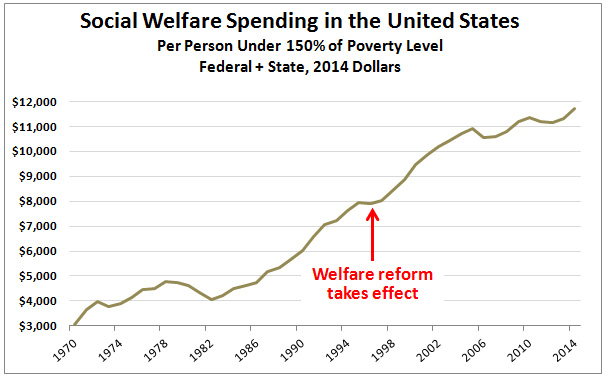
  4. Taxes increase in order to pay for more government spending.
  5. Men who were interested in marriage were hit with higher taxes, which made marriage enterprise financially unfeasible for them.

Here’s the evidence for each point.

1. Feminism was behind no-fault divorce, according to this feminist, pro-no-fault-divorce writer.

Excerpt:

Households of 2010 don’t look quite like they did in 1969, when no-fault divorce actually was a controversial topic and these counter-arguments held some weight. The working dad/stay-at-home mom model of the middle class has been replaced by two-parent earner households and a growing number of working mom/stay-at-home dad arrangements. In working poor and impoverished families, the one-parent provider model was never the norm. No-fault divorce seemed scary when it had never before existed, but the truth is that its introduction was long overdue. Feminist groups at the time supported no-fault divorce, as it provided women an escape hatch from desperately unhappy marriages in a society where they were already disadvantaged on almost every level, regardless of their marital status. Imagine an abusive marriage in 1968, when the court-savvy abuser could actually force the victim to stay in the relationship forever. Imagine that now, and you know why domestic violence attorneys are in full support of introducing no-fault divorce to New York. And the judges aren’t the only problem.

Note that the author of this piece thinks that it is not women’s fault that they choose men who they then want to divorce. It’s not the woman’s fault that she is unhappy with the man she courted with and then chose and then made vows to. She isn’t responsible for choosing a good man with chastity, sobriety, moral convictions, etc. She thinks that women shouldn’t be held responsible for their choices. Also, feminists think that children do fine without fathers.

2. Easier divorces means more divorces.

Abstract:

This paper analyzes a panel of 18 European countries spanning from 1950 to 2003 to examine the extent to which the legal reforms leading to “easier divorce” that took place during the second half of the 20th century have contributed to the increase in divorce rates across Europe. We use a quasi-experimental set-up and exploit the different timing of the reforms in divorce laws across countries. We account for unobserved country-specific factors by introducing country fixed effects, and we include country-specific trends to control for time-varying factors at the country level that may be correlated with divorce rates and divorce laws, such as changing social norms or slow moving demographic trends. We find that the different reforms that “made divorce easier” were followed by significant increases in divorce rates. The effect of no-fault legislation was strong and permanent, while unilateral reforms only had a temporary effect on divorce rates. Overall, we estimate that the legal reforms account for about 20 percent of the increase in divorce rates in Europe between 1960 and 2002.

It seems obvious, but more evidence never hurts. About 70% of divorces are initiated by women, either because they chose to marry the wrong man, or because they become unhappy with the right man.

3. Marital instability causes women to vote for bigger government for security.

Excerpt:

Giving women the right to vote significantly changed American politics from the very beginning. Despite claims to the contrary, the gender gap is not something that has arisen since the 1970s. Suffrage coincided with immediate increases in state government expenditures and revenue, and these effects continued growing as more women took advantage of the franchise. Similar changes occurred at the federal level as female suffrage led to more liberal voting records for the state’s U.S. House and Senate delegations. In the Senate, suffrage changed voting behavior by an amount equal to almost 20 percent of the difference between Republican and Democratic senators. Suffrage also coincided with changes in the probability that prohibition would be enacted and changes in divorce laws.

[…]More work remains to be done on why women vote so differently, but our initial work provides scant evidence that it is due to self-interest arising from their employment by government. The only evidence that we found indicated that the gender gap in part arises from women’s fear that they are being left to raise children on their own (Lott and Kenny 1997). If this result is true, the continued breakdown of the family and higher divorce rates imply growing political conflicts between the sexes.

Bigger government must be paid for by higher taxes, which makes it harder for one working man’s income to provide for a family. In fact, feminists wanted men to be displaced as sole-providers. They would prefer that women are “equal” to men, and that means making women get out and work like men. It was no concern of theirs that children would be raised by strangers in daycares and government schools.

4. Women are in fact observed to vote for bigger government.

Excerpt:

On Tuesday, the nation made history. It made history in electing the first African American president; it made history in building a bigger margin for the first female Speaker of the House; it made history in delivering the biggest Democratic margin since 1964; it made history in sending a record number of people to the polls and the highest percentage turnout since the 1960 election. Analysts will spend the next few months sifting through the data, trying to figure out what happened and why. Historians will likely spend the next several years and decades studying this election, as well. But one thing is immediately clear. Unmarried women played a pivotal role in making this history and in changing this nation. They delivered a stunning 70 to 29 percent margin to Barack Obama and delivered similarly strong margins in races for Congress and the U.S. Senate. Although unmarried women have voted Democratic consistently since marital status has been was tracked, this election represents the highest margin recorded and a 16-point net gain at the Presidential level from 2004.

In fact, there was a recent (2011) study showing that unmarried women do in fact vote for higher taxes and more government as a substitute for a husband’s provider role.

Abstract:

The last three decades have witnessed the rise of a political gender gap in the United States wherein more women than men favor the Democratic party. We trace this development to the decline in marriage, which we posit has made men richer and women poorer. Data for the United States support this argument. First, there is a strong positive correlation between state divorce prevalence and the political gender gap – higher divorce prevalence reduces support for the Democrats among men but not women. Second, longitudinal data show that following marriage (divorce), women are less (more) likely to support the Democratic party.

What follows from voting Democrat?

If more people vote for Democrats then we will get higher taxes to pay for all the government spending. Higher taxes means that a married man can no longer retain enough of his earnings to support a family. And that means his wife has to work, and that means that his children will learn what the daycare workers and government school teachers decide they should learn.

But what do men want out of marriage? Men don’t want to marry a stressed-out competitor, and be yelled at in their own home. They want a homemaker who is focused on her husband and children. They want their children raised by someone who shares their worldview. Men want to produce moral, influential, independent children. Men want to be respected in their homes as sole provider. Men marry in order to lead on moral and spiritual issues. And men understand that a woman who doesn’t work outside the home usually makes a more feminine, supportive partner in the marriage enterprise.

If society, including the parents of daughters and the pastors of daughters, have decided that women don’t have to care about what men want out of marriage, then they should not be surprised that men don’t want marriage. Men may have no-commitment temporary sexual relationships with a secular left feminist who has been focused on her own feminist projects: travel, student loans, promiscuity, career, etc. But they certainly do not marry those women. When it comes to marriage, men want women who embrace the roles of wife and mother. And unlike shoes and handbags, we get a vote about whether or not the marriage happens.


New poll: few Millennials describe belief in God as “very important”

Beliefs of millennials and boomers

I saw a very interesting article that compared the attitudes of young people about things like patriotism, religion, freedom, etc. The numbers are very discouraging.

So, here’s the article from the Washington Examiner:

The importance of patriotism, faith in God, and having children is significantly lower among millennials and Generation Z, compared to previous generations.

In a new poll conducted by the Wall Street Journal and NBC News, nearly 80% of people aged 55-91 said being patriotic is important to them, while only 42% of millennials and Generation Z, or those aged 18-38, said the same. Thirty percent of millennials and Generation Z said religion was important, compared to the over 75% of baby boomers, with just over 30% of millennials and Generation Z saying it was important to have children.

Areas where the younger generations had placed higher importance compared to boomers were tolerance for others and self-fulfillment, with financial security being almost tied between the two age groups.

I’m sure that everyone has seen other polls showing the decline of Christianity, especially in mainline and Catholic churches. Evangelicals are declining less, but they are still declining.

The reason I linked to this post is because I’ve noticed that some Christians don’t really think that there is anything to be concerned about. Everything is working fine, they say. Whatever we’re doing right now must be working, because there is no decline. We’re winning, and if you think otherwise, then you’re just complaining.

Well, I don’t really know why there is this decline, all I can do is speak from my experiences. I’ve met people through my blog who did lose their faith in college, and I’ve met ex-Christians in my office, too. I asked them what the problem was, and it seems to be that when they were growing up, they often bullied into behaving like a Christian without being able to ask any questions about whether it was true. And then as soon as they got to college away from their parents and pastors, they just dumped the whole thing.

I remember listening to an amazing lecture a while back by Dr. Scott Waller. I think it was a lecture he gave for the Stand to Reason “Masters Series in Christian Thought” in 2003. The lecture was about Postmodernism in the University. Postmodernism is the view that there are no true or false views, especially with “soft” issues like religion and morality. In the lecture, he talked about how a father had sent his devout Christian son to university, and the son had returned an atheist after one semester. I remember Dr. Waller quoting the son telling his parents “I have come to think of my time growing up in this house as the dark period of my life”. The father was very upset. So Dr. Waller told him what to do. He said, you’re going to need to read a few books on the most common questions that your son has, and then work through the answers with him. And he made a little pile of books about common questions that college students ask, and pushed the pile across the table to the father. And the father pushed the books back across the table to Dr. Waller, and said “well, I don’t have time for reading so many books… but could you just talk to him instead?”

Another thing that seems to cause a lot of young people to  leave the faith in college is sex. Now if I were trying to convince someone to be responsible about sex, I’d try to show them studies and statistics to explain why there really are best practices to relationships and marriage. For example, I’d might show them that the number of premarital sex partners increases marital instability, or that sliding into cohabitation early tends to make marriages less stable. But this takes a bit of work, and you have to work through it with the young people. I just don’t know if parents really reason with their kids like this. But in churches, I’ve noticed that trying to make an argument using evidence isn’t very popular. To me, if I were trying to be convincing to someone about something, I would use evidence. It’s just natural to me to make a case if I’m trying to be persuasive. But making a case just hasn’t been a really big priority in the churches I’ve attended.

So, I guess if I had to give any advice to parents of children, or pastors in churches, it would be that Christianity is in decline, and we need to do more than just order people to memorize Bible verses and creeds, go to church, etc. It’s hard for me to know what’s really going on in everyone’s home, and in everyone’s church. But I don’t think that whatever we’re doing in our homes and churches is working to convince young people that belief in God is very important.

Was Hitler a Christian? Is Nazism similar to Christianity?

A conflict of worldviews

One of the strangest things I have heard from atheists is the assertion that Christianity is somehow connected to the fascism, such as the fascism that existed under Adolf Hitler. Two posts by Jewish author Jonah Goldberg from National Review supply us with the facts to set the record straight.

Let’s start with the first post.

Here are some of the points:

1) Hitler wanted Christianity removed from the public square

Like the engineers of that proverbial railway bridge, the Nazis worked relentlessly to replace the nuts and bolts of traditional Christianity with a new political religion. The shrewdest way to accomplish this was to co-opt Christianity via the Gleichschaltung while at the same time shrinking traditional religion’s role in civil society.

2) Hitler banned the giving of donations to churches

Hitler banned religious charity, crippling the churches’ role as a counterweight to the state. Clergy were put on government salary, hence subjected to state authority. “The parsons will be made to dig their own graves,” Hitler cackled. “They will betray their God to us. They will betray anything for the sake of their miserable little jobs and incomes.”

3) Hitler replaced Christian celebrations with celebrations of the state

Following the Jacobin example, the Nazis replaced the traditional Christian calendar. The new year began on January 30 with the Day of the Seizure of Power. Each November the streets of central Munich were dedicated to a Nazi Passion play depicting Hitler’s Beer Hall Putsch. The martyrdom of Horst Wessel and his “old fighters” replaced Jesus and the apostles. Plays and official histories were rewritten to glorify pagan Aryans bravely fighting against Christianizing foreign armies. Anticipating some feminist pseudo history, witches became martyrs to the bloodthirsty oppression of Christianity.

4) Hitler favored the complete elimination of Christianity

When some Protestant bishops visited the Fuhrer to register complaints, Hitler’s rage got the better of him. “Christianity will disappear from Germany just as it has done in Russia . . . The Germanrace has existed without Christianity for thousands of years . . . and will continue after Christianity has disappeared . . . We must get used to the teachings of blood and race.”

5) Hitler favored the removal of mandatory prayers in schools

In 1935 mandatory prayer in school was abolished…

6) Hitler favored the banning of Christmas carols and nativity plays

…and in 1938 carols and Nativity plays were banned entirely.

7) Hitler abolished religious instruction for children

By 1941 religious instruction for children fourteen years and up had been abolished altogether….

And now the second post.

8) Hitler opposed the ideas of universal truth and objective moral absolutes

…Just as the Nazi attack on Christianity was part of a larger war on the idea of universal truth, whole postmodern cosmologies have been created to prove that traditional religious morality is a scam, that there are no fixed truths or “natural” categories, and that all knowledge is socially constructed.

Practically everything this man believed was 100% anti-Christian. But he fits in fine on the secular left.

Conclusion

Adolf Hitler was a man influenced by two big ideas: evolution and socialism. His party was the national SOCIALIST party. He favored a strong role for the state in interfering with the free market. He was in favor of regulating the family so that the state could have a bigger influence on children. And he favored the idea of survival of the fittest. His ideas are 100% incompatible with Christianity and with capitalism as well. Christians value individual rights and freedoms, small government and the autonomy of the family against the state. The commandments about not coveting and not stealing are incompatible with redistribution of wealth from those who produce to those who “need”. The differences are clear and significant. The Bible favors voluntary charity by individuals and churches. It does not favor redistribution of wealth by a secular government to equalize life outcomes regardless of personal responsibility.

Ignorant atheists and their myths

In a recent debate between Matt Dillahunty and David Robertson, Dillahunty made the claim that Hitler was a Christian, because in a campaign speech, he told a Catholic audience that secular schools were bad, and religious schools were good. Dillahunty thought that this meant that Hitler was a Christian. Robertson asked him when those words were spoken, and whether they formed the basis of any POLICY after Hitler was elected. Dillahunty didn’t know, because he just cited the quotation without knowing anything about the context, or about the historical period. Robertson informed him that the words were spoken in a campaign speech, prior to Hitler’s rise to power, and that nothing in Hitler’s policies ever took the words seriously after he came to power. It was the equivalent of Obama claiming to support natural marriage, then legalizing same-sex marriage once elected. He lied in order to be elected. This kind of ignorance is very prominent in the atheist (“secular humanist”) community, which survives on mythology which is never subjected to rational inquiry. Here’s another good example of this ignorance.

Incidentally, Dillahunty later said, in the same debate no less, that he “didn’t know” if the Holocaust was morally wrong. Right – because on atheism right and wrong are meaningless concepts, rationally speaking. They are reduced to personal preferences only, where each opinion is as valid as the opposite opinion, since there is no objective standard by which to judge different opinions. That’s why atheists can’t make moral judgements about anything, they just have preferences, like their preference for certain foods and certain clothes. Very important to realize this when talking to atheists, because they use moral language to describe their personal feelings and opinions.

Whenever I hear atheists speculating about whether Hitler was a Christian, I immediately know that they have not investigated anything very carefully, and are merely being insulting. It’s not worth having a conversation with people who are stupid AND insulting.