Gays, lesbians, bisexuals and transgender people would be added to the lengthy list of social and ethnic groups that public schools must include in social studies lessons under a landmark bill passed Thursday by the California Senate.
If the bill is adopted by the state Assembly and signed by Gov. Jerry Brown, California would become the first state to require the teaching of gay history.
Supporters say the move is needed to counter anti-gay stereotypes and beliefs that make children in those groups vulnerable to bullying and suicide.
Opponents counter that such instruction would further burden an already crowded curriculum and expose students to a subject that some parents find objectionable.
The legislation, sponsored by Democratic Sen. Mark Leno of San Francisco, passed on a 23-14 party line vote. It also would add disabled people to the curriculum.
The bill gives school districts flexibility in deciding what to include in the lessons and at what grades students would receive them.
But starting in the 2013-14 school year, it would prohibit districts and the California Board of Education from using textbooks or other instructional materials that reflect adversely on gay, bisexual and transgender Americans.
There are policies that we could pass that would promote school choice and homeschooling, like voucher programs. The public sector unions oppose school choice laws, because they do not want parents to have a choice of what their children will learn. Vote smart – don’t vote for Democrats.
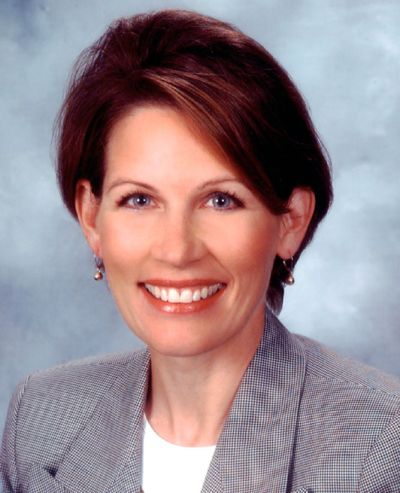
My favorite Congresswoman stole the spotlight in Iowa when she lectured for the Family Leader Presidential Lecture Series. She’s back to the passionate arm-waving that I always liked so much.
Bachmann started her speech sharing her testimony saying she understood the Gospel for the first time at age 16 after growing up in a Lutheran Church and then she gave her life to Christ. She said that it “changed her life forever.” She said she had a hunger for the Word after then, and explained that the Holy Spirit “lifted the veil” from her eyes so she was then able to understand it. She participated in YoungLife and another Bible study when in high school. That first year in Christ was, Bachmann said, “was the defining year of my life.”
In college she participated the InterVarsity Christian Fellowship at her school, and cited Francis Schaffer’s film, How Now Shall We Live, made an impact on how she lives out her faith. During law school at Oral Roberts University Law School she did advocacy for better homeschooling laws. She and her husband, Marcus, homeschooled their five children in their early years. She got involved in public schools as they did foster care for 23 kids since they were not allowed by Minnesota law to put those kids in private school or to home school them.
She noted a change in public schools where “knowledge, facts, and information” were taking a back seat to indoctrination. She noted the 2000 Goals to Work standard implemented in the public schools that was a federal program implemented in all 50 states. She advocated for its repeal in Minnesota – the first state to do so. She said later this is where she got her start in politics.
She highlighted her prolife advocacy in the Minnesota Legislature – a requirement to fund prolife groups if they were going to fund Planned Parenthood and a woman’s right to know act.
[…]On marriage, she commended Iowans for booting the three Iowa Supreme Court justices up for retention last fall. She said that Minnesota could possibly vote in favor of a Marriage Amendment now that Republicans She noted that Congress can limit the subject matter jurisdiction for Article Three courts federally denying them an opportunity to rule on marriage. “This is the first time in recorded history that we have seen marriage in society defined as anything other than between one man and one woman.”
[…]On life she said that she and her husband has done more than just talk about life, but have tried to live it out through being sidewalk counselors and taking unwed mothers into their home. Quoting Francis Schaeffer she, “life is the watershed issue of our time.” Bachman proclaimed her commitment to life, “I will not give up until we give life the position it deserves in the United States and is protected from conception until natural death.”
She explained how taxes has impacted the family where in the 1950s would pay approximately 5% of their income to taxes. She said now some families can pay up to 50% which explains why we have fewer one income families. She noted the spending which has fueled anti-family tax policy. She said the first thing on the House’s pro-family agenda was to rein in spending. Regarding education reform, she noted how the Supreme Court has recently ruled that tax credits for private religious schools is constitutional. She also said that she’d abolish the Federal Department of Education. She also called for the abolishment of the United States Tax Code.
[Note: commenter Francine notes that Michele says that this is the first time that marriage has been redefined to not be between men and women – the summary is in error about what she said]
She ends the speech with her concern for the fact that over 40% of children are beig born without a mother and father in the home, and she blames bad fiscal policies for this injustice. She makes the connection between left-wing fiscal policies and social breakdown. It’s so important that social conservatives understand that big government, high taxes, excessive regulation and massive spending are major causes of virtually all of our social problems. The breakdown of the family is what makes soul-destroying secularism possible.
There was also a press conference after the speech.
During the press conference that was held after Congresswoman Michelle Bachmann’s speech in Pella, IA for The FAMiLY Leader’s Presidential Lecture Series, she was asked to elaborate on the bill in Minnesota she helped to get passed that allowed funding for prolife organizations basically putting them on the same footing as Planned Parenthood. During her answer she mentioned that she said that she introduced a similar bill in Congress.
She was also asked about what programs would she be open to abolishing other than the Federal Department of Education. She listed the Department of Energy and the Department of Commerce as ones that have been discussed in Congress. She said “anywhere we can abolish we might as well cut back and abolish.” Saying in particular that our private sector has the capability to handle our energy needs. She was asked about her disappointment with the House budget deal and where she would like the House leadership to put up a fight. Bachmann said, “defunding Obamacare, this will change our country forever.” She noted later that some may not be willing to take on budget battles in the future, she said that we have to… she said, “we have to change course.”
I have been pushing Michele Bachmann on this blog since the beginning two years ago, because she represents what I consider to be an ideal Christian woman. She is everything that I have ever hoped a Christian woman could be in my wildest, wildest dreams. I could not give any politician a more ringing endorsement. I hope with all my heart that she will some day be President of the United States.
She explained how taxes has impacted the family where in the 1950s would pay approximately 5% of their income to taxes. She said now some families can pay up to 50% which explains why we have fewer one income families. She noted the spending which has fueled anti-family tax policy. She said the first thing on the House’s pro-family agenda was to rein in spending. Regarding education reform, she noted how the Supreme Court has recently ruled that tax credits for private religious schools is constitutional. She also said that she’d abolish the Federal Department of Education. She also called for the abolishment of the United States Tax Code.
A popular article by Carrie Lukas, writing in the Wall Street Journal. (H/T Mary)
Excerpt:
The unemployment rate is consistently higher among men than among women. The Bureau of Labor Statistics reports that 9.3% of men over the age of 16 are currently out of work. The figure for women is 8.3%. Unemployment fell for both sexes over the past year, but labor force participation (the percentage of working age people employed) also dropped. The participation rate fell more among men (to 70.4% today from 71.4% in March 2010) than women (to 58.3% from 58.8%). That means much of the improvement in unemployment numbers comes from discouraged workers—particularly male ones—giving up their job searches entirely.
Men have been hit harder by this recession because they tend to work in fields like construction, manufacturing and trucking, which are disproportionately affected by bad economic conditions. Women cluster in more insulated occupations, such as teaching, health care and service industries.
[…]The Department of Labor’s Time Use survey shows that full-time working women spend an average of 8.01 hours per day on the job, compared to 8.75 hours for full-time working men. One would expect that someone who works 9% more would also earn more. This one fact alone accounts for more than a third of the wage gap.
Choice of occupation also plays an important role in earnings. While feminists suggest that women are coerced into lower-paying job sectors, most women know that something else is often at work. Women gravitate toward jobs with fewer risks, more comfortable conditions, regular hours, more personal fulfillment and greater flexibility. Simply put, many women—not all, but enough to have a big impact on the statistics—are willing to trade higher pay for other desirable job characteristics.
Men, by contrast, often take on jobs that involve physical labor, outdoor work, overnight shifts and dangerous conditions (which is also why men suffer the overwhelming majority of injuries and deaths at the workplace). They put up with these unpleasant factors so that they can earn more.
Recent studies have shown that the wage gap shrinks—or even reverses—when relevant factors are taken into account and comparisons are made between men and women in similar circumstances. In a 2010 study of single, childless urban workers between the ages of 22 and 30, the research firm Reach Advisors found that women earned an average of 8% more than their male counterparts. Given that women are outpacing men in educational attainment, and that our economy is increasingly geared toward knowledge-based jobs, it makes sense that women’s earnings are going up compared to men’s.
My favorite book on feminism, economics and marriage is Carrie Lukas’ “The Politically Incorrect Guide to Women, Sex and Feminism“. If you don’t have the book, then please go out and buy one for you, and one for a young, unmarried woman in your life. Books like this one are for women who are serious about making their marriages last. And men can read them, too – so that we’ll know what to look for in women. There is nothing more attractive to a marriage-minded man than a fiscally conservative woman.
Here’s an interview of Carrie Lukas conducted by famous men’s rights activist Bernard Chapin. The next time you see men reading the Sports Illustrated Swimsuit Issue, take a closer look. On the inside of that magazine we are often concealing a copy of Carrie Lukas’ book. When Carrie Lukas talks about economics and policy, men think about marriage.


 WINTERY KNIGHT