Robin Collins and atheist Peter Millican discuss the fine-tuning of the universe for life

British Spitfire and German Messerschmitt Me 109 locked in a dogfight

You might remember Peter Millican from the debate he had with William Lane Craig. I ranked that debate as one of the 3 best I have ever seen, along with the first Craig  vs Dacey debate and the second Craig vs Sinnott-Armstrong debate.

Details:

Science has revealed that the fundamental constants and forces of the cosmos appear to be exquisitely fine-tuned to allow a universe in which life can develop. Is God the best explanation of the incredibly improbable odds of the universe we live in being a life-permitting one?

Robin Collins is a Christian philosopher and a leading advocate of the argument for God from cosmic design. Peter Millican is an atheist philosopher at Oxford University. They debate the issues.

From ‘Unbelievable?’ on ‘Premier Christian Radio’, Saturday 19th March 2016.

The debate:

MP3 file is available on the Unbelievable web site.

As usual when the atheist is an expert, there is no snark or paraphrasing in the summary.

Summary

Brierley: What is the fine-tuning argument?

Collins: the fine-tuning is structure of the universe is extremely precisely set to allow the existing of conscious, embodied agents who are capable of moral behavior. There are 3 kinds of fine-tuning: 1) the laws of nature (mathematical formulas), 2) the constants of physics (numbers that are plugged into the equations), 3) the initial conditions of the universe. The fine-tuning exists not just because there are lots of possibilities, but there is something special about the actual state of affairs that we see. Every set of laws, parameters and initial conditions is equally improbable, but the vast majority of permutations do not permit life. The possible explanations: theism or the multiverse.

Brierley: How improbable are the numbers?

Collins: Once case is the cosmological constant (dark energy density), with is 1 part in (10 raised to 120th power). If larger, the universe expands too rapidly for galaxies and stars to form after the Big Bang. If smaller, the universe collapses in on itself before life could form. Another case is the initial distribution of mass energy to give us the low entropy we have that is necessary for life. The fine-tuning there is 1 part in (10 raised to the 10th power raised to the 123rd power).

Brierley: What do you think of the argument?

Millican: The argument is worth taking very seriously. I am a fan of the argument. The other arguments for God’s existence such as the ontological and cosmological arguments are very weak. But the fine-tuning argument has the right structure to deliver the conclusion that theists want. And it is different from the traditional design argument tended to focus on biological nature, which is not a strong argument. But the fine-tuning argument is strong because it precedes any sort of biological evolution. Although the design is present at the beginning of the universe, it is not visible until much later. The argument points to at least deism, and possibly theism. The argument is not based on ignorance, it is rooted in “the latest results from the frontiers of science” (his phrase).

Brierley: Is this the best argument from natural theology?

Collins: The cosmological argument makes theism viable intuitively, but there are some things that are puzzling, like the concept of the necessary being. But the fine-tuning argument is decisive.

Brierley: What’s are some objections to the fine-tuning argument?

Millican: The argument is based on recent physics, so we should be cautious because we maybe we will discover a natural explanation.

Brierley: Respond to that.

Collins: The cosmological constant has been around since 1980. But the direction that physics is moving in is that there are more constants and quantities being discovered that need to be fine-tuned, not less. Even if you had a grand unified theory, that would have to be have the fine-tuning pushed into it.

(BREAK)

Millican: Since we have no experience of other laws and values from other universes, we don’t know whether these values can be other than they are. Psychologically, humans are prone to seeing purpose and patterns where there is none, so maybe that’s happening here.

Brierley: Respond to that.

Collins: It is possible to determine probabilities on a single universe case, for example using multiple ways of calculating Avogadro’s number all converging on the same number makes it more probable.

Millican: Yes, I willing to accept that these constants can take on other values, (“principle of indifference”). But maybe this principle be applied if the improbability were pushed up into the theory?

Collins: Even if you had a grand theory, selecting the grand theory from others would retain the improbability.

Brierley: What about the multiverse?

Millican: What if there are many, many different universes, and we happen to be in the one that is finely-tuned, then we should not be surprised to observe fine-tuning. Maybe a multiverse theory will be discovered in the future that would allow us to have these many universes with randomized constants and quantities. “I do think that it is a little bit of a promissary note”. I don’t think physics is pointing to this right now.

Brierley: Respond to that.

Collins: I agree it’s a promissary note. This is the strongest objection to the fine-tuning argument. But there are objections to the multiverse: 1) the fine-tuning is kicked back up to the multiverse generator has to be set just right to produce universes with different constants, 2) the multiverse is more likely to produce a small universe with Boltzmann brains that pop into existence and then out again, rather than a universe that contains conscious, embodied intelligent agents. I am working on a third response now that would show that the same constants that allow complex, embodied life ALSO allow the universe to be discoverable. This would negate the observer-selection effect required by the multiverse objection.

Brierley: Respond to that.

Millican: I don’t see why the multiverse generator has to be fine-tuned, since we don’t know what the multiverse generator is. I’m not impressed by the Boltzmann brains, but won’t discuss. We should be cautious about inferring design because maybe this is a case where we are seeing purpose and design where there is none.

Brierley: Can you negate the discoverability of the universe by saying that it might be psychological?

Collins: These things are not psychological. The selected value for the cosmic microwave background radiation is fine-tuned for life and for discoverability. It’s not merely a discoverability selection effect, it’s optimal for discoverability. If baryon-photon value were much smaller, we would have known that it was not optimal. So that judgment cannot be explained by

Millican: That’s a very interesting new twist.

Brierley: Give us your best objection.

Millican: I have two. 1) Even if you admit to the fine-tuning, this doesn’t show a being who is omnipotent and omnisicient. What the fine-tuning shows is that the designer is doing the best it can given the constraints from nature. If I were God, I would not have made the universe so big, and I wouldn’t have made it last 14 billion years, just to make one small area that supports life. An all-powerful God would have made the universe much smaller, and much younger. 2) The fine-tuning allows life to exist in other solar systems in other galaxies. What does this alien life elsewhere mean for traditional Christian theology? The existence of other alien civilizations argues against the truth of any one religion.

Brierley: Respond to those.

Collins: First objection: with a finite Creator, you run into the problem of having to push the design of that creature up one level, so you don’t really solve the fine-tuning problem. An unlimited being (non-material, not composed of parts) does not require fine-tuning. The fine-tuning is more compatible with theism than atheism. Second objection: I actually do think that it is likely that are other universes, and life in other galaxies and stars, and the doctrine of the Incarnation is easily adaptable to that, because God can take on multiple natures to appear to different alien civilizations.

Other resources (from WK)

If you liked this discussion, be sure and check out a full length lecture by Robin Collins on the fine-tuning, and a shorter lecture on his very latest work. And also this the Common Sense Atheism podcast, featuring cosmologist Luke Barnes, who answers about a dozen objections to the fine-tuning argument.

Can recreational sex turn a selfish, irresponsible man into a marriage-minded provider?

Man helping a woman with proper handgun marksmanship

An article from the American Thinker answers the question that vexes many men. As you read this excerpt below, ask yourself if it is a man or a woman writing this.

First of all, liberal women seem to be having an awful lot of sex these days. They are losing their virginity early, and working their way through as many “alpha males” as possible, but all the while they insist that a stream of recreational-sex relationships is somehow a path to lifelong married love. Can you turn a man who wants nothing more than recreational sex into the perfect husband, simply by invoking the magical power of vagina?

Liberal women think that you can:

On the one hand, liberal women believe wholeheartedly in the idiotic social construct they call, “sexual liberation.”  They pride themselves on losing their virginity, as though that “accomplishment” had ever been above the challenge-scale of an alley cat in heat.

These liberal women I’ve known, having given away their female V-card over and over and over again, all the while scour their host of intimate “trial runs” searching for that mythical, Hollywood-construct, Mr. Right.  This Mr. Right guy, for whom they are searching, is known to them up front as even more sexually-liberated than they, but this little factoid seems not to register in their liberated little heads as they frantically search for the equally mythical family home with the white picket fence, which somehow never gets hit by any of life’s roving tornadoes.  One can almost hear them say in unison, “And they all lived happily ever after.”

I think it’s one of the deepest mysteries of the world why women think that a man who has lots and lots of recreational sex is somehow marriage material. When I think of men who are qualified for marriage, I think of men who have studied hard subjects, gotten marketable skills, worked and worked, saved and saved, and shown that they can be faithful in marriage by exhibiting self-control in the courtship. But liberal women think that all of this reasoning is junk, and you must just jump right into sex to see if the relationship will “work out” or to find out what you “like”. Recreational sex, they insist, is a superior way of finding a husband. Discussing who will do what in an actual marriage and what the actual marriage is for is apparently ineffective.

More:

Evidently, the liberal woman is capable of the most severe form of psychological denial known to humankind.  Certain that one of the men with whom she has copulated without strings will suddenly morph into a faithfully monogamous creature the minute she can convince one of them to say “I do” in front of a few witnesses, the liberal woman marches blindly down the aisle towards near-certain, adulterous doom.  Yet, no amount of honest reason can dissuade liberal women from this self-destructive, moral myopia.

What other term but “morally schizoid” could possibly describe this blatantly contradictory tendency among liberal women?

Having spent their youth casually throwing their own sexual morality to the winds of fairytale “liberation,” these liberal women still steadfastly cling to the faithfully monogamous ideal for that sometime-later moment when they actually do desire all the traditional things — the husband, the kids, the white picket fence — those pesky female-nature embedded longings, which coincidentally ensure the continuation of the human race.

But these liberal women somehow — in perfect schizoid manner — convince themselves that once married, they will be the gratuitous beneficiaries of the monogamous respect they still desire, but have never once demanded or deserved.  Intuitively, women know that strict monogamy provides the only real security for themselves and their own offspring.  Yet, they continue themselves to spurn the demands of monogamy until the very last minute, believing that fidelity springs forth naturally in miraculous profusion among all “married” humans.  Such pure poppycock can only be explained as a mental disorder.

I think women need to ask themselves questions honestly and rationally:

  • can recreational sex make an unemployed man get a job?
  • can recreational sex make a violent man be courteous and respectful?
  • can recreational sex make an atheist turn into a Christian?
  • can recreational sex make a male slut stay faithful?
  • can recreational sex make wastefulness turn into frugality?
  • can recreational sex make laziness turn into diligence?
  • can recreational sex make irresponsibility turn into commitment?

Marriages last because both partners have prepared themselves for self-sacrifice, rational discussions, problem solving and cooperation.

Previously, I provided the male perspective on liberal women’s poor decision-making about men and marriage. Read the article from the American Thinker (written by a woman), then read mine.

New study: fracking doesn’t contaminate groundwater

Hydraulic fracturing also known as "fracking"
Hydraulic fracturing, also known as “fracking”

A new study was reported in the Daily Signal.

Excerpt:

Hydraulic fracturing hasn’t contaminated groundwater in Texas, isn’t an earthquake hazard, and has been a boon for the state’s economy, according to a study released Monday.

The new study’s conclusions on drinking water are in line with multiple other studies of hydraulic fracturing, popularly known as fracking.

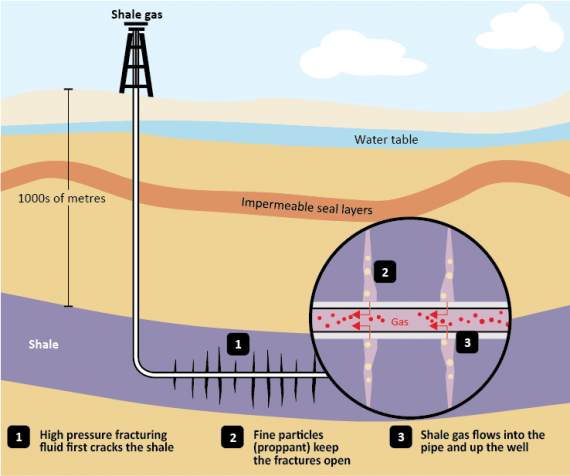
Hydraulic fracturing is the process of drilling into rock and injecting a high-pressure mixture of water, sand, and chemicals to obtain shale gas and oil, which is produced from fractured rock. Some environmentalists argue that it can harm water supplies.

The report initiated by the Academy of Medicine, Engineering and Science of Texas, based in Austin, asserted that “direct migration of contaminants from targeted injection zones is highly unlikely to lead to contamination of potential drinking water aquifers.”

[…]“In Texas and pretty much everywhere, hydraulic fracturing has not been proven to have an adverse impact on drinking water,” Christine Ehlig-Economides, a professor of petroleum engineering at the University of Houston who is chairwoman of the task force, told The Daily Signal.

But that’s not all:

The study also explored the impact of fracking in five other areas: geology and earthquake activity; land resources; air quality; the economy; and society. It found generally positive results for each.

However, in a sixth category, transportation, the report found that fracking produced a surge of trucks, damaging pavement at an estimated cost to state taxpayers of $1.5 billion to $2 billion per year.

Even so, the study concluded that fracking adds $473 billion to the Texas economy and created 3.8 million jobs.

This isn’t the first study this year that found that fracking is safe for the environment.

The radically leftist National Public Radio reported on another study out of Duke University earlier this year:

Fracking the Marcellus Shale did not pollute groundwater in northwestern West Virginia, but wastewater spills did contaminate surface water, according to a new study from Duke University.

[…]The study was unique in that it monitored drinking water wells and surface water over three years, a longer time period than previous research on the impact of fracking on drinking water. The study also used multiple methods of determining the source of the pollution, and was able to draw on baseline water quality data.

“Based on consistent evidence from comprehensive testing, we found no indication of groundwater contamination over the three-year course of our study,” said Avner Vengosh, professor of geochemistry and water quality at Duke’s Nicholas School of the Environment. ”

[…]The peer-reviewed study was published recently in Geochimica et Cosmochimica Acta, a European journal.

[…]Vengosh said the baseline data, gathered from drinking water wells before shale gas drilling occurred nearby, boosts their confidence in the results. A total of 112 water wells were sampled over three years, with 20 sampled before drilling or fracking occurred.

Now, I know that Democrats will not like this study, but the study was rigorous and thorough:

David Yoxtheimer, a hydrogeologist with Penn State’s Marcellus Center for Outreach and Research, who was not involved in the study, said the report is comprehensive in that it used a number of different tools to determine the source of contamination.

“This is a good example of an objective study,” said Yoxtheimer. “They kept their scientific glasses on and looked at it objectively. It’s the type of science we need more of out there. Collect data without motive and come back and report.”

Prior to this study, we had a peer-reviewed PNAS study:

Now comes a study, conducted by scientists at the University of Texas and published in the Proceedings of the National Academy of Sciences — and co-financed by one of the highest-profile environmentalists in the country — that shows much smaller amounts of methane emissions associated with fracking, far less than environmentalists and the Environmental Protection Agency have contended.

[…]The study, billed as the first to measure the actual emissions of methane from natural gas wells, finds these emissions were, in some cases, only about 2% of the most recent national estimate by the EPA in 2011. An upcoming EPA rule, effective January 2015, requires all methane to be captured when liquids are removed after drilling.

[…]“For those wells with methane capture or control, 99% of the potential emissions were captured or controlled,” the study notes.

[…]Thanks in large part to fracking, energy-related carbon dioxide emissions in 2012 were the lowest in the U.S. since 1994, at 5.3 billion metric tons. With the exception of 2010, emissions have declined every year since 2007.

Prior to that study, there was this report from the far-left EPA, also reported in the radically leftist National Public Radio.

Excerpt:

The Environmental Protection Agency says it finds no evidence that hydraulic fracturing — better known as fracking — has led to widespread pollution of drinking water. The oil industry and its backers welcome the long-awaited study while environmental groups criticize it.

“We found the hydraulic fracturing activities in the United States are carried out in a way that has not led to widespread systemic impacts on drinking water resources,” says Tom Burke, Science Advisor and Deputy Assistant Administrator of EPA’s Office of Research and Development. “In fact, the number of documented impacts to drinking water resources is relatively low when compared to the number of fractured wells,” he adds.

The EPA’s draft assessment was conducted at the request of Congress. “It is the most complete compilation of scientific data to date,” says Burke, “including over 950 sources of information, published papers, numerous technical reports, information from stakeholders and peer-reviewed EPA scientific reports.”

Fracking reduces air pollution and lowers energy costs for consumers and businesses that employ consumers. What’s not to like? People on the political right like fracking, because they are aware of the science in these studies. People on the left hate science, and so they hate fracking. They don’t let science inform their views.