
Tag Archives: Feminist Theory

Abortion debate: a secular case against legalized abortion

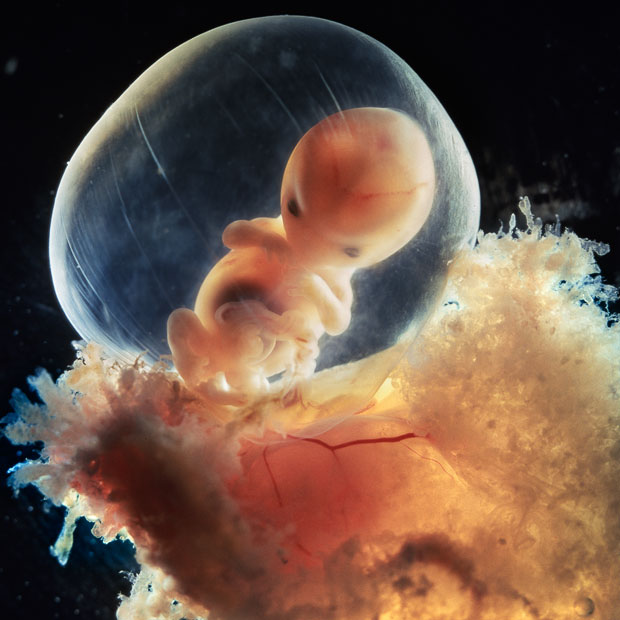
Unborn baby scheming about being only two months old

Note: this post has a twin! Its companion post on a secular case against gay marriage is here.

Now, you may think that the view that the unborn deserve protection during pregnancy is something that you either take on faith or not. But I want to explain how you can make a case for the right to life of the unborn, just by using reason and evidence.

To defend the pro-life position, I think you need to sustain 3 arguments:

  1. The unborn is a living being with human DNA, and is therefore human.
  2. There is no morally-relevant difference between an unborn baby, and one already born.
  3. None of the justifications given for terminating an unborn baby are morally adequate.

Now, the pro-abortion debater may object to point 1, perhaps by claiming that the unborn baby is either not living, or not human, or not distinct from the mother.

Defending point 1: Well, it is pretty obvious that the unborn child is not inanimate matter. It is definitely living and growing through all 9 months of pregnancy. (Click here for a video that shows what a baby looks like through all 9 months of pregnancy). Since it has human DNA, that makes it a human. And its DNA is different from either its mother or father, so it clearly not just a tissue growth of the father or the mother. More on this point at Christian Cadre, here. An unborn child cannot be the woman’s own body, because then the woman would have four arms, four legs, two heads, four eyes and two different DNA signatures. When you have two different human DNA signatures, you have two different humans.

Secondly, the pro-abortion debater may try to identify a characteristic of the unborn that is not yet present or developed while it is still in the womb, and then argue that because the unborn does not have that characteristic, it does not deserve the protection of the law.

Defending point 2: You need to show that the unborn are not different from the already-born in any meaningful way. The main differences between them are: size, level of development, environment and degree of dependence. Once these characteristics are identified, you can explain that none of these differences provide moral justification for terminating a life. For example, babies inside and outside the womb have the same value, because location does not change a human’s intrinsic value.

Additionally, the pro-abortion debater may try to identify a characteristic of the already-born that is not yet present or developed in the unborn, and then argue that because the unborn does not have that characteristic, that it does not deserve protection, (e.g. – sentience). Most of the these objections that you may encounter are refuted in this essay by Francis Beckwith. Usually these objections fall apart because they assume the thing they are trying to prove, namely, that the unborn deserves less protection than the already born.

Finally, the pro-abortion debater may conceded your points 1 and 2, and admit that the unborn is fully human. But they may then try to provide a moral justification for terminating the life of the unborn, regardless.

Defending point 3: I fully grant that it is sometimes justifiable to terminate an innocent human life, if there is a moral justification. Is there such a justification for abortion? One of the best known attempts to justify abortion is Judith Jarvis Thomson’s “violinist” argument. This argument is summarized by Paul Manata, one of the experts over at Triablogue:

Briefly, this argument goes like this: Say a world-famous violinist developed a fatal kidney ailment and the Society of Music Lovers found that only you had the right blood-type to help. So, they therefore have you kidnapped and then attach you to the violinist’s circulatory system so that your kidneys can be used to extract the poison from his. To unplug yourself from the violinist would be to kill him; therefore, pro-lifers would say a person has to stay attached against her will to the violinist for 9 months. Thompson says that it would be morally virtuous to stay plugged-in. But she asks, “Do you have to?” She appeals to our intuitions and answers, “No.”

Manata then goes on to defeat Thomson’s proposal here, with a short, memorable illustration, which I highly recommend that you check out. More info on how to respond to similar arguments is here.

Here is the best book for beginners on the pro-life view.

For those looking for advanced resources, Francis Beckwith, a professor at Baylor University, published the book Defending Life, with Cambridge University Press, 2007.

Can recreational sex turn a selfish, irresponsible man into a marriage-minded provider?

Man helping a woman with proper handgun marksmanship

An article from the American Thinker answers the question that vexes many men. As you read this excerpt below, ask yourself if it is a man or a woman writing this.

First of all, liberal women seem to be having an awful lot of sex these days. They are losing their virginity early, and working their way through as many “alpha males” as possible, but all the while they insist that a stream of recreational-sex relationships is somehow a path to lifelong married love. Can you turn a man who wants nothing more than recreational sex into the perfect husband, simply by invoking the magical power of vagina?

Liberal women think that you can:

On the one hand, liberal women believe wholeheartedly in the idiotic social construct they call, “sexual liberation.”  They pride themselves on losing their virginity, as though that “accomplishment” had ever been above the challenge-scale of an alley cat in heat.

These liberal women I’ve known, having given away their female V-card over and over and over again, all the while scour their host of intimate “trial runs” searching for that mythical, Hollywood-construct, Mr. Right.  This Mr. Right guy, for whom they are searching, is known to them up front as even more sexually-liberated than they, but this little factoid seems not to register in their liberated little heads as they frantically search for the equally mythical family home with the white picket fence, which somehow never gets hit by any of life’s roving tornadoes.  One can almost hear them say in unison, “And they all lived happily ever after.”

I think it’s one of the deepest mysteries of the world why women think that a man who has lots and lots of recreational sex is somehow marriage material. When I think of men who are qualified for marriage, I think of men who have studied hard subjects, gotten marketable skills, worked and worked, saved and saved, and shown that they can be faithful in marriage by exhibiting self-control in the courtship. But liberal women think that all of this reasoning is junk, and you must just jump right into sex to see if the relationship will “work out” or to find out what you “like”. Recreational sex, they insist, is a superior way of finding a husband. Discussing who will do what in an actual marriage and what the actual marriage is for is apparently ineffective.

More:

Evidently, the liberal woman is capable of the most severe form of psychological denial known to humankind.  Certain that one of the men with whom she has copulated without strings will suddenly morph into a faithfully monogamous creature the minute she can convince one of them to say “I do” in front of a few witnesses, the liberal woman marches blindly down the aisle towards near-certain, adulterous doom.  Yet, no amount of honest reason can dissuade liberal women from this self-destructive, moral myopia.

What other term but “morally schizoid” could possibly describe this blatantly contradictory tendency among liberal women?

Having spent their youth casually throwing their own sexual morality to the winds of fairytale “liberation,” these liberal women still steadfastly cling to the faithfully monogamous ideal for that sometime-later moment when they actually do desire all the traditional things — the husband, the kids, the white picket fence — those pesky female-nature embedded longings, which coincidentally ensure the continuation of the human race.

But these liberal women somehow — in perfect schizoid manner — convince themselves that once married, they will be the gratuitous beneficiaries of the monogamous respect they still desire, but have never once demanded or deserved.  Intuitively, women know that strict monogamy provides the only real security for themselves and their own offspring.  Yet, they continue themselves to spurn the demands of monogamy until the very last minute, believing that fidelity springs forth naturally in miraculous profusion among all “married” humans.  Such pure poppycock can only be explained as a mental disorder.

I think women need to ask themselves questions honestly and rationally:

  • can recreational sex make an unemployed man get a job?
  • can recreational sex make a violent man be courteous and respectful?
  • can recreational sex make an atheist turn into a Christian?
  • can recreational sex make a male slut stay faithful?
  • can recreational sex make wastefulness turn into frugality?
  • can recreational sex make laziness turn into diligence?
  • can recreational sex make irresponsibility turn into commitment?

Marriages last because both partners have prepared themselves for self-sacrifice, rational discussions, problem solving and cooperation.

Previously, I provided the male perspective on liberal women’s poor decision-making about men and marriage. Read the article from the American Thinker (written by a woman), then read mine.

Are young, unmarried women sincere about wanting to be married “some day”?

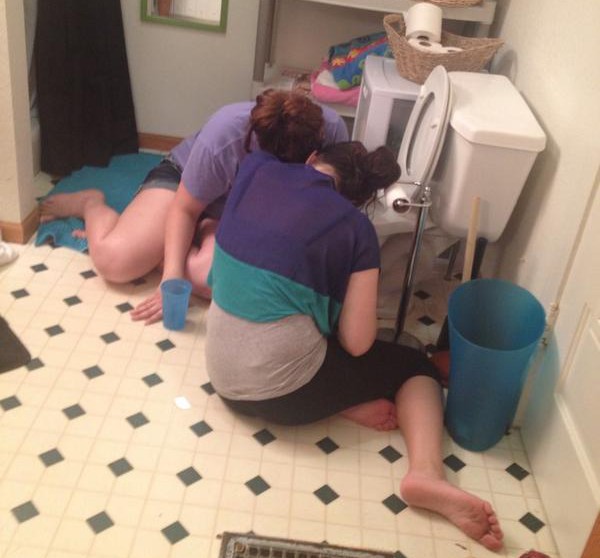
College students puking in toilet

Here’s a useful video for learning about what men think of marriage now that radical feminism has redefined it:

This comment about the video by Gaza on the Elusive Wapiti blog deserves a post of it’s own, so here it is:

One thing that Helen seems to miss is how women value and prioritize marriage and what role this plays vis a vis the male corollary. 

The “story” isn’t just about men being “on strike” or even (to Helen’s credit) rationally choosing to delay and/or avoid; it must also include how women treat marriage WRT their own valuation and prioritization and life decisions (NOT merely stated desires). 

There are not swarms of 25 y/o female college-grads looking for a husband with no willing men within sight. There are, however, swarms of 25 y/o/ female college-grads looking to have fun, travel, chase dreams, build careers, and explore their options. 

I’ve “dated” a few of these women; most (and their social circles included) are so focused on the self-indulgence (“experience”) and the status associated with sexual conquest/power that any mention of marriage is usually as a joke (enter the “boyfriends/husbands are boring/stupid/lazy” meme); marriage is merely some distant thing to be acquired at some seemingly distant age. 

Sure, over time (cue: the wall), the distant thing becomes a stated desire, but the transition from stated-desire to behavioral change and actual prioritization often takes years. I meet women well into their 30’s who still can’t alter their behaviors to demonstrate congruence with their stated desires. 

But that is when we start to hear how important marriage is, how men are avoiding commitment, why men should value marriage. All bacon-wrapped in various shaming mechanisms. The women singing the “Man-up and marry me” tune are not the 25 y/o versions; they are too busy singing the “you go girl” showtunes, exactly as prescribed by the Sandberg, lean-in, [binge drinking, continuous alpha male hookups, alpha male cohabitation], [and later, jump off the carousel into a marriage to a beta provider that makes her perpetually feel that she married down compared to the alphas that she used to hookup with while drunk].

So we can plainly see how something is valued based on the prioritization of one’s choices. Most young women value marriage as an idea, as a capstone to her personal journey; an indicator of status and achievement but not as a goal in-of-itself and not as a life decision that supersedes the accumulation of personal experience, the flexing her sexual and relationship power, or the kindling her optionality. 

These women desire to “hang-out” with the most attractive men they can, under any number of relationship approximations while pursuing their personal journeys and then suddenly desire to elevate commitment and marriage as something paramount, right around the same time their ability to define and opt-in/out of those indulgent relationship approximations wanes. Hmm.

After 10+ years of treating men and relationships as consumable commodities, marriage is now so valuable? So sacred that it will magically be more robust in the face of challenges, requiring more giving and less taking than those previous marital approximations, and yet because it is now a “Marriage”, it won’t be treated as merely a vehicle for the pursuit of her apparently perpetually fleeting “happiness”? Convince me.

There is a false premise at work that assumes that it is men who are devaluing marriage. Sure, there is some truth to this, but woman are messaging their own valuation of marriage as well; in real-time, often in very overt means and often at the expense of men who are still clinging to some idealistic view of marriage. 

And likely those are the very men who are willing and able to be husbands at 25. The very same men who will grow to become self-sufficient 35 y/o men feeling their own blossoming optionality, harvesting their own “experiences” with the 25 y/o versions of the suddenly-marriage-minded women, while a decade of observational and experiential evidence of what women truly value buries what remains of their marital idealism.

Tl:dr
I’d consider marriage to a woman who has demonstrated through her choices, prioritization, sacrifice and delayed gratification that marriage is valuable to her and who can articulate how it would be valuable to me. [not holding breath]

What do you think? Is that something that you are seeing more of in the current generation of young, unmarried women? I have to confess, I see a lot of emphasis among Christian women on short-term missions trips and on careers, but not much planning on how to be prepared for marriage. In my experience, there is not much preparation work going on, and marriage is put off later and later. This is despite the fact that a woman’s fertility declines starting at age 27 and is pretty much dead at 35. IVF is very expensive, but has a higher risk of birth defects and and can often lead to too many embryos, some of which will then need to be aborted. Men respond to incentives, and they have certain things they are looking for out of a wife and marriage.

It would be nice if there were some wisdom being transferred from older, married women to young, unmarried women, but I don’t see it happening. What I see happening is young women, including ones raised in Christian homes, going off to college to binge drink and hookup and cohabitate, and always expressing the desire for marriage “some day”. But marriage is something you prepare for early with every decision. Some decisions are not good preparation for marriage. I get the impression that young, unmarried women think that marriage is “boring” and not the way to “make a difference”, and so in practice, they are trying other things.

Remember, the offer that a woman such as Gaza describes to a man is not the same as the offer of marriage that was made by 20-year-old women in the 1950s.

Marriage used to mean:

  • Being the legally and socially recognized head of the household.
  • An expectation of regular sex.
  • Legal rights to children.
  • Lifetime commitment.
  • That you are guaranteed a chaste bride on your wedding night.

Men liked the original version of marriage without the modern debasements. Should they feel obligated to settle for the new version of marriage which is influenced by radical feminism? I would have to be convinced. Women are kidding themselves if they think that they can do anything they want and wait as long as they want and still be as attractive to men.