
Tag Archives: Husband

Should a husband take special measures to assure his wife of his fidelity to her?

Painting: "St. George and the Dragon", by Paolo Uccello (~1456)
Painting: “St. George and the Dragon”, by Paolo Uccello (~1456)

Well. A story broke last Thursday that occupied my mind so much that I could barely concentrate at work. I sent it to all my best advisers to get their response to it.

Here is the story reported in The Stream:

It sounds like Vice President Mike Pence really loves his wife and really values his marriage.

Yesterday The Washington Post ran a sweet profile of second lady Karen Pence noting her meek, steady influence on her husband. Interviews with friends and colleagues revealed that Mrs. Pence is a prayer warrior. She’s also passionate about art therapy and works to help military families.

But Karen Pence’s quiet power was not what set off a million talking heads on Twitter. No, it was the matter-of-fact statement that Mike and Karen Pence abide by a version of the Billy Graham Rule. In a 2002 interview, then-congressman Pence said he doesn’t drink without his wife present, nor does he dine alone with other women.

This common-sense rule stands out in a town like DC, where many, many marriages have fallen apart because of affairs.

Indeed.

Regular readers of my blog know that I almost always take the side of men against young, unmarried women who have been influenced by feminism. But that doesn’t mean that I think that men who find a good woman and then commit to her in marriage should do as they please. Not only do I approve of what Pence is doing for his wife, but I consider his actions essential and required for any husband. At the very least, every Christian husband has to come to some sort of understanding with his wife about how he intends to protect her from infidelity. And he needs to be realistic about the role that alcohol plays, as well as peer-pressure and opportunity. In a place like Washington, D.C. it becomes even more of a necessity to have these discussions. Every husband who claims to be a follower of Jesus has a responsibility to be a provider, a protector and a leader on moral and spiritual issues. Part of that protector role is protecting his wife from infidelity. He needs to have a plan to make sure that neither husband nor wife is exposed to temptation beyond what either can resist.

But look at how people on the secular left responded to this story- they claimed that Pence was “sexist” and that he could never allow any woman to occupy a position of authority with this rule – even though he had a female lieutenant governor while keeping to this rule.

Newsbusters reports:

Some on the left went crazy, criticizing the VP’s respectful stance as old-fashioned, demeaning to women, or even sharia-esque.

“Pence’s rule doesn’t honor his wife,” MTV News Senior National Correspondent Jamil Smith tweeted. “It uses antiquated ideas about gender and public scorn to place new responsibility upon her shoulders.”

Slate contributor Heather Schwedel accused the politician of holding “a pretty radically retrograde mindset” that views women “primarily as sexual temptations.” Schwedel also quoted formerly evangelical journalist Elizabeth Spiers, who ridiculously wondered if “Pence could argue that he shouldn’t have to hire women on a religious freedom basis.”

Linking to Schwedel’s piece, TeenVogue writer Lily Herman revealed her complete misunderstanding of the VP’s practice. “Mike Pence basically doesn’t interact with women,” she tweeted.

Others made illogical attempts to prove Pence’s hypocrisy.

[…]“Sincere question. How is this different from extreme repressive interpretations of Islam (“Sharia Law!”) mocked by people like Mike Pence,” queried NYT contributor Xeni Jardin.

St. Louis Post columnist Aisha Sultan agreed, commenting: “He’s waaay more Muslim than Obama ever was.”

Mollie Z. reported on even more secular leftist screeching at The Federalist, and she commented:

Infidelity destroys intimacy, happiness, and marriages themselves. But it happens because of the strong temptation that exists every day for most healthy people. When marriages end, the associated costs are financial, emotional, and physical. Divorce tends to be hard on men, women, and children. It harms economic and health outcomes for children, and decreases women’s standard of living over the course of their lifetimes. Guarding against it is smart.

[…]Physical proximity is important for that last part. Emily Belz wrote in 2010 about Mark Souder’s marital failure that forced him out of Congress. He was an Indiana representative who shocked everyone by stepping down after the revelation he’d had an affair with a part-time staffer who was also married. In her article, she notes that Dan Quayle had told Souder to move his family to Washington when he was first elected. Souder didn’t do that. Also mentioned in this article is one Mike Pence, also a congressman from Indiana at the time. Pence did move his family, and it paid off. In the article his wife discusses how he needs the kids and the kids need him.

If divorce rates weren’t sky-high and if infidelity weren’t a problem faced by millions of couples, mocking Pence for the means by which he keeps his marriage intact might make more sense. Heck, if the human condition weren’t such that we all find it difficult to do the right thing, the mockery also might make sense.

As it is, Pence’s smart tactics for avoiding the kind of marital failure that could destroy him, his wife, their family, and the lives of those around them is to be commended and celebrated.

I think I know what it is that is animating people to mock Pence’s thoughtful plan. It’s not mockery that is just coming from the secular left, either. The fundamental thing that Pence is doing is this: he is making a plan to achieve the result he wants, and then following through on the plan. The plan does not allow him to play fast and loose with boundaries. He has to exercise self-control well before he is faced with an impossible situation. He has to give up on some freedom and exercise self-control in order to draw a line well before he comes to the line that he cannot cross. In short, Pence has made a plan on his own that is not Biblical, but that will help him to achieve the goal that the Bible sets for him: do not commit adultery.

I think that there are people on the secular left AND on the religious right alike who don’t want to give up any freedom, nor make any plan. They just want to pursue pleasure and be driven by their feelings. They don’t want to say no to anything or have any self-control. This is a problem I see in secular leftists and low-grade feelings-based Christians, too. Naturally, secular leftists lack moral wisdom enough to exercise self-control, that’s a given. But what happens to people on the religious right is that they want to punt to the Bible, and piety and feelings to such an extent that they are destroyed by their own foolishness. Because the Bible only specifies goals, lazy Christians often lean too much on God, refusing to think that there is any wisdom elsewhere that could make the achievement of Biblical goals easier. That’s why you see a lot of young Christians getting into trouble. If you have a goal to achieve for your Boss, you have to make a plan to achieve it. You can’t just follow your feelings and then blame everyone else when you fail. You can’t do what you feel like doing, refusing to exercise self-denial and self-control throughout a plan, then complain that you didn’t achieve the goal. No one does well on an exam if they don’t come to class, do the homework, and study for the exam.

What about results?

What about the approach of secular leftist women who attack Pence? What kind of men do they choose, and do these men produce results like Pence and Pence’s rule do?

This splendid article from The Stream explores the decisions of the radical feminists, noting that Democrat women pick men like Anthony Weiner and Bill Clinton.

It concludes:

What feminists really claim to want from men is a milder version of Jenner: Someone who suppresses, beats down, and denies what it means to be a man. Who internalizes the guilt that feminism sprays men with like a firehose. And yet who (like Jenner) is somehow still attracted to women. A tame man, a damaged man, a man who is no threat at all.

At least that’s what feminists think they want. In fact, they’re probably secretly more attracted to Clinton. They’d be better off with Pence. What they’ll end up with is Weiner.

Who said that there’s no justice in the world?


What we are seeing today is a generation of people inside and outside the church who laugh at moral rules like chastity. Instead of choosing chaste partners and being intelligent about settle moral boundaries, they think that they can achieve the same outcome (lifelong married love) with their own made-up “morality”. When you look around at the great crises of our time: abortion, divorce, single motherhood, you can clearly see that each begins with a decision to take what makes me feel good and disregard moral rules. Naturally, the people who break the rules never imagine that they will not get the same lifelong, married love that the rule-followers get. But of course, it doesn’t work like that. What the rule-breakers really get is Bill Clinton and Anthony Weiner. They fail the exam because they refused to prepare for it.
A lesson about men for marriage-minded women from the movie “High Noon”

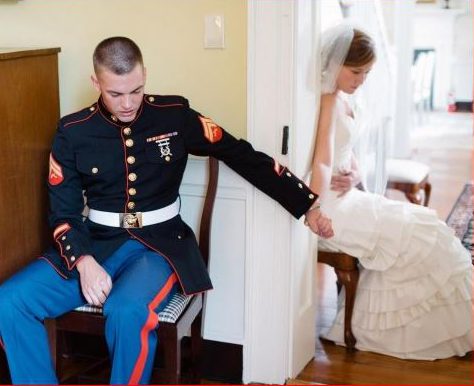
Marine prays with his wife on their wedding day

One of my favorite movies for explaining the differences between men and women is “High Noon” (1952).

Here’s the summary from IMDB:

Former marshal Will Kane (Gary Cooper) is preparing to leave the small town of Hadleyville, New Mexico, with his new bride, Amy (Grace Kelly), when he learns that local criminal Frank Miller has been set free and is coming to seek revenge on the marshal who turned him in. When he starts recruiting deputies to fight Miller, Kane is discouraged to find that the people of Hadleyville turn cowardly when the time comes for a showdown, and he must face Miller and his cronies alone.

The main theme of the film concerns Amy’s decision to break her wedding vows the very day that she makes them. She tells her new husband that he must bow to her will, and give up his male role as protector. When he explains his reasons for standing his ground to her practically (Miller will hunt them down) and morally (he has a duty protect the town), she dismisses both. She tells him that if he doesn’t run away from Miller and his gang with her, that she will get on the train and leave town by herself.

The intro of film shows the member’s of Miller’s gang assembling, and the words of the song explain the central conflict between husband and wife:

Here’s the part of the lyrics we care about:

The noonday train will bring Frank Miller.
If I’m a man I must be brave
And I must face that deadly killer
Or lie a coward, a craven coward,
Or lie a coward in my grave.

O to be torn ‘twixt love and duty!
S’posin’ I lose my fair-haired beauty!
Look at that big hand move along
Nearin’ high noon.

He made a vow while in State’s Prison,
Vow’d it would be my life or his’n
I’m not afraid of death, but O,
What will I do if you leave me?

Do not forsake me O my darlin’
You made that promise when we wed.
Do not forsake me O my darlin’
Although you’re grievin’, I can’t be leavin’
Until I shoot Frank Miller dead.

What’s interesting is that his new wife Amy apparently does not understand the meaning of wedding vows or the natural roles of good men as protectors of the weak, and fighters against evil. Although she vowed to stick by him and help him, the minute anything threatening appears that makes her feel unhappy, she abandons her vows and abandons her man. Let’s break down her mistakes now, using actual conversations from the movie.

First, she doesn’t understand or respect the man she married as a man:

Kane: [while riding out of town] It’s no good. I’ve got to go back, Amy.

Amy: Why?

Kane: This is crazy. I haven’t even got any guns.

Amy: Then let’s go on. Hurry.

Kane: No, that’s what I’ve been thinkin’. They’re making me run. I’ve never run from anybody before.

Amy: I don’t understand any of this.

Kane: [after looking at his vest watch] Well, I haven’t got time to tell ya.

Amy: Then don’t go back, Will.

Kane: I’ve got to. That’s the whole thing. [He turns the buggy around and rides back into town]

Her feelings and her desires for the world to be a happy place for her are so strong that they cloud her judgment.

Second, she doesn’t understand the threat posed by evil men:

More:

Kane: I sent a man up five years ago for murder. He was supposed to hang. But up North, they commuted it to life and now he’s free. I don’t know how. Anyway, it looks like he’s coming back.

Amy: I still don’t understand.

Kane: He was always wild and kind of crazy. He’ll probably make trouble.

Amy: But that’s no concern of yours, not anymore.

Kane: I’m the one who sent him up.

Amy: Well, that was part of your job. That’s finished now. They’ve got a new marshal.

Kane: He won’t be here until tomorrow. Seems to me I’ve got to stay. Anyway, I’m the same man with or without this. [He pins his badge on his vest]

Amy: Oh, that isn’t so.

Kane: I expect he’ll come lookin’ for me. Three of his old bunch are waiting at the depot.

Amy: That’s exactly why we ought to go.

Kane: They’ll just come after us, four of ’em, and we’d be all alone on the prairie.

Amy: We’ve got an hour.

Kane: What’s an hour?…What’s a hundred miles? We’d never be able to keep that store, Amy. They’d come after us and we’d have to run again, as long as we live.

Amy: No we wouldn’t, not if they didn’t know where to find us. Oh Will! Will, I’m begging you, please let’s go.

Kane: I can’t.

Amy: Don’t try to be a hero. You don’t have to be a hero, not for me.

Kane: I’m not trying to be a hero. If you think I like this, you’re crazy.

Instead of recognizing how her feelings are deceiving her about the threat and trusting her husband, she tries to force him to accept her mistaken view of reality by threatening to abandon him.

One of Kane’s ex-girlfriends has a talk with Amy, which helps her to understand who Kane is, and what is expected of her:

Amy: That man downstairs, the clerk, he said things about you and Will. I’ve been trying to understand why he wouldn’t go with me, and now all I can think of is that it’s got to be because of you…Let him go, he still has a chance. Let him go.

Helen: He isn’t staying for me. I haven’t spoken to him for a year – until today. I am leaving on the same train you are…What kind of woman are you? How can you leave him like this? Does the sound of guns frighten you that much?

Amy: I’ve heard guns. My father and my brother were killed by guns. They were on the right side but that didn’t help them any when the shooting started. My brother was nineteen. I watched him die. That’s when I became a Quaker. I don’t care who’s right or who’s wrong. There’s got to be some better way for people to live. Will knows how I feel about it.

Helen: I hate this town. I always hated it – to be a Mexican woman in a town like this.

Amy: I understand.

Helen: You do? That’s good. I don’t understand you. No matter what you say. If Kane was my man, I’d never leave him like this. I’d get a gun. I’d fight.

Amy: Why don’t you?

Helen: He is not my man. He’s yours.

Helen understands the need for a wife to stand by her man. But Amy’s response to evil is to shut her eyes and focus on feeling good and being happy. Notice that her “better way” is unspecified – it’s just a feeling she has that pacificism and no-violence will somehow “work” to stop evil. But in reality, pacifism is not a “better way” of dealing with evil – it does not work. Her pacifist response not only does not make evil go away, it actually encourages more evil. Weakness emboldens evildoers, and laying down your arms provokes them to do more evil. Will Kane knows this, but she won’t listen to him.

You can watch the final gunfight here, as well as Amy’s final decision:

So, this is why I really recommend this movie as a discussion-starter when you like a girl and are thinking of marrying her. It clarifies the essential problem with many young women today not being ready for marriage. To be fair, most women come around to respect their husbands and his different roles after they get married. However, the risk of divorce is so dangerous that it makes sense to bring it up for discussion before the marriage happens. Marriage is supposed to be an engine to serve God, and the success of that enterprise cannot be left to chance. You can’t just rely on the fact that she says the words of the vow, you have to check to see if she has a habit of keeping her promises when it goes against her own self-interest.

Ask yourself: Who are you, as a man? And does your woman accept that you have obligations to stand up to evil and do good ? Will she support you in your battle against evil, or will the marriage just be about her feelings and desires? I would especially beware of women who think that God is speaking to them through their feelings and desires. Look at her friends: are they practical and successful? Or are they irresponsible, unaccountable and reckless? Look at her father: does he have a plan for her, and does he lead her to be practical, frugal and hard-working? If you are not going to get an ally and a supporter in a wife, then you will not be able to serve God well, as a married man. Think about it.

Why is it so hard for a working man to provide for a family these days?

Welfare spending
Welfare spending

Here’s my argument which answers the question:

  1. Feminism was behind no-fault divorce.
  2. Making it easier to divorce means that more divorces will occur.
  3. Marital instability causes women to vote for bigger government.
  4. Unmarried women vote mostly for Democrats.

*Please note that I am talking about unmarried (never married, divorced) women throughout this post.

Here’s the evidence for each point.

1. Feminism was behind no-fault divorce, according to this feminist, pro-no-fault-divorce writer.

Excerpt:

Households of 2010 don’t look quite like they did in 1969, when no-fault divorce actually was a controversial topic and these counter-arguments held some weight. The working dad/stay-at-home mom model of the middle class has been replaced by two-parent earner households and a growing number of working mom/stay-at-home dad arrangements. In working poor and impoverished families, the one-parent provider model was never the norm. No-fault divorce seemed scary when it had never before existed, but the truth is that its introduction was long overdue. Feminist groups at the time supported no-fault divorce, as it provided women an escape hatch from desperately unhappy marriages in a society where they were already disadvantaged on almost every level, regardless of their marital status. Imagine an abusive marriage in 1968, when the court-savvy abuser could actually force the victim to stay in the relationship forever. Imagine that now, and you know why domestic violence attorneys are in full support of introducing no-fault divorce to New York. And the judges aren’t the only problem.

Note that the author of this piece thinks that it is not women’s fault that they choose men who they then want to divorce. It’s not the woman’s fault that she is unhappy with the man she courted with and then chose and then made vows to – women need a no-fault escape hatch, and children do fine without fathers.

2. Easier divorces means more divorces.

Abstract:

This paper analyzes a panel of 18 European countries spanning from 1950 to 2003 to examine the extent to which the legal reforms leading to “easier divorce” that took place during the second half of the 20th century have contributed to the increase in divorce rates across Europe. We use a quasi-experimental set-up and exploit the different timing of the reforms in divorce laws across countries. We account for unobserved country-specific factors by introducing country fixed effects, and we include country-specific trends to control for timevarying factors at the country level that may be correlated with divorce rates and divorce laws, such as changing social norms or slow moving demographic trends. We find that the different reforms that “made divorce easier” were followed by significant increases in divorce rates. The effect of no-fault legislation was strong and permanent, while unilateral reforms only had a temporary effect on divorce rates. Overall, we estimate that the legal reforms account for about 20 percent of the increase in divorce rates in Europe between 1960 and 2002.

It seems obvious, but more evidence never hurts. About 70% of divorces are initiated by women, either because they chose to marry the wrong man, or because they are unhappy with the right man.

3. Marital instability causes women to vote for bigger government for security.

Excerpt:

Giving women the right to vote significantly changed American politics from the very beginning. Despite claims to the contrary, the gender gap is not something that has arisen since the 1970s. Suffrage coincided with immediate increases in state government expenditures and revenue, and these effects continued growing as more women took advantage of the franchise. Similar changes occurred at the federal level as female suffrage led to more liberal voting records for the state’s U.S. House and Senate delegations. In the Senate, suffrage changed voting behavior by an amount equal to almost 20 percent of the difference between Republican and Democratic senators. Suffrage also coincided with changes in the probability that prohibition would be enacted and changes in divorce laws.

[…]More work remains to be done on why women vote so differently, but our initial work provides scant evidence that it is due to self-interest arising from their employment by government. The only evidence that we found indicated that the gender gap in part arises from women’s fear that they are being left to raise children on their own (Lott and Kenny 1997). If this result is true, the continued breakdown of the family and higher divorce rates imply growing political conflicts between the sexes. 19

Bigger government must be paid for by higher taxes, of course, which makes it harder for one working man’s income to provide for a family. In fact, feminists wanted men to be displaced as sole-providers. They would prefer that women are “equal” to men, and that means making women get out and work like men. Feminists had every reason to want bigger government and higher taxes to make traditional single-earner families unfeasible financially. They did it for equality.

4. Women are in fact observed to vote for bigger government.

Excerpt:

On Tuesday, the nation made history. It made history in electing the first African American president; it made history in building a bigger margin for the first female Speaker of the House; it made history in delivering the biggest Democratic margin since 1964; it made history in sending a record number of people to the polls and the highest percentage turnout since the 1960 election. Analysts will spend the next few months sifting through the data, trying to figure out what happened and why. Historians will likely spend the next several years and decades studying this election, as well. But one thing is immediately clear. Unmarried women played a pivotal role in making this history and in changing this nation. They delivered a stunning 70 to 29 percent margin to Barack Obama and delivered similarly strong margins in races for Congress and the U.S. Senate. Although unmarried women have voted Democratic consistently since marital status has been was tracked, this election represents the highest margin recorded and a 16-point net gain at the Presidential level from 2004.

In fact, there was a recent (2011) study showing that unmarried women do in fact vote for higher taxes and more government as a substitute for a husband’s provider role.

Abstract:

The last three decades have witnessed the rise of a political gender gap in the United States wherein more women than men favor the Democratic party. We trace this development to the decline in marriage, which we posit has made men richer and women poorer. Data for the United States support this argument. First, there is a strong positive correlation between state divorce prevalence and the political gender gap – higher divorce prevalence reduces support for the Democrats among men but not women. Second, longitudinal data show that following marriage (divorce), women are less (more) likely to support the Democratic party.

What follows from voting Democrat?

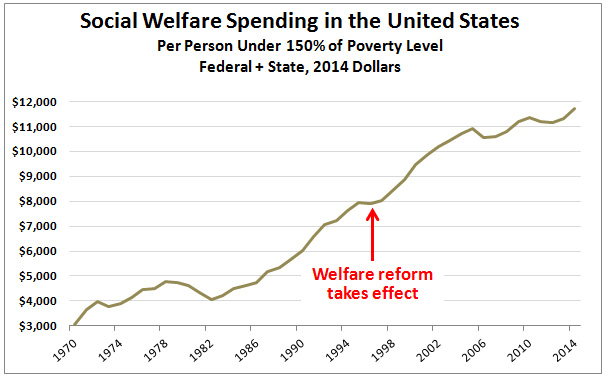
Since the Democrats took the House and Senate in 2006, and then the Presidency in 2008, the national debt has more than doubled from about 8 trillion to 20 trillion. A lot of that money was spent in welfare for single mothers, which only makes the women and their fatherless children more dependent on government. Children raised in unmarried home are far less likely to marry themselves, and to be independent of government. Which means that they will vote for bigger government when they start to vote, since they can’t make it through life on their own strength.

If more people vote for Democrats then we will get higher taxes to pay for all the government spending. Higher taxes means that a married man can no longer retain enough of his earnings to support a family. And that means his wife has to work, and that means that his children will learn what the government schools decide they should learn – so that all the children will be equal and think the same (pro-government) thoughts. This should not be controversial, because it is what it is. But if we want to talk about the decline of marriage honestly, then we need to be talking to single women about how they choose men, when they have sex with men, and how they vote at election time. You really can’t have it all.