In a recent study published this July in American Sociological Review, Harvard sociology professor Alexandra Killewald, Ph.D., analyzed data on 6,309 heterosexual married couples from the 1968 to 2013 waves of the Panel Study of Income Dynamics (PSID). She looked specifically at the potential effects on marital stability of “spouses’ division of labor, overall financial resources, and wives’ economic prospects following divorce,” comparing couples married before 1975 to those married in 1975 or later (through 2011).
[…]Killewald found that for couples married in 1975 or later, marriages in which the husband was not employed full-time were one-third more likely to divorce. Specifically, a husband who was not employed full-time experienced a “3.3 percent predicted probability of divorce the following year, compared to 2.5 percent if he is employed full-time.”
[…]Killewald is certainly not the first to find an association between men’s employment and marital stability. A study conducted by three economists and published in 2015 found that “In couples where the wife earns more than the husband, the wife spends more time on household chores; moreover, those couples are less satisfied with their marriage and are more likely to divorce.”
And an earlier study by Liana C. Sayer, Paula England, Paul Allison and Nicole Kangas found that when a husband is “nonemployed” (defined as not working at all), both the husband and the wife are more likely to end a marriage. In an email interview with IFS, one of the study’s co-authors, New York University sociology professor Paula England, explained her findings.
“The innovation of our study was to look separately at what predicts a divorce wanted more by the woman versus a divorce wanted more by the man,” England wrote. “We found that a nonemployed man predicts either the woman leaving the man or the man leaving the woman.”
She continued, “Killewald’s data just show her if they got divorced, not who left. We found that women’s employment doesn’t make men leave more, and it only makes women leave more when they are unhappy in the marriage.”
People sometimes ask me why I have all these rules and best practices when it comes to relationships and marriage plans. You know: men must have STEM degrees, no sex before marriage, men have to approach women by speaking to fathers first, etc. Well, why have all these rules? Why not just do what feels good? Why not just do what my peers will approve of?
The answer is this: don’t get your ideas about relationships and marriage from your feelings, your peers or the culture. Think for yourself.
I didn’t get my idea of how courting and marriage works from a culture that dismisses all of the ancient wisdom about love and marriage in favor of the trends of a culture dominated by ideologies that emphasize pleasure over wisdom. The right way to learn about romance, love, marriage and parenting is to go the classics, and then to the scientific studies. We have to learn how the world really works, and abide by the best practices that we find in the classics and in the peer-reviewed publications. And we have to be willing to say no to feelings and friends and even family, when the classics and the peer-reviewed literature say something different. Peer-reviewed studies matter: we cannot escape them by feelings or by peer approval or by cultural trends.
The big problem with this Peter Pan, Disney princess view of relationships popular with women (Christian and non-Christian) is children. Children deserve to have parents who are wise and self-controlled, willing to do things the right way. You can’t break all the rules and then expect things to somehow magically work out because you feel that they will somehow. The rules are there for a reason. If a man cannot demonstrate that he is serious about the husband role by showing you a resume with 5 years of full-time private sector experience in a STEM or vocational job, and $50,000 net worth, then he’s not fit for the role of husband. Women need to rule out every man who has not demonstrated his ability as a provider and saver, then choose from the ones who are left by evaluating for other criteria. Feelings of attraction based on “hot” appearance, non-judgmentalism, liberal politics and lack of leadership, (which often goes along with lack of planning), are not signs that a man is qualified for husband and father roles. Women today have things exactly backwards when choosing men. If your goal is marriage, choose a man who has demonstrated ability to do marriage tasks – like working full time and not wasting all his earnings on fun and thrills.
Making it easier to divorce means that more divorces will occur.
Marital instability causes women to vote for bigger government.
Unmarried women vote mostly for Democrats.
When government spending increases for social programs and welfare, then taxes must be raised to pay for it. When taxes rise, men keep too little of their salaries to hold onto the provider role.
*Please note that I am talking about unmarried (never married, divorced) women throughout this post.
Households of 2010 don’t look quite like they did in 1969, when no-fault divorce actually was a controversial topic and these counter-arguments held some weight. The working dad/stay-at-home mom model of the middle class has been replaced by two-parent earner households and a growing number of working mom/stay-at-home dad arrangements. In working poor and impoverished families, the one-parent provider model was never the norm. No-fault divorce seemed scary when it had never before existed, but the truth is that its introduction was long overdue. Feminist groups at the time supported no-fault divorce, as it provided women an escape hatch from desperately unhappy marriages in a society where they were already disadvantaged on almost every level, regardless of their marital status. Imagine an abusive marriage in 1968, when the court-savvy abuser could actually force the victim to stay in the relationship forever. Imagine that now, and you know why domestic violence attorneys are in full support of introducing no-fault divorce to New York. And the judges aren’t the only problem.
Note that the author of this piece thinks that it is not women’s fault that they choose men who they then want to divorce. It’s not the woman’s fault that she is unhappy with the man she courted with and then chose and then made vows to – women need a no-fault escape hatch, and children do fine without fathers.
This paper analyzes a panel of 18 European countries spanning from 1950 to 2003 to examine the extent to which the legal reforms leading to “easier divorce” that took place during the second half of the 20th century have contributed to the increase in divorce rates across Europe. We use a quasi-experimental set-up and exploit the different timing of the reforms in divorce laws across countries. We account for unobserved country-specific factors by introducing country fixed effects, and we include country-specific trends to control for timevarying factors at the country level that may be correlated with divorce rates and divorce laws, such as changing social norms or slow moving demographic trends. We find that the different reforms that “made divorce easier” were followed by significant increases in divorce rates. The effect of no-fault legislation was strong and permanent, while unilateral reforms only had a temporary effect on divorce rates. Overall, we estimate that the legal reforms account for about 20 percent of the increase in divorce rates in Europe between 1960 and 2002.
It seems obvious, but more evidence never hurts. About 70% of divorces are initiated by women, either because they chose to marry the wrong man, or because they are unhappy with the right man.
Giving women the right to vote significantly changed American politics from the very beginning. Despite claims to the contrary, the gender gap is not something that has arisen since the 1970s. Suffrage coincided with immediate increases in state government expenditures and revenue, and these effects continued growing as more women took advantage of the franchise. Similar changes occurred at the federal level as female suffrage led to more liberal voting records for the state’s U.S. House and Senate delegations. In the Senate, suffrage changed voting behavior by an amount equal to almost 20 percent of the difference between Republican and Democratic senators. Suffrage also coincided with changes in the probability that prohibition would be enacted and changes in divorce laws.
[…]More work remains to be done on why women vote so differently, but our initial work provides scant evidence that it is due to self-interest arising from their employment by government. The only evidence that we found indicated that the gender gap in part arises from women’s fear that they are being left to raise children on their own (Lott and Kenny 1997). If this result is true, the continued breakdown of the family and higher divorce rates imply growing political conflicts between the sexes. 19
Bigger government must be paid for by higher taxes, of course, which makes it harder for one working man’s income to provide for a family. In fact, feminists wanted men to be displaced as sole-providers. They would prefer that women are “equal” to men, and that means making women get out and work like men. Feminists had every reason to want bigger government and higher taxes to make traditional single-earner families unfeasible financially. They did it for equality.
On Tuesday, the nation made history. It made history in electing the first African American president; it made history in building a bigger margin for the first female Speaker of the House; it made history in delivering the biggest Democratic margin since 1964; it made history in sending a record number of people to the polls and the highest percentage turnout since the 1960 election. Analysts will spend the next few months sifting through the data, trying to figure out what happened and why. Historians will likely spend the next several years and decades studying this election, as well. But one thing is immediately clear. Unmarried women played a pivotal role in making this history and in changing this nation. They delivered a stunning 70 to 29 percent margin to Barack Obama and delivered similarly strong margins in races for Congress and the U.S. Senate. Although unmarried women have voted Democratic consistently since marital status has been was tracked, this election represents the highest margin recorded and a 16-point net gain at the Presidential level from 2004.
In fact, there was a recent (2011) study showing that unmarried women do in fact vote for higher taxes and more government as a substitute for a husband’s provider role.
Abstract:
The last three decades have witnessed the rise of a political gender gap in the United States wherein more women than men favor the Democratic party. We trace this development to the decline in marriage, which we posit has made men richer and women poorer. Data for the United States support this argument. First, there is a strong positive correlation between state divorce prevalence and the political gender gap – higher divorce prevalence reduces support for the Democrats among men but not women. Second, longitudinal data show that following marriage (divorce), women are less (more) likely to support the Democratic party.
What follows from voting Democrat?
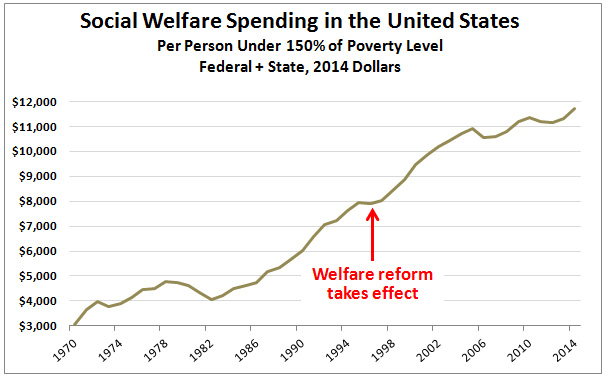
Since the Democrats took the House and Senate in 2006, and then the Presidency in 2008, the national debt has more than doubled from about 8 trillion to 20 trillion. A lot of that money was spent in welfare for single mothers, which only makes the women and their fatherless children more dependent on government. Children raised in unmarried home are far less likely to marry themselves, and to be independent of government. Which means that they will vote for bigger government when they start to vote, since they can’t make it through life on their own strength.
If more people vote for Democrats then we will get higher taxes to pay for all the government spending. Higher taxes means that a married man can no longer retain enough of his earnings to support a family. And that means his wife has to work, and that means that his children will learn what the government schools decide they should learn – so that all the children will be equal and think the same (pro-government) thoughts. This should not be controversial, because it is what it is. But if we want to talk about the decline of marriage honestly, then we need to be talking to single women about how they choose men, when they have sex with men, and how they vote at election time. You really can’t have it all.
My favorite painting: “Godspeed” by Edmund Blair Leighton, 1900
Matt Walsh writes a popular blog where he sometimes talks about male-female relationships. I got the impression that he was writing too much about how to blame men, and not enough about the policies and practices that provide incentives for men to underperform, e.g. – mostly female teachers, unfair divorce laws, stimulus spending geared towards women, etc. So imagine my surprise when I came across this article about men and their need for respect.
Matt is concerned that men are hearing too many negative messages in the culture, and not getting enough respect for what they do right.
He writes:
These cultural messages aren’t harmful because they hurt my manly feelings; they’re harmful because of what they do to young girls. Society tells our daughters that men are boorish dolts who need to be herded like goats and lectured like school boys. Then they grow up and enter into marriage wholly unprepared and unwilling to accept the Biblical notion that “wives should submit to their husbands” because “the husband is the head of the wife.” [Ephesians 5]
It is a fatal problem, because the one thing that is consistently withheld from men and husbands — respect — is the one thing we need the most.
Yes, need. We need respect, and that need is so deeply ingrained that a marriage cannot possibly survive if the man is deprived of it.
Often, people will say that a husband should only be respected if he “earns” it. This attitude is precisely the problem. A wife ought to respect her husband because he is her husband, just as he ought to love and honor her because she is his wife. Your husband might “deserve” it when you mock him, berate him, belittle him, and nag him, but you don’t marry someone in order to give them what they deserve. In marriage, you give them what you’ve promised them, even when they aren’t holding up their end of the bargain.
OK really, one last quote from Matt:
Respect is our language. If it isn’t said with respect, we can’t hear it. This is why nagging is ineffective and self defeating. This is why statements made in sarcastic tones, or with rolling eyes, will never be received well. We have a filter in our brains, and a statement made in disrespect will be filtered out like the poison it is.
Men are notoriously reluctant to share feelings or display vulnerability. Many times, we keep those inner thoughts locked away — our feelings guarded and hidden — because we know we are not respected. A man will never be vulnerable to someone who doesn’t respect him. Never.
A man isn’t satisfied or content if he isn’t respected. If he can’t find respect where he is, he will seek it somewhere else. This can have disastrous implications for a relationship, but it applies in other areas of life as well. A man is much more likely to stay in a low paying job, a physically demanding job, a dangerous job, or a tedious job, than a job where he isn’t respected.
I’m only emphasizing this because I think it might actually be news to some people. Society does not permit men to be vocal about their need for respect, so the need is often ignored.
What I’ve found in speaking to women about this is that all the married and divorced women know about this need that men have. And by and large, they agree with it, too. But that is much rarer among single women, which is why men need to be ready to explain their needs and feelings. And women need to allow them to do that and then provide what men need in order to keep them performing.
Let’s take a quick look at the Bible, because that’s always a good thing to do when you want the truth about these things.
22 Wives, be subject to your own husbands, as to the Lord.
23 For the husband is the head of the wife, as Christ also is the head of the church, He Himself being the Savior of the body.
24 But as the church is subject to Christ, so also the wives ought to be to their husbands in everything.
25 Husbands, love your wives, just as Christ also loved the church and gave Himself up for her,
26 so that He might sanctify her, having cleansed her by the washing of water with the word,
27 that He might present to Himself the church in all her glory, having no spot or wrinkle or any such thing; but that she would be holy and blameless.
28 So husbands ought also to love their own wives as their own bodies. He who loves his own wife loves himself;
29 for no one ever hated his own flesh, but nourishes and cherishes it, just as Christ also does the church,
30 because we are members of His body.
31 For this reason a man shall leave his father and mother and shall be joined to his wife, and the two shall become one flesh.
32 This mystery is great; but I am speaking with reference to Christ and the church.
33 Nevertheless, each individual among you also is to love his own wife even as himself, and the wife must see to it that she respects her husband.
Some women get scared by that, but they shouldn’t be, because women get to pick their husbands, so just pick someone whose leadership you actually respect. Believe it or not, it is actually very comforting to co-operate with someone who knows what he is doing, and has demonstrated that through his past decisions.
And now for my opinion about this topic.
To start, remember that men are supposed to be good at the following roles:
protecting
providing
moral leader
spiritual leader
If a woman sees a man – any man – working away at these tasks so that he can solve her problems with something more than confident promises about the future, that’s the time to practice respecting him. All men need to be recognized and encouraged in these areas, by all woman who care that men are masculine.
When I think of protecting, there is obviously the physical protection, but there is also the protection from lies and bad decisions. For protection, what I end up doing most is analyzing decisions for women and then giving my recommendation. I have 12 young people I mentor, men and women, who are in undergraduate or graduate school. My job is to make sure that they are not studying garbage subjects, and working during the summer months. I am proud to say that the 7 women I advise are all in STEM areas, and that took some convincing. Why is this protection? Because women need to not starve, and they need to not feel pressured to settle for a guy because they can’t be financially independent by themselves. I am not a feminist, but I do think that women make better wives when they study hard subjects and do hard jobs. It shapes their character so that they are easier to reason with, less fun-focused, and more able to perform hard work without complaint. I also advise women not to waste money of pursuing fun and thrills when they are young, and instead advise them to save and invest it early. One of the young ladies I mentor just finished her BS in computer science, and just finished her first year of an MS in computer science, worked as a TA and in the summers as a software tester, just finished an internship with a great software company for the summer, and she has an account with Fidelity, just like me.
When I think of providing, I think of the man’s ability to work for money. It starts in high school, in the summers or evenings and goes on right to retirement. I did a summer internship with a huge telecom firm when I was in my sophomore year of high school, so it is possible. A man should not rely on others for money, he needs to be independent. A man should not find paid work “boring” and “meaningless”. In fact, part of what it means to be a man is to do things that you don’t feel like doing, so that you can provide for others. A man does not spend his money on alcohol or travel or other entertainments. He will have plenty to spend it on when he gets older – his family or maybe charity. A man buys things for others that will help them achieve goals – solving problems for others with his earned income. For example, if a woman has surgery on both of her hands, and cannot lug the vacuum up and down the stairs to clean up her cat’s fur, then the man buys her a corded hand vacuum, which is much lighter for her to use every day, (he knows she has OCD and wants everything clean). Money makes a woman’s life easier, freeing her up to do more important things. It’s important for a man to get started early earning money, because earnings can be invested to produce a return. A man’s confidence about the future has no cash value. A woman’s feelings about a man’s potential future earnings has no cash value. Cash has cash value. There is no such thing as assumed future income, there is only a resume, which predicts future earned income based on the reality of past earned income.
A good moral leader is not just good at being moral and spiritual himself, but of convincing others to be moral and spiritual. He is able to present his views on moral issues in a convincing way, especially to non-Christians. He studies philosophy (in his spare time! not as a job because it does not pay!) and is aware of research that helps him to make his point about topics like abortion and marriage. He has an interest in current events and politics, and is able to talk about legislation, policies and court cases related to his worldview. He is able to solve problems that could impact a person’s ability to be moral or spiritual in the future. For example, consider that some people really do lose their faith when experiencing evil and suffering. A good spiritual leader advises a woman to not make plans that are likely to fail, so that she will never blame God for her own poor decisions. A good moral leader convinces a woman to be serious about marriage early, so that she is not tempted to become a single mother by choice later. Those last two cases are cases I actually had to face, and I won the first one (she dumped a complete loser of a man and married a really great one), and lost the second (she became a single mother by choice and had a fatherless son). But the point is that there is more to being a moral leader than reciting moral rules. And there is more to being a spiritual leader than reciting Bible verses. A good leader proves he can lead by pushing the people he leads into real world achievements.
These are the things that a good woman looks for in a man, and when she finds them, she accords a man respect in those areas.



 WINTERY KNIGHT