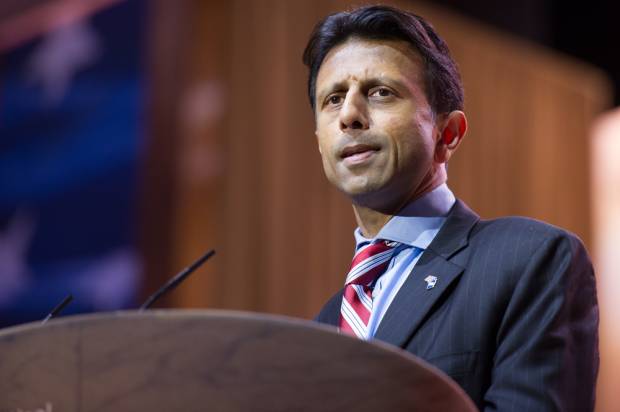
William Lane Craig explains the purpose of prayer

This is from a recent Q&A from his web site Reasonable Faith.

Here’s the question:

My question is this: what is the point of prayer? Here prayer is defined as an attempt to communicate with God.

God either can read our thoughts or he cannot. If he can read our thoughts, there is surely no need to try to transmit or broadcast them to him as he already knows what they are. If he cannot read our thoughts, then any thought-based effort to contact him is futile. It doesn’t matter what type of prayer it is (eg petition, thanksgiving, repentance), there is no point in making any effort to send it up to him.

Of course, Christianity generally holds that God is omniscient and therefore able to read our thoughts, so the first of these scenarios would be the applicable one. The characteristic of omniscience makes the concept of prayer all the more redundant as it means God already knows any information that might be communicated to him, and exactly what the best thing is to do about it, so prayer could not in any way influence his decisions.

I am well aware that the Bible commands us to pray in numerous instances, but in the light of this argument this strikes me as an incredibly arbitrary thing for a good God to command, and thus makes the reliability of the Bible all the more questionable to me.

Currently it seems to me that the idea of prayer is most sensibly explained as an addictive placebo that gives people a greater sense of control over their circumstances than they actually have.

Dr. Craig’s response is long, but here is the key part:

Yes, God can read our thoughts. So how is that problematic for the spiritual discipline of prayer? You say, “there is surely no need to try to transmit or broadcast them to him as he already knows what they are.” Hold on, Joe! Seriously, do you think prayer is a matter of providing God information? You defined prayer as communication with God. You don’t communicate with another person through a third-person relationship. You enter into what has been called an “I-thou” relationship. You speak to another person, not just about that person. Your girlfriend or wife would be decidedly unimpressed if you rationalized never telling her “I love you” on the grounds that she already knows that! Anybody that obtuse is on his way to a break-up! Two people who are in love with each other want to speak to each other, to build an intimate relationship with each other.

So, sure, God reads my mind, and that enables me to pray to Him at any moment, even when audible prayers would be inappropriate. I can shoot up a thought-prayer, “Thank you, Lord!” or “God, give me wisdom!” at a moment’s notice. This is what people in a relationship do. Can you imagine anyone so obtuse as to say, “I don’t have to thank John for what he did for me because he already knows I’m grateful”? Or “I don’t have to apologize to Susan because she already knows I’m sorry”?

Moreover, did it not occur to you that such personal communication may be good for you? I-thou relationships open you up as a person, to make you a more loving, transparent, and vulnerable person. Prayer to God is the same way. God knows what is good for us and so wants us to talk to Him.

But in addition to that – yes, God can answer prayers:

You have a second, different objection to prayer: “omniscience makes the concept of prayer all the more redundant as it means God already knows any information that might be communicated to him, and exactly what the best thing is to do about it, so prayer could not in any way influence his decisions.” This is an objection to the efficacy of prayer. What the objection overlooks is that God can take prayers (or the lack thereof) into account in His providential planning of the world. Knowing that Joe would freely pray in a certain set of circumstances, God may actualize a world in which Joe’s prayers are answered; but had God known that Joe would not pray, God may have actualized something else instead. Prayers, then, are not an effort to change God’s mind. Rather God takes account of prayers in choosing which world to actualize. Prayers thus make a counterfactual difference: if I were not to pray, then something else would have been the case instead. Knowledge of this sort is called “middle knowledge,” and there’s a lot on this website about this fascinating topic.

I have to tell you that in a poll of some of my male apologist friends, we all struggle with prayer. I can’t say why they struggle with prayer, but in my case it’s just that I have trouble understanding how big God is and how much more he can do – especially when there are so many problems and I can’t work on them all myself. My personality is very practical. If something needs to be done, I do it. If something needs to be said, I say it. The best thing to do when any dragon appears is to attack it. The best thing to do when a princess is in distress is to rescue her. I do not call for help when there is anything for me to do. Prayer is like a last resort!

Having said that, I do understand that God wants to partner with me and that means that my perception of him changes as I work my way through the standard prayer practices… acknowledging who God is, thanking him for what I have, asking him for what I need, asking him to defend himself and act to make people aware of him and his character, etc. I do struggle with it, though. It’s not as easy for me to do as go to church or read the Bible. Apologetics, of course, is no problem for me! I wish someone would encourage me to pray.

I think the middle knowledge point he raised is key, though – God, prior to creating the world can factor in all of your prayers that you freely pray, because he foreknows everything you will do in the circumstances (time and place) that he places you in. So, have confidence. Even if he doesn’t answer you the way you expect, your prayers were heard.

Aside from all that, I do think that God is pleased when I pray about my concerns to him. It shows him how I am changing, and have his priorities in my mind, and not my own. If you are interested in pleasing God, then talking to him about your concerns and priorities is a good thing to do, especially as your concerns and priorities become more like his.

Differences between moving in together / living together and getting married?

Marriage and family
Marriage and family

Dad sent me this article from the Daily Signal. Let’s look at it, then I’ll give my opinion on this research.

Five points:

  1. Cohabiting couples are more prone to break up (and break up for good) than married couples
  2. Even after marrying, women who cohabitated prior to marriage are more apt to separate or divorce than those who did not.
  3. Men who cohabit tend to make less money than their married counterparts
  4. Among young mothers, married women are more financially secure than cohabiting women
  5. Cohabiting couples report more depression and more alcohol problems than married couples

The key points for me:

1. Cohabiting couples are more prone to break up (and break up for good) than married couples.  In the May 2003 issue of the Journal of Marriage and Family Study, Georgina Binstock and Arland Thornton found that, in the first year of living together, couples who cohabited were eight times more likely to end their relationships than those who were married.  In the second and third years, those rates decreased to four and three times more likely, respectively.  And when it comes to getting back together after a breakup, cohabiting couples were about a third less likely to get back together again.

2. Even after marrying, women who cohabitated prior to marriage are more apt to separate or divorce than those who did not.  One study demonstrated that for women who lived with their partners before marriage, it was 33 percent more likely for their marriages to result in separation or divorce.

5. Cohabiting couples report more depression and more alcohol problems than married couples.  Even when controlling for race, age and gender, cohabiting individuals reported higher levels of depression than married ones, 2.8 points according to one study.  In another study, cohabiting individuals were three times more likely to report having problems with alcohol consumption than those who were married, as well as 25 percent more problems than single people who did not cohabit.  Cohabiting women indicated more alcohol problems than married women—and men who cohabited said they had more alcohol problems than both married and single men.

This article from the UK Daily Mail that Dina sent me says that 9 in 10 children being born now will see their parents split by the time the children reach 16.

It says:

Nearly nine out of ten babies born to co-habiting parents this year will have seen their family break up by the time they reach the age of 16, says a study.

Half of all children born this year will not be living with both natural parents when they reach their mid-teens, and almost all those who suffer family breakdown will be the children of unmarried parents, added the report.

The study, based on figures from the national census and large-scale academic surveys, extrapolates from current trends and calculates that just 9 per cent of babies born to cohabiting couples today will still have their parents living together by the time they are 16.

The report adds that the declining popularity of marriage and the rise of co-habitation will damage the lives of increasing numbers of children.

The figures were produced by researcher Harry Benson, of the Marriage Foundation think tank, who said: ‘The report provides solid evidence that married parents are more stable than unmarried parents.

[…]The study by the think  tank, which is headed by High Court family division judge Sir Paul Coleridge, was based  on findings from the census of 2001 and recent results from Understanding Society, a government-backed survey which charts the lives of people in 40,000 homes.

The report said that in 2001, four out of ten teenagers aged 15 were not living with both parents, and among the parents of 15-year-olds who stayed together, 97 per cent were married.

The article is from 2013, but I don’t see why things would have gotten any better. We are even more supportive as a society now of adult selfishness and less inclined to take care in our courting so that children are not deprived of fathers and/or mothers through our poor decision making.

So I’ve had experiences mentoring two women who started off as Christian, fell away from Christianity, then returned to the faith. Both of them spend time cohabitating with atheist men. So when I read numbers like the ones above, I want to warn Christian parents. You should not assume that your daughter will always be a Christian when you are raising them. You have to talk to them about these issues and share these numbers with them. Although you can start by telling them what the Bible says, you have to go on from there to explain what a romantic relationship looks like between Christians, and what happens to people who reject the Bible and start having premarital sex.

I am writing this as a virgin who had no trouble with the Bible. I take the rules on sexuality seriously. I am saving my first kiss on the lips for my engagement. But the reason why this is so easy for me, and so hard for others is because I am being bounded by evidence. I am not making decisions while drunk. I am not embracing a cultural view of what a good romantic partner is. I am not getting my moral rules and boundaries from my peers or from the culture. There is a lot more to building your defenses than just quoting the Bible. Lots of people quote the Bible, but they still end up raising fatherless children or having abortions. Parents, take the time to teach them the evidence.

Why didn’t Scott Walker finish his fourth year of college at Marquette University?

Wisconsin Governor Scott Walker

The Weekly Standard explains the terrible scandal – he got a job offer in his fourth year of college, and he took it.

Excerpt:

As Scott Walker surges in the 2016 GOP primary polls, Democrats and the mainstream media have taken a newfound interest in the well-known fact that the Wisconsin governor never received a college degree.

[…]Walker’s story about his departure from college has always been straightforward: He attended Marquette University in Milwaukee from 1986 to 1990, but in the spring of his fourth year he left Marquette “in good standing” in order to take a full-time job at the American Red Cross. He intended to finish, but couldn’t find the time.

[…]When he arrived at college, Walker threw himself into student government and campus politics, but was uninterested in class. The Post reports:

Even in politics class, Walker could appear disengaged.

“He seemed utterly bored,” said Michael Fleet, who taught him in a class on the politics of the Third World. Fleet said he’d hoped to get Walker into debates with the liberals in the room. But it didn’t work. Walker would only give occasional short speeches that made conservative arguments.

So Walker abandoned the pursuit of a political science degree not only to take a full-time job at the American Red Cross but also to launch his political career. In the fall of 1990, Walker ran his first campaign for the Wisconsin legislature. He knocked on 13,000 doors only to lose badly, but his longshot campaign set him up for a winning campaign in another legislative district in 1993. In 2002, he was elected (and re-elected twice) as county executive in overwhelmingly Democratic Milwaukee county and went on to win three gubernatorial elections between 2010 and 2014.

Look, I studied computer science, and I thought that was interesting, but if I were studying political science, I would quit it too – if someone offered me a job. Non-STEM programs are a waste of time and money, compared to a real job. The job experience is worth more. And if he left to work, then he could start running for office as soon as he stopped studying full-time. I think people on the left forget how much college costs compared to a job. If you are paying $15K a year for college, then making $45K instead is quite a swing in a positive direction.

I think people in the media are starting to go after Scott Walker, now, so everything gets put under a microscope.

The Weekly Standard also wrote about a New York Times hit piece on Walker that actually lied about his record.

Take a look:

New York Times columnist Gail Collins writes about Wisconsin governor Scott Walker’s recent speech in Iowa:

Mainly, though, The Speech was about waging war on public employee unions, particularly the ones for teachers. “In 2010, there was a young woman named Megan Sampson who was honored as the outstanding teacher of the year in my state. And not long after she got that distinction, she was laid off by her school district,” said Walker, lacing into teacher contracts that require layoffs be done by seniority.

All of that came as a distinct surprise to Claudia Felske, a member of the faculty at East Troy High School who actually was named a Wisconsin Teacher of the Year in 2010. In a phone interview, Felske said she still remembers when she got the news at a “surprise pep assembly at my school.” As well as the fact that those layoffs happened because Walker cut state aid to education [emphasis added].

Only one problem with that:

[T]he big error in Collins’s piece is her claim that “those layoffs happened because Walker cut state aid to education.” As you can see in the excerpt above, Collins is talking about teacher layoffs that occurred in 2010. Walker did not become governor until 2011. 

The truth is that Walker’s reforms actually saved teachers’ jobs. Right before the 2012 Wisconsin recall election, Walker’s Democratic opponent Tom Barrett couldn’t name a single school that had been hurt by Walker’s policies. When Walker’s 2014 Democratic opponent Mary Burke was asked to name any schools hurt by Walker’s collective bargaining reform, she relayed an anecdote she’d heard secondhand about one school. Burke’s story didn’t check out, and the superintendent of that school wrote a letter telling Burke she didn’t know what she was talking about.

The New York Times updated their article after two days, with a correction that didn’t go far enough, in my opinion.

Meanwhile, the knock on Walker is that he is not able to raise as much money as the RINO candidates.

The Wall Street Journal says boo to that:

Several GOP fundraisers from the financial-services industry and other Manhattan business sectors are hosting donor events for Mr. Walker, a likely presidential candidate, when he visits New York next week. The events show that while former Florida Gov. Jeb Bush and New Jersey Gov. Chris Christie have strong support in New York money circles, neither has a lock on the city’s big-dollar donors.” The report continues, “Several fundraisers who backed GOP nominee Mitt Romney in 2012 are now helping Mr. Walker, who is best known for challenging Wisconsin public-sector unions and winning three statewide elections in a presidential swing state.”

How is Walker doing in the polls? The International Business Times reports on a new Fox News poll:

Wisconsin Gov. Scott Walker is at the head of the class among possible 2016 Republican presidential candidates, according to a new Fox News poll. In a survey that asked respondents to assign letter grades to 10 Republicans who may mount a campaign, Walker received an average grade of “B.” Retired neurosurgeon Ben Carson and U.S. Sen. Marco Rubio, R-Fla., both received “B-” averages.

[…]Besides leading the Republican field in average grade, Walker also received the highest share of “A” grades among Republican voters at 18 percent. He was followed by Carson at 15 percent and former Arkansas Gov. Mike Huckabee at 12 percent. Ohio Gov. John Kasich got the lowest percentage of “A” grades among the 10 possible GOP candidates at 5 percent, while New Jersey Gov. Chris Christie got the highest percentage of “F” grades at 13 percent.

[…]The Fox News poll of 1,044 registered voters was conducted between Feb. 8 and Feb. 10. It has a margin of error of 3 percentage points.

If you want to hear a great introductory podcast on Scott Walker, I recommend listening to this 10-minute podcast on Scott Walker from the Weekly Standard. Get to know your Republican candidates now, don’t wait for the mainstream media to pick another Romney for you.

If you want to learn more about Scott Walker, I recommend Walker’s new book. I actually got the audio version, and it’s read by Governor Walker himself.

Related posts