
Category Archives: Videos

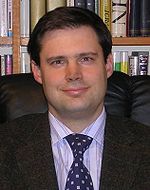
Peter J. Williams lectures on the historical reliability of the gospel narratives

Peter J. Williams
Peter J. Williams

Here’s the main lecture: (54 minutes)

And here’s the Q&A: (9 minutes)

About Peter Williams:

Peter J. Williams is the Warden (CEO) of Tyndale House and a member of the Faculty of Divinity in the University of Cambridge. He received his MA, MPhil and PhD, in the study of ancient languages related to the Bible from Cambridge University. After his PhD, he was on staff in the Faculty of Divinity, Cambridge University (1997–1998), and thereafter taught Hebrew and Old Testament there as Affiliated Lecturer in Hebrew and Aramaic and as Research Fellow in Old Testament at Tyndale House, Cambridge (1998–2003). From 2003 to 2007 he was on the faculty of the University of Aberdeen, Scotland, where he became a Senior Lecturer in New Testament and Deputy Head of the School of Divinity, History and Philosophy. In July 2007 he became the youngest Warden in the history of Tyndale House. He also retains his position as an honorary Senior Lecturer in Biblical Studies at the University of Aberdeen.

Summary of the lecture:

  • What if the stories about Jesus are legendary?
  • were the gospels transmitted accurately?
  • were the gospels written in the same place as where the events happened?
  • do the gospel authors know the customs and locations where the events happened?
  • do the gospels use the right names for the time and place where the events took place?
  • do the gospels disambiguate people’s names depending on how common those names were?
  • how do the New Testament gospels compare to the later gnostic gospels?
  • how do the gospels refer to the main character? How non-Biblical sources refer to Jesus?
  • how does Jesus refer to himself in the gospels? do the later Christians refer to him that way?
  • how does Jesus teach? do later Christians teach the same way?
  • why didn’t Jesus say anything about early conflicts in the church (the Gentiles, church services)?
  • did the writers of the gospels know the places where the events took place?
  • how many places are named in the gospels? how about in the later gnostic gospels?
  • are the botanical details mentioned in the gospels accurate? how about the later gnostic gospels?

And here are the questions from the audience:

  • how what about the discrepancies in the resurrection narratives that Bart Ehrman is obsessed with?
  • what do you think of the new 2011 NIV translation (Peter is on the ESV translation committee)?
  • how did untrained, ordinary men produce complex, sophisticated documents like the gospels?
  • is oral tradition a strong enough bridge between the events and the writers who interviewed the eyewitnesses?
  • what does the name John mean?
  • why did the gospel writers wait so long before writing their gospels?
  • do you think that Matthew and Luke used a hypothetical source which historians call “Q”?
  • which gospel do critical historians trust the least and why?

I really enjoyed watching this lecture. He’s getting some of this material from Richard Bauckham’s awesome book “Jesus and the Eyewitnesses”, so if you aren’t familiar with it, you can get an idea of what’s in it. Peter Williams is a lot of fun to listen to – an excellent speaker.

You can read an interview with Peter Williams here on Between Two Worlds.

And you can listen to the Peter Williams vs Bart Ehrman debate. That link contains a link to the audio of the debate as well as my snarky summary. It’s very snarky.

And Apologetics 315 also posted Peter Williams’ assessment of Bart Ehrman’s “Misquoting Jesus”.

Ryan T. Anderson defends marriage at Indiana House Judiciary Committee hearing

(the video is 11 minutes long)

The Heritage Foundation reports.

Excerpt:

Ryan T. Anderson, the William E. Simon Fellow at The Heritage Foundation, testified before the Indiana House Judiciary Committee yesterday on their proposed constitutional amendment to define marriage as the union of a man and woman.

The controversial bill, which would place the amendment on the state ballot and give citizens the right to vote about such an important matter, spurred a three-hour heated debate full of testimonies from both supporters and opponents.

Anderson,  co-author with Princeton’s Robert P. George and Sherif Girgis of the acclaimed book “What Is Marriage? Man and Woman: A Defense” which Justice Samuel Alito cited twice in his dissenting opinion in the Supreme Court case involving the Defense of Marriage Act, began his testimony by explaining what marriage is and why marriage matters. According to Anderson, the collapse of marriage over the past 50 years is directly tied to the over-expanded welfare state of the country, and lack of male figureheads in families.

“If the biggest social problem we face right now in the United States is absentee dads,” Anderson said, “How will we insist that dads are essential when the law redefines marriage to make fathers optional?”

The full testimony is here at the Public Discourse, and here is one part of it:

Part of this is based on the reality that there’s no such thing as parenting in the abstract: there’s mothering, and there’s fathering. Men and women bring different gifts to the parenting enterprise. Rutgers sociologist Professor David Popenoe writes, “the burden of social science evidence supports the idea that gender-differentiated parenting is important for human development and the contribution of fathers to childrearing is unique and irreplaceable.” He then concludes:

We should disavow the notion that mommies can make good daddies, just as we should the popular notion that daddies can make good mommies. The two sexes are different to the core and each is necessary—culturally and biologically—for the optimal development of a human being.

This is why so many states continue to define marriage as the union of a man and a woman, many doing so by amending their constitutions.

So why does marriage matter for public policy? Perhaps there is no better way to analyze this than by looking to our own president, President Barack Obama. Allow me to quote him:

We know the statistics: that children who grow up without a father are five times more likely to live in poverty and commit crime, nine times more likely to drop out of school, and twenty times more likely to end up in prison. They are more likely to have behavioral problems or run away from home, or become teenage parents themselves. And the foundations of our community are weaker because of it.

There is a host of social science evidence. We go through the litany and cite the studies in our book, but President Obama sums it up pretty well. We’ve seen in the past fifty years, since the war on poverty began, that the family has collapsed. At one point in America, virtually every child was given the gift of a married mother and father. Today, 40 percent of all Americans, 50 percent of Hispanics, and 70 percent of African Americans are born to single moms—and the consequences for those children are quite serious.

The state’s interest in marriage is not that it cares about my love life, or your love life, or anyone’s love life just for the sake of romance. The state’s interest in marriage is ensuring that those kids have fathers who are involved in their lives.

People who are honest in recognizing that fathers matter cannot press for a redefinition of marriage that makes fathers optional. Any policy that normalizes and celebrates gender-interchangeability is bad for children, and we should be favoring the rights of children over the selfishness of adults in our laws and policies. Period.

The rest of the article is a nice short summary of the case for traditional marriage. It addresses social issues like religious liberty, but it also addresses fiscal issues like the costs of social programs.

William Lane Craig lectures on naturalistic alternatives to the Big Bang

Here’s the lecture, which was given in 2004 at the University of Colorado, Boulder. A very liberal university!

This lecture might be a little advanced for beginners, but if you stretch your mind first, you shouldn’t tear anything. (Note: standard disclaimers apply if you do tear something!)

The description of the video states:

This is quite simply one of the best lectures William Lane Craig (a philosopher of science) has given. Craig explores the origins of the universe. He argues for a beginning of the universe, while refuting scientific models like the Steady State Theory, the Oscillating Theory, Quantum Vacuum Fluctuation Model, Chaotic Inflationary Theory, Quantum Gravity Theory, String Theory, M-Theory and Cyclic Ekpyrotic Theory.

And here is the description of the lecture from Reasonable Faith:

A Templeton Foundation lecture at the University of Colorado, Boulder, laying out the case from contemporary cosmology for the beginning of the universe and its theological implications. Includes a lengthy Q & A period which features previous critics and debate opponents of Dr. Craig who were in attendance, including Michael Tooley, Victor Stenger, and Arnold Guminski.

Craig has previously debated famous atheists Stenger and Tooley previously. And they both asked him questions in the Q&A time of this lecture. Imagine – having laid out your entire case to two people who have debated you before and who know your arguments well. What did they ask Craig, and how did he respond?

The scientific evidence

The Big Bang cosmology that Dr. Craig presents is the standard model for how the universe came into being. It is a theory based on six lines of experimental evidence.

Scientific evidence:

  1. Einstein’s theory of general relativity (GTR)
  2. the red-shifting of light from distant galaxies implies an expanding universe
  3. the cosmic background radiation (which also disproves the oscillating model of the universe)
  4. the second law of thermodynamics applied to star formation theory
  5. hydrogen-helium abundance predictions
  6. radioactive element abundance predictions

If you are looking for some detail on these evidences, here’s a re-cap of the three main evidences for the Big Bang cosmology from Caltech. (Numbers 2, 3 and 5 from the list above)

Excerpt:

Until the early 1900s, most people had assumed that the universe was fixed in size. New possibilities opened up in 1915, when Einstein formulated his famous general relativity theory that describes the nature of space, time, and gravity. This theory allows for expansion or contraction of the fabric of space. In 1917, astronomer Willem de Sitter applied this theory to the entire universe and boldly went on to show that the universe could be expanding. Aleksandr Friedmann, a mathematician, reached the same conclusion in a more general way in 1922, as did Georges Lemaître, a cosmologist and a Jesuit, in 1927. This step was revolutionary since the accepted view at the time was that the universe was static in size. Tracing back this expanding universe, Lemaître imagined all matter initially contained in a tiny universe and then exploding. These thoughts introduced amazing new possibilities for the universe, but were independent of observation at that time.

[…]Three main observational results over the past century led astronomers to become certain that the universe began with the big bang. First, they found out that the universe is expanding—meaning that the separations between galaxies are becoming larger and larger. This led them to deduce that everything used to be extremely close together before some kind of explosion. Second, the big bang perfectly explains the abundance of helium and other nuclei like deuterium (an isotope of hydrogen) in the universe. A hot, dense, and expanding environment at the beginning could produce these nuclei in the abundance we observe today. Third, astronomers could actually observe the cosmic background radiation—the afterglow of the explosion—from every direction in the universe. This last evidence so conclusively confirmed the theory of the universe’s beginning that Stephen Hawking said, “It is the discovery of the century, if not of all time.”

It’s probably a good idea to be familiar with these if you are presenting this argument, because experimental science is a reliable way of knowing about reality.

Published research paper

This lecture by Dr. Craig is based on a research paper published in an astrophysics journal, and was delivered to an audience of students and faculty, including atheist physicist Victor Stenger and prominent atheist philosopher Michael Tooley, at the University of Colorado at Boulder.

Here’s the peer-reviewed article that the lecture is based on.

Here’s the abstract:

Both cosmology and philosophy trace their roots to the wonder felt by the ancient Greeks as they contemplated the universe. The ultimate question remains why the universe exists rather than nothing. This question led Leibniz to postulate the existence of a metaphysically necessary being, which he identified as God. Leibniz’s critics, however, disputed this identification, claiming that the space-time universe itself may be the metaphysically necessary being. The discovery during this century that the universe began to exist, however, calls into question the universe’s status as metaphysically necessary, since any necessary being must be eternal in its existence. Although various cosmogonic models claiming to avert the beginning of the universe predicted by the standard model have been and continue to be offered, no model involving an eternal universe has proved as plausible as the standard model. Unless we are to assert that the universe simply sprang into being uncaused out of nothing, we are thus led to Leibniz’s conclusion. Several objections to inferring a supernatural cause of the origin of the universe are considered and found to be unsound.

The whole text of the article is posted online here.

If you want something to post on your Twitter or Facebook that is much shorter than this lecture, then you should check out this quick 4-minute explanation of the kalam argument.