Category Archives: Commentary

What is issue 2? Should you vote no on Ohio issue 2?

In the 2010 mid-term elections, Republican John Kasich won the governorship and promised to balance the state’s budget by reining in the state’s spending on salaries and benefits for public sector union employees. To accomplish this, the Ohio legislature pass Senate Bill 5. However, an effort is on the ballot to repeal the law, and Ohio voters will get a chance to keep or scrap the law on Tuesday, November 8th, 2011.

Here’s what Ohio’s State Issue 2 is all about:

Issue 2 makes some very fair and common sense requests of our government employees to give local communities the flexibility they need to get taxes and spending under control, while providing the essential services that we rely on.

  • It allows an employee’s job performance to be considered when determining compensation, rather than just awarding automatic pay increases based only on an employee’s length of service.
  • It asks that government employees pay at least 15 percent of the cost of their health insurance premium. That’s less than half of what private sector workers are currently paying.
  • It requires that government health care benefits apply equally to all government employees, whether they work in management or non-management positions. No special favors.
  • It asks our government employees to pay their own share of a generous pension contribution, rather than forcing taxpayers to pay both the employee and employer shares.
  • It keeps union bosses from protecting bad teachers and stops the outdated practice of laying off good teachers first just because they haven’t served long enough.
  • Finally, it preserves collective bargaining for government employees, but it also returns some basic control of our schools and services to the taxpayers who fund them, not the union bosses who thrive on their mismanagement.

Even under the reforms of State Issue 2, Ohio’s government employees will still receive better pay, better health care and better retirement benefits, on average, than the vast majority of Ohioans who work in the private sector.

There are a number of myths going around about Issue 2, and it’s important to set the record straight, so I’ll do that below.
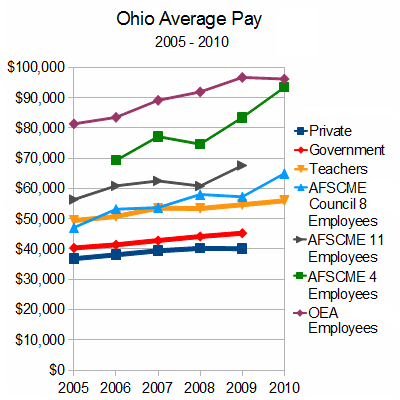
Ohio Average Pay: Public vs. Private
Ohio Average Pay: Public Unions vs. Private

Myths and truths about Ohio State Issue 2

Here’s a common myth:

State Issue 2 would “cut salaries and benefits.”

The truth:

Issue 2 would not cut salaries or benefits for any government employee. Employees would simply be asked to pay a modest share of their benefits, just like employees in the private sector do. For health care coverage, they would pay at least 15% of their overall plan. (Many local government employees currently pay less than 9% of their health care premium, while the average private sector worker pays upwards of 30%.) In addition, employees would be required to pay their personal share of a retirement plan (only 10%), rather than asking taxpayers to pay that share. That’s not too much to ask at a time when many private sector workers get no retirement benefit at all. Finally, Issue 2 requires that benefits apply equally to all public employees, so no one gets special treatment.

And another common myth:

State Issue 2 will eliminate government employee pensions.

The truth:

Government employees will still get a very generous pension benefit – an annual payment that averages their three highest annual salaries. That’s a pretty nice deal, when many private sector workers get no retirement benefit at all. State Issue 2 only ends a practice where some government union contracts require taxpayers to pick up the tab for BOTH the employer AND employee shares of a required pension contribution. In this economy, it’s simply not right to ask struggling taxpayers to foot the bill so government employees can get a free retirement. Issue 2 simply says government employees should pay their required share (10 percent) and taxpayers will contribute the employer share (14 percent).

Another myth:

State Issue 2 will cut teacher salaries.

The truth:

That’s one of the scare tactics government unions are using to turn people against these reforms. Nothing in Issue 2 determines salary levels. It only ends the practice of handing out automatic pay raises, or “step” increases, and longevity pay – or bonuses just for holding the job for a certain period of time. Issue 2 also asks that performance be added as a factor in teacher compensation, a goal President Barack Obama set out in his national education policy in 2009.

And another myth:

State Issue 2 will cost jobs

The truth:

Just the opposite is true. Ohio’s state and local tax burden ranks among the top third in the nation. As a result, companies large and small have left our state in pursuit of better tax incentives elsewhere, taking hundreds of thousands of jobs with them. If Ohio hopes to compete for new job growth, we have to make our state a more affordable place to live, work and do business. That starts with getting the cost of government under control so we can direct more of our limited resources into economic development, community revitalization and better schools.

More myths about Ohio State Issue 2 are corrected on this page.

Newspaper endorsements

So far, Issue 2 has been endorsed by several Ohio newspapers, including the biggest ones.

The Cleveland Plain Dealer:

The fiscal picture of local governments and school districts, especially, will improve as they are able to right-size their work forces and their expenditures on services. That will happen over time, not overnight, as new contracts are established.

Repeal SB 5, though, and it’s going to be awfully hard for local governments to manage their payrolls without resorting to larger-scale layoffs than would otherwise be necessary. And local governments will continue to be hamstrung by anti-merit seniority rules that lead to worker complacency and protect dead weight and time-servers.

Voting YES on Issue 2 will prevent layoffs by keeping public sector wages and benefits in line with what the private sector can afford to pay.

The Columbus Dispatch:

Despite the insistence of opponents, the effort to reform Ohio’s out-of-balance collective-bargaining law is not an expression of disrespect for or dissatisfaction with Ohio teachers, police officers, firefighters and other government employees. It is a much-needed attempt to restore control over public spending to the public officials elected to exercise that control.

It does not assert that public employees are worth less than the compensation they’re receiving, only that the compensation has grown faster than the public’s ability to pay for it.

[…]With more ability to control the escalation of salary and benefit costs, governments won’t be forced as often to impose layoffs, and might be able to afford to keep even more police and firefighters on the streets.

Again, no one is saying that public sector workers don’t matter – the question is whether we can afford to give them better wages and benefits than the private sector workers who are their customers and their employers. Public sector workers work for the public, and the public can only afford to pay so much.

Conclusion

Government employees are paid 43% more than private sector employees, in salary and benefits:

I think that people who care about the long-term prosperity of Ohio should vote “YES” on Issue 2 to make public and private salaries and benefits MORE EQUAL. Ohio is facing enormous economic pressure from the global recession, and everyone has to make sacrifices. Now is not the time for public sector workers to insist on higher wages and benefits, especially when the private sector workers who pay their salaries don’t make as much money, nor do they get the pensions, nor do they get the better job security. Ohio voters can certainly go back and renegotiate union salaries and benefits when Ohio is out of the recession.

Click here to learn more about Ohio State Issue 2.
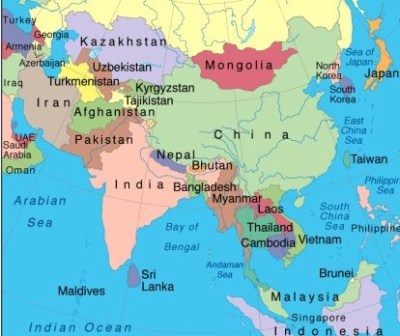
Top ten foreign policy and national security issues for 2012

Map of Asia
Map of Asia

From the American Enterprise Institute.

Here’s the list:

  1. Iran, and the American retreat from Iraq
  2. Dealing with Islam and China in South Asia
  3. America’s strategy for Pakistan
  4. Defense spending priorities
  5. American support for Israel
  6. The Islamization of Turkey
  7. Collapse of the European economies
  8. Demographic crisis in Europe
  9. Demographic crisis in Russia
  10. Strategy for the Middle East

They have one article linked for each topic, so I chose the Islamization of Turkey.

Full text:

Turkey was a key American ally throughout the Cold War. As one of only two NATO countries to share a border with the Soviet Union, Turkey proved pivotal not only to the defense of Europe but also for American interests in Asia. The Turkish army fought alongside U.S. troops in Korea. Americans embraced Turkey not only for its strategic role, but also for its values. The Turkish government was decidedly Western-leaning. Turkey may have been majority Muslim, but most Turks saw their future tied more to the West than the Middle East.

Over the past nine years, however, Turkey has changed. No longer can Turkey be called a democracy. The Pew Global Attitudes Project now ranks Turkey as the most anti-American country it surveys. Reporters Without Frontiers ranks Turkish press freedom below even Zimbabwe and Venezuela. Turkey has imprisoned more journalists than even China and Iran. As Prime Minister Recep Tayyip Erdoğan has sought to Islamize society, Turkish women have lost both their equality and safety: The murder rate of women has increased 1,400 percent since Erdoğan’s Justice and Development Party took power.

Erdoğan has reoriented Turkey’s foreign policy as well. Turkey now not only embraces the Arab world, but it allies itself with its more radical factions: Turkey endorses Hamas, Hezbollah, Sudan’s genocidal dictator Omar al-Bashir, and the Islamic Republic of Iran. Whereas a decade ago, the alliance between Turkey and Israel stabilized the Eastern Mediterranean, today diplomats worry that Turkey’s antagonism toward both Israel and Cyprus could lead to military conflict in the region. In September 2010, Turkey raised eyebrows at the Pentagon when it held secret war games with the Chinese air force without first alerting Washington. Because Turkey increasingly is the obstacle to NATO consensus, its future in the defensive alliance may now be open to question.

Any new president will be faced with serious decisions regarding Turkey. Should Turkey remain in NATO? If so, should the United States share its next generation F-35 Joint Strike Fighters, Predators, and AWACS aircraft with Turkey? Lastly, if Erdoğan fulfills his promise to use the Turkish navy to challenge Israel’s blockade of Gaza, leading to a fight between two traditional American allies, on whose side will the White House be, and what actions would the new president take?

This is a primer, so the articles are fairly short. Just enough to give you background information on the hot spots that the next President will have to deal with. Can you think of any issues they left out? I think that we should also be concerned with the drug cartels in Mexico, the continuous sabre-rattling from Venezuela, threats to our Asian allies from China, and whether we still need to have so many troops in Europe and South Korea.

It’s good for Christians to have some awareness of national security and foreign policy issues. It only takes an hour to read a few articles and to have some understanding of the issues we are facing, so that we can discuss them with others and vote properly. There’s going to be a foreign policy debate for the GOP primary on November 22, 2011, so it would be good for us to study up so we can understand what they are talking about.

Dennis Prager offers the best concise analysis of the effects of feminism ever

Dennis Prager has summarized many of my viewpoints on this blog in a tiny, tiny little article. He calls it “Four Legacies of Feminism“.

Read the whole glorious thing and bask in its wisdom!

Full text:

As we approach the 50th anniversary of the publication of Betty Friedan’s feminist magnum opus, The Feminine Mystique, we can have a perspective on feminism that was largely unavailable heretofore.

And that perspective doesn’t make feminism look good. Yes, women have more opportunities to achieve career success; they are now members of most Jewish and Christian clergy; women’s college sports teams are given huge amounts of money; and there are far more women in political positions of power. But the prices paid for these changes — four in particular — have been great, and outweigh the gains for women, let alone for men and for society.

1) The first was the feminist message to young women to have sex just as men do. There is no reason for them to lead a different sexual life than men, they were told. Just as men can have sex with any woman solely for the sake of physical pleasure, so, too, women ought to enjoy sex with any man just for the fun of it. The notion that the nature of women is to hope for at least the possibility of a long-term commitment from a man they sleep with has been dismissed as sexist nonsense.

As a result, vast numbers of young American women had, and continue to have, what are called “hookups”; and for some of them it is quite possible that no psychological or emotional price has been paid. But the majority of women who are promiscuous do pay prices. One is depression. New York Times columnist Ross Douthat recently summarized an academic study on the subject: “A young woman’s likelihood of depression rose steadily as her number of partners climbed and the present stability of her sex life diminished.”

Long before this study, I had learned from women callers to my radio show (an hour each week — the “Male-Female Hour” — is devoted to very honest discussion of sexual and other man-woman issues) that not only did female promiscuity coincide with depression, it also often had lasting effects on women’s ability to enjoy sex. Many married women told me that in order to have a normal sexual relationship with their husband, they had to work through the negative aftereffects of early promiscuity — not trusting men, feeling used, seeing sex as unrelated to love, and disdaining their husband’s sexual overtures. And many said they still couldn’t have a normal sex life with their husband.

2) The second awful legacy of feminism has been the belief among women that they could and should postpone marriage until they developed their careers. Only then should they seriously consider looking for a husband. Thus, the decade or more during which women have the best chance to attract men is spent being preoccupied with developing a career. Again, I cite woman callers to my radio show over the past 20 years who have sadly looked back at what they now, at age 40, regard as 20 wasted years. Sure, these frequently bright and talented women have a fine career. But most women are not programmed to prefer a great career to a great man and a family. They feel they were sold a bill of goods at college and by the media. And they were. It turns out that most women without a man do worse in life than fish without bicycles.

3) The third sad feminist legacy is that so many women — and men — have bought the notion that women should work outside the home that for the first time in American history, and perhaps world history, vast numbers of children are not primarily raised by their mothers or even by an extended family member. Instead they are raised for a significant part of their childhood by nannies and by workers at daycare centers. Whatever feminists may say about their only advocating choices, everyone knows the truth: Feminism regards work outside the home as more elevating, honorable, and personally productive than full-time mothering and making a home.

4) And the fourth awful legacy of feminism has been the demasculinization of men. For all of higher civilization’s recorded history, becoming a man was defined overwhelmingly as taking responsibility for a family. That notion — indeed the notion of masculinity itself — is regarded by feminism as the worst of sins: patriarchy.

Men need a role, or they become, as the title of George Gilder’s classic book on single men describes them: Naked Nomads. In little more than a generation, feminism has obliterated roles. If you wonder why so many men choose not to get married, the answer lies in large part in the contemporary devaluation of the husband and of the father — of men as men, in other words. Most men want to be honored in some way — as a husband, a father, a provider, as an accomplished something; they don’t want merely to be “equal partners” with a wife.

In sum, thanks to feminism, very many women slept with too many men for their own happiness; postponed marriage too long to find the right man to marry; are having hired hands do much of the raising of their children; and find they are dating boy-men because manly men are so rare.

Feminism exemplifies the truth of the saying, “Be careful what you wish for — you may get it.”

I wish I could add something to this, but I can’t because every time I think of something to add, he says it in the next sentence.

If you like this short essay, then this medium essay arguing against feminism authored by Barbara Kay would be nice follow-up.

It might be worth forwarding these articles along to your friends. And I highly recommend books on male-female relationships and roles by George Gilder, especially “Men and Marriage“.