Tag Archives: Taxes

How a small third world country became the top economy in Latin America

South America Map
South America Map

So, I’ve been watching the Democrat debates, and I’ve noticed that all of their candidates are proposing economic policies that they say will improve the lives of Americans. But have the candidates ever been able to try out these policies, and proven that they work? One way to evaluate policies is to look at other countries that have tried them, to see if those policies are proven to work.

I’ve been reading a book called “Money, Greed and God” with my friend Carla, which talks about what does and does not work to alleviate poverty. The author basically outlined two approaches. In the first approach, the government 1) confiscates the wealth of the most productive workers, 2) nationalizes (takes control of) the businesses of the most successful entrepreneurs, 3) restricts trading between citizens and with other countries, with minimum wage, price controls and tariffs. In the second approach, the government does the opposite: 1) lowers taxes on the most productive workers, and 2) lets entrepreneurs compete to provide goods and services to consumers, and 3) lowers restrictions on internal trading and trading with other countries, e.g. – eliminating minimum wage, tariffs and price controls.

Let’s take a look at two Latin American countries that went in opposite directions. Venezuela and Chile. Then we can finally find out which policies actually achieve results for the people.

Here is how Chile started out in 1973.

PROBLEM: Price controls and tariffs:

Prices for the majority of basic goods were fixed by the government in 1973. Even though Chile was and still is a small economy, the level of protection­ism was high. By the end of 1973, the nominal average tariff for imports was 105 percent, with a maximum of 750 percent. Non-tariff barriers also impeded the import of more than 3,000 out of 5,125 registered goods. Just as economic theory predicts, large queues in front of stores were usual in Santiago and other cities in Chile as a result of the scarcity caused by price controls.

PROBLEM: Government taking over private businesses:

The decline in GDP during 1973 reflected a shrinking productive sector in which the main assets were gradually falling under government control or ownership through expropriations and other government interventions in the economy.

PROBLEM: Deficit spending and government printing money:

The fiscal situation was chaotic. The deficit reached 55 percent of expenditures and 20 percent of GDP and was the main cause of inflation because the Central Bank was issuing money to finance the government deficit.

SOLUTION: lower or eliminate restrictions on trade:

The most important economic reform in Chile was to open trade, primarily through a flat, low tar­iff on imports. Much of the credit for Chilean eco­nomic reforms in the following 30 years should be given to the decision to open our economy to the rest of the world. The strength of Chilean firms, productive sectors, and institutions grew up thanks to that fundamental change.

SOLUTION: let competing entrepreneurs in the private sector provide goods and services to consumers:

A second fundamental reform was to allow the private sector to recover, adding dynamism to the economy. In fact, important sectors such as elec­tricity generation and distribution and telecommu­nications were still managed by state companies. After we implemented a massive privatization plan that included more than 50,000 new direct share­holders and several million indirect (through pen­sion funds) shareholders, these companies were managed by private entrepreneurs that carried out important expansion plans.

SOLUTION: let people take responsibility for their own lives instead of depending on government:

The 1981 reform of the Chilean pension fund system deserves special mention. Under the leader­ship of Minister José Piñera, an individual capitali­zation account program was designed with specific contributions, administered by private institutions selected by the workers. The Chilean Administra­doras de Fondos de Pension (Pension Fund Administrators or AFP) has been replicated in more than 20 countries, and more than 100 million workers in different parts of the world use these accounts to save for retirement.

SOLUTION: allow parents to choose the school that fits their needs from competing education providers, and push school administration down from the federal government to the municipal level, where it would be more responsive to voter’s needs:

In 1981, Chile introduced a universal educational voucher system for students in both its elementary and secondary schools. At the same time, the central government transferred the administration of public schools to municipal governments…  The financial value of the voucher did not depend on family income.

RESULTS: And I was able to find a nice short, description of how all that worked out for them on the far-left Wikipedia, of all places:

The economy of Chile is a high-income economy as ranked by the World Bank, and is considered one of South America’s most stable and prosperous nations, leading Latin American nations in competitiveness, income per capita, globalization, economic freedom, and low perception of corruption.

In 2006, Chile became the country with the highest nominal GDP per capita in Latin America. In May 2010 Chile became the first South American country to join the OECD. Tax revenues, all together 20.2% of GDP in 2013, were the second lowest among the 34 OECD countries, and the lowest in 2010. In 2017, only 0.7% of the population lived on less than US$1.90 a day.

According to the Heritage Foundation, Chile is ranked as the 18th freest economy in the world. The World Bank ranked Chile as the 50th highest GDP per capita for 2018, just below Hungary and above Poland.

Now, you can contrast those results with Venezuela. I have been blogging about Venezuela for years on this blog, and documenting how they raised taxes, banned guns, nationalized private sector companies, raised tariffs, and increased regulations. They are now ranked JUST ABOVE NORTH KOREA for economic freedom – #179 out of 180 countries measured. Basically, they did the opposite of everything that Chile did – transferring power away from parents, workers, business owners, churches and municipal governments to the powerful centralized federal government.

Wikipedia explains how Hugo Chavez took over in 1999 and enacted a communist revolution.

More:

Since the Bolivarian Revolution half-dismantled its PDVSA oil giant corporation in 2002 by firing most of its 20,000-strong dissident professional human capital and imposed stringent currency controls in 2003 in an attempt to prevent capital flight, there has been a steady decline in oil production and exports. Further yet, price controls, expropriation of numerous farmlands and various industries, among other government authoritarian policies… have resulted in severe shortages in Venezuela and steep price rises of all common goods, including food, water, household products, spare parts, tools and medical supplies; forcing many manufacturers to either cut production or close down, with many ultimately abandoning the country as has been the case with several technological firms and most automobile makers.

They confiscated private property, took over private sector businesses, implemented tariffs and price controls, redistributed wealth via massive welfare programs, and pushed all decision-making out of families and municipal governments up to the federal government. By depriving the producers of their earnings, the country caused massive shortages of goods and services, to the point where people are fleeing the country, consuming zoo animals, and selling their bodies as prostitutes in order to get food and water.

Application

In the next election, we are not picking a tribe because of how they make us feel about ourselves. We are not choosing in order to see ourselves as “nice” and “not nice”. We need to look at specific policies being proposed, and see what works and what doesn’t work. The examples of Chile (rags-to-riches) and Venezuela (riches-to-rags) are helpful for voters who want to get RESULTS instead of FEELINGS.

I’ll leave you with a list of links from previous posts so you can see how communism worked out for Venezuela.

Related posts


Why is it so difficult for a working man to be sole provider and leader of a home?

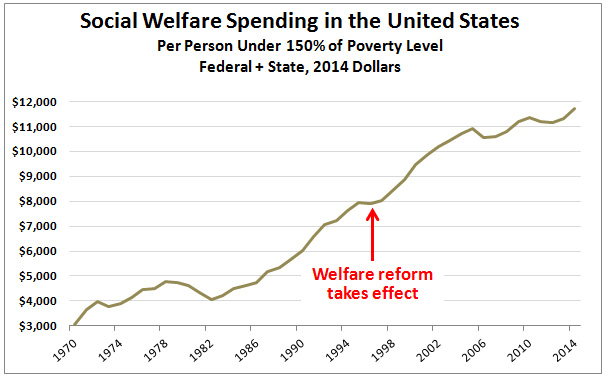
Welfare spending
Welfare spending

So, I’ve noticed that many men who are interested in marriage have been running into problems with their plans. One challenge is the problem of the financial costs of marriage. In order to undertake a marriage enterprise, men have to believe that they can pay the bills. And this is especially challenging to men who want a stay-at-home wife to raise their children.

*Please note that I am talking about unmarried (never married, divorced) women throughout this post.

Here’s my argument for why I think that feminism has made it harder for men to afford to get married:

  1. Feminism caused no-fault divorce.
  2. No-fault divorce laws led to more frequent divorces.
  3. Divorced women turn to government for financial support.
  4. Taxes increase in order to pay for more government spending.
  5. Men who were interested in marriage were hit with higher taxes, which made marriage enterprise financially unfeasible for them.

Here’s the evidence for each point.

1. Feminism was behind no-fault divorce, according to this feminist, pro-no-fault-divorce writer.

Excerpt:

Households of 2010 don’t look quite like they did in 1969, when no-fault divorce actually was a controversial topic and these counter-arguments held some weight. The working dad/stay-at-home mom model of the middle class has been replaced by two-parent earner households and a growing number of working mom/stay-at-home dad arrangements. In working poor and impoverished families, the one-parent provider model was never the norm. No-fault divorce seemed scary when it had never before existed, but the truth is that its introduction was long overdue. Feminist groups at the time supported no-fault divorce, as it provided women an escape hatch from desperately unhappy marriages in a society where they were already disadvantaged on almost every level, regardless of their marital status. Imagine an abusive marriage in 1968, when the court-savvy abuser could actually force the victim to stay in the relationship forever. Imagine that now, and you know why domestic violence attorneys are in full support of introducing no-fault divorce to New York. And the judges aren’t the only problem.

Note that the author of this piece thinks that it is not women’s fault that they choose men who they then want to divorce. It’s not the woman’s fault that she is unhappy with the man she courted with and then chose and then made vows to. She isn’t responsible for choosing a good man with chastity, sobriety, moral convictions, etc. She thinks that women shouldn’t be held responsible for their choices. Also, feminists think that children do fine without fathers.

2. Easier divorces means more divorces.

Abstract:

This paper analyzes a panel of 18 European countries spanning from 1950 to 2003 to examine the extent to which the legal reforms leading to “easier divorce” that took place during the second half of the 20th century have contributed to the increase in divorce rates across Europe. We use a quasi-experimental set-up and exploit the different timing of the reforms in divorce laws across countries. We account for unobserved country-specific factors by introducing country fixed effects, and we include country-specific trends to control for time-varying factors at the country level that may be correlated with divorce rates and divorce laws, such as changing social norms or slow moving demographic trends. We find that the different reforms that “made divorce easier” were followed by significant increases in divorce rates. The effect of no-fault legislation was strong and permanent, while unilateral reforms only had a temporary effect on divorce rates. Overall, we estimate that the legal reforms account for about 20 percent of the increase in divorce rates in Europe between 1960 and 2002.

It seems obvious, but more evidence never hurts. About 70% of divorces are initiated by women, either because they chose to marry the wrong man, or because they become unhappy with the right man.

3. Marital instability causes women to vote for bigger government for security.

Excerpt:

Giving women the right to vote significantly changed American politics from the very beginning. Despite claims to the contrary, the gender gap is not something that has arisen since the 1970s. Suffrage coincided with immediate increases in state government expenditures and revenue, and these effects continued growing as more women took advantage of the franchise. Similar changes occurred at the federal level as female suffrage led to more liberal voting records for the state’s U.S. House and Senate delegations. In the Senate, suffrage changed voting behavior by an amount equal to almost 20 percent of the difference between Republican and Democratic senators. Suffrage also coincided with changes in the probability that prohibition would be enacted and changes in divorce laws.

[…]More work remains to be done on why women vote so differently, but our initial work provides scant evidence that it is due to self-interest arising from their employment by government. The only evidence that we found indicated that the gender gap in part arises from women’s fear that they are being left to raise children on their own (Lott and Kenny 1997). If this result is true, the continued breakdown of the family and higher divorce rates imply growing political conflicts between the sexes.

Bigger government must be paid for by higher taxes, which makes it harder for one working man’s income to provide for a family. In fact, feminists wanted men to be displaced as sole-providers. They would prefer that women are “equal” to men, and that means making women get out and work like men. It was no concern of theirs that children would be raised by strangers in daycares and government schools.

4. Women are in fact observed to vote for bigger government.

Excerpt:

On Tuesday, the nation made history. It made history in electing the first African American president; it made history in building a bigger margin for the first female Speaker of the House; it made history in delivering the biggest Democratic margin since 1964; it made history in sending a record number of people to the polls and the highest percentage turnout since the 1960 election. Analysts will spend the next few months sifting through the data, trying to figure out what happened and why. Historians will likely spend the next several years and decades studying this election, as well. But one thing is immediately clear. Unmarried women played a pivotal role in making this history and in changing this nation. They delivered a stunning 70 to 29 percent margin to Barack Obama and delivered similarly strong margins in races for Congress and the U.S. Senate. Although unmarried women have voted Democratic consistently since marital status has been was tracked, this election represents the highest margin recorded and a 16-point net gain at the Presidential level from 2004.

In fact, there was a recent (2011) study showing that unmarried women do in fact vote for higher taxes and more government as a substitute for a husband’s provider role.

Abstract:

The last three decades have witnessed the rise of a political gender gap in the United States wherein more women than men favor the Democratic party. We trace this development to the decline in marriage, which we posit has made men richer and women poorer. Data for the United States support this argument. First, there is a strong positive correlation between state divorce prevalence and the political gender gap – higher divorce prevalence reduces support for the Democrats among men but not women. Second, longitudinal data show that following marriage (divorce), women are less (more) likely to support the Democratic party.

What follows from voting Democrat?

If more people vote for Democrats then we will get higher taxes to pay for all the government spending. Higher taxes means that a married man can no longer retain enough of his earnings to support a family. And that means his wife has to work, and that means that his children will learn what the daycare workers and government school teachers decide they should learn.

But what do men want out of marriage? Men don’t want to marry a stressed-out competitor, and be yelled at in their own home. They want a homemaker who is focused on her husband and children. They want their children raised by someone who shares their worldview. Men want to produce moral, influential, independent children. Men want to be respected in their homes as sole provider. Men marry in order to lead on moral and spiritual issues. And men understand that a woman who doesn’t work outside the home usually makes a more feminine, supportive partner in the marriage enterprise.

If society, including the parents of daughters and the pastors of daughters, have decided that women don’t have to care about what men want out of marriage, then they should not be surprised that men don’t want marriage. Men may have no-commitment temporary sexual relationships with a secular left feminist who has been focused on her own feminist projects: travel, student loans, promiscuity, career, etc. But they certainly do not marry those women. When it comes to marriage, men want women who embrace the roles of wife and mother. And unlike shoes and handbags, we get a vote about whether or not the marriage happens.

Two UK pre-teens suspended from school for asking to be exempted from LGBT indoctrination

Susan Papas, Headteacher at Heavers Farmer Primary School

A long time ago, non-Christians would respond to moral judgments  by saying “don’t force your morality on me”. At the time, you might have thought that secular leftists thought that it was wrong to force morality on other people, and they wanted to force that rule on those who judged them. But we now know that secular leftists LOVE to force THEIR morality on other people who disagree with them.

Here’s what happened:

On June 20, Farrell, sitting next to his friend Kaysey in class, asked his year 5 class teacher, “Sir, please may I not take part in this lesson?” when the teacher handed out LGBT material for colouring. The teacher refused permission saying that the LGBT lesson was part of the curriculum.

After class, the form teacher is said to have accused Farrell of using “homophobic language” for allegedly saying, “LGBT sucks and LGBT’s dumb,” which the child denies.

Farrell, who was sitting with female pupil Kasey says he is a Christian and told a “visitor teacher” he did not “accept LGBT” because of his religion.

The teacher asked the two children, “Do you want them to die?” “We said no,” Farrell replied. If, however, they went back to their countries, they would be punished for being gay, Farrell told the teacher.

The teacher asked Farrell where he was from. Farrell said he was of “African Jamaican” heritage, and because there “everybody is Christian and Catholic, so they don’t accept LGBT.”

The head of the school, Susan Papas, suspended the two children from school for five days for asking not to take part in the LGBT indoctrination.

But she did more than that:

Later, Ms Papas shouted at the two children in front of the class, according to Kaysey. “How dare you? You are a disappointment to the school,” Papas told the two children outside the classroom.

Papas then put the children in different rooms and asked Kasey [sic]: “How dare you say that you want to kill LGBT people?” Kasey replied: “I didn’t say kill.” Papas then shouted at her and said, “Yes, you did, and don’t lie.”

Kaysey, a pentecostal Christian, says she was kept in detention for five hours from 10am to 3pm.

So, if you say to a secular leftist “I disagree”, what they hear is a threat of violence. They feel that disagreeing with them makes you an evil person, and they are entitled to use force to stop you from being evil. There is no “agree to disagree” with a secular leftist.

Life Site News reports:

Kaysey’s and Farrell’s version of the story, which differs widely from what their teacher and the head of their school alleged, has been corroborated by their classmates.

Elsewhere:

Kaysey also noted that Papas’ daughter, School Manager and Deputy Safeguarding Officer Attie Copeman-Papas, is a lesbian, and that Assistant Headteacher Robert Askey is gay.

[…]This isn’t the first time Papas’ militant promotion of the LGBT agenda has roused the ire of parents at the school, which educates 750 pupils in a highly multicultural and multi-religious borough of London.

In June 2018, parents threatened to protest at a Gay Pride parade organized by the school on its playground.

Papas had invited parents to watch the “Proud to Be Me!” parade and join in celebrating “the rainbow of things that make them and their family special.”

Alas, there is no space in that rainbow for anyone who disagrees with Susan Papas.

So, the first thing to note is that this school is a “community school”, which is the UK way of saying “public school”. This is a government-run school. Government schools do not compete in a free market. They are funded by mandatory taxes. Parents are taxed, and then they access to the schools that the government provides to them. It’s a monopoly. They get paid regardless of how they perform.

So, if you want to be able to buy the education for your children that fits your values, then you should vote for lower taxes and less government, so that money for education stayed in your hands. When the parents keep the money they earn, then they can choose how the children are educated. When the government taxes your money, then Susan Papas decides what your children will believe.

Unfortunately, even the majority of Christians now believe that the secular leftists in government make better decisions about moral issues than Christian parents do. That’s why so many of us vote for higher taxes, and more government spending.

Who should feed the children? Who should treat illnesses? Who should care for refugees and illegal immigrants? Who should give money to the poor? Who should care for the environment? Who should teach people about sex  and abortion? Many Christians today say government should do all these things. Young Christians don’t care about preventing government from trampling on Christian values. The priorities of young Christians are whatever the secular left says they are: refugees, illegal immigrants, global warming, free government education, gay rights, government-run health care.

When you vote for higher taxes and bigger government, you’re voting to let Susan Papas decide what your children will believe. You’re voting to let her to punish your children if they don’t believe what Susan Papas believes. We can do better.