Tag Archives: Socialism

Why is it so difficult for a working man to be sole provider and leader of a home?

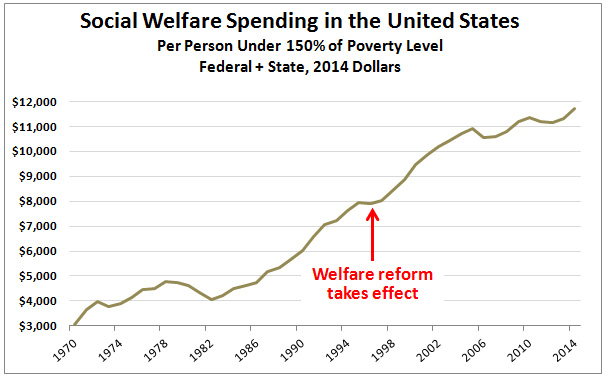
Welfare spending
Welfare spending

So, I’ve noticed that many men who are interested in marriage have been running into problems with their plans. One challenge is the problem of the financial costs of marriage. In order to undertake a marriage enterprise, men have to believe that they can pay the bills. And this is especially challenging to men who want a stay-at-home wife to raise their children.

*Please note that I am talking about unmarried (never married, divorced) women throughout this post.

Here’s my argument for why I think that feminism has made it harder for men to afford to get married:

  1. Feminism caused no-fault divorce.
  2. No-fault divorce laws led to more frequent divorces.
  3. Divorced women turn to government for financial support.
  4. Taxes increase in order to pay for more government spending.
  5. Men who were interested in marriage were hit with higher taxes, which made marriage enterprise financially unfeasible for them.

Here’s the evidence for each point.

1. Feminism was behind no-fault divorce, according to this feminist, pro-no-fault-divorce writer.

Excerpt:

Households of 2010 don’t look quite like they did in 1969, when no-fault divorce actually was a controversial topic and these counter-arguments held some weight. The working dad/stay-at-home mom model of the middle class has been replaced by two-parent earner households and a growing number of working mom/stay-at-home dad arrangements. In working poor and impoverished families, the one-parent provider model was never the norm. No-fault divorce seemed scary when it had never before existed, but the truth is that its introduction was long overdue. Feminist groups at the time supported no-fault divorce, as it provided women an escape hatch from desperately unhappy marriages in a society where they were already disadvantaged on almost every level, regardless of their marital status. Imagine an abusive marriage in 1968, when the court-savvy abuser could actually force the victim to stay in the relationship forever. Imagine that now, and you know why domestic violence attorneys are in full support of introducing no-fault divorce to New York. And the judges aren’t the only problem.

Note that the author of this piece thinks that it is not women’s fault that they choose men who they then want to divorce. It’s not the woman’s fault that she is unhappy with the man she courted with and then chose and then made vows to. She isn’t responsible for choosing a good man with chastity, sobriety, moral convictions, etc. She thinks that women shouldn’t be held responsible for their choices. Also, feminists think that children do fine without fathers.

2. Easier divorces means more divorces.

Abstract:

This paper analyzes a panel of 18 European countries spanning from 1950 to 2003 to examine the extent to which the legal reforms leading to “easier divorce” that took place during the second half of the 20th century have contributed to the increase in divorce rates across Europe. We use a quasi-experimental set-up and exploit the different timing of the reforms in divorce laws across countries. We account for unobserved country-specific factors by introducing country fixed effects, and we include country-specific trends to control for time-varying factors at the country level that may be correlated with divorce rates and divorce laws, such as changing social norms or slow moving demographic trends. We find that the different reforms that “made divorce easier” were followed by significant increases in divorce rates. The effect of no-fault legislation was strong and permanent, while unilateral reforms only had a temporary effect on divorce rates. Overall, we estimate that the legal reforms account for about 20 percent of the increase in divorce rates in Europe between 1960 and 2002.

It seems obvious, but more evidence never hurts. About 70% of divorces are initiated by women, either because they chose to marry the wrong man, or because they become unhappy with the right man.

3. Marital instability causes women to vote for bigger government for security.

Excerpt:

Giving women the right to vote significantly changed American politics from the very beginning. Despite claims to the contrary, the gender gap is not something that has arisen since the 1970s. Suffrage coincided with immediate increases in state government expenditures and revenue, and these effects continued growing as more women took advantage of the franchise. Similar changes occurred at the federal level as female suffrage led to more liberal voting records for the state’s U.S. House and Senate delegations. In the Senate, suffrage changed voting behavior by an amount equal to almost 20 percent of the difference between Republican and Democratic senators. Suffrage also coincided with changes in the probability that prohibition would be enacted and changes in divorce laws.

[…]More work remains to be done on why women vote so differently, but our initial work provides scant evidence that it is due to self-interest arising from their employment by government. The only evidence that we found indicated that the gender gap in part arises from women’s fear that they are being left to raise children on their own (Lott and Kenny 1997). If this result is true, the continued breakdown of the family and higher divorce rates imply growing political conflicts between the sexes.

Bigger government must be paid for by higher taxes, which makes it harder for one working man’s income to provide for a family. In fact, feminists wanted men to be displaced as sole-providers. They would prefer that women are “equal” to men, and that means making women get out and work like men. It was no concern of theirs that children would be raised by strangers in daycares and government schools.

4. Women are in fact observed to vote for bigger government.

Excerpt:

On Tuesday, the nation made history. It made history in electing the first African American president; it made history in building a bigger margin for the first female Speaker of the House; it made history in delivering the biggest Democratic margin since 1964; it made history in sending a record number of people to the polls and the highest percentage turnout since the 1960 election. Analysts will spend the next few months sifting through the data, trying to figure out what happened and why. Historians will likely spend the next several years and decades studying this election, as well. But one thing is immediately clear. Unmarried women played a pivotal role in making this history and in changing this nation. They delivered a stunning 70 to 29 percent margin to Barack Obama and delivered similarly strong margins in races for Congress and the U.S. Senate. Although unmarried women have voted Democratic consistently since marital status has been was tracked, this election represents the highest margin recorded and a 16-point net gain at the Presidential level from 2004.

In fact, there was a recent (2011) study showing that unmarried women do in fact vote for higher taxes and more government as a substitute for a husband’s provider role.

Abstract:

The last three decades have witnessed the rise of a political gender gap in the United States wherein more women than men favor the Democratic party. We trace this development to the decline in marriage, which we posit has made men richer and women poorer. Data for the United States support this argument. First, there is a strong positive correlation between state divorce prevalence and the political gender gap – higher divorce prevalence reduces support for the Democrats among men but not women. Second, longitudinal data show that following marriage (divorce), women are less (more) likely to support the Democratic party.

What follows from voting Democrat?

If more people vote for Democrats then we will get higher taxes to pay for all the government spending. Higher taxes means that a married man can no longer retain enough of his earnings to support a family. And that means his wife has to work, and that means that his children will learn what the daycare workers and government school teachers decide they should learn.

But what do men want out of marriage? Men don’t want to marry a stressed-out competitor, and be yelled at in their own home. They want a homemaker who is focused on her husband and children. They want their children raised by someone who shares their worldview. Men want to produce moral, influential, independent children. Men want to be respected in their homes as sole provider. Men marry in order to lead on moral and spiritual issues. And men understand that a woman who doesn’t work outside the home usually makes a more feminine, supportive partner in the marriage enterprise.

If society, including the parents of daughters and the pastors of daughters, have decided that women don’t have to care about what men want out of marriage, then they should not be surprised that men don’t want marriage. Men may have no-commitment temporary sexual relationships with a secular left feminist who has been focused on her own feminist projects: travel, student loans, promiscuity, career, etc. But they certainly do not marry those women. When it comes to marriage, men want women who embrace the roles of wife and mother. And unlike shoes and handbags, we get a vote about whether or not the marriage happens.
How will Elizabeth Warren pay for her $52 trillion government-run health care plan?

So, in yesterday’s post, we talked about our current budget of $4 trillion dollars, our $3 trillion of revenues, our $1 trillion annual budget deficit, and our $23 trillion in accumulated national debt. We also talked about how Elizabeth Warren’s health care plan would add $5.2 trillion to our annual budget, and how we only get about $2 trillion in revenue if we take almost everything the wealthiest taxpayers earn.

Warren likes to talk about how her plan will reduce health care costs. She thinks that government workers (think of the DMV and the post office) will be more efficient about increasing quality and reducing costs than the private sector (think of Apple and Amazon) is. Is she correct?

Let’s take a look at this article from Reason:

Warren and her defenders will likely try to shift the discussion back to total costs, but that’s just a way of repeating the dodge that has dogged her campaign for much of the year. Warren will no doubt claim that costs would go down under her plan, but there are reasons to doubt this, including an analysis from health care economist Kenneth Thorpe finding that under a Sanders-style plan, more than 70 percent of people who currently have private insurance would see costs increase, as well as an Urban Institute analysis projecting that single-payer plans would raise national health care spending by $7 trillion over a decade.

There isn’t any magic in Warren’s plan that would lover the costs to the point where the middle class would not have to pay for her spending:

Indeed, much of Warren’s plan is based on unlikely, and at times outright fantastical, assumptions about what sort of additional revenue could be raised, what health care costs could be contained, and what might be politically feasible. Among other things, she proposes raising $400 billion by passing comprehensive immigration reform, which, given the politics of immigration policy, is only a little more realistic than planning to pay off your mortgage by winning the lottery. The Washington Examiner‘s Philip Klein has published a useful roundup of Warren’s less plausible ideas; the takeaway is that even if Warren somehow managed to raise the enormous amounts of tax she proposes, it probably would still not be anywhere close to enough to finance her plan. (More on this in a future post.)

In some ways, Warren’s plan amounts to a list of technically sophisticated magic asterisks. It is as much an attempt to obscure the economic and political feasibility of passing and implementing a single-payer health care plan as a good-faith attempt to describe what it would practically require.

Yet in another way, it reveals something about both Warren and the economic reality of single-payer: Despite running a campaign based on wonky academic credentials and detail-oriented policy chops, Warren has, until now, repeatedly refused to directly answer questions about precisely how she would finance Medicare for All and whether she would foist new taxes on the middle class. Turns out she didn’t dodge the question because the answer was complex or hard to explain. She dodged it because the answer was so simple it could be expressed in a single word: yes.

So, let’s just state the obvious. We’re talking about a person who pretended to be an Indian in order to get into Harvard, and who lied about being fired from her teaching job for being pregnant. If we’re looking at her education, we don’t find any evidence that she understands health care policy, or even basic economics. If we’re looking at her work experience, there’s no evidence there that she was ever able to produce results in health care administration. There are people who have been able to reform health care in a way that reduces costs, reduces taxes, improves quality of care, and covers more people. But not Elizabeth Warren.

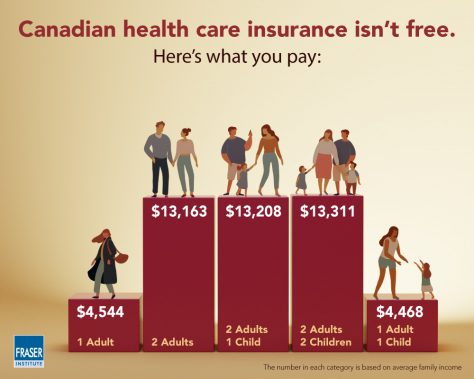
Price of healthcare per Canadian household (Source: Fraser Institute)

Price of healthcare per Canadian household (Source: Fraser Institute)

What about Canada?

I think it’s worth remembering how much government-run health care costs in countries that have adopted “Medicare for All” plans.

I found two interesting studies from Canada’s Angus Reid Institute describing single payer health care in Canada. I’m very interested in find out what things are like in countries that have true government-run health care. A typical Canadian family pays $13,000+ per year per household for healthcare, or about $585,000 over their working lives. What are they getting for all that money?

Here is the first Angus Reid article:

The study finds more than 2 million Canadians aged 55 and older face significant barriers when accessing the health care system in their province, such as being unable to find a family doctor or experiencing lengthy wait-times for surgery, diagnostic tests, or specialist visits.

Moreover, most Canadians in this age group have at least some difficulty getting the care they want or need in a timely manner.

The study focuses on the health care experiences of older Canadians, as well as their assessments of the quality of care they receive.

According to the article, 31% of respondents (aged 55 and older) rated access to the government’s healthcare system as “easy”. 48% had “moderate” problems with access, and 21% had “major” problems with access.

The second Angus Reid article explains:

This second part of the study finds one-in-six Canadians (17%) in the 55-plus age group – a figure that represents upwards of 1.8 million people – say that they or someone else in their household have taken prescription drugs in a way other than prescribed because of cost.

One-in-ten (10%) have decided to simply not fill a prescription because it was too expensive, and a similar number (9%) have decided not to renew one for the same reason. One-in-eight (12%) have taken steps to stretch their prescriptions, such as cutting pills or skipping doses.

Some 17 per cent of Canadians 55 and older have done at least one of these things, and that proportion rises among those who have greater difficulty accessing other aspects of the health care system.

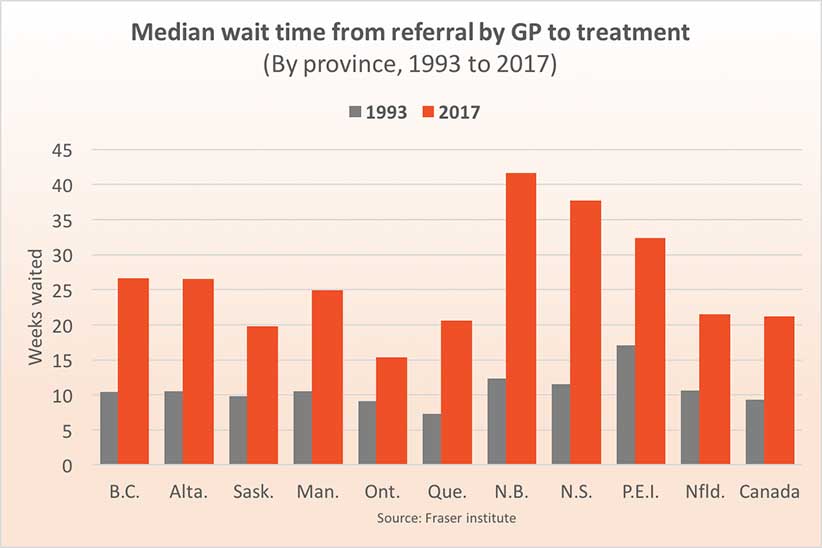
In a previous blog post, I reported on how Canadians have to wait in order to see their GP doctor. If that doctor refers them to a specialist, then they have to wait to see the specialist. And if that specialist schedules surgery, then they have to wait for their surgery appointment. The delays can easily go from weeks to months and even years. The MEDIAN delay from GP referral to treatment is 19.5 weeks.

Wait times in weeks (Source: Maclean's magazine)
Wait times in weeks (Source: Maclean’s magazine)

Also, the Canadian system does NOT cover prescription drugs.

Please share this article and yesterday’s because we have an election coming up, and votes need to know the facts.

Elizabeth Warren’s health care plan: how much will it cost, how much will your taxes rise?

Elizabeth Warren seems to be the likely Democrat nominee, so it it makes sense for us to take a look at her policy proposals and count the cost. Her signature proposal is a plan to outlaw private health insurance and move everyone to government-run health care, paid for though mandatory taxation. How much will that cost, and how much will the taxes on the middle class go up in order to pay for it?

Before we go too far with that, take a look at the budget numbers. I got these from the web site of the Democrats in the House of Representatives:

The 2019 federal budget, according to House Democrats

According to the House Democrats budget web site, the 2019 federal budget has $3.451 trillion in revenue, $4.411 trillion in spending, for an annual deficit of $-960 billion. And keep in mind that we are $23 trillion in debt already. This would be like saying that your annual income is $34, 510. You’re spending $44, 110 per year. You are adding $9,600 to your debt every year. And you are already $230,000 in debt (and paying interest on that).

In other words, America is in no position to be spending more money. We’re already in debt, and adding to the debt each year. So how much more money would you have to spend for Elizabeth Warren’s health care plan?

For months, Sen. Elizabeth Warren (D—Mass.) has hedged on the question of whether she would raise middle class taxes to pay for Medicare for All, the single-payer health care plan she says she supports. Warren has stuck with a talking point about total costs, saying that the middle class would pay less, while critics, political rivals, and even liberal economists friendly to single payer have argued that the enormous additional government spending required by such a plan would inevitably hit the middle class.

Today, Warren released a plan to finance Medicare for All at a total price tag of nearly $52 trillion, including about $20 trillion of new government spending (an estimate that is probably low). Although her plan declares that no middle-class taxes will be necessary to finance the system, it includes what is effectively a new tax on employers that would undoubtedly hit middle-class Americans.

So , Warren admits that the total cost of her plan is $52 trillion over 10 years. Warren needs to come up with $5.2 trillion per year to pay for her plan. Is there that much money available by taxing only the wealthy?

The wealthiest Americans don’t have enough money to cover even $2 trillion in additional spending – assuming they continue to work in America as much as they did before the government took MOST of their earnings:

CRFB reinforced their prior work indicating that taxes on “the rich” could at best fund about one-third of the cost of single payer. Their proposals include $2 trillion in revenue from raising tax rates on the affluent, another $2 trillion from phasing out tax incentives for the wealthy, another $2 trillion from doubling corporate income taxes, $3 trillion from wealth taxes, and $1 trillion from taxes on financial transactions and institutions.

Several of the proposals CRFB analyzed would raise tax rates on the wealthiest households above 60 percent. At these rates, economists suggest that individuals would reduce their income and cut back on work, because they do not see the point in generating additional income if government will take 70 (or 80, or 90) cents on every additional dollar earned. While taxing “the rich” might sound publicly appealing, at a certain point it becomes a self-defeating proposition—and several proposals CRFB vetted would meet, or exceed, that point.

So, Warren is going to have to lean on the middle class for the remaining $3.2 trillion, even if the rich hold still while the government takes 70-90 percent of what they earn. (Unlikely)

Warren likes to tell everyone that her plan will make costs go down. I guess she thinks that government oversight of health care will be more efficient than private sector oversight of health care. Maybe she believes that people in government are more careful about spending taxpayer money than people in private businesses are about spending their own money? In any case, studies from centrist and center-left think tanks disagree with Warren:

Warren and her defenders will likely try to shift the discussion back to total costs, but that’s just a way of repeating the dodge that has dogged her campaign for much of the year. Warren will no doubt claim that costs would go down under her plan, but there are reasons to doubt this, including an analysis from health care economist Kenneth Thorpe finding that under a Sanders-style plan, more than 70 percent of people who currently have private insurance would see costs increase, as well as an Urban Institute analysis projecting that single-payer plans would raise national health care spending by $7 trillion over a decade.

All we have right now to weight against these studies is Warren’s own words, as a candidate wanting to win a popularity contest.

Warren herself says that there would be enormous job losses in the health care industry:

Democratic Massachusetts Sen. Elizabeth Warren admitted Wednesday that Medicare for All could result in two million lost jobs.

In an interview with New Hampshire Public Radio, the Democratic presidential contender said she concurs with a study from the University of Massachusetts-Amherst that said socialized medicine would probably have a devastating impact on the those working in the current private health care industry.

This would create similar health care shortages and waiting lists (with people dying on waiting lists) that we see in single-payer systems such as Canada and the Veteran’s Affairs health care system. Except far worse.

And keep in mind that the middle class pays for health care in Canada:

Socialized medicine in Canada anything but free. The [Fraser Institute] think-tank reported that the average Canadian family spends over $12,000 in taxes on government-funded health care.

That is how single-actually works. We need to look at how single-payer health care works in reality, and not form our opinions of it based on a candidate’s WORDS during an ELECTION CAMPAIGN. Let’s look at evidence, and not just vote for things that sound good and make us feel good and make our friends like us.