

Tag Archives: Lesbian

Ryan T. Anderson presents the case for natural / traditional marriage

Does government provide incentives for people to get married?
What effects does redefining marriage have on society?

A must-read long paper from the Heritage Foundation. It’s a great concise presentation of the reasons why the United States should not redefine marriage. (H/T A tweet from Ryan T. Anderson)

Abstract:

Marriage is based on the truth that men and women are complementary, the biological fact that reproduction depends on a man and a woman, and the reality that children need a mother and a father. Redefining marriage does not simply expand the existing understanding of marriage; it rejects these truths. Marriage is society’s least restrictive means of ensuring the well-being of children. By encouraging the norms of marriage—monogamy, sexual exclusivity, and permanence—the state strengthens civil society and reduces its own role. The future of this country depends on the future of marriage. The future of marriage depends on citizens understanding what it is and why it matters and demanding that government policies support, not undermine, true marriage.

Excerpt:

Supporters of redefinition use the following analogy: Laws defining marriage as a union of a man and a woman are unjust—fail to treat people equally—exactly like laws that prevented interracial marriage. Yet such appeals beg the question of what is essential to marriage. They assume exactly what is in dispute: that gender is as irrelevant as race in state recognition of marriage. However, race has nothing to with marriage, and racist laws kept the races apart. Marriage has everything to do with men and women, husbands and wives, mothers and fathers and children, and that is why principle-based policy has defined marriage as the union of one man and one woman.

Marriage must be color-blind, but it cannot be gender-blind. The color of two people’s skin has nothing to do with what kind of marital bond they have. However, the sexual difference between a man and a woman is central to what marriage is. Men and women regardless of their race can unite in marriage, and children regardless of their race need moms and dads. To acknowledge such facts requires an understanding of what, at an essential level, makes a marriage.

And a bit later:

If the law taught a falsehood about marriage, it would make it harder for people to live out the norms of marriage because marital norms make no sense, as matters of principle, if marriage is just intense emotional feeling. No reason of principle requires an emotional union to be permanent or limited to two persons, much less sexually exclusive. Nor should it be inherently oriented to family life and shaped by its demands. This does not mean that a couple could not decide to live out these norms where temperament or taste so motivated them, just that there is no reason of principle to demand that they do so. Legally enshrining this alternate view of marriage would undermine the norms whose link to the common good is the basis for state recognition of marriage in the first place.

Insofar as society weakens the rational foundation for marriage norms, fewer people would live them out, and fewer people would reap the benefits of the marriage institution. This would affect not only spouses, but also the well-being of their children. The concern is not so much that a handful of gay or lesbian couples would be raising children, but that it would be very difficult for the law to send a message that fathers matter when it has redefined marriage to make fathers optional.

And one last one:

In fact, much of this is already occurring. Heritage Foundation Visiting Fellow Thomas Messner has documented multiple instances in which redefining marriage has already become a nightmare for religious liberty.[48] If marriage is redefined to include same-sex relationships, then those who continue to believe the truth about marriage—that it is by nature a union of a man and a woman—would face three different types of threats to their liberty: the administrative state, nondiscrimination law, and private actors in a culture that is now hostile to traditional views.[49]

After Massachusetts redefined marriage to include same-sex relationships, Catholic Charities of Boston was forced to discontinue its adoption services rather than place children with same-sex couples against its principles.[50] Massachusetts public schools began teaching grade-school students about same-sex marriage, defending their decision because they are “committed to teaching about the world they live in, and in Massachusetts same-sex marriage is legal.” A Massachusetts appellate court ruled that parents have no right to exempt their children from these classes.[51]

The New Mexico Human Rights Commission prosecuted a photographer for declining to photograph a same-sex “commitment ceremony.” Doctors in California were successfully sued for declining to perform an artificial insemination on a woman in a same-sex relationship. Owners of a bed and breakfast in Illinois who declined to rent their facility for a same-sex civil union ceremony and reception were sued for violating the state nondiscrimination law. A Georgia counselor was fired after she referred someone in a same-sex relationship to another counselor.[52] In fact, the Becket Fund for Religious Liberty reports that “over 350 separate state anti-discrimination provisions would likely be triggered by recognition of same-sex marriage.”[53]

This article is long and comprehensive. It will take some time to read. It’s includes logical arguments as well as empirical evidence from research – with footnotes. I really recommend taking a look at the article. Even if it takes a long time to read, it will definitely expand your mind to think about why we had a definition of marriage in the first place, and what we would lose by changing that definition. When you debate people who want to redefine marriage, it’s very important to appeal to logical arguments and evidence from studies. Get the conversation away from emotions and instead introduce facts and arguments.

My favorite book on the marriage issue is Ryan Anderson’s “Truth Overruled”. If you don’t have it, I really recommend it.
Ryan T. Anderson presents the case for natural / traditional marriage

Does government provide incentives for people to get married?
What effects does redefining marriage have on society?

I spend Tuesday night working through 3 chapters of Anderson’s book “Truth Overruled”, so I thought I would re-post this old post on marriage.

A must-read long paper from the Heritage Foundation. It’s a great concise presentation of the reasons why the United States should not redefine marriage. (H/T A tweet from Ryan T. Anderson)

Abstract:

Marriage is based on the truth that men and women are complementary, the biological fact that reproduction depends on a man and a woman, and the reality that children need a mother and a father. Redefining marriage does not simply expand the existing understanding of marriage; it rejects these truths. Marriage is society’s least restrictive means of ensuring the well-being of children. By encouraging the norms of marriage—monogamy, sexual exclusivity, and permanence—the state strengthens civil society and reduces its own role. The future of this country depends on the future of marriage. The future of marriage depends on citizens understanding what it is and why it matters and demanding that government policies support, not undermine, true marriage.

Excerpt:

Supporters of redefinition use the following analogy: Laws defining marriage as a union of a man and a woman are unjust—fail to treat people equally—exactly like laws that prevented interracial marriage. Yet such appeals beg the question of what is essential to marriage. They assume exactly what is in dispute: that gender is as irrelevant as race in state recognition of marriage. However, race has nothing to with marriage, and racist laws kept the races apart. Marriage has everything to do with men and women, husbands and wives, mothers and fathers and children, and that is why principle-based policy has defined marriage as the union of one man and one woman.

Marriage must be color-blind, but it cannot be gender-blind. The color of two people’s skin has nothing to do with what kind of marital bond they have. However, the sexual difference between a man and a woman is central to what marriage is. Men and women regardless of their race can unite in marriage, and children regardless of their race need moms and dads. To acknowledge such facts requires an understanding of what, at an essential level, makes a marriage.

And a bit later:

If the law taught a falsehood about marriage, it would make it harder for people to live out the norms of marriage because marital norms make no sense, as matters of principle, if marriage is just intense emotional feeling. No reason of principle requires an emotional union to be permanent or limited to two persons, much less sexually exclusive. Nor should it be inherently oriented to family life and shaped by its demands. This does not mean that a couple could not decide to live out these norms where temperament or taste so motivated them, just that there is no reason of principle to demand that they do so. Legally enshrining this alternate view of marriage would undermine the norms whose link to the common good is the basis for state recognition of marriage in the first place.

Insofar as society weakens the rational foundation for marriage norms, fewer people would live them out, and fewer people would reap the benefits of the marriage institution. This would affect not only spouses, but also the well-being of their children. The concern is not so much that a handful of gay or lesbian couples would be raising children, but that it would be very difficult for the law to send a message that fathers matter when it has redefined marriage to make fathers optional.

And one last one:

In fact, much of this is already occurring. Heritage Foundation Visiting Fellow Thomas Messner has documented multiple instances in which redefining marriage has already become a nightmare for religious liberty.[48] If marriage is redefined to include same-sex relationships, then those who continue to believe the truth about marriage—that it is by nature a union of a man and a woman—would face three different types of threats to their liberty: the administrative state, nondiscrimination law, and private actors in a culture that is now hostile to traditional views.[49]

After Massachusetts redefined marriage to include same-sex relationships, Catholic Charities of Boston was forced to discontinue its adoption services rather than place children with same-sex couples against its principles.[50] Massachusetts public schools began teaching grade-school students about same-sex marriage, defending their decision because they are “committed to teaching about the world they live in, and in Massachusetts same-sex marriage is legal.” A Massachusetts appellate court ruled that parents have no right to exempt their children from these classes.[51]

The New Mexico Human Rights Commission prosecuted a photographer for declining to photograph a same-sex “commitment ceremony.” Doctors in California were successfully sued for declining to perform an artificial insemination on a woman in a same-sex relationship. Owners of a bed and breakfast in Illinois who declined to rent their facility for a same-sex civil union ceremony and reception were sued for violating the state nondiscrimination law. A Georgia counselor was fired after she referred someone in a same-sex relationship to another counselor.[52] In fact, the Becket Fund for Religious Liberty reports that “over 350 separate state anti-discrimination provisions would likely be triggered by recognition of same-sex marriage.”[53]

This article is long and comprehensive. It will take some time to read. It’s includes logical arguments as well as empirical evidence from research – with footnotes. I really recommend taking a look at the article. Even if it takes a long time to read, it will definitely expand your mind to think about why we had a definition of marriage in the first place, and what we would lose by changing that definition. When you debate people who want to redefine marriage, it’s very important to appeal to logical arguments and evidence from studies. Get the conversation away from emotions and instead introduce facts and arguments.

You can get an even longer treatment in the new book by Ryan T. Anderson and his co-authors Sherif Girgis and Robert P. George. This is *the* book to get on the marriage issue.

Are gay relationships more stable than straight ones?

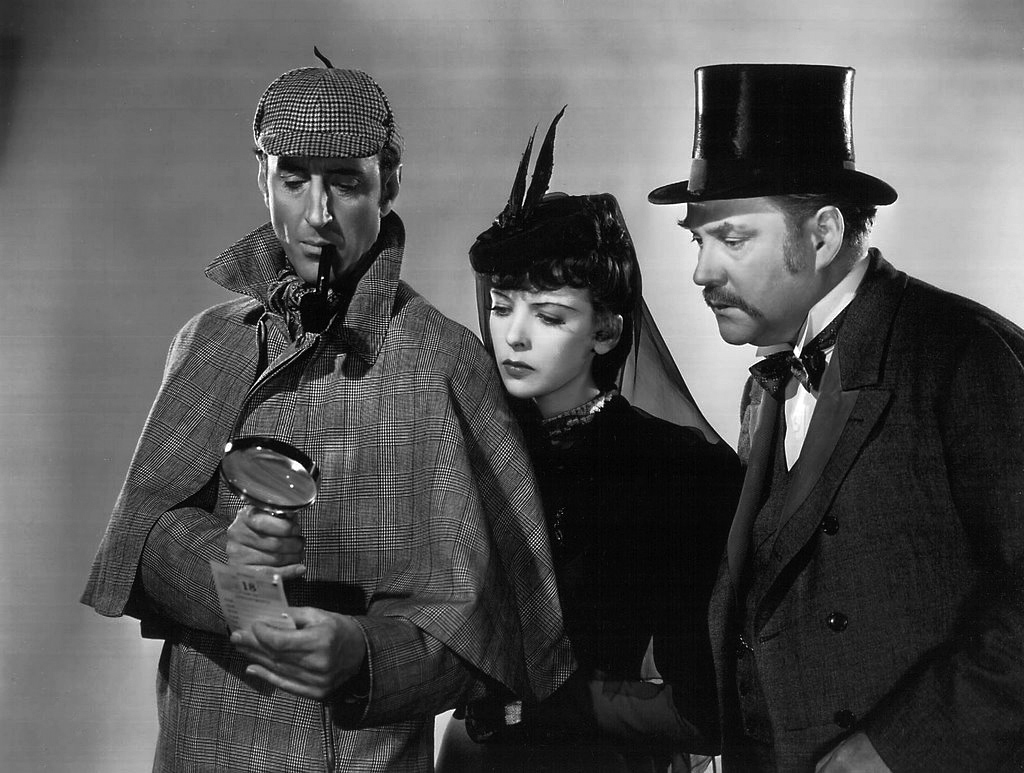
Sherlock Holmes and John Watson are going to take a look at the data

Let’s look at this post from The Public Discourse and see if gay relationships are as stable, or even more stable, than straight ones.

Excerpt:

The [NFSS] study found that the children who were raised by a gay or lesbian parent as little as 15 years ago were usually conceived within a heterosexual marriage, which then underwent divorce or separation, leaving the child with a single parent. That parent then had at least one same-sex romantic relationship, sometimes outside of the child’s home, sometimes within it. To be more specific, among the respondents who said their mother had a same-sex romantic relationship, a minority, 23%, said they had spent at least three years living in the same household with both their mother and her romantic partner. Only 2 out of the 15,000 screened spent a span of 18 years with the same two mothers. Among those who said their father had had a same-sex relationship, 1.1% of children reported spending at least three years together with both men.

This strongly suggests that the parents’ same-sex relationships were often short-lived, a finding consistent with the broader research on elevated levels of instability among same-sex romantic partners. For example, a recent 2012 study of same-sex couples in Great Britain finds that gay and lesbian cohabiting couples are more likely to separate than heterosexual couples.[3] A 2006 study of same sex marriages in Norway and Sweden found that “divorce risk levels are considerably higher in same-sex marriages”[4] such that Swedish lesbian couples are more than three times as likely to divorce as heterosexual couples, and Swedish gay couples are 1.35 times more likely to divorce (net of controls). Timothy Biblarz and Judith Stacey, two of the most outspoken advocates for same-sex marriage in the U.S. academy, acknowledge that there is more instability among lesbian parents.[5]

This paper from the Family Research Council makes the same point:

The 2003-2004 Gay/Lesbian Consumer Online Census surveyed the lifestyles of 7,862 homosexuals. Of those involved in a “current relationship,” only 15 percent describe their current relationship as having lasted twelve years or longer, with five percent lasting more than twenty years.[4] While this “snapshot in time” is not an absolute predictor of the length of homosexual relationships, it does indicate that few homosexual relationships achieve the longevity common in marriages.

In The Sexual Organization of the City, University of Chicago sociologist Edward Laumann argues that “typical gay city inhabitants spend most of their adult lives in ‘transactional’ relationships, or short-term commitments of less than six months.”[5]

A study of homosexual men in the Netherlands published in the journal AIDS found that the “duration of steady partnerships” was 1.5 years.[6]

In his study of male homosexuality in Western Sexuality: Practice and Precept in Past and Present Times, Pollak found that “few homosexual relationships last longer than two years, with many men reporting hundreds of lifetime partners.”[7]

In Male and Female Homosexuality, Saghir and Robins found that the average male homosexual live-in relationship lasts between two and three years.[8]

It’s a Grindr lifestyle. And it’s not a good environment for meeting the needs of children. (Example)

There is one study (Rosenfeld, 2014) that tries to argue against the conclusion of all these other studies, and the problems with it are discussed in this post.

The right way to think about gay marriage is to think about it as an extension of no-fault divorce. The same feminists and leftists who pushed for the legalization of no-fault divorce told us back then that the children would be fine, that children are resilient. No-fault divorce was a change in the definition of marriage. The leftists said that divorce would never become widespread, and that it would not harm children in any way. It was all a pack of lies. If the practices of the gay lifestyle become conflated with marriage, then marriage will come to denote relationships engaged in for “love” not children, such that unchastity, infidelity, increased domestic violence and frequent break-ups are incorporated back into the definition of marriage. Marriage is about permanence, exclusivity and building an environment that can welcome children and supply for their needs. It’s not about government giving people respect for their romantic feelings. Those are volatile. What government ought to be rewarding is lifelong commitment.