
Tag Archives: Husband

A lesson about men for marriage-minded women from the movie “High Noon”

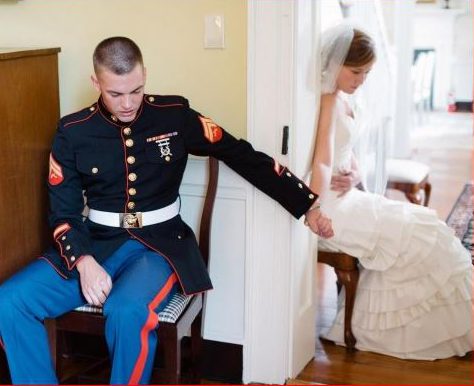
Marine prays with his wife on their wedding day

One of my favorite movies for explaining the differences between men and women is “High Noon” (1952).

Here’s the summary from IMDB:

Former marshal Will Kane (Gary Cooper) is preparing to leave the small town of Hadleyville, New Mexico, with his new bride, Amy (Grace Kelly), when he learns that local criminal Frank Miller has been set free and is coming to seek revenge on the marshal who turned him in. When he starts recruiting deputies to fight Miller, Kane is discouraged to find that the people of Hadleyville turn cowardly when the time comes for a showdown, and he must face Miller and his cronies alone.

The main theme of the film concerns Amy’s decision to break her wedding vows the very day that she makes them. She tells her new husband that he must bow to her will, and give up his male role as protector. When he explains his reasons for standing his ground to her practically (Miller will hunt them down) and morally (he has a duty protect the town), she dismisses both. She tells him that if he doesn’t run away from Miller and his gang with her, that she will get on the train and leave town by herself.

The intro of film shows the member’s of Miller’s gang assembling, and the words of the song explain the central conflict between husband and wife:

Here’s the part of the lyrics we care about:

The noonday train will bring Frank Miller.
If I’m a man I must be brave
And I must face that deadly killer
Or lie a coward, a craven coward,
Or lie a coward in my grave.

O to be torn ‘twixt love and duty!
S’posin’ I lose my fair-haired beauty!
Look at that big hand move along
Nearin’ high noon.

He made a vow while in State’s Prison,
Vow’d it would be my life or his’n
I’m not afraid of death, but O,
What will I do if you leave me?

Do not forsake me O my darlin’
You made that promise when we wed.
Do not forsake me O my darlin’
Although you’re grievin’, I can’t be leavin’
Until I shoot Frank Miller dead.

What’s interesting is that his new wife Amy apparently does not understand the meaning of wedding vows or the natural roles of good men as protectors of the weak, and fighters against evil. Although she vowed to stick by him and help him, the minute anything threatening appears that makes her feel unhappy, she abandons her vows and abandons her man. Let’s break down her mistakes now, using actual conversations from the movie.

First, she doesn’t understand or respect the man she married as a man:

Kane: [while riding out of town] It’s no good. I’ve got to go back, Amy.

Amy: Why?

Kane: This is crazy. I haven’t even got any guns.

Amy: Then let’s go on. Hurry.

Kane: No, that’s what I’ve been thinkin’. They’re making me run. I’ve never run from anybody before.

Amy: I don’t understand any of this.

Kane: [after looking at his vest watch] Well, I haven’t got time to tell ya.

Amy: Then don’t go back, Will.

Kane: I’ve got to. That’s the whole thing. [He turns the buggy around and rides back into town]

Her feelings and her desires for the world to be a happy place for her are so strong that they cloud her judgment.

Second, she doesn’t understand the threat posed by evil men:

More:

Kane: I sent a man up five years ago for murder. He was supposed to hang. But up North, they commuted it to life and now he’s free. I don’t know how. Anyway, it looks like he’s coming back.

Amy: I still don’t understand.

Kane: He was always wild and kind of crazy. He’ll probably make trouble.

Amy: But that’s no concern of yours, not anymore.

Kane: I’m the one who sent him up.

Amy: Well, that was part of your job. That’s finished now. They’ve got a new marshal.

Kane: He won’t be here until tomorrow. Seems to me I’ve got to stay. Anyway, I’m the same man with or without this. [He pins his badge on his vest]

Amy: Oh, that isn’t so.

Kane: I expect he’ll come lookin’ for me. Three of his old bunch are waiting at the depot.

Amy: That’s exactly why we ought to go.

Kane: They’ll just come after us, four of ’em, and we’d be all alone on the prairie.

Amy: We’ve got an hour.

Kane: What’s an hour?…What’s a hundred miles? We’d never be able to keep that store, Amy. They’d come after us and we’d have to run again, as long as we live.

Amy: No we wouldn’t, not if they didn’t know where to find us. Oh Will! Will, I’m begging you, please let’s go.

Kane: I can’t.

Amy: Don’t try to be a hero. You don’t have to be a hero, not for me.

Kane: I’m not trying to be a hero. If you think I like this, you’re crazy.

Instead of recognizing how her feelings are deceiving her about the threat and trusting her husband, she tries to force him to accept her mistaken view of reality by threatening to abandon him.

One of Kane’s ex-girlfriends has a talk with Amy, which helps her to understand who Kane is, and what is expected of her:

Amy: That man downstairs, the clerk, he said things about you and Will. I’ve been trying to understand why he wouldn’t go with me, and now all I can think of is that it’s got to be because of you…Let him go, he still has a chance. Let him go.

Helen: He isn’t staying for me. I haven’t spoken to him for a year – until today. I am leaving on the same train you are…What kind of woman are you? How can you leave him like this? Does the sound of guns frighten you that much?

Amy: I’ve heard guns. My father and my brother were killed by guns. They were on the right side but that didn’t help them any when the shooting started. My brother was nineteen. I watched him die. That’s when I became a Quaker. I don’t care who’s right or who’s wrong. There’s got to be some better way for people to live. Will knows how I feel about it.

Helen: I hate this town. I always hated it – to be a Mexican woman in a town like this.

Amy: I understand.

Helen: You do? That’s good. I don’t understand you. No matter what you say. If Kane was my man, I’d never leave him like this. I’d get a gun. I’d fight.

Amy: Why don’t you?

Helen: He is not my man. He’s yours.

Helen understands the need for a wife to stand by her man. But Amy’s response to evil is to shut her eyes and focus on feeling good and being happy. Notice that her “better way” is unspecified – it’s just a feeling she has that pacificism and no-violence will somehow “work” to stop evil. But in reality, pacifism is not a “better way” of dealing with evil – it does not work. Her pacifist response not only does not make evil go away, it actually encourages more evil. Weakness emboldens evildoers, and laying down your arms provokes them to do more evil. Will Kane knows this, but she won’t listen to him.

You can watch the final gunfight here, as well as Amy’s final decision:

So, this is why I really recommend this movie as a discussion-starter when you like a girl and are thinking of marrying her. It clarifies the essential problem with many young women today not being ready for marriage. To be fair, most women come around to respect their husbands and his different roles after they get married. However, the risk of divorce is so dangerous that it makes sense to bring it up for discussion before the marriage happens. Marriage is supposed to be an engine to serve God, and the success of that enterprise cannot be left to chance. You can’t just rely on the fact that she says the words of the vow, you have to check to see if she has a habit of keeping her promises when it goes against her own self-interest.

Ask yourself: Who are you, as a man? And does your woman accept that you have obligations to stand up to evil and do good ? Will she support you in your battle against evil, or will the marriage just be about her feelings and desires? I would especially beware of women who think that God is speaking to them through their feelings and desires. Look at her friends: are they practical and successful? Or are they irresponsible, unaccountable and reckless? Look at her father: does he have a plan for her, and does he lead her to be practical, frugal and hard-working? If you are not going to get an ally and a supporter in a wife, then you will not be able to serve God well, as a married man. Think about it.

What does the common practice of withholding sex reveal about women?

Dennis Prager features a lot of discussions about male-female relationships on his show, particularly during the male-female hour. I think this is one of the parts of his show that I really like best, because he knows what he is talking about.

He did a two part series a while back on 1) male sexuality and 2) what women should do about it within a marriage.

Part 1 is here.

Excerpt:

It is an axiom of contemporary marital life that if a wife is not in the mood, she need not have sex with her husband. Here are some arguments why a woman who loves her husband might want to rethink this axiom.

First, women need to recognize how a man understands a wife’s refusal to have sex with him: A husband knows that his wife loves him first and foremost by her willingness to give her body to him. This is rarely the case for women. Few women know their husband loves them because he gives her his body (the idea sounds almost funny). This is, therefore, usually a revelation to a woman. Many women think men’s natures are similar to theirs, and this is so different from a woman’s nature, that few women know this about men unless told about it.

This is a major reason many husbands clam up. A man whose wife frequently denies him sex will first be hurt, then sad, then angry, then quiet. And most men will never tell their wives why they have become quiet and distant. They are afraid to tell their wives. They are often made to feel ashamed of their male sexual nature, and they are humiliated (indeed emasculated) by feeling that they are reduced to having to beg for sex.

When first told this about men, women generally react in one or more of five ways…

He then explains the 5 ways that women respond to this.

Here’s one:

1. You have to be kidding. That certainly isn’t my way of knowing if he loves me. There have to be deeper ways than sex for me to show my husband that I love him.

And this is the common mistake that some feminist women make because they think that men are just hairy women with no feelings and desires of their own that are distincly theirs. In the past, all women understood how men are different than women, but today almost no younger feminist women do. In fact, many younger women today struggle with the idea that there is anything different about men that they need to learn. The only thing that they need to know is what makes women happy, and that it is everyone else’s job to make women happy, so that women can then behave nicely (whatever that means). Younger feminist women today often think that they only need to be in touch with their own feelings – and that men and children simply have to get used to the idea that they have no right to make any demands on a woman – she has no moral obligations in a marriage.

Here’s another from the list:

4. You have it backwards. If he truly loved me, he wouldn’t expect sex when I’m not in the mood.

I think this whole problem of feminist women not understanding men, and of demeaning male feelings and values, is very serious. In my opinion, there is a whole lot of work that needs to be done by feminism-influenced women in order to fix this problem. The best place to learn about this is in Dr. Laura’s book “The Proper Care and Feeding of Husbands”. It’s like an application form for a serious relationship. Sex is one thing, but a serious man should insist that a woman take him seriously – and take marriage and children seriously. Pre-marital sex, having fun, getting drunk, and going out, etc. are not the right foundation for a relationship that is defined by the need for mutual self-sacrifice. There is no such thing as a “feminist” marriage – marriage is not about selfishness and playing the victim.

I actually had a conversation with a Christian woman once who said that women should not be obligated to do things that they didn’t feel like doing. I asked her if men were obligated to go to work when they didn’t feel like going. She said yes, and acted as though I were crazy for asking. I just laughed, because she didn’t even see the inconsistency. Many young feminist women today just don’t understand men, and they don’t want to understand them. They just want what they want and in the quickest way possible. Understand the needs of men and children, or how feminist-inspired laws discourage men from committing to marriage and parenting, are of no interest at all.

Part 2 is here.

Excerpt:

Here are eight reasons for a woman not to allow not being in the mood for sex to determine whether she denies her husband sex.

He then explains the eight reasons.

Here’s one of them:

7. Many contemporary women have an almost exclusively romantic notion of sex: It should always be mutually desired and equally satisfying or one should not engage in it. Therefore, if a couple engages in sexual relations when he wants it and she does not, the act is “dehumanizing” and “mechanical.” Now, ideally, every time a husband and wife have sex, they would equally desire it and equally enjoy it. But, given the different sexual natures of men and women, this cannot always be the case. If it is romance a woman seeks — and she has every reason to seek it — it would help her to realize how much more romantic her husband and her marriage are likely to be if he is not regularly denied sex, even of the non-romantic variety.

This makes the point that many young feminist women today do not really understand that they are, in a sense, capable of changing their husband’s conduct by the way they act themselves. I think that younger feminist women seem to think that their role in the relationship is to sort of do nothing and wait for the man to serve them. But relationships take work, and they take work from both participants.

At the end of the article, Prager makes a general point about women that I think needs to be emphasized over and over and over:

That solution is for a wife who loves her husband — if she doesn’t love him, mood is not the problem — to be guided by her mind, not her mood, in deciding whether to deny her husband sex.

I think that is an excellent question to ask a woman. What does it mean to love a man? I was forwarded one amazing response from a Calvinist woman recently in which she explained several things that she wanted to do to meet a particular man’s needs and make his life easier, and what she was prepared to do now in order to show him that she really could do handle the role. I think that she said these things out of sympathy and understanding of that man, and that was very encouraging.

But I think that kind of seriousness about taking of someone else as they really are, self-sacrificially, is rare. And it makes me wonder what people think that marriage is when they get into the church and make vows that, ostensibly, will require self-sacrifice. What do women think that marriage is? What is the goal of it? What makes a marriage successful? Why do women think that men marry? What do men get out of marriage? What are the woman’s responsibilities to the man in a marriage? I think these are questions that men should ask women. And the should not be satisfied with glib answers. Men should demand that books be read, that essays be written, that skills be developed, and that the woman’s life experiences show that she has understood what will be expected from her and why.

I think that it’s a good idea for men to try to get married, but they should be careful to make sure that the woman they choose is sensitive to their needs, just as men ought to be sensitive to the needs of women.

William Lane Craig’s secret weapon is his amazing wife Jan

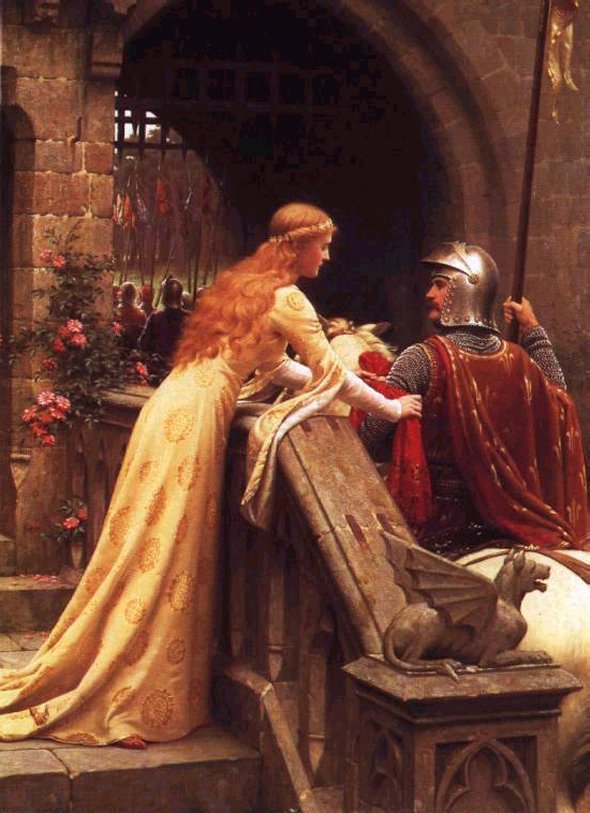
My favorite painting: "Godspeed" by Edmund Blair Leighton, 1900
My favorite painting: “Godspeed” by Edmund Blair Leighton, 1900

I’m re-posting this classic post because it was mentioned in a recent episode of the Reasonable Faith podcast.

I want to draw your attention to a talk on “Vision in Life” given by Dr. William Lane Craig. Dr. Craig is the ablest defender of the Christian faith operating today. He has done formal academic debates with all of the best known atheists on major university campuses in front of thousands of university students.

It turns out that he owes a lot of his success to his amazing wife Jan.

The MP3 file is here. (32 minutes)

This talk was Dr. Craig’s chapel address to Biola University students.

About 11 minutes into the talk, Bill describes what happened after he finished his Bachelor’s degree at Wheaton:

And so I joined the staff of Campus Crusade for Christ for 2 years, and was assigned to Northern Illinois University. And that was where I met my wife Jan. She was a graduate of the University of North Dakota where she had come to faith in Christ. And she had a similar vision for her life of evangelism and discipleship.

And as we worked at NIU together, she with gals and I with the guys, leading students to Christ and discipling them to walk with the Lord, we fell in love. And we decided that we would be more effective if we joined forces and became a team.

So their reason for getting together was because they thought that they would be more effective in evangelism and discipleship if they worked as a team.

It is at this point in the talk where Bill begins to explain just how Jan molded him into the lean, mean debating machine that travels the world striking terror into the hearts of atheists.

Bill’s first story about Jan occurs early after their marriage while he is working on his first Masters degree at Trinity:

And it was also at that time that I began to see what an invaluable asset the Lord had given me in Jan. I remember I came home from classes one day, and found her at the kitchen table with all the catalogs and schedules and papers spread out in front of her and she said, “look! I’ve figured out how you can get two Masters degrees at the same time that it would normally take to get one! All you have to do is take overloads every semester, go to all full-time summer school and do all these other things, and you can do two MAs in the time it takes to do one!”

And I thought, whoa! Are you sure you really want to make the commitment it takes to do this kind of thing? And she said, “Yeah! Go for it!” And it was then I began to see that God had given me a very special woman who was my supporter – my cheerleader – and who really believed in me. And as long as she believed in me, that gave me the confidence to dream bigger dreams, and to take on challenges that I had never thought of before.

In an article on his web site, he talks about how Jan encouraged him to do his first Ph.D:

As graduation from Trinity neared, Jan and I were sitting one evening at the supper table in our little campus apartment, talking about what to do after graduation. Neither of us had any clear leading or inclination of what we should do next.

So Jan said to me, “Well, if money were no object, what would you really like to do next?”

I replied, “If money were no object, what I’d really like to do is go to England and do a doctorate under John Hick.”

“Who’s he?” she asked.

“Oh, he’s this famous British philosopher who’s written extensively on arguments for the existence of God,” I explained. “If I could study with him, I could develop a cosmological argument for God’s existence.”

But it hardly seemed a realistic idea.

The next evening at supper Jan handed me a slip of paper with John Hick’s address on it. “I went to the library today and found out that he’s at the University of Birmingham in England,” she said. “Why don’t you write him a letter and ask him if you can do a doctoral thesis under him on the cosmological argument?”

What a woman! So I did, and to our amazement and delight Professor Hick wrote back saying he’d be very pleased to supervise my doctoral work on that subject. So it was an open door!

And in the same article, he explains how Jan encouraged him to get his second Ph.D:

As Jan and I neared the completion of my doctoral studies in Birmingham, our future path was again unclear to us. I had sent out a number of applications for teaching positions in philosophy at American universities but had received no bites. We didn’t know what to do.

I remember it like yesterday. We were sitting at the supper table in our little house outside Birmingham, and Jan suddenly said to me, “Well, if money were no object, what would you really like to do next?”

I laughed because I remembered how the Lord had used her question to guide us in the past. I had no trouble answering the question. “If money were no object, what I’d really like to do is go to Germany and study under Wolfhart Pannenberg.”

“Who’s he?”

“Oh, he’s this famous German theologian who’s defended the resurrection of Christ historically,” I explained. “If I could study with him, I could develop a historical apologetic for the resurrection of Jesus.”

Our conversation drifted to other subjects, but Jan later told me that my remark had just lit a fire under her. The next day while I was at the university, she slipped away to the library and began to research grants-in-aid for study at German universities. Most of the leads proved to be defunct or otherwise inapplicable to our situation. But there were two grants she found that were possibilities. You can imagine how surprised I was when she sprung them on me!

Both of these Ph.D experiences are also described in the talk. And the talk concludes as follows:

I am so thankful to be married to a woman who is tremendously resourceful, tremendously talented and energetic, who could have pursued an independent career in any number of areas, but instead, she has chose to wed her aspirations to mine, and to make it her goal to make me the most effective person I can be, for Christ. And she has been like my right arm in ministry over these many years. And it is a tremendous privilege to be a team with a person like that.

And you young men, I would encourage you, if you marry, to find a gal who shares your vision, not some independent vision, but who is interested in aligning herself with you, and pursuing together a common vision and goal that will draw you [together], so that you will avoid the growing separateness that so often creeps into marriages.

And now you know the rest of Bill’s story. The person you marry will have an enormous influence on the impact you will have for Christ and his Kingdom. It is up to you to decide whether that influence is going to be positive or negative, by deciding if you will marry, and if you do marry, by deciding whom you will marry.

You may also be interested in this talk given by William Lane Craig, entitled “Healthy Relationships” (National Faculty Leadership Conf. 2008) (audio here) In that talk, he offers advice to Christians who want to have a marriage that is consistent with their Christian faith.