Tag Archives: Discrimination

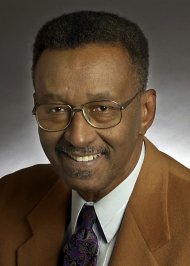
Walter Williams interviewed by libertarian Reason magazine

Walter Williams
Walter Williams

Here’s the video. (H/T The Blog Prof)

He’s my second favorite economist, right behind Thomas Sowell.

In his latest column, he explains the famous “Broken Window Fallacy”.

Excerpt:

Economic lunacy abounds, and often the most learned, including Nobel Laureates, are its primary victims. The most recent example of economic lunacy is found in a Huffington Post article titled “The Silver Lining of Japan’s Quake” written by Nathan Gardels, editor of New Perspectives Quarterly, who has also written articles for The Wall Street Journal, Los Angeles Times, New York Times and Washington Post.

Mr. Gardels says, “No one — least of all someone like myself who has experienced the existential terror of California’s regular tremors and knows the big one is coming here next — would minimize the grief, suffering and disruption caused by Japan’s massive earthquake and tsunami. But if one can look past the devastation, there is a silver lining. The need to rebuild a large swath of Japan will create huge opportunities for domestic economic growth, particularly in energy-efficient technologies, while also stimulating global demand and hastening the integration of East Asia. … By taking Japan’s mature economy down a notch, Mother Nature has accomplished what fiscal policy and the central bank could not.”

[…]Why might Japan’s and Florida’s devastation be seen as “pluses”? French economist Frederic Bastiat (1801-1850) explained it in his pamphlet “What is Seen and What is Not Seen,” saying, “There is only one difference between a bad economist and a good one: the bad economist confines himself to the visible effect; the good economist takes into account both the effect that can be seen and those effects that must be foreseen.”

Bastiat elaborated further in his “Broken Window Fallacy” parable where a vandal smashes a shopkeeper’s window.

A crowd forms, sympathizing with the shopkeeper. Soon, someone in the crowd suggests that instead of a tragedy, there might be a silver lining. Instead of the boy being a vandal, he was a public benefactor, creating economic benefits for everyone in town. Fixing the broken window creates employment for the glazier, who will then buy bread and benefit the baker, who will then buy shoes and benefit the cobbler and so forth.

Bastiat says that’s what’s seen. What is not seen is what the shopkeeper would have done with the money had his window not been smashed. He might have purchased a suit from the tailor. Therefore, an act that created a job for the glazier destroyed a job for the tailor. On top of that, had the property destruction not occurred, the shopkeeper would have had a suit and a window. Now he has just a window and as a result, he is poorer.

I learned a lot about economics from his columns.

How do secular leftist professors feel about Christian students?

From the Alliance Defense Fund.

Excerpt:

The late American philosopher Richard Rorty (d. 2007) in describing his assessment of the role of university professor wrote:  “When we American college teachers encounter religious fundamentalists, we do not consider the possibility of reformulating our own practices of justification so as to give more weight to the authority of the Christian scriptures.  Instead, we do our best to convince these students of the benefits of secularization.”  The re-education imperative is one that he, “like most Americans who teach humanities or social science in colleges and universities, invoke when we try to arrange things so that students who enter as bigoted, homophobic, religious fundamentalists will leave college with views more like our own.”  Rorty explains to the “fundamentalist” parents of his students:  “we are going to go right on trying to discredit you in the eyes of your children, trying to strip your fundamentalist religious community of dignity, trying to make your views seem silly rather than discussable.”  He helpfully explains that “I think those students are lucky to find themselves under the benevolent Herrschaft [domination] of people like me, and to have escaped the grip of their frightening, vicious, dangerous parents.”

The sociologist Alvin Gouldner in his book The Future of Intellectuals and the Rise of the New Class set forth a number of the historical developments that were decisive in the formation of the revolutionary intellectual class.  Among the factors is the process of secularization which de-sacralizes authority and enables challenges to theological traditions.  Another factor was the extension of non-church public schooling.  The colleges and universities in particular generate “dissent, deviance, and the cultivation of an authority-subverting culture of critical discourse.”  And the school teachers at all levels conceive and fulfill their tasks as representatives of (the abstract) society as a whole (whatever that is), thus distanced from and with no allegiance or obligation to the values of the parents of their students.  A related factor is the structure of the new educational system:  “increasingly insulated from the family system,” thereby situated to serve as “an important source of values among students divergent from those of their families.”  In both form and content (which are not so neatly divisible, by the way) the state educational enterprise has been leveraged to missionary ends, further undermining parental authority and replacing its formative function.

Law Professor Samuel Levinson has with welcome candor revealed that it is not due to his sympathy for certain religious students that he prefers that public grade schools grant limited exemptions to those students with conscientious objections to portions of the curriculum.  Rather, such measures are calculated to mollify those religious students, thereby keeping them in the secularizing environment of the government school where they are likely to have their views transformed.  With just enough solicitude for such students’ interests, they may be convinced to stay put, and thus be “lured away from the views—some of them only foolish, others, alas, quite pernicious—of their parents.”

To push these [Christian] students from the public schools . . . will assure that they will in fact be educated within institutions that are, from my perspective at least, far more limited, and indeed, “totalitarian” than anything likely to be found within a decent public school.  My desire to “lure” religious parents back to the public schools thus has at least a trace of the spider’s web about it.

And there’s more than a trace of irony in his assigning “totalitarian” levels as he plots means to manipulate the worldviews of children by coaxing them to remain in institutions designed for that very purpose.  Spider’s web, indeed.

I was just having a conversation with a couple of left-wing Christians on Facebook who were telling me how Christianity was compatible with left-wing politics. They have no idea what they are talking about – they just don’t know what they are up against. They are the ones who vote for more funding for public schools, thinking they are innocuous.

One of the reasons that kept me from marrying is that I didn’t meet anyone in university who took this threat as seriously as I do. If you believe that children should be influential for the Christ, then reading that excerpt should scare you. But if babies are just for baby pictures, then it’s not really a big deal. But it’s a big deal to me.

University of California Davis: only Christians commit religious discrimination

From an Alliance Defense Fund press release.

Excerpt:

An Alliance Defense Fund allied attorney sent a letter to the University of California at Davis Wednesday on behalf of more than 25 students who object to a policy that defines religious discrimination as Christians oppressing non-Christians.

“Christians deserve the same protections against religious discrimination as any other students on a public university campus,” said ADF Senior Counsel David French. “It’s ridiculously absurd to single out Christians as oppressors and non-Christians as the only oppressed people on campus when the facts show that public universities are more hostile to Christians than anyone else.”

The UC-Davis policy defines “Religious/Spiritual Discrimination” as “The loss of power and privilege to those who do not practice the dominant culture’s religion.  In the United States, this is institutionalized oppressions toward those who are not Christian.”

The letter from ADF-allied attorney Tim Swickard, one of nearly 1,900 attorneys in the ADF alliance, explains, “It is patently clear that UC Davis’s definition of religious discrimination is blatantly unconstitutional under both the Federal and California State Constitutions. The policy singles out some faiths for official school protection while denying the same protection to others solely on the basis of their particular religious views….. Moreover, the UC Davis policy is simply nonsensical given the environment on most University campuses where Christian students, if anything, are among the most likely to be subjected to discrimination because of their faith.”

The letter cites a recent study of more than 1,200 faculty at public universities that showed that professors admitted to having a significant bias against Christian students, particularly evangelicals. Fifty-three percent admitted to having negative feelings about evangelical students solely because of their religious beliefs. Mormon and Catholic students did not fare much better in the study. A 2004 Harvard Institute of Politics poll indicated that only 35 percent of college students call themselves “born again,” and only 22 percent identify as evangelical Christians. A 2000 study of teens by the Barna Research Group found that only 26 percent claim to be “committed to the Christian faith.”

But that’s not all. Apparently, laws can be applied differently to certain groups.

Consider this interesting column from the Toronto Sun.

Excerpt:

When Ontario’s McGuinty government and the leadership of the OPP sided with First Nations protesters against local residents in Caledonia in 2006, it outraged many people.

In her seminal book about the issue, Helpless, Christie Blatchford avoided the native rights issue and concentrated on the abandonment of rule of law which, curiously (or maybe not so curiously), offended many rank and file OPP officers who were ordered not to provoke Indians, but to hammer down locals who protested against the protesters.

Two of the victims of the temporary policy — Gary McHale and Mark Vandermaas, once arrested for raising the Canadian flag!

And here’s an example from Denmark:

When historian Lars Hedegaard was charged with making disparaging remarks about Muslims and Sharia law, Jesper Langballe, a Danish MP was similarly charged for supporting Hedegaard’s right to free speech.

Both were charged under Article 266b of a Danish law which, extraordinarily for a democratic country, does not allow “truth” as a defence.

Article 266b says “whoever publicly … issues a … communication by which a group of persons is threatened, insulted or denigrated … is liable to a fine or incarceration for up to two years.”

In other words, the truth of whatever might be said is irrelevant.

MP Langballe pleaded guilty, because he realized the Danish law doesn’t recognize “truth” as a defence.

And here’s an example from Austria:

Meanwhile in Austria, Elisabeth Sabaditsch-Wolff faces three years in prison if convicted on Tuesday, of denigrating religious teachings — specifically Muslim teachings with quotes from the Koran — and inciting hatred against a religious group.

Among other things, Ms. Wolff felt Sharia law was not compatible with a free and secular society, and referred to Paris, Brussels, Rotterdam where there are “no-go zones where Sharia is effectively the law … (where) immigrant youths (mostly Muslim) torch cars, throw stones at police, etc.”

She denies she sought to incite hatred and violence, but “we need to be informed, make people aware, to inform our politicians and write letters to the newspapers.”

It’s so strange because these laws are never applied equally – only some groups are protected, while other groups can only be offenders.