
Tag Archives: Women

New study finds that choice to abort nearly doubles the risk of mental illness

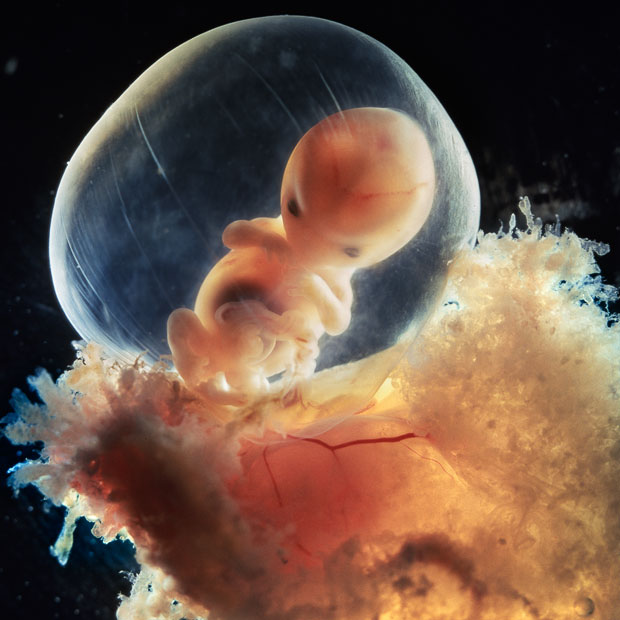
Unborn baby scheming about prestigious research papers
Unborn baby scheming about a new research paper

Here is the study published in the British Journal of Psychiatry. (H/T Mary)

Abstract:

Background Given the methodological limitations of recently published qualitative reviews of abortion and mental health, a quantitative synthesis was deemed necessary to represent more accurately the published literature and to provide clarity to clinicians.

Aims To measure the association between abortion and indicators of adverse mental health, with subgroup effects calculated based on comparison groups (no abortion, unintended pregnancy delivered, pregnancy delivered) and particular outcomes. A secondary objective was to calculate population-attributable risk (PAR) statistics for each outcome.

Method After the application of methodologically based selection criteria and extraction rules to minimise bias, the sample comprised 22 studies, 36 measures of effect and 877 181 participants (163 831 experienced an abortion). Random effects pooled odds ratios were computed using adjusted odds ratios from the original studies and PAR statistics were derived from the pooled odds ratios.

Results Women who had undergone an abortion experienced an 81% increased risk of mental health problems, and nearly 10% of the incidence of mental health problems was shown to be attributable to abortion. The strongest subgroup estimates of increased risk occurred when abortion was compared with term pregnancy and when the outcomes pertained to substance use and suicidal behaviour.

Conclusions This review offers the largest quantitative estimate of mental health risks associated with abortion available in the world literature. Calling into question the conclusions from traditional reviews, the results revealed a moderate to highly increased risk of mental health problems after abortion. Consistent with the tenets of evidence-based medicine, this information should inform the delivery of abortion services.

Life News has more about the study.

Excerpt:

A new study published in the British Journal of Psychiatry by leading American researcher Dr. Priscilla Coleman of Bowling Green State University finds women who have an abortion face almost double the risk of mental health problems as women who have their baby.

Coleman’s study is based on an analysis of 22 separate studies which, in total, examine the pregnancy experiences of 877,000 women, with 163,831 women having an abortion. The study also indicated abortion accounts for one in ten of every adverse mental health issue women face as a whole.

“Results indicate quite consistently that abortion is associated with moderate to highly increased risks of psychological problems subsequent to the procedure,” the study says. “Overall, the results revealed that women who had undergone an abortion experienced an 81 percent increased risk of mental health problems, and nearly 10 percent of the incidence of mental health problems were shown to be directly attributable to abortion.”

The peer-reviewed study indicated abortion was linked with a 34 percent chance of anxiety disorders, and 37 percent higher possibility of depression, a more than double risk of alcohol abuse (110 percent), a three times greater risk of marijuana use (220 percent), and 155 percent greater risk of trying to commit suicide.

When compared to unintended pregnancy delivered women had a 55% increased risk of experiencing any mental health problem.

[…]“The paper is being published in a very prestigious journal, the British Journal of Psychiatry, which is considered one of the top psychiatry journals in the world. This means the paper has been extensively scrutinized by well-respected scientists and the results of studies are trusted by practitioners throughout the world,” Coleman said.

I was always told when debating the abortion issue not to talk about the effects on women, because the studies conflict. Some women have positive reactions after an abortion (relief) and some have negative reactions (guilt). This paper tips the balance in favor of the view that abortion is harmful to women. It confirms other recent studies that showed that abortion does have a negative impact on women’s mental health.

Abortion and breast cancer

Recent studies have also confirmed that there is a link between abortion and breast cancer.

Consider this article in the UK Daily Mail.

Excerpt:

An abortion can triple a woman’s risk of developing breast cancer in later life, researchers say. A team of scientists made the claim while carrying out research into how breastfeeding can protect women from developing the killer disease. While concluding that breastfeeding offered significant protection from cancer, they also noted that the highest reported risk factor in developing the disease was abortion. Other factors included the onset of the menopause and smoking. The findings, published in the journal Cancer Epidemiology, are the latest research to show a link between abortion and breast cancer. The research was carried out by scientists at the University of Colombo in Sri Lanka. It is the fourth epidemiological study to report such a link in the past 14 months, with research in China, Turkey and the U.S. showing similar conclusions.

[…]There has been an 80 per cent increase in the rate of breast cancer since 1971, when in the wake of the Abortion Act, the number of abortions rose from 18,000 to nearly 200,000 a year.

Earlier this year, Dr Louise Brinton, a senior researcher with the U.S. National Cancer Institute who did not accept the link, reversed her position to say she was now convinced abortion increased the risk of breast cancer by about 40 per cent.

Note that there were only 300 people in the new study, so it is a small study. But it confirms the Turkey study that I blogged on before, and the China study that I blogged about before, and the American study that I blogged about before.

, , , , , , , , , , , , , , , , , , , , , , , , , , ,

How did Dutch women get to be the happiest women in the world?

Mary sends me this article from Macleans, which she found on pastor Mark Driscoll’s blog.

Excerpt:

Like many Dutch women, Marie-Louise van Haeren views herself as liberated. “Every woman in Holland can do whatever she wants with her life,” says Van Haeren, 52, who lives just outside of Rotterdam and rides her bicycle or the train to work three days a week at a police academy, where she counsels students. She has worked part-time her entire career, as have almost all of her friends—married or unmarried, kids or no kids—save one or two who logged more hours out of financial necessity. Van Haeren, who wasn’t married until last year and has no children, says she’s worked part-time “to have time to do things that matter to me, live the way I want. To stay mentally and physically healthy and happy.”

Many women in the Netherlands seem to share similar views, valuing independence over success in the workplace. In 2001, nearly 60 per cent of working Dutch women were employed part-time, compared to just 20 per cent of Canadian women. Today, the number is even higher, hovering around 75 per cent. Some, like Van Haeren, view this as progress, evidence of personal freedom and a commitment to a balanced lifestyle.

[…]…Dutch women appear deaf to the siren call of the workplace. Asked whether they’d like to increase their hours, just four per cent said yes, compared to 25 per cent of French women. And while across the Channel, British media are heralding the resurgence of feminism—last weekend, some 500 women crowded into a feminist training camp, UK Feminista, to be trained in direct action and activism—in Holland, women like Van Haeren baldly proclaim no further need for the movement. “Feminism wasn’t necessary anymore by the time I grew up,” she says. “In my eyes, it was a thing of the past.”

The relationship between personal lifestyle choices and the socio-economic standing of women has been under the microscope in Holland ever since the publication of Dutch Women Don’t Get Depressed in 2008. Ellen de Bruin, who patterned her book after Mireille Guiliano’s bestseller French Women Don’t Get Fat, began by defining the stereotypical Dutch woman: naturally beautiful with a no-fuss sense of style, she rides her bike to fetch the groceries, has ample time with her kids and husband, takes art classes in the middle of the week, and spends leisurely afternoons drinking coffee with her friends. She loves to work part-time and does not earn as much as her husband, but she’s fine with that—he takes care of the bills. The book went on to note that Dutch women rank consistently low, compared to those in other Western countries, in terms of representation in top positions in business and government—and rank consistently near the top in terms of happiness and well-being. In fact, just about everyone in Holland seems pleased with the status quo; in 2009, the Netherlands ranked highest of all OECD countries in terms of overall well-being.

Could it be that the Bible actually speaks truly about the differences between men and women? That doesn’t mean that women and men should be careless when choosing a spouse – they should choose wisely. But maybe it is better for men and women to play complementary roles. Maybe they were designed to be able to do different things, because they have different strengths?  Maybe they fit together hand in glove in marriage, canceling out the weaknesses of the other?

New study finds that cohabitation is harmful to children

Note: I had to pull the Mike Adams column because it was mistakenly published today when it was supposed to be posted on Monday. So I re-scheduled my post to Monday.

From communist NPR, of all places. (H/T Mark Driscoll via Mary)

Excerpt:

In a new report out on Tuesday, they say research shows the children of cohabiting parents are at risk for a broad range of problems, from trouble in school to psychological stress, physical abuse and poverty.

The study is put out by the National Marriage Project and the Institute for American Values, groups whose missions include strengthening marriage and family life. It suggests a shift in focus is needed away from the children of divorce, which has long been a preoccupying concern for such scholars.

Brad Wilcox, a report co-author and head of the National Marriage Project, says divorce rates have steadily dropped since their peak in 1979-80, while rates of out-of-wedlock childbearing have soared. Forty-one percent of all births are now to unwed mothers, many of them living with — but not married to — the child’s father.

[…]Wilcox says the children of the divorce revolution grew up to be understandably gun-shy about marriage. Many are putting it off, even after they have kids. But research shows such couples are twice as likely to split.

“Ironically,” he says, “they’re likely to experience even more instability than they would [have] if they had taken the time and effort to move forward slowly and get married before starting a family.”

In fact, another recent study finds that a quarter of American women with multiple children conceived them with more than one man. Psychologist John Gottman, a co-author of Tuesday’s report, says that kind of instability can have a negative impact on kids in all kinds of ways.

“Both in externalizing disorders, more aggression,” Gottman says, “and internalizing disorders, more depression. Children of cohabiting couples are at greater risk than children of married couples.”

I think the story of this post is that pastor Mark Driscoll posted this. If there is one hope for saving society, it is that Christian pastors like Mark Driscoll and Wayne Grudem get widely imitated in their habit of showing WHY what the Bible says is true, and linking WHAT the Bible says is true with real, published evidence – scientific, historical, statistical, etc. Either we start to think about emphasizing Christianity as a true worldview, or Christianity is done, and Western Civilization with it. A lot of men would immediately return to church if church involved more apologetics and worldview content.

Here’s my previous mean, snarky post opposing cohabitation.

Marriage is the best way to prevent child poverty, so let’s have some policies that promote marriage and discourage cohabitation.

Related posts