
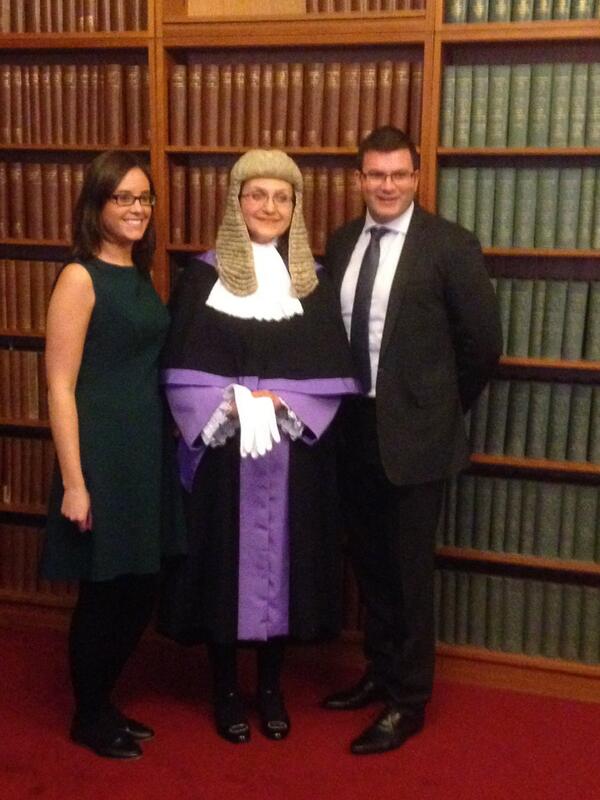
The UK Telegraph reports on the state of religious liberty in the United Kingdom.
Excerpt:
A Christian NHS worker suspended for giving a religious book to a Muslim colleague has lost her appeal against a ruling that the decision to discipline her was lawful.
Victoria Wasteney, 39, was found guilty by her NHS employer in 2014 of “harassing and bullying” a work friend for giving her a book about a Muslim woman’s encounter with Christianity, praying with her and asking her to church.
She was suspended for nine months and given a written warning, even though the woman had been happy to discuss faith with her and never gave evidence about her allegations to the NHS.
Ms Wasteney, a senior occupational therapist, challenged the decision by East London NHS Foundation Trust at an employment tribunal last year, but it ruled that her employer had not discriminated against her.
A judge gave her the chance to appeal against that decision, saying it should consider whether the original ruling had correctly applied the European Convention on Human Rights’ strong protection of freedom of religion and expression.
But at a hearing in central London on Thursday, Her Honour Judge Eady QC dismissed the appeal.
Following the decision, Miss Wasteney, from Epping, Essex, said: “What the court clearly failed to do was to say how, in today’s politically correct world, any Christian can even enter into a conversation with a fellow employee on the subject of religion and not, potentially, later end up in an employment tribunal.
“If someone sends you friendly text messages, how is one to know that they are offended? I had no idea that I was upsetting her.”
[…]The woman, who quit her job shortly after making the complaints, never gave any evidence about her allegations to the NHS or later to the employment tribunal.
It sounded to me like the Muslim woman encouraged the Christian woman and the Christian woman was later surprised by the complaints. I think most Christians can take no for an answer, but Christians are caring, and they see offering to pray and offering to bring someone to church as a caring thing to do. If they don’t hear a no, then they keep right on doing what comes naturally to Christians – talking about spiritual things and trying to lead others to the Lord.
It was much easier to do this in the past, before people got more concerned about not feeling offended than they were about discussing what is or is not true. So now, even in a country like England, you can be anything you want to be as long as you’re not behaving like a Christian in public. I think this is especially the case when the people who adjudicate these cases are more focused on feelings… the person who feels the most offended seems to win all the time.
Before I had an alias, I had experience dealing with co-workers who did not much like me talking about spiritual things at work. Some types of people are more risky than others, I’ve found. That’s when I started to make rules based on my experiences, about who was and who was not safe to talk to. And that’s when I decided that to really say what I wanted to say, I’d have to get an alias, and not tell too many co-workers about it.
So who is dangerous? Obviously, people who are committed to a sinful lifestyle already are dangerous to talk to. I don’t talk to people about anything interesting if they are committed to a sinful lifestyle, because they will feel obligated to discuss issues defensively, rather than in a truth-focused way. I also avoid people who are more focused on feelings, family and community above truth. They tend to be more focused on feeling good and getting along, and they are the worst people to disagree with. The safest people are people who like to argue about what is true, and who respond to evidence.
So how to detect who is safe? Well, If the person talks about themselves a lot, and about their feelings, and happy experiences, and their vacations, their families and popular culture fluff, then I would avoid them. Don’t say a word to them. The ones who are safer are the ones who accept disagreements and don’t just rush to agree with you while hiding their own opinions in order to be liked. You also want to avoid people who take everything personally, instead of debating the outside world with a focus on what is true.
I am terrified of people who try to agree with me on everything, or who cannot explain both sides of an issue respectfully. I watch what people watch on TV in the gym – if it’s sports, housewives of beverly hills, or other shallow life enhancement fluff, then I don’t talk to them. If it’s news or business, then it’s safer to talk to them – because then you can talk about facts. Beware of people who try to jump to agreement quickly, without showing any evidence or reasons for their view. It’s always better to talk about issues in the abstract, rather than offering to pray or asking someone to church. For example, you can discuss whether the universe had a beginning, or which books of the Bible were written early. Christians need to learn how to do that – how to talk about facts.
A good question to ask to test a person is to ask where they get their news. If there is no balance there, then it’s a good sign to avoid them. Two of my leftist co-workers this week asked me why I thought that the Washington Post and the New York Times were “radically leftist”. I asked them to name conservative columnists at either paper. They couldn’t name a single one. One tried to google it right in front of me! I named Arthur Brooks, Ross Douthat, Jennifer Rubin, etc. and explained why they weren’t conservative. Then I listed off a half-dozen liberal names at the Washington Post. If the person you are talking to is in a bubble, then they are too risky to talk to. Pretty much everyone on the secular left is that way, and you should check first by seeing what they read for news. If they’re not safe, then get yourself an alias and write something online, instead.


 WINTERY KNIGHT