Tag Archives: Social Justice

Darren Lund loses second attempt to punish Canadian pastor for exercising free speech

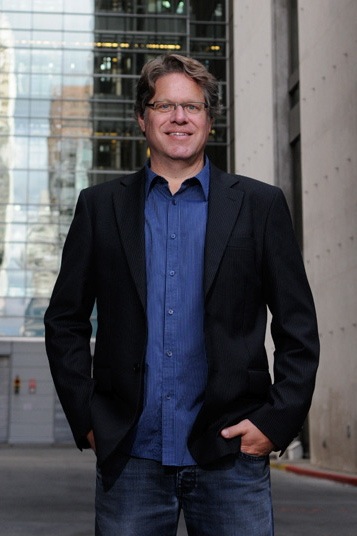
Dr. Darren Lund, Professor of Education at the University of Calgary

From Life Site News.

Excerpt:

Pastor Stephen Boissoin, who was found guilty in 2007 by a provincial human rights tribunal of “hate speech” for writing a letter to the editor expressing his views on homosexuality, has been strongly vindicated after the Alberta Appeals Court dismissed an appeal of a lower court decision in Boissoin’s favor.

The court also ordered Boissoin’s accuser, homosexual activist Dr. Darren Lund, an assistant professor at the University of Calgary, to pay Boissoin’s attorney fees.

Appeals Court Justice Clifton O’Brien concurred with the lower court that Boissoin’s letter “was not likely to expose homosexuals to hatred or contempt within the meaning of the Alberta statute.”

In 2009, Court of Queen’s Bench Justice Earl C. Wilson overturned the 2007 ruling by the Alberta Human Rights Commission (AHRC), which ordered Boissoin to desist from expressing his views on homosexuality in any sort of public forum, ordered him to pay damages equivalent to $7,000 to Lund and called for Boissoin to personally apologize to Lund via a public statement in the local newspaper.

[…]“Matters of morality, including the perceived morality of certain types of sexual behavior, are topics for discussion in the public forum,” concluded Justice O’Brien. “Freedom of speech does not just protect polite speech.”

Boissoin’s lawyer, Gerald Chipeur, Q.C., who is an allied attorney with Alliance Defending Freedom (ADF), pointed out that not only did Justice O’Brien throw out the AHRC’s decision, but ruled that a human rights panel had no constitutional authority to preside in such circumstances.

“This was a watershed case,” Chipeur said. “Very important, in terms of freedom of expression and religious liberty. Going forward, it will be extremely difficult, if not impossible, for religious or political debate to be found in breach of Alberta’s current human rights laws.”

“Christians and other people of faith should not be fined or jailed for expressing their political or religious beliefs. There is no place for thought control in a free and democratic society,” Chipeur remarked. “The tools of censorship should not be available to prohibit freedom of religious expression in Canada. The court rightly found that this type of religious speech is not ‘hate’ speech.”

Gay activists can sometimes go too far and end up suppressing basic human rights like free speech and freedom of association.

Consider the case of the gay activist Floyd Lee Corkins II and the recent shooting at the Family Research Council that he was involved with. We need to be careful in the United States about encouraging gay activists like Floyd Lee Corkins II, who are hostile to basic human rights like free speech and freedom of association. The fascistic tendencies of the secular left have resulted in much violence in the past century, and you can even see it today in places like North Korea, where free speech and freedom of religion are not allowed. I’m sure that Stalin thought that what he was doing to the millions of people who disagreed with his agenda was “social justice”, too.

Related posts

Patients starving and dying of thirst in socialized NHS health care system

From the UK Telegraph, a story about government-run health care in the UK.

Excerpt:

Forty-three hospital patients starved to death last year and 111 died of thirst while being treated on wards, new figures disclose today.

The death toll was disclosed by the Government amid mounting concern over the dignity of patients on NHS wards.

They will also fuel concerns about care homes, as it was disclosed that eight people starved to death and 21 people died of thirst while in care.

Last night there were warnings that they must prompt action by the NHS and care home regulators to prevent further deaths among patients.

The Office for National Statistics figures also showed that:

  • as well as 43 people who starved to death, 287 people were recorded by doctors as being malnourished when they died in hospitals;
  • there were 558 cases where doctors recorded that a patient had died in a state of severe dehydration in hospitals;
  • 78 hospital and 39 care home patients were killed by bedsores, while a further 650 people who died had their presence noted on their death certificates;
  • 21,696 were recorded as suffering from septicemia when they died, a condition which experts say is most often associated with infected wounds.

The records, from the Office for National Statistics, follow a series of scandals of care of the elderly, with doctors forced to prescribe patients with drinking water or put them on drips to make sure they do not become severely dehydrated .

This is the problem with socialized medicine. You pay your money up front and then later on the government decides how much treatment you get. They have no reason to be nice to you – you already paid them. They don’t get paid more or less based on the quality of care they give you. You can’t get a refund on taxes paid. And where else can you go? It’s a single payer system.

Related posts

Abortion debate: a secular case against legalized abortion

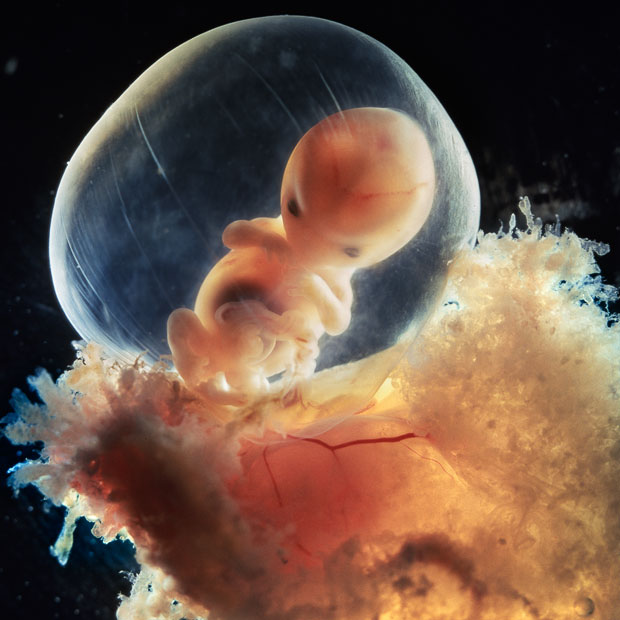
Unborn baby scheming about being only two months old

Note: this post has a twin! Its companion post on a secular case against gay marriage is here.

Now, you may think that the view that the unborn deserve protection during pregnancy is something that you either take on faith or not. But I want to explain how you can make a case for the right to life of the unborn, just by using reason and evidence.

To defend the pro-life position, I think you need to sustain 3 arguments:

  1. The unborn is a living being with human DNA, and is therefore human.
  2. There is no morally-relevant difference between an unborn baby, and one already born.
  3. None of the justifications given for terminating an unborn baby are morally adequate.

Now, the pro-abortion debater may object to point 1, perhaps by claiming that the unborn baby is either not living, or not human, or not distinct from the mother.

Defending point 1: Well, it is pretty obvious that the unborn child is not inanimate matter. It is definitely living and growing through all 9 months of pregnancy. (Click here for a video that shows what a baby looks like through all 9 months of pregnancy). Since it has human DNA, that makes it a human. And its DNA is different from either its mother or father, so it clearly not just a tissue growth of the father or the mother. More on this point at Christian Cadre, here. An unborn child cannot be the woman’s own body, because then the woman would have four arms, four legs, two heads, four eyes and two different DNA signatures. When you have two different human DNA signatures, you have two different humans.

Secondly, the pro-abortion debater may try to identify a characteristic of the unborn that is not yet present or developed while it is still in the womb, and then argue that because the unborn does not have that characteristic, it does not deserve the protection of the law.

Defending point 2: You need to show that the unborn are not different from the already-born in any meaningful way. The main differences between them are: size, level of development, environment and degree of dependence. Once these characteristics are identified, you can explain that none of these differences provide moral justification for terminating a life. For example, babies inside and outside the womb have the same value, because location does not change a human’s intrinsic value. More at Stand to Reason, here.

Additionally, the pro-abortion debater may try to identify a characteristic of the already-born that is not yet present or developed in the unborn, and then argue that because the unborn does not have that characteristic, that it does not deserve protection, (e.g. – sentience). Most of the these objections that you may encounter are refuted in this essay by Francis Beckwith. Usually these objections fall apart because they assume the thing they are trying to prove, namely, that the unborn deserves less protection than the already born.

Finally, the pro-abortion debater may conceded your points 1 and 2, and admit that the unborn is fully human. But they may then try to provide a moral justification for terminating the life of the unborn, regardless.

Defending point 3: I fully grant that it is sometimes justifiable to terminate an innocent human life, if there is a moral justification. Is there such a justification for abortion? One of the best known attempts to justify abortion is Judith Jarvis Thomson’s “violinist” argument. This argument is summarized by Paul Manata, one of the experts over at Triablogue:

Briefly, this argument goes like this: Say a world-famous violinist developed a fatal kidney ailment and the Society of Music Lovers found that only you had the right blood-type to help. So, they therefore have you kidnapped and then attach you to the violinist’s circulatory system so that your kidneys can be used to extract the poison from his. To unplug yourself from the violinist would be to kill him; therefore, pro-lifers would say a person has to stay attached against her will to the violinist for 9 months. Thompson says that it would be morally virtuous to stay plugged-in. But she asks, “Do you have to?” She appeals to our intuitions and answers, “No.”

Manata then goes on to defeat Thomson’s proposal here, with a short, memorable illustration, which I highly recommend that you check out. More info on how to respond to similar arguments is here.

The best book for beginners on the pro-life view is this book:

For those looking for advanced resources, Francis Beckwith, a professor at Baylor University, published the book Defending Life, with Cambridge University Press, 2007.

Learn about the pro-life case

And some posts motivating Christians and conservatives to take abortion seriously: