Tag Archives: Provider

Why is it so hard for a working man to provide for a family these days?

Welfare spending
Welfare spending

Here’s my argument which answers the question:

  1. Feminism was behind no-fault divorce.
  2. Making it easier to divorce means that more divorces will occur.
  3. Marital instability causes women to vote for bigger government.
  4. Unmarried women vote mostly for Democrats.

*Please note that I am talking about unmarried (never married, divorced) women throughout this post.

Here’s the evidence for each point.

1. Feminism was behind no-fault divorce, according to this feminist, pro-no-fault-divorce writer.

Excerpt:

Households of 2010 don’t look quite like they did in 1969, when no-fault divorce actually was a controversial topic and these counter-arguments held some weight. The working dad/stay-at-home mom model of the middle class has been replaced by two-parent earner households and a growing number of working mom/stay-at-home dad arrangements. In working poor and impoverished families, the one-parent provider model was never the norm. No-fault divorce seemed scary when it had never before existed, but the truth is that its introduction was long overdue. Feminist groups at the time supported no-fault divorce, as it provided women an escape hatch from desperately unhappy marriages in a society where they were already disadvantaged on almost every level, regardless of their marital status. Imagine an abusive marriage in 1968, when the court-savvy abuser could actually force the victim to stay in the relationship forever. Imagine that now, and you know why domestic violence attorneys are in full support of introducing no-fault divorce to New York. And the judges aren’t the only problem.

Note that the author of this piece thinks that it is not women’s fault that they choose men who they then want to divorce. It’s not the woman’s fault that she is unhappy with the man she courted with and then chose and then made vows to – women need a no-fault escape hatch, and children do fine without fathers.

2. Easier divorces means more divorces.

Abstract:

This paper analyzes a panel of 18 European countries spanning from 1950 to 2003 to examine the extent to which the legal reforms leading to “easier divorce” that took place during the second half of the 20th century have contributed to the increase in divorce rates across Europe. We use a quasi-experimental set-up and exploit the different timing of the reforms in divorce laws across countries. We account for unobserved country-specific factors by introducing country fixed effects, and we include country-specific trends to control for timevarying factors at the country level that may be correlated with divorce rates and divorce laws, such as changing social norms or slow moving demographic trends. We find that the different reforms that “made divorce easier” were followed by significant increases in divorce rates. The effect of no-fault legislation was strong and permanent, while unilateral reforms only had a temporary effect on divorce rates. Overall, we estimate that the legal reforms account for about 20 percent of the increase in divorce rates in Europe between 1960 and 2002.

It seems obvious, but more evidence never hurts. About 70% of divorces are initiated by women, either because they chose to marry the wrong man, or because they are unhappy with the right man.

3. Marital instability causes women to vote for bigger government for security.

Excerpt:

Giving women the right to vote significantly changed American politics from the very beginning. Despite claims to the contrary, the gender gap is not something that has arisen since the 1970s. Suffrage coincided with immediate increases in state government expenditures and revenue, and these effects continued growing as more women took advantage of the franchise. Similar changes occurred at the federal level as female suffrage led to more liberal voting records for the state’s U.S. House and Senate delegations. In the Senate, suffrage changed voting behavior by an amount equal to almost 20 percent of the difference between Republican and Democratic senators. Suffrage also coincided with changes in the probability that prohibition would be enacted and changes in divorce laws.

[…]More work remains to be done on why women vote so differently, but our initial work provides scant evidence that it is due to self-interest arising from their employment by government. The only evidence that we found indicated that the gender gap in part arises from women’s fear that they are being left to raise children on their own (Lott and Kenny 1997). If this result is true, the continued breakdown of the family and higher divorce rates imply growing political conflicts between the sexes. 19

Bigger government must be paid for by higher taxes, of course, which makes it harder for one working man’s income to provide for a family. In fact, feminists wanted men to be displaced as sole-providers. They would prefer that women are “equal” to men, and that means making women get out and work like men. Feminists had every reason to want bigger government and higher taxes to make traditional single-earner families unfeasible financially. They did it for equality.

4. Women are in fact observed to vote for bigger government.

Excerpt:

On Tuesday, the nation made history. It made history in electing the first African American president; it made history in building a bigger margin for the first female Speaker of the House; it made history in delivering the biggest Democratic margin since 1964; it made history in sending a record number of people to the polls and the highest percentage turnout since the 1960 election. Analysts will spend the next few months sifting through the data, trying to figure out what happened and why. Historians will likely spend the next several years and decades studying this election, as well. But one thing is immediately clear. Unmarried women played a pivotal role in making this history and in changing this nation. They delivered a stunning 70 to 29 percent margin to Barack Obama and delivered similarly strong margins in races for Congress and the U.S. Senate. Although unmarried women have voted Democratic consistently since marital status has been was tracked, this election represents the highest margin recorded and a 16-point net gain at the Presidential level from 2004.

In fact, there was a recent (2011) study showing that unmarried women do in fact vote for higher taxes and more government as a substitute for a husband’s provider role.

Abstract:

The last three decades have witnessed the rise of a political gender gap in the United States wherein more women than men favor the Democratic party. We trace this development to the decline in marriage, which we posit has made men richer and women poorer. Data for the United States support this argument. First, there is a strong positive correlation between state divorce prevalence and the political gender gap – higher divorce prevalence reduces support for the Democrats among men but not women. Second, longitudinal data show that following marriage (divorce), women are less (more) likely to support the Democratic party.

What follows from voting Democrat?

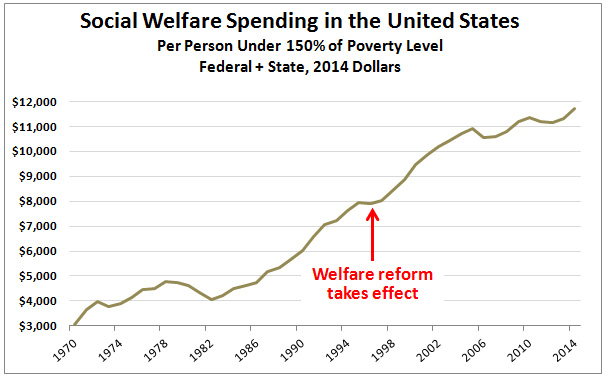
Since the Democrats took the House and Senate in 2006, and then the Presidency in 2008, the national debt has more than doubled from about 8 trillion to 20 trillion. A lot of that money was spent in welfare for single mothers, which only makes the women and their fatherless children more dependent on government. Children raised in unmarried home are far less likely to marry themselves, and to be independent of government. Which means that they will vote for bigger government when they start to vote, since they can’t make it through life on their own strength.

If more people vote for Democrats then we will get higher taxes to pay for all the government spending. Higher taxes means that a married man can no longer retain enough of his earnings to support a family. And that means his wife has to work, and that means that his children will learn what the government schools decide they should learn – so that all the children will be equal and think the same (pro-government) thoughts. This should not be controversial, because it is what it is. But if we want to talk about the decline of marriage honestly, then we need to be talking to single women about how they choose men, when they have sex with men, and how they vote at election time. You really can’t have it all.

New study: marriages where husband does not work full-time more likely to end in divorce

Air Force TACPs confirm target locations with their map

This was reported in Family Studies.

Excerpt:

In a recent study published this July in American Sociological Review, Harvard sociology professor Alexandra Killewald, Ph.D., analyzed data on 6,309 heterosexual married couples from the 1968 to 2013 waves of the Panel Study of Income Dynamics (PSID). She looked specifically at the potential effects on marital stability of “spouses’ division of labor, overall financial resources, and wives’ economic prospects following divorce,” comparing couples married before 1975 to those married in 1975 or later (through 2011).

[…]Killewald found that for couples married in 1975 or later, marriages in which the husband was not employed full-time were one-third more likely to divorce. Specifically, a husband who was not employed full-time experienced a “3.3 percent predicted probability of divorce the following year, compared to 2.5 percent if he is employed full-time.”

[…]Killewald is certainly not the first to find an association between men’s employment and marital stability. A study conducted by three economists and published in 2015 found that “In couples where the wife earns more than the husband, the wife spends more time on household chores; moreover, those couples are less satisfied with their marriage and are more likely to divorce.”

And an earlier study by Liana C. Sayer, Paula England, Paul Allison and Nicole Kangas found that when a husband is “nonemployed” (defined as not working at all), both the husband and the wife are more likely to end a marriage. In an email interview with IFS, one of the study’s co-authors, New York University sociology professor Paula England, explained her findings.

“The innovation of our study was to look separately at what predicts a divorce wanted more by the woman versus a divorce wanted more by the man,” England wrote. “We found that a nonemployed man predicts either the woman leaving the man or the man leaving the woman.”

She continued, “Killewald’s data just show her if they got divorced, not who left. We found that women’s employment doesn’t make men leave more, and it only makes women leave more when they are unhappy in the marriage.”

People sometimes ask me why I have all these rules and best practices when it comes to relationships and marriage plans. You know: men must have STEM degrees, no sex before marriage, men have to approach women by speaking to fathers first, etc. Well, why have all these rules? Why not just do what feels good? Why not just do what my peers will approve of?

The answer is this:

I didn’t get my idea of how courting and marriage works from a culture that dismisses all of the ancient wisdom about love and marriage in favor of the trends of a culture dominated by ideologies that emphasize pleasure over wisdom. The right way to learn about romance, love, marriage and parenting is to go the classics, and then to the scientific studies. We have to learn how the world really works, and abide by the best practices that we find in the classics and in the peer-reviewed publications. And we have to be willing to say no to feelings and friends and even family, when the classics and the peer-reviewed literature say something different.

I’m really not sure where people get this idea that peer-reviewed literature “works within a narrow scope”, but you can just do anything you want. No, your radical feminist emotion-fueled craziness works in a narrow scope: in your dreams. In the real world, we do things by the book, and that’s how we get results. Children deserve to have parents who are wise and self-controlled, willing to do things the right way. You can’t break all the rules and then expect things to somehow magically work out because you feel that they will somehow. The rules are there for a reason.

What kinds of things should boys do to be more manly?

Painting: "St. George and the Dragon", by Paolo Uccello (~1456)
Painting: “St. George and the Dragon”, by Paolo Uccello (~1456)

Super-wife Lindsay sent me this article by David French in National Review. I am skeptical of older men who try to get younger men of today to “man up” without realizing all of the challenges that men face. Many of them are fatherless because their mothers divorced their fathers. Many of them are in failing public schools where 90% of their teachers are women. Many of them are depressed by the $20 trillion debt that was run up to pay for the feminist welfare state. And on, and on, and on.

However, I decided to blog on this because the article was very balanced.

First, here’s David:

I look back to my own childhood. In 1985, I was 16 years old, and I was a nerd’s nerd. I toted graph paper and 20-sided dice to school to play Dungeons & Dragons at lunch. (I like to think I was the finest dungeon master Scott County, Ky., had ever seen.) When I wasn’t playing D&D, my nose was buried in Lord of the Rings, or the Shannara books by Terry Brooks, or the Dragonriders of Pern by Anne McCaffrey. I played sports, sure, but let’s just say that my varsity tennis exploits didn’t make the cheerleaders’ hearts flutter.

But none of my nerdiness relieved me of the responsibility of learning how to be a man — a protector, builder, and fixer. So that meant spending my Saturdays hauling out the ramps to change the oil and oil filters on all our cars. That meant helping my dad build a new back porch or constantly wrestling with immense piles of firewood. (We heated our house with a wood stove.) I made extra money working in neighborhood yards. Being a guy meant doing manual labor. That was just part of growing up — no matter your social class.

In the age of instant oil change (why entrust your car’s health to your 16-year-old?), ubiquitous lawn services, and on-demand handymen, privileged kids simply don’t have the same, naturally occurring opportunities to learn to work with their hands and to develop physical strength. In the age of zero-tolerance school-disciplinary policies — where any kind of physical confrontation is treated like a human-rights violation — they have less opportunity to develop toughness. Today’s young males don’t have common touchstones for what it’s like to grow up to be a man.

I just had to quote this, because wow, David French (Harvard Law graduate, Major in the Army Reserves, Bronze Star recipient, and heroic defender of religious liberty) played good old D&D. So did I, although I preferred Warhammer Fantasy Role-Play. I have over 200 hand-painted miniatures in my parents’ basement.

Anyway, I digress.

French continues:

Raising a boy to be a young man used to be a natural act. Common experiences and rites-of-passage meant that my D&D friends could pop the hood of a car and get to work right alongside the future mechanics of my high-school class. We weren’t as good or as knowledgeable, but we held our own. And there were no social-justice warriors shrieking that there was no such thing as distinctively male or masculine pursuits.

Now, for parents of the privileged, raising a boy to be a young man has to be an intentional act. You have to ignore the voices who are telling you to indulge your child’s inclinations — no matter what they are — and train them to be not just morally courageous but also physically strong. They can have their Xbox or their PC (my son brags about his kill/death ratio on Battlefield, and we belong to the same World of Warcraft guild), but they can also hit the weight room. They can also not just learn to shoot but also how to assemble and disassemble their weapon. Even if you’re rich, you can make your kid do the hard work that keeps any household together.

Though this sounds simplistic, never ever underestimate the positive effect that raw physical strength can have on a young man’s development. I’ve seen the impact that weight training has had on my son, and I wish I’d been as diligent when I was his age. I’ve experienced the impact — even as an older adult — of the physical transformation of Army training.

Our culture strips its young men of their created purpose and then wonders why they struggle. It wonders why men — who are built to be distinctive from women — flail in modern schools and workplaces designed from the ground-up for the feminine experience. Men were meant to be strong. Yet we excuse and enable their weakness. It’s but one marker of cultural decay, to be sure, but it’s a telling marker indeed. There is no virtue in physical decline.

Yes. I have been thinking about this a lot lately. My parents never had any plan for me growing up, except that I get As in school and work during the summers. However, since I got free of them after graduate school, I have been lifting weights, eating lots of protein from whole foods and taking the appropriate supplements on and off. I think it is important for a man to be able to lift his future wife across the threshold of her new home, and so I had this idea that I should lift weights. I have lifted up one woman (who I was in love with) and that was very fun. So, yes to muscles. Cardio, meh.

And lately I have been picking out my first firearm and getting ready to do my concealed carry permit. (I’m trying to decide between the S&W Performance Center M&P Shield and the Walther PPS M2). And I have always wanted to learn more about auto repair, so I can save money on that. Although, I think that my generation of men didn’t learn as much about cars as we did about computer programming and building computers from parts. I’d like to make things out of wood – maybe toys and perches for parrots. And I want to learn gardening, so I can feed myself from what I grow.

There are so many interesting things to learn and do, and I do think that men should be expected and encouraged to develop useful skills so that they can help others. Part of being a man is learning useful things so that you can help others. I think if you explain to young men why they should be learning useful skills and working and saving (to help others, to learn self-sacrifice, to practice being generous with gifts) then they would be more interested in these things. A man will do anything in order to get respect, especially from women. Maybe the problem is there – that women want men to be weak man-shaped girlfriends who just agree with them, and never challenge them to grow. I see that a lot in young women today. They aren’t comfortable giving men respect, or letting men help them and lead them.