Tag Archives: Naturalism

Peter J. Williams lectures on the historical reliability of the gospel narratives

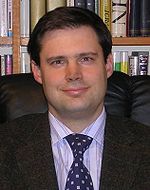
Peter J. Williams
Peter J. Williams

Here’s the main lecture: (54 minutes)

And here’s the Q&A: (9 minutes)

About Peter Williams:

Peter J. Williams is the Warden (CEO) of Tyndale House and a member of the Faculty of Divinity in the University of Cambridge. He received his MA, MPhil and PhD, in the study of ancient languages related to the Bible from Cambridge University. After his PhD, he was on staff in the Faculty of Divinity, Cambridge University (1997–1998), and thereafter taught Hebrew and Old Testament there as Affiliated Lecturer in Hebrew and Aramaic and as Research Fellow in Old Testament at Tyndale House, Cambridge (1998–2003). From 2003 to 2007 he was on the faculty of the University of Aberdeen, Scotland, where he became a Senior Lecturer in New Testament and Deputy Head of the School of Divinity, History and Philosophy. In July 2007 he became the youngest Warden in the history of Tyndale House. He also retains his position as an honorary Senior Lecturer in Biblical Studies at the University of Aberdeen.

Summary of the lecture:

  • What if the stories about Jesus are legendary?
  • were the gospels transmitted accurately?
  • were the gospels written in the same place as where the events happened?
  • do the gospel authors know the customs and locations where the events happened?
  • do the gospels use the right names for the time and place where the events took place?
  • do the gospels disambiguate people’s names depending on how common those names were?
  • how do the New Testament gospels compare to the later gnostic gospels?
  • how do the gospels refer to the main character? How non-Biblical sources refer to Jesus?
  • how does Jesus refer to himself in the gospels? do the later Christians refer to him that way?
  • how does Jesus teach? do later Christians teach the same way?
  • why didn’t Jesus say anything about early conflicts in the church (the Gentiles, church services)?
  • did the writers of the gospels know the places where the events took place?
  • how many places are named in the gospels? how about in the later gnostic gospels?
  • are the botanical details mentioned in the gospels accurate? how about the later gnostic gospels?

And here are the questions from the audience:

  • how what about the discrepancies in the resurrection narratives that Bart Ehrman is obsessed with?
  • what do you think of the new 2011 NIV translation (Peter is on the ESV translation committee)?
  • how did untrained, ordinary men produce complex, sophisticated documents like the gospels?
  • is oral tradition a strong enough bridge between the events and the writers who interviewed the eyewitnesses?
  • what does the name John mean?
  • why did the gospel writers wait so long before writing their gospels?
  • do you think that Matthew and Luke used a hypothetical source which historians call “Q”?
  • which gospel do critical historians trust the least and why?

I really enjoyed watching this lecture. He’s getting some of this material from Richard Bauckham’s awesome book “Jesus and the Eyewitnesses”, so if you aren’t familiar with it, you can get an idea of what’s in it. Peter Williams is a lot of fun to listen to – an excellent speaker.

You can read an interview with Peter Williams here on Between Two Worlds.

And you can listen to the Peter Williams vs Bart Ehrman debate. That link contains a link to the audio of the debate as well as my snarky summary. It’s very snarky.

And Apologetics 315 also posted Peter Williams’ assessment of Bart Ehrman’s “Misquoting Jesus”.

MIT physicist explains the challenge of cosmic fine-tuning for naturalism

Here’s the article from Harper’s magazine.

The MIT physicist says that the fine-tuning is real, and is best explained by positing the existence of an infinite number of universes that are not fine-tuned – the so-called multiverse.

Excerpt:

While challenging the Platonic dream of theoretical physicists, the multiverse idea does explain one aspect of our universe that has unsettled some scientists for years: according to various calculations, if the values of some of the fundamental parameters of our universe were a little larger or a little smaller, life could not have arisen. For example, if the nuclear force were a few percentage points stronger than it actually is, then all the hydrogen atoms in the infant universe would have fused with other hydrogen atoms to make helium, and there would be no hydrogen left. No hydrogen means no water. Although we are far from certain about what conditions are necessary for life, most biologists believe that water is necessary. On the other hand, if the nuclear force were substantially weaker than what it actually is, then the complex atoms needed for biology could not hold together. As another example, if the relationship between the strengths of the gravitational force and the electromagnetic force were not close to what it is, then the cosmos would not harbor any stars that explode and spew out life-supporting chemical elements into space or any other stars that form planets. Both kinds of stars are required for the emergence of life. The strengths of the basic forces and certain other fundamental parameters in our universe appear to be “fine-tuned” to allow the existence of life. The recognition of this fine-­tuning led British physicist Brandon Carter to articulate what he called the anthropic principle, which states that the universe must have the parameters it does because we are here to observe it. Actually, the word anthropic, from the Greek for “man,” is a misnomer: if these fundamental parameters were much different from what they are, it is not only human beings who would not exist. No life of any kind would exist.

If such conclusions are correct, the great question, of course, is why these fundamental parameters happen to lie within the range needed for life. Does the universe care about life? Intelligent design is one answer. Indeed, a fair number of theologians, philosophers, and even some scientists have used fine-tuning and the anthropic principle as evidence of the existence of God. For example, at the 2011 Christian Scholars’ Conference at Pepperdine University, Francis Collins, a leading geneticist and director of the National Institutes of Health, said, “To get our universe, with all of its potential for complexities or any kind of potential for any kind of life-form, everything has to be precisely defined on this knife edge of improbability…. [Y]ou have to see the hands of a creator who set the parameters to be just so because the creator was interested in something a little more complicated than random particles.”

Intelligent design, however, is an answer to fine-tuning that does not appeal to most scientists. The multiverse offers another explanation. If there are countless different universes with different properties—for example, some with nuclear forces much stronger than in our universe and some with nuclear forces much weaker—then some of those universes will allow the emergence of life and some will not. Some of those universes will be dead, lifeless hulks of matter and energy, and others will permit the emergence of cells, plants and animals, minds. From the huge range of possible universes predicted by the theories, the fraction of universes with life is undoubtedly small. But that doesn’t matter. We live in one of the universes that permits life because otherwise we wouldn’t be here to ask the question.

I thought I was going to have to go outside this article to refute the multiverse, but Lightman is honest enough to refute it himself:

The… conjecture that there are many other worlds… [T]here is no way they can prove this conjecture. That same uncertainty disturbs many physicists who are adjusting to the idea of the multiverse. Not only must we accept that basic properties of our universe are accidental and uncalculable. In addition, we must believe in the existence of many other universes. But we have no conceivable way of observing these other universes and cannot prove their existence. Thus, to explain what we see in the world and in our mental deductions, we must believe in what we cannot prove.

Sound familiar? Theologians are accustomed to taking some beliefs on faith. Scientists are not. All we can do is hope that the same theories that predict the multiverse also produce many other predictions that we can test here in our own universe. But the other universes themselves will almost certainly remain a conjecture.

The multiverse is not pure nonsense, it is theoretically possible. The problem is that the multiverse generator itself would require fine-tuning, so the multiverse doesn’t get rid of the problem. And, as Lightman indicates, we have no independent experimental evidence for the existence of the multiverse in any case. Atheists just have to take it on faith, and hope that their speculations will be proved right. Meanwhile, the fine-tuning is just as easily explained by postulating God, and we have independent evidence for God’s existence, like the the origin of biological information, the sudden appearance of animal body plans, the argument from consciousness, and so on. Even if the naturalists could explain the fine-tuning, they would still have a lot of explaining to do. Theism (intelligent causation) is the simplest explanation for all of the things we learn from the progress of science.

We need to be frank about atheists and their objections to the progress of science. Within the last 100 years, we have discovered that the physical universe came into being out of nothing 15 billion years ago, and we have discovered that this one universe is fine-tuned for intelligent life. I don’t think it’s like that the last 100 years of scientific progress on the origins question are going to be overturned so that science once again affirms what atheists believe about the universe. Things are going the wrong way for atheists – at least with respect to science.

See it in action

To see these arguments examined in a debate with a famous atheist, simply watch the debate between William Lane Craig and Christopher Hitchens, and judge which debater is willing to form his beliefs on scientific progress, and which debater is forming his beliefs against the science we have today, and hoping that the good science we have today based on experiments will be overturned by speculative theories at some point in the future. When you watch that debate, it becomes very clear that Christian theists are interested in conforming their beliefs to science, and atheists are very interested in speculating against what science has shown in order to maintain their current pre-scientific view. That’s not what rational people ought to do when confronted with evidence.

Positive arguments for Christian theism

Brian Auten interviews Dr. Angus Menuge on philosophy of mind

Click here for the interview. It’s up at Apologetics 315!

Details:

Today’s interview is with Dr. Angus Menuge, Professor of Philosophy  at Concordia University, and author of Agents Under Fire: Materialism and the Rationality of Science. He talks about his background and work, the philosophy of mind, what reason (or reasoning) is, what materialism is as a worldview, things excluded from a materialistic worldview, methodological naturalism and materialism, accounting for free will, materialistic accounts of reason, the epistemological argument from reason, the ontological argument from reason, finding the best explanation for reason, problems with methodological naturalism, implications of materialism, practical application of the argument from reason, advice for apologists, the International Academy of Apologetics, and more.

If what Dr. Menuge says in this interview is true, and I think it is, then a person who believes in materialism can neither ground free will nor rationality! So atheism wouldn’t really be freethought so much as it would be… un-free… non-thought.

In case people don’t want to listen to the podcast, then I’ve got some things for you to read below.

The ontological argument from reason

Dr. Menuge presented a paper at the real Evangelical Philosophical Society conference for students and professors of philosophy, and you can download the paper here in Word format. (here’s a PDF version I made)

Here is the introduction to the paper that Dr. Menuge read at the EPS conference:

The argument from reason is really a family of arguments to show that reasoning is incompatible with naturalism. Here, naturalism is understood as the idea that foundationally, there are only physical objects, properties and relations, and anything else reduces to, supervenes on, or emerges from that. For our purposes, one of the most important claims of naturalism is that all causation is passive, automatic, event causation (an earthquake automatically causes a tidal wave; the tidal wave responds passively): there are no agent causes, where something does not happen automatically but only because the agent exerts his active power by choosing to do it. The most famous version of the argument from reason is epistemological: if naturalism were true, we could not be justified in believing it. Today, I want to focus on the ontological argument from reason, which asserts that there cannot be reasoning in a naturalistic world, because reasoning requires libertarian free will, and this in turn requires a unified, enduring self with active power.

The two most promising ways out of this argument are: (1) Compatibilism—even in a deterministic, naturalistic world, humans are capable of free acts of reason if their minds are responsive to rational causes; (2) Libertarian Naturalism—a self with libertarian free will emerges from the brain. I argue that neither of these moves works, and so, unless someone has a better idea, the ontological argument from reason stands.

The paper is 11 pages long, and it is helpful for those of you looking for some good discussion of one of the issues in the area of philosophy of mind.

You may also be interested in Alvin Plantinga’s epistemological argument from reason, which is related to this argument. It shows that even to have the ability to think, you have to have a certain anthropology and you have to have mental faculties that are designed for reason, not survival.

Methodological naturalism

Dr. Menuge also wrote an article entitled “Is methodological materialism good for science?”.

Intro:

Should science by governed by methodological materialism? That is, should scientists assume that only undirected causes can figure in their theories and explanations? If the answer to these questions is yes, then there can be no such thing as teleological science or intelligent design. But is methodological materialism a defensible approach to science, or might it prevent scientists from discovering important truths about the natural world? In my contribution to The Waning of Materialism (Oxford University Press, 2010), edited by Robert Koons and George Bealer, I consider twelve of the most common arguments in favor of methodological materialism and show that none of them is convincing.

Of these arguments, perhaps the most prevalent is the “God of the gaps” charge, according to which invoking something other than a material cause is an argument from ignorance which, like a bad script writer, cites a deus ex machina to save our account from difficulty. Not only materialists, but also many Christian thinkers, like Francis Collins, worry that appeal to intelligent design commits the God of the gaps fallacy.

As I argue, however, not only is an inference to an intelligent cause not the same as an inference to the supernatural, it is a mistake to assume that all gap arguments are bad, or that only theists make them. If a gap argument is based solely on ignorance of what might explain some phenomenon, then indeed it is a bad argument. But there are many good gap arguments which are made both by scientific materialists and proponents of intelligent design.

So how do you make an argument like that?

As Stephen Meyer has argued in his Signature in the Cell, intelligent design argues in just the same way, claiming not merely that the material categories of chance and necessity (singly or in combination) are unable to explain the complex specified information in DNA, but also that in our experience, intelligent agents are the only known causes of such information. The argument is based on what we know about causal powers, not on what we do not know about them.

Since the inference is based on known causal powers, we learn that the cause is intelligent, but only further assumptions or data can tell us whether that intelligence is immanent in nature or supernatural. It is a serious mistake to confuse intelligent design with theistic science, and the argument that since some proponents of design believe that the designer is God, that is what they are claiming can be inferred from the data, is a sophomoric intensional fallacy.

If you think this is interesting, then do have a listen to the podcast. Dr. Menuge is not an ordinary academic – he is very direct. He calls materialism “a catastrophe” in the podcast!