Economist Walter Williams answers the question in the Daily Signal.
He writes:
Let’s look at the power of the rich. With all the money that Gates, Bezos, and other super-rich people have, what can they force you or me to do?
Can they condemn our houses to create space so that another individual can build an auto dealership or a casino parking lot? Can they force us to pay money into the government-run—and doomed—Obamacare program? Can they force us to bus our children to schools out of our neighborhood in the name of diversity? Can they force us to buy our sugar from a high-cost domestic producer rather than from a low-cost Caribbean producer?
The answer to all of these questions is a big fat no.
You say, “Williams, I don’t understand.” Let me be more explicit.
Bill Gates cannot order you to enroll your child in another school in order to promote racial diversity. He has no power to condemn your house to make way for a casino parking lot.
Unless our elected public officials grant them the power to rip us off, rich people have little power to force us to do anything. A lowly municipal clerk earning $50,000 a year has far more life-and-death power over us. It is that type of person to whom we must turn for permission to build a house, ply a trade, open a restaurant, and do myriad other activities.
It’s government people, not rich people, who have the power to coerce us and rip us off. They have the power to make our lives miserable if we disobey. This coercive power goes a long way toward explaining legalized political corruption.
We have much more to fear from big government than we do from big corporations, and this is granting that big corporations are bad. There’s no question that big corporations are generally very liberal, and opposed to social conservatives, and even fiscal conservatives. But what can they really do to you? Not much.
There is a lot of anger among young people in particular against “big corporations” these days, and many of these young people vote for bigger government because of it. But big corporations can only ever try to sell you things, and if you don’t like it, turn off the TV and block their ads on Twitter. But you can’t as easily stop the IRS from attacking your conservative group, or get rid of a SWAT team conducting a pre-dawn raid to punish you for being a conservative.
Households of 2010 don’t look quite like they did in 1969, when no-fault divorce actually was a controversial topic and these counter-arguments held some weight. The working dad/stay-at-home mom model of the middle class has been replaced by two-parent earner households and a growing number of working mom/stay-at-home dad arrangements. In working poor and impoverished families, the one-parent provider model was never the norm. No-fault divorce seemed scary when it had never before existed, but the truth is that its introduction was long overdue. Feminist groups at the time supported no-fault divorce, as it provided women an escape hatch from desperately unhappy marriages in a society where they were already disadvantaged on almost every level, regardless of their marital status. Imagine an abusive marriage in 1968, when the court-savvy abuser could actually force the victim to stay in the relationship forever. Imagine that now, and you know why domestic violence attorneys are in full support of introducing no-fault divorce to New York. And the judges aren’t the only problem.
Note that the author of this piece thinks that it is not women’s fault that they choose men who they then want to divorce. It’s not the woman’s fault that she is unhappy with the man she courted with and then chose and then made vows to – women need a no-fault escape hatch, and children do fine without fathers.
This paper analyzes a panel of 18 European countries spanning from 1950 to 2003 to examine the extent to which the legal reforms leading to “easier divorce” that took place during the second half of the 20th century have contributed to the increase in divorce rates across Europe. We use a quasi-experimental set-up and exploit the different timing of the reforms in divorce laws across countries. We account for unobserved country-specific factors by introducing country fixed effects, and we include country-specific trends to control for timevarying factors at the country level that may be correlated with divorce rates and divorce laws, such as changing social norms or slow moving demographic trends. We find that the different reforms that “made divorce easier” were followed by significant increases in divorce rates. The effect of no-fault legislation was strong and permanent, while unilateral reforms only had a temporary effect on divorce rates. Overall, we estimate that the legal reforms account for about 20 percent of the increase in divorce rates in Europe between 1960 and 2002.
It seems obvious, but more evidence never hurts. About 70% of divorces are initiated by women, either because they chose to marry the wrong man, or because they are unhappy with the right man.
Giving women the right to vote significantly changed American politics from the very beginning. Despite claims to the contrary, the gender gap is not something that has arisen since the 1970s. Suffrage coincided with immediate increases in state government expenditures and revenue, and these effects continued growing as more women took advantage of the franchise. Similar changes occurred at the federal level as female suffrage led to more liberal voting records for the state’s U.S. House and Senate delegations. In the Senate, suffrage changed voting behavior by an amount equal to almost 20 percent of the difference between Republican and Democratic senators. Suffrage also coincided with changes in the probability that prohibition would be enacted and changes in divorce laws.
[…]More work remains to be done on why women vote so differently, but our initial work provides scant evidence that it is due to self-interest arising from their employment by government. The only evidence that we found indicated that the gender gap in part arises from women’s fear that they are being left to raise children on their own (Lott and Kenny 1997). If this result is true, the continued breakdown of the family and higher divorce rates imply growing political conflicts between the sexes. 19
Bigger government must be paid for by higher taxes, of course, which makes it harder for one working man’s income to provide for a family. In fact, feminists wanted men to be displaced as sole-providers. They would prefer that women are “equal” to men, and that means making women get out and work like men. Feminists had every reason to want bigger government and higher taxes to make traditional single-earner families unfeasible financially. They did it for equality.
On Tuesday, the nation made history. It made history in electing the first African American president; it made history in building a bigger margin for the first female Speaker of the House; it made history in delivering the biggest Democratic margin since 1964; it made history in sending a record number of people to the polls and the highest percentage turnout since the 1960 election. Analysts will spend the next few months sifting through the data, trying to figure out what happened and why. Historians will likely spend the next several years and decades studying this election, as well. But one thing is immediately clear. Unmarried women played a pivotal role in making this history and in changing this nation. They delivered a stunning 70 to 29 percent margin to Barack Obama and delivered similarly strong margins in races for Congress and the U.S. Senate. Although unmarried women have voted Democratic consistently since marital status has been was tracked, this election represents the highest margin recorded and a 16-point net gain at the Presidential level from 2004.
In fact, there was a recent (2011) study showing that unmarried women do in fact vote for higher taxes and more government as a substitute for a husband’s provider role.
Abstract:
The last three decades have witnessed the rise of a political gender gap in the United States wherein more women than men favor the Democratic party. We trace this development to the decline in marriage, which we posit has made men richer and women poorer. Data for the United States support this argument. First, there is a strong positive correlation between state divorce prevalence and the political gender gap – higher divorce prevalence reduces support for the Democrats among men but not women. Second, longitudinal data show that following marriage (divorce), women are less (more) likely to support the Democratic party.
What follows from voting Democrat?
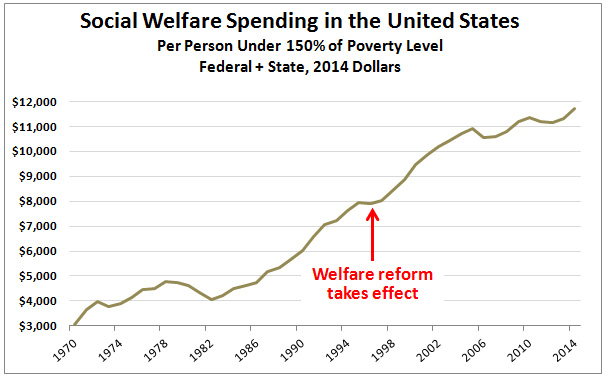
Since the Democrats took the House and Senate in 2006, and then the Presidency in 2008, the national debt has more than doubled from about 8 trillion to 20 trillion. A lot of that money was spent in welfare for single mothers, which only makes the women and their fatherless children more dependent on government. Children raised in unmarried home are far less likely to marry themselves, and to be independent of government. Which means that they will vote for bigger government when they start to vote, since they can’t make it through life on their own strength.
If more people vote for Democrats then we will get higher taxes to pay for all the government spending. Higher taxes means that a married man can no longer retain enough of his earnings to support a family. And that means his wife has to work, and that means that his children will learn what the government schools decide they should learn – so that all the children will be equal and think the same (pro-government) thoughts. This should not be controversial, because it is what it is. But if we want to talk about the decline of marriage honestly, then we need to be talking to single women about how they choose men, when they have sex with men, and how they vote at election time. You really can’t have it all.
I found a paper (PDF) on the University of Washington web site that makes the case for why Christians ought to care about more than just social issues.
Here’s the abstract:
What accounts for cross-national variation in religiosity as measured by church attendance and non-religious rates? Examining answers from both secularization theory and the religious economy perspective, we assert that cross-national variation in religious participation is a function of government welfare spending and provide a theory that links macro-sociological outcomes with individual rationality. Churches historically have provided social welfare. As governments gradually assume many of these welfare functions, individuals with elastic preferences for spiritual goods will reduce their level of participation since the desired welfare goods can be obtained from secular sources. Cross-national data on welfare spending and religious participation show a strong negative relationship between these two variables after controlling for other aspects of modernization.
Here’s the conclusion:
It is quite apparent that there is a strong statistical relationship between state social welfare spending and religious participation and religiosity. Countries with higher levels of per capita welfare have a proclivity for less religious participation and tend to have higher percentages of non-religious individuals. People living in countries with high social welfare spending per capita even have less of a tendency to take comfort in religion, perhaps knowing that the state is there to help them in times of crisis.34 As laid out in the theory above, there is likely a substitution effect for some individuals between state-provided services and religious services. Religion will still be there to serve the spiritual needs of people seeking answers to the philosophic mysteries of life, but those who value those spiritual goods less than the tangible welfare benefits churches provide will be less likely to participate in religious services once secular substitutes become available. Given that religious practice and values are often passed down from generation to generation, the weakening of practice in one generation will likely translate into weaker practice in subsequent generations. Does this mean that secularization theory is correct in its prediction that religion will gradually fade away? Doubtful. Realizing that there is still a yearning among many people to understand the mysteries of life, religion is not likely to dissipate at any time soon. Government simply cannot offer credible substitutes for these less tangible, supernatural goods. The explosion in spirituality once religion was made legal in former Soviet bloc countries lends credence to this assertion (Greeley 1994). As religious markets become more deregulated in various parts of the world, it is likely that new religious movements will take advantage of increased liberty and discover ways to expand.
Perhaps one of the most important lessons from the findings above is that the religiosity of a society is not simply determined by sociological factors. Government policy can play an important role in shaping the religiosity of a nation. Policies aimed at regulating the activities of religious organizations — from tax laws to zoning regulations — have important effects on the firms that supply religious goods and services. Many of these policies are designed consciously to promote or inhibit religious practice. Alternatively, welfare policy has been shown here to unintentionally affect the demand for religious services, likely over the course of generations. And, finally, since an extensive welfare state is considered by many to be a hallmark of modernized societies, the microfoundational analysis presented above provides a way of incorporating a component part of the secularization thesis (which relies heavily on notions of modernization) into the religious economy perspective.
Have you ever heard a sermon that addresses the size of government and individual liberty and prosperity? I haven’t. You’d have to be reading Wayne Grudem or Jay Richards to find that. The typical church you attend either praises big government or says nothing about it. After all, we can keep making withdrawals on the liberties we have right now without ever worrying about having to make any deposits, right? Everything will be fine, and it’s easier not to have to think about what’s down the road to serfdom, so long as the scenery is nice for us right now. Religion is primarily about comfort, not truth. Right?
The funny thing is that when I talk to most Christians about this, especially non-Americans, they simply don’t have the knowledge of economics to understand how big government affects liberty, prosperity and security. There is no one reading F.A. Hayek and Thomas Sowell in Europe, and there are not that many people reading them here at home either.



 WINTERY KNIGHT