
Tag Archives: Emotions

A lesson about men for marriage-minded women from the movie “High Noon”

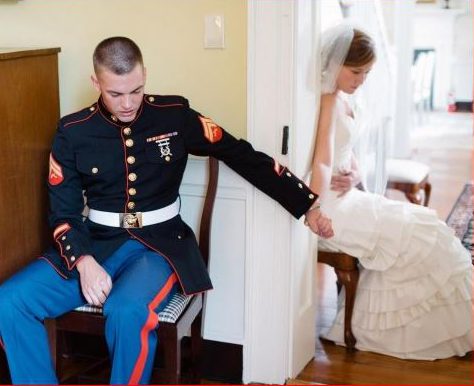
Marine prays with his wife on their wedding day

One of my favorite movies for explaining the differences between men and women is “High Noon” (1952).

Here’s the summary from IMDB:

Former marshal Will Kane (Gary Cooper) is preparing to leave the small town of Hadleyville, New Mexico, with his new bride, Amy (Grace Kelly), when he learns that local criminal Frank Miller has been set free and is coming to seek revenge on the marshal who turned him in. When he starts recruiting deputies to fight Miller, Kane is discouraged to find that the people of Hadleyville turn cowardly when the time comes for a showdown, and he must face Miller and his cronies alone.

The main theme of the film concerns Amy’s decision to break her wedding vows the very day that she makes them. She tells her new husband that he must bow to her will, and give up his male role as protector. When he explains his reasons for standing his ground to her practically (Miller will hunt them down) and morally (he has a duty protect the town), she dismisses both. She tells him that if he doesn’t run away from Miller and his gang with her, that she will get on the train and leave town by herself.

The intro of film shows the member’s of Miller’s gang assembling, and the words of the song explain the central conflict between husband and wife:

Here’s the part of the lyrics we care about:

The noonday train will bring Frank Miller.
If I’m a man I must be brave
And I must face that deadly killer
Or lie a coward, a craven coward,
Or lie a coward in my grave.

O to be torn ‘twixt love and duty!
S’posin’ I lose my fair-haired beauty!
Look at that big hand move along
Nearin’ high noon.

He made a vow while in State’s Prison,
Vow’d it would be my life or his’n
I’m not afraid of death, but O,
What will I do if you leave me?

Do not forsake me O my darlin’
You made that promise when we wed.
Do not forsake me O my darlin’
Although you’re grievin’, I can’t be leavin’
Until I shoot Frank Miller dead.

What’s interesting is that his new wife Amy apparently does not understand the meaning of wedding vows or the natural roles of good men as protectors of the weak, and fighters against evil. Although she vowed to stick by him and help him, the minute anything threatening appears that makes her feel unhappy, she abandons her vows and abandons her man. Let’s break down her mistakes now, using actual conversations from the movie.

First, she doesn’t understand or respect the man she married as a man:

Kane: [while riding out of town] It’s no good. I’ve got to go back, Amy.

Amy: Why?

Kane: This is crazy. I haven’t even got any guns.

Amy: Then let’s go on. Hurry.

Kane: No, that’s what I’ve been thinkin’. They’re making me run. I’ve never run from anybody before.

Amy: I don’t understand any of this.

Kane: [after looking at his vest watch] Well, I haven’t got time to tell ya.

Amy: Then don’t go back, Will.

Kane: I’ve got to. That’s the whole thing. [He turns the buggy around and rides back into town]

Her feelings and her desires for the world to be a happy place for her are so strong that they cloud her judgment.

Second, she doesn’t understand the threat posed by evil men:

More:

Kane: I sent a man up five years ago for murder. He was supposed to hang. But up North, they commuted it to life and now he’s free. I don’t know how. Anyway, it looks like he’s coming back.

Amy: I still don’t understand.

Kane: He was always wild and kind of crazy. He’ll probably make trouble.

Amy: But that’s no concern of yours, not anymore.

Kane: I’m the one who sent him up.

Amy: Well, that was part of your job. That’s finished now. They’ve got a new marshal.

Kane: He won’t be here until tomorrow. Seems to me I’ve got to stay. Anyway, I’m the same man with or without this. [He pins his badge on his vest]

Amy: Oh, that isn’t so.

Kane: I expect he’ll come lookin’ for me. Three of his old bunch are waiting at the depot.

Amy: That’s exactly why we ought to go.

Kane: They’ll just come after us, four of ’em, and we’d be all alone on the prairie.

Amy: We’ve got an hour.

Kane: What’s an hour?…What’s a hundred miles? We’d never be able to keep that store, Amy. They’d come after us and we’d have to run again, as long as we live.

Amy: No we wouldn’t, not if they didn’t know where to find us. Oh Will! Will, I’m begging you, please let’s go.

Kane: I can’t.

Amy: Don’t try to be a hero. You don’t have to be a hero, not for me.

Kane: I’m not trying to be a hero. If you think I like this, you’re crazy.

Instead of recognizing how her feelings are deceiving her about the threat and trusting her husband, she tries to force him to accept her mistaken view of reality by threatening to abandon him.

One of Kane’s ex-girlfriends has a talk with Amy, which helps her to understand who Kane is, and what is expected of her:

Amy: That man downstairs, the clerk, he said things about you and Will. I’ve been trying to understand why he wouldn’t go with me, and now all I can think of is that it’s got to be because of you…Let him go, he still has a chance. Let him go.

Helen: He isn’t staying for me. I haven’t spoken to him for a year – until today. I am leaving on the same train you are…What kind of woman are you? How can you leave him like this? Does the sound of guns frighten you that much?

Amy: I’ve heard guns. My father and my brother were killed by guns. They were on the right side but that didn’t help them any when the shooting started. My brother was nineteen. I watched him die. That’s when I became a Quaker. I don’t care who’s right or who’s wrong. There’s got to be some better way for people to live. Will knows how I feel about it.

Helen: I hate this town. I always hated it – to be a Mexican woman in a town like this.

Amy: I understand.

Helen: You do? That’s good. I don’t understand you. No matter what you say. If Kane was my man, I’d never leave him like this. I’d get a gun. I’d fight.

Amy: Why don’t you?

Helen: He is not my man. He’s yours.

Helen understands the need for a wife to stand by her man. But Amy’s response to evil is to shut her eyes and focus on feeling good and being happy. Notice that her “better way” is unspecified – it’s just a feeling she has that pacificism and no-violence will somehow “work” to stop evil. But in reality, pacifism is not a “better way” of dealing with evil – it does not work. Her pacifist response not only does not make evil go away, it actually encourages more evil. Weakness emboldens evildoers, and laying down your arms provokes them to do more evil. Will Kane knows this, but she won’t listen to him.

You can watch the final gunfight here, as well as Amy’s final decision:

So, this is why I really recommend this movie as a discussion-starter when you like a girl and are thinking of marrying her. It clarifies the essential problem with many young women today not being ready for marriage. To be fair, most women come around to respect their husbands and his different roles after they get married. However, the risk of divorce is so dangerous that it makes sense to bring it up for discussion before the marriage happens. Marriage is supposed to be an engine to serve God, and the success of that enterprise cannot be left to chance. You can’t just rely on the fact that she says the words of the vow, you have to check to see if she has a habit of keeping her promises when it goes against her own self-interest.

Ask yourself: Who are you, as a man? And does your woman accept that you have obligations to stand up to evil and do good ? Will she support you in your battle against evil, or will the marriage just be about her feelings and desires? I would especially beware of women who think that God is speaking to them through their feelings and desires. Look at her friends: are they practical and successful? Or are they irresponsible, unaccountable and reckless? Look at her father: does he have a plan for her, and does he lead her to be practical, frugal and hard-working? If you are not going to get an ally and a supporter in a wife, then you will not be able to serve God well, as a married man. Think about it.

Should you marry a woman who is pro-choice, pro-divorce or pro-gay-marriage?

Young, unmarried women celebrate gay pride
Young women celebrate gay pride: do they understand marriage? are they safe to marry?

Let’s take a closer look at what these three views mean for you as a future husband.

Pro-choice:

Let’s start by talking about sex, because you can’t have an abortion without sex. So, the right way to view sex is that it’s something that should be confined to marriage. Sex is so non-trivial that it should only be done after a couple has committed to each other for life. Feelings of being “in love” cannot ground sex, because feelings come and go, but marriage is for life.  The function that sex provides in a married home is that it relieves stress, affirms the unity of the marriage, and communicates love to the man in particular. Sex is not to be used before marriage as a way of getting what you want without having to promise to love the other person for a lifetime, no matter what.

Again, it’s not how you feel about the other person that matters, because feelings change. What matters is whether you are willing to make that commitment to take responsibility for another person’s needs, regardless of how you feel. Sex makes sense in a relationship where both people have promised to do that. And both people should have some kind of track record at doing that in their past, since accepting responsibilities, expectations and obligations is not something that just gets turned on and off by a wedding.

When a woman says that she is pro-choice, what she means is that sex is something completely different than what I just described. A pro-choice woman thinks it should be OK for a woman to have pre-marital sex for recreation – outside of the boundaries of a lifelong, exclusive commitment to marry. Since people don’t usually have pre-marital sex when they are sober, this is probably going to mean drinking a lot to break down her judgment, and to give her a way of getting out of the responsibility and feelings of guilt – “that wasn’t me, it was the alcohol that I freely chose to drink”. Premarital sex is about a woman choosing a man apart from his ability to commit to performing the roles of husband and father for her. She is not giving sex to a man who committed to her, she’s giving sex to a man who is hot and fun and will give her thrills and tingles and will make her friends so envious.

So what happens when this recreational sex results in a pregnancy? A pro-choice woman believes that it’s OK to murder another innocent human being in order to escape the normal, natural consequences of her own choices. Is this view of sex as recreational and commitment-free compatible with the needs and goals of a marriage-minded man?

Not only is this recreational, me-first, fun and thrills view of sex not compatible with marriage, but it’s not compatible with having children either. A woman who thinks that murdering an innocent child is an acceptable way to insulate herself from obligations and responsibilities is not a good woman to marry. A pro-choice woman will not be able to handle the needs of  a child, because she thinks that her happiness comes above self-sacrificial service to others.

Pro-no-fault-divorce:

The first redefinition of marriage before gay marriage was the enactment of no-fault divorce, which allows one spouse (the woman, 70% of the time) to exit the marriage for any reason, or no reason at all. These no-fault divorce laws were pushed through by two groups on the left: feminists and trial lawyers. They both stood to gain from no-fault divorce. Trial lawyers stood to make a ton of money from the divorce trials. Feminists objected to the traditional marital roles: sole male provider and stay-at-home wife and mother. By making it easier to divorce, they basically encouraged women to not think through who they were choosing to marry, since they could easily get out of it now. A woman who can get out of a marriage easily does not think rationally about whether the man can perform the traditional male roles. It enables her to reject her father’s guidance and just marry based on her feelings – the man’s appearance, peer-approval, cultural standards of what men ought to be, etc. No-fault divorce is like winning the lottery for a woman: she gets alimony AND child support.

If a woman supports no-fault divorce, it means that she does not want to be roped into responsibilities, expectations and obligations that require self-denial, self-control and self-sacrifice. Women who support no-fault divorce typically have the view that life is too unpredictable to logically connect causes and effects. They think that the most reliable way to choose a man is through their feelings, not by measuring his abilities against objective criteria like the traditional set of {provider, protector, moral leader, spiritual leader}. What this means for you is that if their feelings change, then they will divorce you. A woman who thinks that her feelings can predict whether an enterprise like marriage is likely to succeed or fail is a divorce risk. She will rely on her feelings to motivate her to perform in the marriage, and will expect you to make her feel like doing her jobs. You can’t get involved with that. Your job as a man is to protect, provide, and lead on moral and spiritual issues, not to make her do her job by making sure she always feels like doing it.

What if a woman says she opposes divorce – can she still be a divorce risk? Yes. If she has an overriding desire to be happy in other areas of her life that is so strong that it causes her to avoid hard things. If she studies easy subjects, prefers easy jobs, spends more on vacations than investments, etc. Avoid women who prioritize thrill-seeking behavior, like going out, getting drunk, hooking up, or doing pointless, expensive activities like sky-diving, zip-lining or surfing. They are not going to be content with married life, because they don’t value the end result of a good marriage over their own desire to be free of constraints and to have happy feelings. Whatever duties they have in the marriage will never get done, because they are not used to committing to do hard things, and then doing them, regardless of how they feel. Prefer women with a history of doing the right thing, even if they don’t feel like it.

Pro-gay-marriage:

What does it mean to be in favor of removing the requirement for two complementary genders in marriage? Well, what it means is that there is no design to marriage such that the male and female nature need to balance each other out. Same-sex relationships tend to exhibit characteristics that not favorable for the needs of children, e.g. – higher rates of domestic violence, non-monogamy, etc. I don’t think it’s a good idea to redefine marriage in a way that undermines the norms of natural marriage, e.g. – pre-marital chastity, exclusivity, permanence, and focusing on stability for the sake of the children. If your candidate thinks that raising children without a father or without a mother is “marriage”, they don’t understand marriage.

Any children who are raised by a same-sex couple will be automatically deprived of either their biological mother, their biological father, or both. Biological parents are naturally going to have an additional interest in the child, since the child contains their genetic material. And of course children do better when they are raised in a stable home. Anyone one can see that children of divorce do worse without their father. And orphans who go without a mother during their childhood – especially the first 5 years – do much worse than children raised by stay-at-home moms. So, either way, same-sex unions impose a lot of stress and strain on kids.

So should should marry a woman who thinks that it is OK to put the needs of selfish adults over the needs of vulnerable children? The answer is no. Any woman who puts the needs of selfish adults over the needs of innocent, vulnerable children is certainly not going to treat YOU well as a man. You are much less adorable and cute than any child. You’re big and hairy, and most women think you can take care of yourself. So naturally, a woman who thinks that children shouldn’t get their needs met is certainly going to think that you shouldn’t get your needs met, either. You want a woman who is prepared to put aside her own selfishness desires for the sake of the children. She has to believe in adults sacrificing their own desires for the sake of the children. Otherwise, not only will your children suffer, but you will as well.

Conclusion:

So we have seen 3 character traits in women that marriage-minded men should avoid. I just want to tell you that I have seen all 3 of these beliefs in women who claimed to be Christians. You cannot take the words “I am pro-life” to be a sign that she is really pro-life. You have to go deeper, and look for an understanding of the logic of the pro-life case, and pro-life activism. You cannot take the words “I oppose divorce” as a sign that she really opposes no-fault divorce. If her life is focused on pursuing pleasure by relying on her emotions, and then breaking promises and dismissing obligations that don’t feel good, then she is a divorce waiting to happen. You cannot take the words “I oppose same-sex marriage” as proof that she opposes same-sex marriage. If her view of relationships is that adults should do what they want, and the kids just have to adjust, then the risk that she will put herself above the children’s needs – and your needs – is there, regardless of what she says.

Watch out for women who say that their emotions are “God speaking to them”. That is a huge red flag, especially if their past shows evidence of poor decision making, e.g. – debt, abortion, unemployment,  drunkenness, sexual promiscuity, etc. You are looking for a past that shows long-term commitment that overrides feelings. This is not something that can be decided by will or emotions, it has to be a habit cultivated over a lifetime.

How can we get single men and husbands to be interested in church and ministry?

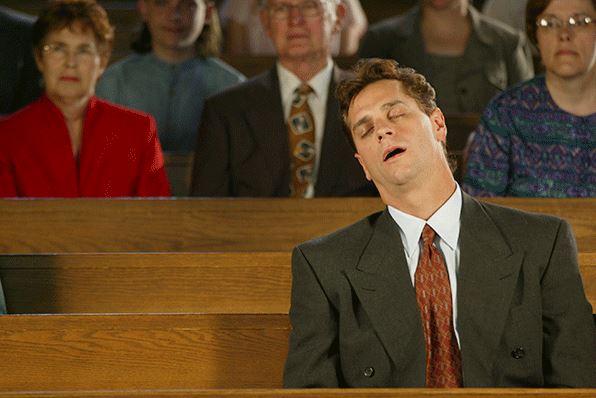
Church sucks, that's why men are bored there
Church is ineffective and impractical, and that’s why men are bored there

Consider this passage from William Lane Craig’s April 2013 newsletter, which made me very excited and happy. (H/T Triablogue)

Here it is:

One overwhelming impression of these engagements is the way in which the intellectual defense of Christian faith attracts men. Both at Texas A&M and again at Miami every single student who got up to ask a question was a guy! I wondered if the girls are just shy. But then I remembered a lengthy clip Jan and I watched of cast members of Downton Abbey doing a Q&A with an audience in New York. Almost every person who came to the microphone at that event was a woman! It wasn’t until late into the evening that a man finally asked a question, which was remarked by all the cast members. Why the difference between that session and the ones I experienced?—simply because the Downton Abbey program is highly relational, which is more appealing to women, whereas my talks were principally intellectually oriented, which is more appealing to men.

Churches have difficulty attracting men, and the church is becoming increasingly feminized. I believe that apologetics is a key to attracting large numbers of men (as well as women) to church and to Christ. By presenting rational arguments and historical evidences for the truth of the Gospel, by appealing to the mind as well as the heart, we can bring a great influx of men into the Kingdom. I’m so pleased that the church in Canada seems to be awakening to this challenge! I’m convinced that we have the opportunity to revolutionize Western Christianity by reclaiming our intellectual heritage.

Now, I hear a lot of complaints from women in the church and pastors in the church about men not being interested in going to church. I think that the problem is that church is hostile to men’s natures. Men thrive on conflict and competition. Men prefer strict rules and moral judgments. Men prefer to shame people who underperform, rather than coddle them. Men are practical and results focused. So how should the church accommodate the different nature that men have? Apologetics is one way to appeal to the male nature.

Let’s take a look at it.

Pastors: church as it is now is abrasive to men’s male nature

In William Lane Craig’s most recent podcast, at time 8:47, the WLC tells Kevin Harris about how he and his wife Jan asked about six of the young men who attend his “Defenders” apologetics class which morning service they attended: traditional or contemporary. ALL of the young men said that they attended neither service, because they go to church to learn something and the service has no educational value to them. The only attend the Defenders class. The apologetics class taught them things they could actually use – things they could actually use to think better, and fight better. This is my experience as well, although I am looking for a better church that does have some appeal to men. I might even have to move to find a decent church that has apologetics.

There is absolutely nothing going on in most churches that is valuable to a man. Men, by and large, only pray as a last resort, after we have done everything we can to solve the problem ourselves. We pay the most attention to the parts of the Bible that help us debate with non-Christians, or that give us things to do. We like to find evidence in the real world that connects with what the Bible is saying. We are interested in planning, execution and results. We are not very interested in feelings, singing, devotions, or bending the rules to make people doing bad things feel good. Now that’s not necessarily true for all men, but it is true for the majority of men.

And lest some people worry that fighting makes enemies, it doesn’t. Fighting with non-Christians has two effects: 1) they respect Christianity more, and 2) they want to be your friends and talk to you about spiritual things. I just got an e-mail from Captain Capitalism this week (he is a non-Christian) expressing some interest in what it is that I am doing as a Christian. He reads the posts where I take on atheism, they don’t make him respect me less as a Christian at all. He thinks that standing up for what you believe in and living consistently with it makes you authentic. That is not the exception, Christian women and pastors – that is the rule. Atheists don’t think that standing up for what you believe in makes Christianity look fake, they think it makes Christianity look authentic. Well, at least the ones who you want to talk to think that.

Wives: don’t choose men who had no interest in advocating for Christianity before you married them

A related problem I see is the problem of wives marrying the wrong men then complaining that the men they freely chose to marry are not interested in church. This is actually the woman’s fault. Most women don’t think about what is best for God when they think about who to marry and have children with, they think about what makes them feel good. They don’t have any kind of plan where they match the man’s ability to the roles he will play as husband and father – they just pick who makes them feel good. This works about as well as buying and selling stocks based on which make you feel good, or choosing electronics and computers based on the color, or choosing a job or a church based on what the building looks like. The Bible lays out a few minimal requirements for a man: chastity, self-sacrificial love, providing for family, leading on moral and spiritual issues. Most young, unmarried women don’t value those things. If a woman picks a man who doesn’t make any demands on them, and who doesn’t judge them, then she cannot depend on him to show spiritual and moral leadership later on in the marriage. So don’t pick a man like that.

Wives: men respond to attention, recognition and approval from women

The reason that most husbands don’t engage in Christianity is because most wives (not my married friends of course) haven’t approached Christianity as something that is objectively true. Men don’t create illusions for themselves in order to feel better – they are more practical than that. Men only invest in things that they think are true, and where they can see that their practical efforts will make a difference. Men are turned off by the view that Christianity is just something that helps families and communities bond, and makes people feel comfort. We think that’s weakness, and we abhor weakness. Once men get the idea that a woman thinks of Christianity as feelings-fulfillment, we stop trying to achieve anything for the Kingdom of God. Men don’t want to be roped into Christianity if all it means is helping people get along and feel good. But they very much want to be roped into a demanding relationship with God where their efforts to achieve results count with God and gets them recognition and approval from their wives.

So how do wives learn to recognize and approve of what men do as Christians? Well, women need to learn apologetics and they need to practice debating with non-Christians. That will teach them to value conflict and competition, and to see how engagement and authenticity drives relationships with non-Christians forward. If women show an interest in objective truth, moral goodness and theological correctness, then men will become interested in these things, too. They will do it because men are addicted to pleasing women, and they want to help women more than anything in the world, second only to pleasing God. Men will enthusiastically engage in whatever will get them praise and recognition from women, and that means that women have to care about Christianity beyond their personal emotional experience of it and beyond their social cohesion experience of it. Initially, wives must be ready to praise and encourage their husbands, and then once the husbands get it, then they will be self-motivated and move out on their own. It will be self-sustaining.