Tag Archives: Boys

Obama’s policies ignore the needs and concerns of men

Christina Hoff Sommers

Christina Hoff Sommers re-caps Obama’s history of introducing anti-male policies at the American Enterprise Institute blog.

Excerpt:

The Affordable Care Act mentions “breast” 44 times, “prostate” not once. It also establishes an elaborate and expensive network of special programs to promote women’s health. Programs for men are nowhere to be found. What explains the imbalance?

When President Obama took office, he promised to insulate his administration from organized lobbyists. Yet, from day one, he granted the women’s lobby unprecedented influence. The results should trouble fair-minded feminists.

The 2009 stimulus program set the pattern. The president had originally called for a two-year “shovel-ready” plan to modernize roads, bridges, electrical grids, and dams. Women’s activists were appalled. Op-eds appeared with titles like “Where Are the New Jobs for Women?” and “The Macho Stimulus Plan.” More than 1,000 feminist historians signed an open letter urging Mr. Obama not to favor a “heavily male-dominated field” like construction: “We need to rebuild not only concrete and steel bridges but also human bridges.” Kim Gandy, president of the National Organization for Women (NOW), attacked the “testosterone-laden ‘shovel-ready’ terminology.” Christina Romer, who chaired the President’s Council of Economic Advisers, would later say, “The very first e-mail I got . . . was from a women’s group saying, ‘We don’t want this stimulus package to just create jobs for burly men.’”

The president’s original plan was designed to stop the hemorrhaging in construction and manufacturing while investing in physical infrastructure. It was not a grab bag of gender-correct transfer programs. The whole idea was to get Americans back to work, and it was “burly men” who had lost most of the jobs following the financial collapse of 2008. But as protests mounted, the president’s team reconfigured the bill according to NOW’s specifications. In a column entitled “Economic Recovery: What’s NOW Got to Do with It?” Gandy could hardly contain her elation: “As we looked through the act, over and over we saw reflections of the very specific proposals that we had made, and with big numbers next to them. Numbers that started with a ‘B’ (as in billion).” To read Gandy’s column is to understand why shovels are still standing idle and the stimulus was such a disappointment

A year later, the 2010 Affordable Care Act created an Office of Women’s Health, a National Women’s Health Information Center, a Coordinating Committee on Women’s Health, and more — right down to the mandate that universities pay for students’ birth-control pills.

The average lifespan of American men is five years shorter than women’s, and men contract the big diseases several years earlier. According to the American Cancer Society, men’s lifetime risk of developing cancer is approximately 1 in 2; for women, it is 1 in 3. But the Act is informed by the spirit of NOW and other women’s organizations such as the American Association of University Women. It would never occur to these groups that the health and longevity of men are matters of interest to women. To them, relations between the sexes are a zero-sum game — and their role is to fight for women and against men.

Most striking of all is the Obama administration’s blindness to the growing problem of male academic underachievement. Girls outshine boys by nearly every measure of classroom success. They earn better grades, take more advanced-placement and honors courses in high school, and are far more likely to go to college. Women earn 57 percent of bachelor’s degrees, 63 percent of master’s degrees, and 53 percent of doctoral degrees. According to a recent Harvard study (“Pathways to Prosperity”), the new passport to the American Dream “is education beyond high school.” Today, far more women than men have that passport.

Yet the president persists in acting as if our schools are a hostile learning environment for girls, one that warrants aggressive federal intervention. Pressured by groups like the AAUW and the National Women’s Law Center (NWLC), the White House recently announced that the Department of Education would be adopting a more rigorous application of Title IX to career, technology, and engineering programs in high school and college — to stop the alleged boy-favoritism that is shortchanging girls. To avoid federal investigations that threaten withdrawal of financial support, programs will simply enroll fewer males.

Male readers, did you know about these issues, and the others that Christina brings up in her article? Probably not. It’s a funny thing but sometimes I think that men do need to be a little more vocal about how laws and policies discriminate against us. After all, if we are poor and sick and unemployed, as Obama seems to want, then we cannot do much good for anyone. We need to take care of ourselves even if our ultimate goal is to serve others.
On wargames, history and heroes: “this story shall the good man teach his son”

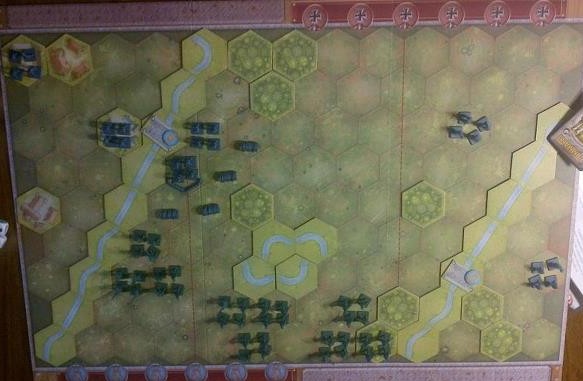
Memoir '44: Pegasus Bridge setup
Memoir ’44: Pegasus Bridge setup

Last night, I played through the Pegasus Bridge scenario from the Memoir ’44 wargame with Dina a few times. We actually played the online version of the game, using Steam. She was very gracious to play a wargame with me, which I don’t think is necessarily the first thing on most women’s lists of things to do on a Thursday night! I appreciated her agreeing to learn how to play and then playing with me several times. I think that Christians need to plan and execute more “together” activities like that – activities that involve interaction, co-operation, communication and engagement. We try to avoid doing things where we are both spectators. Playing wargames is not the only thing we do – we also do Bible study and cooking lessons (for me), for example.

Anyway, the point of this post is to express the deeper meaning behind playing wargames. I think that it is important to recognize and celebrate those who have demonstrated good character, whether it be now, or in the past. I think that it is important for us to search out the best role models ourselves, so that they will influence the way we act in our own lives. The second world war was a clear example of good versus evil. Anyone on the Allied side who demonstrated bravery and courage should be celebrated for safeguarding the security, liberty and prosperity that we enjoy today. In the case of Pegasus bridge, the hero is Major John Howard of the British paratroops.

Here is a quick re-cap of his exploits that day from the New York Times:

Maj. John Howard, the commander of glider-borne British infantrymen who seized the strategically vital Pegasus Bridge in the first battle of the D-Day invasion of Normandy, died Wednesday in a hospital in Surrey, England. He was 86 and had lived in Burford, near Oxford.

Under cover of night on June 6, 1944, six gliders carrying 181 officers and men of the Second Oxfordshire and Buckinghamshire Light Infantry landed on the eastern flank of a 60-mile invasion front on the northern coast of France. The regiment had a heritage going back to the battles of Bunker Hill and New Orleans, to Waterloo and to World War I. Now its soldiers were in the vanguard of the invasion of Hitler’s Europe.

Major Howard’s D Company was ordered to seize two bridges, one over the Caen Canal and the other spanning the parallel Orne River. If the Germans held on to those bridges, panzer units could move across them in a counterattack isolating 10,000 British paratroopers jumping behind the British invasion beach known as Sword, where infantry forces would arrive at daybreak. And Major Howard’s men sought to strike swiftly to prevent the Germans from blowing up the bridges if they were overwhelmed; the British needed those bridges to resupply their airborne units.

British Halifax bombers towed the gliders over the English Channel, then cut them loose.

Major Howard’s lead glider landed at 12:16 A.M., only 50 yards from the Caen Canal bridge, but the glider’s nose collapsed on impact, knocking everybody aboard unconscious for a few seconds. The soldiers quickly emerged, and over the next five minutes the men directly under Major Howard killed the surprised German defenders.

The nearby Orne River bridge was captured by other troops in Major Howard’s unit, and soon the words ”Ham and Jam,” signifying mission accomplished, were radioed to the airborne.

Two British soldiers were killed and 14 wounded in the operation.

Over the next 12 hours, British paratroopers and commandos reinforced Major Howard’s men, and British forces were able to move toward the city of Caen, their flank having been protected by the capture of the bridges.

On July 16, Major Howard received the Distinguished Service Order, Britain’s second-highest award for valor. On the 10th anniversary of D-Day, he received the Croix de Guerre Avec Palme from the French Government, which had renamed the Caen Canal span Pegasus Bridge, for the flying horse symbolizing the British airborne. The road crossing the bridge was later renamed Esplanade Major John Howard.

Why is this important? Well, it’s important to think on the things that are excellent. There are so many things in the culture that are not excellent that we are confronted with every day. We have to make it our business to do things together where goodness is celebrated. Especially when manly virtues like courage are celebrated. We don’t do that much anymore. And I think there’s a connection between wargames and Christian apologetics that we need to deliberately encourage.

Here’s an excellent passage from Shakespeare’s “Henry V” that makes the point:

This day is called the feast of Crispian:
He that outlives this day and comes safe home,
Will stand a tip-toe when this day is named,
And rouse him at the name of Crispian.
He that shall live this day, and see old age,
Will yearly on the vigil feast his neighbours,
And say, ‘To-morrow is Saint Crispian:’
Then will he strip his sleeve and show his scars,
And say, ‘These wounds I had on Crispin’s day.’
Old men forget: yet all shall be forgot,
But he’ll remember with advantages
What feats he did that day. Then shall our names,
Familiar in his mouth as household words,
Harry the King, Bedford and Exeter,
Warwick and Talbot, Salisbury and Gloucester,
Be in their flowing cups freshly remembered.
This story shall the good man teach his son;
And Crispin Crispian shall ne’er go by,
From this day to the ending of the world,
But we in it shall be rememberèd;
We few, we happy few, we band of brothers;
For he to-day that sheds his blood with me
Shall be my brother; be he ne’er so vile
This day shall gentle his condition:
And gentlemen in England, now a-bed
Shall think themselves accursed they were not here,
And hold their manhoods cheap whiles any speaks
That fought with us upon Saint Crispin’s day. (4.3.43)

This is from the famous speech in which King Henry charges his men to fight well before the famous Battle of Agincourt.

You can read more about the history of the British Airborne division and Pegasus bridge. The famous historian of the second world war Stephen E. Ambrose also wrote a history of the Pegasus bridge battle, called “Pegasus Bridge: June 6, 1944“. You won’t find many military historians better than Stephen E. Ambrose!

You might be surprised how many men are interested in military history and wargames, precisely because men instinctively look up to men like John Howard who embody qualities like bravery and courage. We have a dearth of moral character in this society. And we don’t do much to teach young men about manly virtues, even in the church. I think that it is important for us to think of creative ways for us to present good character to our young men. Young women should also learn about good character, because they must separate out the good men from the bad when they are courting.

Thanks to Dina for helping me to edit this post!

New study finds that boys benefit from bonding with Dads in first three months

First, an article from Dina from the UK Daily Mail.

Excerpt:

Dr Paul Ramchandani, who led the Oxford University study, said behavioural problems in early childhood often lead to health and psychological problems in adulthood which can be difficult to overcome.

But he said most research on how parents affect a baby’s behaviour and development has focused on mothers, when fathers also play an important role. The research team recruited 192 families from maternity units and experts filmed the mothers and fathers separately as they played with their children at home in different situations – looking at how caring or engaged they were.

The parents did psychological tests, while the children’s behaviour was assessed examining whether they were fretful, disobedient, had tantrums or in the worst cases showed aggression by hitting and biting.

‘We found that children whose fathers were more engaged in the interactions had better outcomes, with fewer subsequent behavioural problems,’ said Dr Ramchandani.

‘At the other end of the scale children tended to have greater behavioural problems when their fathers were more remote and lost in their own thoughts, or when their fathers interacted less with them.

‘This association tended to be stronger  for boys than for girls, suggesting that  perhaps boys are more susceptible to the influence of their father from a very early age.’

The study, which is published today in the Journal of Child Psychology and Psychiatry, found the three-month-olds with less engaged fathers were more likely to be in the 10 per cent of children who displayed the beginnings of behavioural problems at one year old.

This is surprising to me, and it conflicts with my idea of avoiding the little monsters until they are ready to learn apologetics at the age of 6. Now because of this study, I would have to be involved with the children right away, if I ever have any. Well, live and learn!

Now add to that study this article on single motherhood from the leftist New York Times that Stuart Schneiderman found.

Excerpt:

The economic storms of recent years have raised concerns about growing inequality and questions about a core national faith, that even Americans of humble backgrounds have a good chance of getting ahead. Most of the discussion has focused on labor market forces like falling blue-collar wages and lavish Wall Street pay.

But striking changes in family structure have also broadened income gaps and posed new barriers to upward mobility. College-educated Americans like the Faulkners are increasingly likely to marry one another, compounding their growing advantages in pay. Less-educated women like Ms. Schairer, who left college without finishing her degree, are growing less likely to marry at all, raising children on pinched paychecks that come in ones, not twos.

Estimates vary widely, but scholars have said that changes in marriage patterns — as opposed to changes in individual earnings — may account for as much as 40 percent of the growth in certain measures of inequality. Long a nation of economic extremes, the United States is also becoming a society of family haves and family have-nots, with marriage and its rewards evermore confined to the fortunate classes.

[…]About 41 percent of births in the United States occur outside marriage, up sharply from 17 percent three decades ago. But equally sharp are the educational divides, according to an analysis by Child Trends, a Washington research group. Less than 10 percent of the births to college-educated women occur outside marriage, while for women with high school degrees or less the figure is nearly 60 percent.

[…]While many children of single mothers flourish (two of the last three presidents had mothers who were single during part of their childhood), a large body of research shows that they are more likely than similar children with married parents to experience childhood poverty, act up in class, become teenage parents and drop out of school.

[…]Four decades ago, families in the top income fifth spent about four times as much as those at the bottom fifth on things like sports, music and private schools, according to research byGreg J. Duncan of the University of California, Irvine, and Richard J. Murnane of Harvard. Now affluent families spend seven times as much.

Two parents also bring two parenting perspectives. Ms. Faulkner does bedtime talks. Mr. Faulkner does math. When Ms. Faulkner’s coaxing failed to persuade Jeremy to try hamburgers, Mr. Faulkner offered to jump in a pool fully clothed if he took a bite — an offer Jeremy found too tempting to refuse.

While many studies have found that children of single parents are more likely to grow up poor, less is known about their chances of advancement as adults. But there are suggestions that the absence of a father in the house makes it harder for children to climb the economic ladder.

Scott Winship of the Brookings Institution examined the class trajectories of 2,400 Americans now in their mid-20s. Among those raised in the poorest third as teenagers, 58 percent living with two parents moved up to a higher level as adults, compared with just 44 percent of those with an absent parent.

A parallel story played out at the top: just 15 percent of teenagers living with two parents fell to the bottom third, compared with 27 percent of teenagers without both parents.

“You’re more likely to rise out of the bottom if you live with two parents, and you’re less likely to fall out of the top,” Mr. Winship said.

That article has some poignant illustrations of what fatherlessness does to a child.

Still think that single motherhood by choice is a great idea? Now if you were a legislator, tell me what legislation you would introduce to make sure that the government was encouraging fatherhood and discouraging single motherhood. How would you make marriage and fathers in the home easier for men, and single motherhood harder for women? It’s a policy problem – we have to change the incentives if we want to protect the children. How would you communicate to women that they need to get married before they have children, and how would you help them to know how to evaluate a man so that they can tell if he will make a good husband and father, and perform the traditional male roles in the family?