Tag Archives: Apologetics

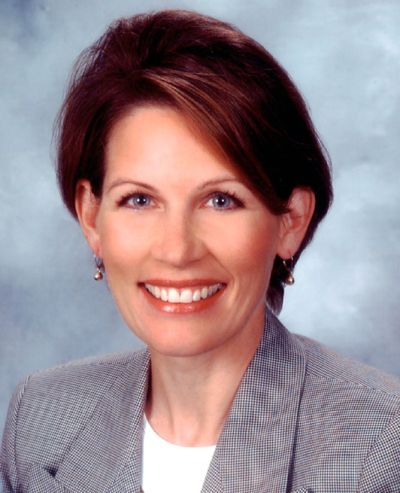
MUST-HEAR: Michele Bachmann gives the best speech ever

Rep. Michele Bachmann

My favorite Congresswoman stole the spotlight in Iowa when she lectured for the Family Leader Presidential Lecture Series. She’s back to the passionate arm-waving that I always liked so much.

The MP3 file is here. (17 Mb)

Shane Vander Hart from Caffeinated Thoughts has a great summary of the speech.

Excerpt:

Bachmann started her speech sharing her testimony saying she understood the Gospel for the first time at age 16 after growing up in a Lutheran Church and then she gave her life to Christ.  She said that it “changed her life forever.”  She said she had a hunger for the Word after then, and explained that the Holy Spirit “lifted the veil” from her eyes so she was then able to understand it.  She participated in YoungLife and another Bible study when in high school.  That first year in Christ was, Bachmann said, “was the defining year of my life.”

In college she participated the InterVarsity Christian Fellowship at her school, and cited Francis Schaffer’s film, How Now Shall We Live, made an impact on how she lives out her faith.  During law school at Oral Roberts University Law School she did advocacy for better homeschooling laws.  She and her husband, Marcus, homeschooled their five children in their early years.  She got involved in public schools as they did foster care for 23 kids since they were not allowed by Minnesota law to put those kids in private school or to home school them.

She noted a change in public schools where “knowledge, facts, and information” were taking a back seat to indoctrination.  She noted the 2000 Goals to Work standard implemented in the public schools that was a federal program implemented in all 50 states.  She advocated for its repeal in Minnesota – the first state to do so.  She said later this is where she got her start in politics.

She highlighted her prolife advocacy in the Minnesota Legislature – a requirement to fund prolife groups if they were going to fund Planned Parenthood and a woman’s right to know act.

[…]On marriage, she commended Iowans for booting the three Iowa Supreme Court justices up for retention last fall.  She said that Minnesota could possibly vote in favor of a Marriage Amendment now that Republicans  She noted that Congress can limit the subject matter jurisdiction for Article Three courts federally denying them an opportunity to rule on marriage. “This is the first time in recorded history that we have seen marriage in society defined as anything other than between one man and one woman.”

[…]On life she said that she and her husband has done more than just talk about life, but have tried to live it out through being sidewalk counselors and taking unwed mothers into their home.  Quoting Francis Schaeffer she, “life is the watershed issue of our time.”  Bachman proclaimed her commitment to life, “I will not give up until we give life the position it deserves in the United States and is protected from conception until natural death.”

She explained how taxes has impacted the family where in the 1950s would pay approximately 5% of their income to taxes.  She said now some families can pay up to 50% which explains why we have fewer one income families.  She noted the spending which has fueled anti-family tax policy.  She said the first thing on the House’s pro-family agenda was to rein in spending.  Regarding education reform, she noted how the Supreme Court has recently ruled that tax credits for private religious schools is constitutional.  She also said that she’d abolish the Federal Department of Education. She also called for the abolishment of the United States Tax Code.

[Note: commenter Francine notes that Michele says that this is the first time that marriage has been redefined to not be between men and women – the summary is in error about what she said]

She ends the speech with her concern for the fact that over 40% of children are beig born without a mother and father in the home, and she blames bad fiscal policies for this injustice. She makes the connection between left-wing fiscal policies and social breakdown. It’s so important that social conservatives understand that big government, high taxes, excessive regulation and massive spending are major causes of virtually all of our social problems. The breakdown of the family is what makes soul-destroying secularism possible.

There was also a press conference after the speech.

The MP3 file is here. (3 Mb)

Shane also covered the press conference.

Excerpt:

During the press conference that was held after Congresswoman Michelle Bachmann’s speech in Pella, IA for The FAMiLY Leader’s Presidential Lecture Series, she was asked to elaborate on the bill in Minnesota she helped to get passed that allowed funding for prolife organizations basically putting them on the same footing as Planned Parenthood.  During her answer she mentioned that she said that she introduced a similar bill in Congress.

She was also asked about what programs would she be open to abolishing other than the Federal Department of Education.  She listed the Department of Energy and the Department of Commerce as ones that have been discussed in Congress.  She said “anywhere we can abolish we might as well cut back and abolish.”  Saying in particular that our private sector has the capability to handle our energy needs.  She was asked about her disappointment with the House budget deal and where she would like the House leadership to put up a fight.  Bachmann said, “defunding Obamacare, this will change our country forever.”  She noted later that some may not be willing to take on budget battles in the future, she said that we have to… she said, “we have to change course.”

I have been pushing Michele Bachmann on this blog since the beginning two years ago, because she represents what I consider to be an ideal Christian woman. She is everything that I have ever hoped a Christian woman could be in my wildest, wildest dreams. I could not give any politician a more ringing endorsement. I hope with all my heart that she will some day be President of the United States.

Related posts

She explained how taxes has impacted the family where in the 1950s would pay approximately 5% of their income to taxes.  She said now some families can pay up to 50% which explains why we have fewer one income families.  She noted the spending which has fueled anti-family tax policy.  She said the first thing on the House’s pro-family agenda was to rein in spending.  Regarding education reform, she noted how the Supreme Court has recently ruled that tax credits for private religious schools is constitutional.  She also said that she’d abolish the Federal Department of Education. She also called for the abolishment of the United States Tax Code.

Audio, video and full summary of the William Lane Craig vs Sam Harris debate

The details of the debate:

  • Who: William Lane Craig vs. Sam Harris
  • Where: The University of Notre Dame
  • When: Thursday, April 7 – 7pm to 9pm
  • Topic: Is Good from God?

Here are the links to my preview, the audio and the video.

This comprehensive summary is from Thinking Matters New Zealand. It is entertaining to read, but accurate and comprehensive.

Here’s an overview:

Summary of Craig’s arguments:

  1. Under theism, God accounts for moral values because he is a perfect being and goodness is part of his nature
  2. Under theism, God’s commands account for moral duties
  3. Under atheism, morality is just an evolved convention, in which case it is not actually morality
  4. If morality is evolved convention, it doesn’t refer to anything objective
  5. We can imagine moral conventions evolving differently; therefore they aren’t objective
  6. Harris is trying to redefine goodness as wellbeing, just by his own fiat
  7. Harris’s describing how to be moral doesn’t explain what grounds morality
  8. Harris faces an insuperable problem in the naturalistic fallacy: you cannot derive what ought to be from mere facts about the universe
  9. Harris’s naturalistic view doesn’t allow for free will, which completely undermines his moral theories anyway

Craig’s two basic contentions:

  1. If God exists we have a sound foundation for objective moral values and duties;
  2. If God does not exist we do not have a sound foundation for these.

Summary of Harris’ arguments:

  1. Objective morality is important
  2. You don’t need religion to have objective morality
  3. Science can actually tell us what we ought to value because we never really separate facts and values
  4. Moral values depend on nature because they depend on nature-dependent minds, and so can be understood with science
  5. Morality is intrinsically about wellbeing because we can imagine a possible world in which everyone suffers horribly, and we see that we have an obligation to relieve that suffering
  6. Morality can’t be dictated by divine commands because God is evil
  7. We can say scientifically that the Taliban is bad

Harris’ main argument:

  1. Moral values and obligations depend upon minds
  2. Minds depend upon the laws of nature
  3. Therefore, moral values depend upon nature and can be understood through science

And, for an excerpt, here’s their summary of Craig’s first rebuttal:

Craig started by drawing the audience’s attention to how Harris was confusing moral ontology with moral semantics: confusing the basis or the foundation for moral values with the meaning of moral terms. Craig’s argument, and the topic of the debate, was about what grounds moral values and duties—not what words like “right” and “wrong” and “good” and “evil” mean. Christians readily concede that we can know what good and evil are even if we don’t believe they are grounded ontologically in God.

He then rightly dismissed Harris’s criticism of YHWH’s character as irrelevant. For one thing, there are plenty of divine command theorists who are not Jews or Christians. For another, there’s good reason to think that YHWH (the God of the Bible) is not a moral monster—in that regard he recommended Paul Copan’s new book, Is God a Moral Monster?. “We have not heard any objection to a theistic grounding for ethics,” Craig said. “If God does exist, it’s clear, I think—obvious even—that we have a sound foundation for objective moral values and duties.”

He then started to drag Harris over broken glass by showing that the issue of human flourishing, or conscious wellbeing, is not the question of the debate. We agree that, all things being equal, the flourishing of conscious creatures is good. The question is: if atheism were true, what would make the flourishing of conscious creatures good? Craig observed that Harris is using words like “good” and “better” in non-moral ways: for example, that there is a good way to get yourself killed doesn’t imply that it’s a moral thing to do. Harris’s contrast of the “good” life and the “bad” life is not an ethical contrast: it is a contrast between a pleasurable life and a miserable life. Since Harris had given no reason to identify pleasure and misery with good and evil, there was no reason for thinking that the flourishing of conscious creatures is objectively good.

Here Craig brought down the hammer and completely crushed Harris for the rest of the debate, by not only showing that Harris wasn’t engaging with the topic (he was equivocating between moral epistemology and ontology) but that his entire ethical system was necessarily false, by his own admission. Harris was saying that the property of “being good” is identical with the property of creaturely flourishing…but on the penultimate page of his book, he tellingly admitted that if rapists, liars, and thieves could be just as happy as good people, then his moral landscape would no longer be a moral landscape: it would just be a continuum of wellbeing, whose peaks were occupied by good and bad people alike. But as Craig pointed out, this implies that there’s a possible world where the peaks of wellbeing are occupied by evil people (say psychopaths). If moral goodness is identical to human wellbeing it is logically contradictory for there to be a possible world in which the peaks of wellbeing are occupied by evil people. Thus, moral goodness cannot be identical with human wellbeing or flourishing.

Harris was down for the count, and never even tried to address this argument in his followups.

Craig followed up this crushing argument with a further one, noting that moral obligations only arise when there is an appropriate authority to issue binding commands—and under atheism, no objective authority exists, and so objective moral values cannot exist.

If you missed the debate and can’t listen to the audio or see the video, this summary is well worth reading. It is accurate, and yet snarky, but without any exaggerations. I really think that what is behind atheism’s philosophical flirtations with the language of morality is an effort to put a respectable smokescreen around a worldview adopted by those who simply cannot be bothered with any moral obligation that might act as a speed bump on their pursuit of happy feelings and pleasures here and now. They want to be happy, and being good gets in their way. They aren’t trying to explain morality – they are trying to explain morality away… as the arbitrary conventions of a random process of biological evolution and cultural convention. Then they will be able to dismiss their conscience as an illusion created by the arbitrary culture they were raised in.

UPDATE: An even LONGER summary from New Zealand philosopher Glenn Peoples here.

What’s the best way to combat the trend toward “village atheism”

A village atheist is an atheist who is very convinced about his atheism but whose reasons for atheism are completely naive and superstitious, and who is completely unaware of the scholarly evidence for theism. Letitia wrote a post recently on her blog in which she expressed her concerns about the idea that the public may be trending towards village atheism, just because atheism is being presented as the most intelligent view in popular culture, and because Christians are not getting their scholarly arguments and evidences heard.

Excerpt:

While reflecting on his debate with Sam Harris and the audience questions that came after, Dr. William Lane Craig wrote the following about the makeup of the audience that night:

I wonder is something culturally significant is going on here. Several years ago, I asked the Warden at Tyndale House in Cambridge why it is that British society is so secular when Britain has such a rich legacy of great Christian scholars. He replied, “Oh, Christianity is not underrepresented among the intelligentsia. It’s the working classes which are so secular.” He explained that these folks are never exposed to Christian scholarship because of their lack of education. As a result there is a sort of pervasive, uninformed, village atheism among them. I wonder if something like this could be happening in the States. I was surprised to see the number of blue collar folks from the community buying Harris’ book and thanking him for all he has done. They didn’t seem to have any inkling that his views had just been systematically exposed as logically incoherent. The intelligentsia have almost universally panned Harris’ recent book (read the reviews!). Yet it is lapped up in popular culture. Wouldn’t it be amazing if unbelief became the possession mainly of the uneducated?

This comment causes my heart to sink. Personally, I like to think that I am fairly observant of the religious cultural shifts here in the U.S. and their bearing on what Christians should do to respond to them. However, I have to admit that Dr. Craig’s note above catches me a little off guard, even alarming to a degree as I realize what his observation, if truly symptomatic of an eve of a significant change, means for Christian apologists in this day and age. An inculcation of “New Atheism” among the blue collar/working class here would be a dramatic reversal of the religious landscape of America. I cannot help but feel that such a situation might be more “dismaying” than “amazing.”

[…]I have no doubt that the inculcation is taking place. It is being impressed upon the public through books by New Atheists like Sam Harris that are aimed on the popular level, both to adults and youth (e.g. Philip Pullman’s His Dark Materials). In the public classroom, atheism is the default worldview in the disciplines of both the hard and social sciences. Atheism is marketed as the new neutral position in almost all of public literature, television, and many commercial media outlets. Atheists pronounce that atheism is the only viable alternative for fair-minded people once they have shed the evil “superstition” of theism and Christianity that has existed here since the Pilgrims brought their Bibles off the Mayflower. Pair the New Atheists’ media blitz of book tours and public appearances and the fruits of declining Christian influence over American culture, I suppose we should expect an eventual ‘atheism-of-the-masses’ to emerge.

She then finishes the post with three ideas on how to counter this trend: 1) Christian scholars should try to appear on television shows, 2) Christian scholars should try to submit opinion columns to newspapers, and 3) Christians who are prepared to discuss theology and apologetics should participate in public discussions. I’ll just point out that it is excellent for Christian women to be concerned about these things, and to come up with solutions to the problems they raise. We need more women like Letitia to be concerned about these things, and to come up with effective plans to do something about it. (You’ll recall that she has a conference coming up in Arizona where she will be speaking – so she has chips on the table).

She also posted her post on Facebook, and got a few interesting replies. I’ll just paste a few of them in anonymously.

Here’s one from P:

The culprit here is government-controlled education. Secular progressives control teacher certification, teacher and administrator education, curriculum construction, textbook writing and selection, and just about all curriculum selection. …Virtually everybody but the very wealthy are required to spend 12 years under this regime. The consequence is uniform inculcation of the young in America, from kindergarten to high school graduation, with the same ideas that we just heard come out of Sam Harris’ mouth.

That echoes my comments earlier about how Christians should support school choice and oppose a public school monopoly.

But there’s more from S:

[D]on’t you think we (the church) ought to be more supportive of our congregants who wish to pursue doctorate level work within their particular field of discipline? It seems that if we had a individuals …with full-on Christian worldviews who have risen to the highest levels of authority in places like the educational system, that they could make just as much impact as what is happening now.

And then I chimed in and recommended that the church bring more scholars to speak in the on issues of policy and apologetics, so that the congregants would have something to talk about with their neighbors, and so that the children would get ideas about what they could study in order to have an effective influence.

I would like to see churches turn to questions like 1) is Christianity true? 2) how do we know it’s true from science, philosophy and history? 3) which economic policies are the best for Christians to support? 4) how do you use evidence and arguments to convince other people to be pro-life and pro-traditional marriage? 5) why do Christians have so many rules about sex and relationships? 6) how do you respond to the arguments made by non-Christians? 7) what is the best way to prevent wars – disarmament or deterrence? 8) what should Christians think about secular fads like global warming and feminism? And so on.

When the church starts to become interesting again, by actually having lectures, debates and disagreements about what’s true, then people in the culture will take it seriously. Right now, I think we are too focused on not have debates, not pursuing truth, not making exclusive theological claims, not making moral judgments, and just putting on a show that will make people have happy feelings and a sense of community. Eventually, when people in church notice that there are no men in the church, and consequently no children in the church, then we may decide to try something else.