William Lane Craig lectures on naturalistic alternatives to the Big Bang

Here’s the lecture, which was given in 2004 at the University of Colorado, Boulder. A very liberal university!

This lecture is suitable for intermediate and advanced Christian apologists.

The description of the video states:

This is quite simply one of the best lectures William Lane Craig (a philosopher of science) has given. Craig explores the origins of the universe. He argues for a beginning of the universe, while refuting scientific models like the Steady State Theory, the Oscillating Theory, Quantum Vacuum Fluctuation Model, Chaotic Inflationary Theory, Quantum Gravity Theory, String Theory, M-Theory and Cyclic Ekpyrotic Theory.

And here is the description of the lecture from Reasonable Faith:

A Templeton Foundation lecture at the University of Colorado, Boulder, laying out the case from contemporary cosmology for the beginning of the universe and its theological implications. Includes a lengthy Q & A period which features previous critics and debate opponents of Dr. Craig who were in attendance, including Michael Tooley, Victor Stenger, and Arnold Guminski.

Craig has previously debated Stenger and Tooley previously. And they both asked him questions in the Q&A time of this lecture. Imagine – having laid out your entire case to two people who have debated you before and who know your arguments well. What did they ask Craig, and how did he respond?

This lecture is based on a research paper published in an astrophysics journal, and was delivered to an audience of students and faculty, including atheist physicist Victor Stenger and prominent atheist philosopher Michael Tooley, at the University of Colorado at Boulder.

The whole research paper that the lecture is based on is posted online.

Woman who claims to be a Christian denounces premarital chastity

UPDATE: This post has been linked by Captain Capitalism, a libertarian non-Christian who respects Christians who act consistently with their beliefs.

Here’s the plan for this post. We’re going to take a look at a post by a woman who claims to be a Christian. In that post, she offers some reasons why premarital chastity is wrong. Then we’ll take a look at what the Bible says. Then we’ll take a look at what the research says. Then I explain what this trend among Christian women means for marriage-minded men.

First here is the post by “Joy”. Her reasons for disagreeing with premarital chastity are as follows:

  1. Chastity makes women who have had premarital sex feel ashamed
  2. It does no harm for a woman to have premarital sex before marriage
  3. God made people with a sexual drive, so God thinks that premarital sex is OK
  4. Most people are already having sex, so God thinks that premarital sex is OK
  5. Practicing sex with men you don’t intend to marry makes you better at marital sex

In another post, she is more clear about her views: (these are her actual words)

  • Choosing to not to abstain from sexual intercourse before marriage is not shameful.
  • Your decision to abstain or not to abstain does not necessarily have any connection to the health of your future marriage.
  • Your decision to abstain or not to abstain does not necessarily have any connection to the health of your future sex life.

Now first off, she has no Biblical evidence for any of these assertions in the original post I linked to. She also has no evidence from outside the Bible for any of her assertions. Assertion #3 in the list of 5 above seems to me to justify adultery as easily as it justifies premarital sex. Now, you might expect a person who claims to be a Christian to look first to the Bible to see what is right and wrong, then to look to evidence to strengthen the argument when discussing it with others inside and outside the church. For Joy, feelings and peer-pressure are enough to make anything morally OK. Now let’s take a quick look at what the Bible says about chastity and premarital sex:

1 Cor. 7:8-9

8 To the unmarried and the widows I say that it is good for them to stay single as I am.

9 But if they cannot exercise self-control, they should marry. For it is better to marry than to burn with passion.

The idea of “burning” here has to do with sexual desire. Here Paul tells all unmarried people that if they cannot control their sexual desires, they need to get married. Why? Because Paul assumes that one cannot fulfill this sexual desire outside of the marital bed. While Paul would love for them to remain single (1 Cor. 7:7), he believes that sex outside of marriage is a destructive sin and cannot be used as a gratifying release of our sexual passions.

Now what evidence outside the Bible is there to support that? Here’s some:

Now back to Joy, What I have found when dealing with women like Joy in the church is that the Bible has no authority over them. Not even the words of Jesus have authority to lead them. And obviously they are not impressed with evidence from science, history, etc. Their sole reason for acting the way they do is their own feelings, which largely stem from hedonism and vanity – the desire to feel good and to please and impress their peers. Whatever they do that seems right to them cannot be questioned or judged. If things don’t “work out”, then they are a helpless victim. God’s will for them is that they do whatever they feel like in order to be happy.

It’s very very important for men who are seeking marriage to understand that the typical woman they meet in the church does not understand that Christianity imposes any obligations on them. They don’t look at the Bible for moral guidance, but for comfort. And they don’t study outside the Bible to become persuaded (and persuasive) about what the Bible teaches. Their view of Christianity is that they are good where they are, and that there is nothing that they should be studying or planning for in order to achieve goals, like evangelism or marriage. Everything has to be easy and feel good.

Fortunately, there is a way to detect the women who are serious about Christianity, and it can be done by simply asking them questions to see if they have moved beyond the feelings/selfishness model of Christianity to the truth/responsibility model of Christianity. All you have to do is ask them questions to see how much effort they’ve put into confirming what the Bible teaches by reading outside the Bible. Christians read the Bible to know what’s true, and they read outside the Bible to convince themselves to act on what they know is true, and to show to others what’s true in a persuasive way. But reading outside the Bible is at war with the feelings/victim/don’t-judge-me view of Christianity pushed by people like Joy. That is because the more you read, the less room there is for doing what you feel like. When you study, what you learn constrains your actions.

When you ask a women questions about Christianity before marriage, you can see whether 1) she has studied these issues already or 2) she wants to study these issues, or 3) whether she has no interest in studying anything, no matter how useful to God it might be. You do not want to be married to someone who thinks that breaking God’s law is OK if she feels like it, and who has done no reading or studying of relevant moral issues in order to build up her own ability to have self-control for the good of others around her.

I think men should avoid women who respond to the claims of Scripture and the evidence from research by sticking their fingers in their ears and saying “don’t judge me! don’t shame me!”. You can’t make a marriage with someone who is dismissive of moral obligations, and who acknowledges no higher authority than her own feelings and the approval of her secular, progressive peers. The Bible forbids “unequal yoking”, which is the marriage of a Christian to a non-Christian.

And I’ll go one step further and say that this attitude of “rules make people feel bad, so we shouldn’t have any” is destroying our society. We really need to be a bit more brave about holding immoral, destructive people like Joy and her progressive friends accountable. Note: Just to be clear, I don’t mind if a person is a non-Christian and has had premarital sex, then becomes a christian and is from that point on abstinent before marriage – that is fine. It needs some attention and care to make sure that it doesn’t cause problems, but it’s totally acceptable to marry someone like that in my view. What is wrong is to claim that Christianity and premarital sex are compatible. That’s the mistake I am arguing against.

UPDATE: In the comments below I like to other posts on “A Deeper Story” showing that these women are also pro-gay-marriage. So they are really not Christians in any knowledge-oriented sense, but just applying the label to themselves inconsistently, perhaps like secular Jews call themselves culturally Jewish while not believing in God.

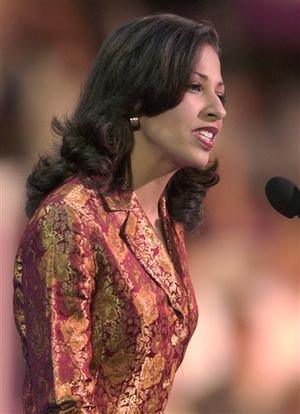
Erika Harold: Harvard law graduate and former Miss America runs for Congress

Republican candidate Erika Harold

The Weekly Standard reports.

Excerpt:

The most interesting House primary of the 2014 cycle began in June in the 13th District of Illinois. It pits freshman Republican congressman Rodney Davis against an insurgent candidate named Erika Harold. Davis is a political operative who won his seat last year nearly by accident. Erika Harold is a 33-year-old lawyer. Who happens to have been Miss America.

[…]In addition to the charisma and poise native to good politicians, Harold has exhibited the principled toughness of the best pols. And again, to appreciate this aspect of her character, you need only go back to Miss America.

Her platform as a Miss America candidate included abstinence:

Harold competed three times for the Miss Illinois crown, which she finally won in 2003. Each time, she ran on a platform of abstinence. But one of the arcane traditions of Miss America is that while contestants choose their own platforms when competing for the state crown, it’s the state organization that decides what platform the winner will take to Atlantic City. The year Harold was named Miss Illinois, her state committee settled on a bland platform opposing “youth violence.” (Think of it as “world peace,” for the children.) Harold agreed to oppose youth violence.

After she was named Miss America, however, Harold decided to add abstinence to her platform for the year of her reign. She didn’t abandon “youth violence” but rather included it, along with abstinence, in a broad appeal to kids to respect themselves by standing up to bullies and avoiding sex, drugs, and alcohol. This was, as a matter of both intellectual coherence and moral sense, a significant improvement on the pure “youth violence” platform she’d been handed. The Miss America organization did not like it one bit.

The organization pushed back hard and told Harold to keep quiet—especially about sex. The disagreement made national headlines and culminated in a news conference at the National Press Club in Washington, where the newly crowned Harold told reporters, “I will not be bullied. I’ve gone through enough adversity in my life to stand up for what I believe in.” Miss America stared down the pageant and won.

Promotes fiscal conservativism to African Americans:

Harold was already interested in politics. During a Miss America appearance at East St. Louis High School, students asked her what she wanted to be when she grew up. She told them, “My ultimate goal is that I want to be the first black female president of the United States.” While still an undergraduate at Illinois, she volunteered for conservative Patrick O’Malley’s doomed 2002 Illinois gubernatorial campaign. She also volunteered with the Republican National Committee in an effort to promote conservative economic principles in African-American communities. After graduating from law school, she joined a Chicago firm where her practice has specialized in health care law and religious freedom.

[…][W]hile Harold tries to resist easy classification, her ideological markers are highly suggestive of a conservative worldview. There’s the abstinence, of course. She’s fiercely pro-life. She favors concealed-carry gun laws. And she’s on the board of Prison Fellowship Ministries, the program founded by Chuck Colson.

Focused on religious liberty:

The most interesting part of Harold’s legal practice has been her work defending faith-based entities. In one case, for example, she represented a retirement community affiliated with a religious group. The organization featured a cross on its logo and used a Bible verse in its mission statement—which attracted a lawsuit from an advocacy group contending that this amounted to discrimination. Describing this work, Harold says, “It’s a passion of mine.”

Looking across the broader national landscape, Harold sees ample reason to be concerned about religious freedom. “We’re starting to see ways in which our constitutional protections are being encroached upon,” she says. “We all are less free when any group isn’t afforded their constitutional protections.”

And not just less free, but less well off. Harold says that her time with Prison Fellowship Ministries has deepened her appreciation for the good religious organizations can do. “I’ve seen firsthand the need for there to be a space in public life for religious groups to be able to offer service to their fellow man,” she says. When government seeks to quarantine religious organizations, moving from freedom of religion to “freedom of worship” (to use the formulation President Obama favors), “it’s far too limiting in terms of the good they can do for the public, and it’s far too restrictive in terms of the protections which are afforded religious groups by the Constitution. We give something up when we say that certain voices aren’t welcome in the public square.”

Harold says she intends to make religious freedom an issue in her campaign. This is fitting at a time when the HHS mandate, the Hobby Lobby case, and the torrent of litigation about to be unleashed by the Supreme Court’s gay marriage decisions appear likely to make religious freedom a central front in the culture war.

We have such a deep bench, so there’s reason for optimism – if you’re a Republican like me! Here’s another story I found about another young, female Republican candidate Elise Stefanik. I would not be annoyed at all if all of our candidates were women or minorities or minority women. I wouldn’t even be annoyed if our candidates were some sort of dolphin-alligator hybrid monstrosities, (although I prefer pretty lawyers ladies). The main thing I want is that our candidates are conservative. That’s what really matters to me.