Democrats defeat bill to ban abortions of babies who can feel pain

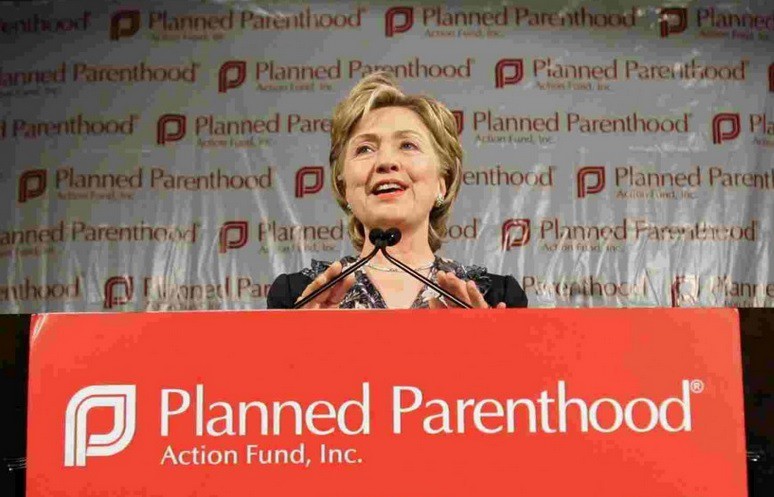
Hillary Clinton and Planned Parenthood

Well, even with all the attention to the for-profit organ harvesting of born-alive babies, the Democrats went ahead and voted against a bill to stop late-term abortions in the Senate.

Life News has the story.

Senate Democrats today blocked a vote on a pro-life Senate bill to ban late-term abortions — a bill that would save as many as 18,000 unborn babies form abortions each and every year.

The Senate voted today to stop the Democrats’ filibuster of the Pain Capable Unborn Child Protection Act, legislation that would ban abortions after 20 weeks — as neither Congress nor state legislatures can vote to ban all abortions under Roe v. Wade. The bill highlights how unborn babies feel intense pain when they are killed in abortions. The vote comes at a time when 10 expose’ videos have exposed the Planned Parenthood abrogation business selling aborted babies and their body parts.

“What I am asking every colleague is this: look in your hearts and help us stand up for the most innocent life,” said Senate Republican Majority Leader Mitch McConnell in advance of the vote.

But Democrats defeated the cloture vote 54-42, with pro-life Senate Republicans not getting the 60 votes needed to end debate and proceed to a vote on the pro-life bill itself. Three Democrats joined with Republicans to support the pro-life bill, including Joe Manchin of West Virginia, Bob Casey of Pennsylvania and Joe Donnelly of Indiana. Two pro-abortion republican, Susan Collins of Maine and Mark Kirk of Illinois — voted with Democrats to support late-term abortions.

[…]Had the Senate approved the bill, President Barack Obama has issued a veto threat. But pro-life groups hope to use the measure as an election tool in 2016 in an attempt to wrest control of the White House and approve a pro-life president who will sign it into law.

Now, I’ve written before about the science that shows that babies after 20 weeks can feel the pain of being torn limb from limb. And I also wrote about how babies as young as 22 weeks could survive outside the womb (“viable”). And that evidence was presented to Senate Democrats as part of the vote.

More:

“Fresh impetus for the bill came from a huge study of nearly 5,000 babies—preemies—published last week in the New England Journal of Medicine. The next day, a New York Times article titled: “Premature Babies May Survive at 22 Weeks if Treated” touted the Journal’s extraordinary findings of survival and hope,” Congressman Smith continued. “Thus the babies we seek to protect from harm today may survive if treated humanely, with expertise and compassion—not the cruelty of the abortion.”

A similar bill in the House did pass, even though almost all the Democrats voted against it, simply because so many Republicans were elected in the 2014 mid-term elections. And yet in the Senate, we were not able to elect enough Republicans to pass the  bill. The article notes that the Senate bill was modeled after similar measures that have been passed in 12 states where Republicans control the legislatures.

Here’s what a baby is like at 20 weeks

You are 20 weeks pregnant. (fetal age 18 weeks)

  • Baby now weighs about 11 ounces and is roughly 7 inches long.
  • Baby is 17 cm long crown to rump, and weighs about 310 grams.
  • The baby can hear and recognize the mother’s voice.
  • The mother will probably start feeling the first fetal movements.
  • The toenails and fingernails are growing.
  • The growth of hair on the rest of the body has started.
  • The skin is getting thicker.
  • The heart can now be heard with a stethoscope.

Your baby may react to loud sounds. Baby can actually hear noises outside of the womb. Familiar voices, music, and sounds that baby becomes accustomed to during their development stages often are calming after birth. This is an important time for sensory development since nerve cells serving each of the senses; taste, smell, hearing, sight, and touch are now developing into their specialized area of the brain.

Your baby now weighs about 11 ounces and at roughly 7 inches long they are filling up more and more of the womb. Though still small and fragile, the baby is growing rapidly and could possibly survive if born at this stage.

I understand why Democrats would vote to allow abortions on unborn children at this age. The abortionists make money off of these procedures, and they make more money off of the sale of organs, sometimes cut from babies who are still alive. Some of that money makes it’s way back to the Democrats in the form of political contributions. It’s similar to the way that slavers made money off of slaves… except they didn’t torture the slaves and cut the organs out of them to sell. I guess someone standing in a slave plantation might have said to a slaver “you can’t do that, they can feel pain”. And Republicans are standing outside abortion clinics and saying “you can’t do that, they can feel pain”. But in both cases, the slavers and the abortionists are making money from their barbarism. So it doesn’t make a difference to them whether they unborn can feel pain. The important thing to them is that they are making money.

Democrats are the heirs to the practice of slavery. They think that it’s fine to declare an entire category of humans as non-persons and then chop them up like firewood to sell. And since most people who vote Democrat do so because they are voting to get more and more of their neighbor’s money, none of this slavery is a concern to them. They care about getting their neighbor’s money without having to earn it. That’s what a Democrat is.
Study: non-STEM college programs make students less religious

Apologetics and the progress of science

Rice University reports on a new study conducted by sociologist Elaine Howard Ecklund.

Excerpt:

The public’s view that science and religion can’t work in collaboration is a misconception that stunts progress, according to a new survey of more than 10,000 Americans, scientists and evangelical Protestants. The study by Rice University also found that scientists and the general public are surprisingly similar in their religious practices.

The study, “Religious Understandings of Science (RUS),” was conducted by sociologist Elaine Howard Ecklund and presented today in Chicago during the annual American Association for the Advancement of Science (AAAS) conference. Ecklund is the Autrey Professor of Sociology and director of Rice’s Religion and Public Life Program.

“We found that nearly 50 percent of evangelicals believe that science and religion can work together and support one another,” Ecklund said. “That’s in contrast to the fact that only 38 percent of Americans feel that science and religion can work in collaboration.”

The study also found that 18 percent of scientists attended weekly religious services, compared with 20 percent of the general U.S. population; 15 percent consider themselves very religious (versus 19 percent of the general U.S. population); 13.5 percent read religious texts weekly (compared with 17 percent of the U.S. population); and 19 percent pray several times a day (versus 26 percent of the U.S. population).

[…]RUS is the largest study of American views on religion and science.

What would be interesting is to find out what specific arguments scientists who believe in God would appeal to, and which specific arguments scientists who don’t believe in God would appeal to. I actually know a professor who is trying to research this.

Meanwhile, Reasonable Faith has a podcast about the study, and what they discuss is how students who go into non-STEM university programs lose their interest in religion at a much higher rate than people who study STEM.

Here is the MP3 file.

And the relevant portion of the transcript:

DR. CRAIG: Right. If you look at their chart they give, where it shows the changes in religiosity by college major, it shows that in biology, engineering, and physical science and math they were mixed. The overall effect was neither negative nor positive. For some it was positive, some negative. But those majors did not seem to have a very significant effect upon the person’s religious behavior. The majors that had a very positive impact on religiosity were education, vocational or clerical education, business, and what is classified as “other.” All of those majors – whatever those are – have an overall positive impact upon students’ religiosity.

KEVIN HARRIS: And attendance as well – attendance to church services.

DR. CRAIG: Yes.

KEVIN HARRIS: The big fly in the ointment here is that “both the Humanities and the Social Sciences see dramatic declines in attendance and even more in religious beliefs.” It lowers church attendance, synagogue attendance, and even more in religious beliefs. What do we mean by the humanities and the social sciences?

DR. CRAIG: Humanities would include your non-scientific areas; for example, literature (hence the title of the article), politics.[3] I don’t know if they would include economics in this or not. Religious studies. In the social sciences are things like anthropology and sociology would be included there.

KEVIN HARRIS: The study of art?

DR. CRAIG: Yes, I suppose the arts would be in the humanities – that would be music and graphic arts. It is a big, big catch-all category.

And why does Dr. Craig think this is happening?

DR. CRAIG: […]It could well be that it is because it is in the humanities that the radicals of the 1960s were able to find a place in the university and become ensconced as professors with the relativism that they were championing. In areas like anthropology and sociology you find tremendous relativism where you simply study these cultures and societies without making any sort of judgment as to truth with regard to what they believe. This leads to the belief that it is all relative; there isn’t anything that is objectively true. John Searle is a very prominent philosopher at the University of California, Berkeley. Searle says that he believes that because of the commitment to the objectivity of truth and logic and the scientific method the hard sciences were barred to these radicals of the 1960s – getting into them and influencing them. But where they found an opening was in things like the Women’s Studies Department, Religious Studies, Anthropology, Sociology. These soft sciences. He says the professors in these disciplines are the children of the 1960s that have carried into it their relativistic views of truth. I noticed here the conclusion by the researchers of the University of Michigan (apparently who did this study), “Our results suggest that it is Postmodernism, not Science, that is the bête noir [the black beast or the hated thing] of religiosity.” The enemy of religiosity is postmodernism, not science.

KEVIN HARRIS: Postmodernism, as you’ve pointed out, was mainly a thing confined to literature and the soft sciences.

DR. CRAIG: Right. Women’s Studies, Religious Studies is rampant with Postmodernist perspectives. That has a real ring of truth to it, and could be the reason behind these statistics.

And this is why I recommend that people not drop math in high school, and pick a STEM field to study in college (or a trade in trade school). You are wasting your money when you let people in non-STEM areas indoctrinate you in fact-free irrationality. By the way, I love business administration as a major, for those who do not want to do the lab work. It attracts a lot of conservatives and entrepreneurs.

You can see Ecklund’s book about her research here on the Oxford University Press web site. You can also buy the book here from Amazon.com.

And here is a related lecture from Cambridge University featuring Dr. Ecklund.

Scott Walker campaign leaders sign up with Marco Rubio

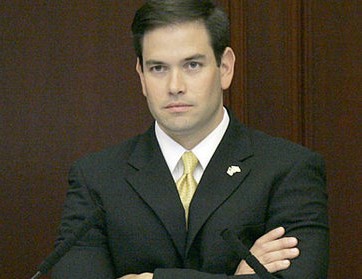
Florida Senator Marco Rubio

Story from the Weekly Standard.

Excerpt:

Four members of Scott Walker’s Iowa campaign are now aligning with Marco Rubio. With the Wisconsin governor exiting the presidential race Monday, the Walker campaign’s network of activist supporters in the early primary states are free to endorse other candidates.

In Iowa, three county chairs and a university student leader are now supporting Rubio, the Florida senator. Melody Slater of Lee County, Matt Giese of Dubuque County, and Alan Ostergren of Muscatine County, have all shifted their support for Rubio.

“While I am saddened by the news of Governor Walker’s campaign ending, I am proud to join Senator Rubio’s team. His conservative, positive vision is exactly what this country needs,” said Slater in a statement to THE WEEKLY STANDARD.

“Senator Rubio has the vision and ideas that are needed to lead us into the new American century,” said Giese. “I’m looking forward to serving on Senator Rubio’s Iowa team.”

“Marco’s optimistic vision for the 21st century is exactly what our country needs. In the coming months, I look forward to helping Marco win the Iowa caucuses,” said Ostergren.

In addition, Brittany Gaura, an Iowa State University student who co-chaired Iowa Students for Walker, is also endorsing Rubio. “As much as I support Governor Walker, I know it is a critical time in this nation’s history. I am supporting Marco for the positive vision and strong leadership he will bring to America’s future,” she said.

Rubio has also picked up support from the chairman of Walker’s New Hampshire campaign as well as an early supporter of Walker’s in South Carolina.

Well, many of you sent me messages on Facebook and Twitter about the sad news that Walker, my #2 candidate, had dropped out of the race. This is a huge loss for America, since Walker’s plan to reform public sector labor unions would have changed the direction of the country, given how labor unions donate so much money to Democrat candidates.

So where do I stand now? My favorite candidate is Bobby Jindal, then Ted Cruz, then Marco Rubio. That’s strictly on conservative principles and conservative achievements. Rubio is the most electable, but I am angry with him for flirting with amnesty. However, he has repudiated his involvement with that movement. I would be happy with any of these three candidates.

These candidates are not conservative enough for me

These candidates are Republicans, but they are too liberal on fiscal issues:

  • Jeb Bush (amnesty)
  • John Kasich (Medicare funding, big government)
  • Mike Huckabee (he is a tax and spend Democrat)
  • RIck Santorum (not conservative enough)
  • Christie (DREAM act, Medicare funding)
  • Carly Fiorina (DREAM act, illegal immigration)

These candidates are Republicans, but they are too liberal on social issues:

  • Rand Paul (crime, abortion & marriage)
  • Jeb Bush (way too liberal on gay marriage and gay activism)
  • Carly Fiorina (civil unions, religious liberty)
  • Chris Christie (marriage)
  • Lindsay Graham (liberal on abortion, marriage, SCOTUS judges)
  • John Kasich (abortion, marriage and religious liberty)
  • Carly Fiorina (soft on crime)

These candidates are Republicans, but they are too liberal on national security and foreign policy issues:

  • Rand Paul (naive isolationist, wrong on every national security and foreign policy issue there is)
  • John Kasich (he is John Kerry)
  • Ben Carson (Iraq war opposition)
  • Chris Christie (has a national security problem re: Muslims and CAIR, Iraq war opposition)

Donald Trump is not a Republican, he is too liberal on every single issue there is, regardless of his clown-talk. His unstable shrieking is just a baby squealing for attention, understanding nothing and with no awareness of facts. He is a nobody, and should not even be running for President.