Tag Archives: Thomas Sowell

Thomas Sowell urges us to reflect on economic trade-offs and incentives

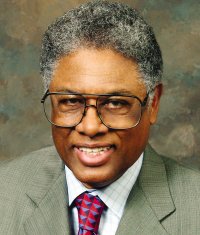
Thomas Sowell

Article here on Creators.

Excerpt:

With all the laments in the media about skyrocketing unemployment among young people, and especially minority young people, few media pundits even try to connect the dots to explain why unemployment hits some groups much harder than others.

Yet unusually high unemployment rates among young people is not something new or even something peculiar to the United States. Even before the current worldwide recession, unemployment rates were 20 percent or more among workers under 25 years of age in a number of Western European countries.

The young have less experience to offer and are therefore less in demand. Before politicians stepped in, that just meant that younger workers were paid less. But this is not a permanent situation because youth itself is not permanent, and pay rises with experience.

Enter politicians. By mandating a minimum wage that sounds reasonable for most workers, they put a price on inexperienced and unskilled labor that often exceeds what it is worth.

Mandated pay rates, like mandated insurance coverage, impose on buyers and sellers alike things that they would not choose to do otherwise.

Workers of course prefer higher wage rates. But the very fact that the government has to impose those wage rates means that workers were unwilling to risk not having a job by refusing to work for less than the wage rate that has been mandated. Now that choice has been taken out of their hands, with the hidden cost in this case being higher unemployment rates.

The law of unintended consequences – hurting the very people they intended to help, because of their economic ignorance. They priced the youngest and most vulnerable workers out of a job, by mandating a minimum wage that no employer will pay to an inexperienced worker. During a recession, you LOWER minimum wage in order to make sure that those most in need can find a job rather than depend on the government.

When people have jobs, they have confidence to spend more money. Making sure that no policy harms job creation is a primary responsibility of government. Jobs, jobs, jobs. No one (especially Christians) should be dependent on the government for money – because the one who pays the piper calls the tune. And no Christian should dance to the tune of a secular leftist government.

If you are a Christian, but not yet a solid small-government fiscal conservative, then read the WHOLE thing. Christians need to understand that the free market is the best guarantor of our freedom of conscience.

Thomas Sowell is my favorite living economist. Walter Williams is number 2. If you click this link, you can read something from Walter Williams about the economic problems that are created by forcing insurance companies to cover people with pre-existing conditions.

Related posts

Are women underpaid for doing the same work as a man?

Here is a neat article from TotallyHer.com on this issue.

Excerpt:

Over the years there’s been much debate surrounding the concern for women receiving inequitable pay, relative to the same work men do. This continues to be an issue even in 2010! As a matter of fact, did you know that there’s an Equity Pay Day this year?

But it’s not just special interest groups who express the concern for women’s apparent lack of parity in their paychecks. President Obama signed legislation early in his presidency to ensure equal pay for women.

So is the President himself admitting that a woman can do the exact same work, for the exact same amount of time, with the exact same qualifications and experience as her male counterpart and get a smaller paycheck? Is that happening in the United States right now?

Click through to read the article and see what the research shows.

Thomas Sowell’s take on the pay gap

I actually have a book on my shelf by Thomas Sowell that tackles this very issue, among others, called “Economic Facts and Fallacies”. Here’s a short 3 minute video about the book.

There’s also a nice 4-clip discussion of the book between Dennis Prager and Thomas Sowell, (from Prager’s radio show). I’m listening to it now, and Sowell also preferred Fred Thompson in the 2008 Republican primary, just like me! This is a really, really good interview.

My thoughts

When I survey the best of my Christian male friends, we all agree that work really gets in the way of the things we would like to be doing. Some of us would like to be working more on our marriages and relationships, or playing with children, or writing, or teaching classes in the church, or organizing debate and lecture events, or lifting weights and playing sports… but one thing we agree on is that there is too much emphasis for men on the workplace as the theater of for our achievements. It’s just stupid.

I myself would love to work fewer hours if I could have more time for other things. Why work so hard just to pay more in taxes? I think men get trapped into marriage and children and then they are stuck working too hard to pay 40% in taxes for government bureacrats to marriage. High taxes are a real disincentive for men contemplating marriage. If women were smart, they would vote to shrink government, welfare and social programs. Then men would really be interested in marriage, because they could work less and still have time for other interesting things.

Videos from apologist William Lane Craig and economist Thomas Sowell

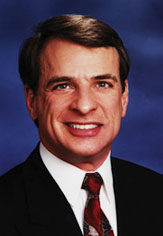
William Lane Craig

Bill Craig
William Lane Craig

First, one from William Lane Craig, called “In Intellectual Neutral”. (H/T Apologetics 315)

It’s 40 minutes long.

This lecture is Dr. Craig’s appeal to the church to use their minds as a way to serve Christ. This is a very passionate and accessible lecture designed to motivate people to take the life of the mind more seriously. His focus is on getting Christians to focus on learning arguments and evidence, so that when they discuss these topics they can appeal to logic and objective reality (science and history) to confirm their views. He is concerned that unless we get good at this, that people will not regard Christianity as a “live option” when choosing their worldview.

I’ve heard this lecture delivered in person at Wheaton College one year when he spoke in the chapel to all the students. It was very moving. But this version is twice as good. This time he’s really letting loose.

Thomas Sowell

Thomas Sowell

This one features my favorite living economist, Thomas Sowell. (H/T ECM)

It’s 40 minutes long.

Thomas Sowell’s new book is about intellectuals, those who deal primary with words and ideas, not arguments and evidence. These intellectuals have the goal of reforming society based on the ideas that they learn in classrooms. (Sowell is not talking about engineers, medical doctors, accountants, etc. – people who actually have hands-on knowledge in advanced areas)

Sowell is concerned with people who are specialized in one narrow area such as linguistics, and then make pronouncements on public policy or economics without knowing anything about those areas. He argues that intellectuals have a low opinion of people who don’t go to the best schools, but instead focus on practical things. This conviction that other people are stupid makes them want to seize control and force their vision onto the world. The vision of the intellectuals includes metaphysical and moral beliefs.

In addition to what Sowell says in the video, I would expect that these intellectuals also disdain the morality and theology of Christians, whom they see as non-intellectuals, because they never hear reasons why people believe in Christianity and Christian morality in their Ivy-league classrooms. This absence of a defense is what causes them to be so aggressive about trying to marginalize what they view as unfounded beliefs and antiquated moral rules. Maybe they would not be so aggressively secular and collectivist if we were all as prepared to give a defense as William Lane Craig is?

More economists

If you like what you see in these videos, you might want to consider reading one of my favorite papers by economist Robert Nozick entitled “Why do Intellectuals Oppose Capitalism?” He uses a similar definition of intellectuals as being “wordsmiths”, rather than engineers, entrepreneurs, and doctors. My other favorite living economists are Walter Williams (#2) and Jennifer Roback Morse (#3).