Tag Archives: Theory

How the science teachers lobby misrepresents intelligent design

From Evolution News.

Excerpt:

Science Teachers Association (NSTA), which stands alongside the rest of the Darwin lobby in holding that neo-Darwinian evolution should be taught in a one-sided, pro-evolution-only fashion.

[…]But the Darwin lobby is smart. While it is trying to ban and censor the views of its opponents, the Darwin lobby has a particular narrative which tries to paint its opponents as the censors and the extremists. The narrative goes something like this (my paraphrase): ‘Dark forces of intelligent design and creationism are seeking to ban evolution from public schools and then force their religious beliefs into the science classroom. We must stand against censorship and religious agendas, so we must fight their agenda at any cost. Stand with us, the guardians of freedom of thought and the First Amendment.’

[…]The article goes on to cover recent debates in Texas over teaching evolution. The reality, of course, is that NO leading Darwin-critics in Texas sought try to censor evolution. Evolution is still a required part of the curriculum in Texas, and the new TEKS that continue to teach evolution were eagerly adopted by the Texas State Board of Education members who were skeptics of neo-Darwinian evolution.

McKee’s strategy is thus one of the oldest in the books: deflect away from the fact that she herself advocates an extreme position by painting her opponents as extremists.

The reality is that leading groups that doubt neo-Darwinian evolution (like Discovery Institute) strongly oppose any attempts to ban evolution or remove it from the curriculum in schools. We also oppose teaching creationism in the science classroom because it’s a religious viewpoint. As for ID, we feel it’s science and constitutional to teach, but we want the debate over ID to be a scientific one and not a political one, so we oppose attempts to push ID into public schools. Instead, we think that public schools should simply teach the scientific evidence both for and against neo-Darwinian evolution.

So where does that leave us? Leading Darwin-critics aren’t seeking to introduce creationism or ID into public schools, and they would vehemently oppose attempts to ban evolution. Rather, they seek to increase coverage of evolution by teaching both the evidence for and against neo-Darwinism.

The Darwin lobby wants only the pro-Darwin-only viewpoint taught. They want to censor any science that challenges neo-Darwinian evolution.

The whole article is good to read, and especially this picture that summarizes their view and my view.

It’s important to understand that conservative pro-ID people like me are not trying to get rid of evolution. We want it taught as the best available theory that naturalists can invent after their faith commitment that the universe is eternal and matter is all that there is. And then we want the scientific evidence against evolution taught. That’s it. Period. Teach the controversy. Don’t distort the evidence to fit the pre-supposition of naturalism. Teach the evidence that the universe had a beginning, and that life exhibits characteristics of information. If nature is hostile to naturalism, then so much the worse for naturalists. Leave religion (naturalism) out of the classroom, and go where the evidence leads.
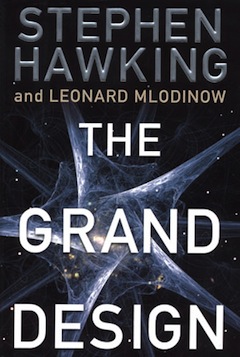
Book review of Stephen Hawking’s “The Grand Design” by Edgar Andrews

First, who is Edgar Andrews?

Professor Edgar H. Andrews (BSc, PhD, DSc, FInstP, FIMMM, CEng, CPhys.) is Emeritus Professor of Materials at the University of London and an international expert on the science of large molecules. In 1967 he set up the Department of Materials at Queen Mary College, University of London, and served both as its Head and later as Dean of Engineering. He has published well over 100 scientific research papers and books, together with two Bible Commentaries and various works on science and religion and on theology. His book From Nothing to Nature has been translated into ten languages.

Edgar Andrews was an international consultant to the Dow Chemical Company (USA) for over thirty years and to the 3M Company (USA) for twenty years. He was a non-executive director of Denbyware PLC throughout the 1970s and for five years a member of the Scientific Advisory Board of Neste Oy, the national oil company of Finland.

And now an excerpt from the book review: (H/T Apologetics 315)

Hawking and Mlodinow declare: ‘According to M-theory, ours is not the only universe. Instead, M-theory predicts that a great many universes were created out of nothing. Their creation does not require the intervention of some supernatural being or god. Rather, these multiple universes arise naturally from physical law. They are a prediction of science’ (p.9).

So what is this magical M-theory? The authors are rather coy about it. ‘M-theory’, they say, ‘Is not a theory in the usual sense. It is a whole family of different theories, each of which is a good description of observations only in some range of physical situations’ (p.8). Theoretical physicist Lee Smolin is more explicit: ‘… we still do not know what M-theory is, or whether there is any theory deserving of the name’ (The trouble with physics, Allen Lane, 2007, p.146).

The fact is that M-theory is an untestable mathematical construction which many scientists believe has no bearing on physical reality. But that doesn’t deter our authors because they don’t believe in ‘objective reality’ anyway. What we think is ‘real’, they say, is simply a model assembled in our brains from raw data input by our senses. But, confusingly, the authors then claim that the best models are those that reflect the way things really do happen in the real world — appealing to the very objective reality they say does not exist! Confused? Me too.

But it gets worse. They claim that M-theory (whatever it might be) predicts not one universe but a multiverse — a vast collection of universes which cannot be observed or known to us in any way. On their own criterion, this makes M-theory a very bad model indeed. So it’s hardly a useful replacement for God.

Here’s a better book to read if you want to understand how belief in God relates to experimental science.

My Dad just finished reading his book “Who Made God?” and called me up to tell me how much he liked the book. My Dad is not a scientist, yet he read the whole thing and learned a lot about science. This is the book for people who haven’t read a thing about science and religion. It’s easy to understand because he explains the same thing over and other giving more and more detail. Even a child can understand the first explanation, and then he keeps layering on details until he gets up to the state-of-the-art.

Remember Brian Auten of Apologetics 315 picked this book as his favorite of 2010. You can’t go wrong!

My Dad is now reading my copy of “Is God Just a Human Invention?” by Jonathan Morrow and Sean McDowell. I’m working on “Is God a Moral Monster?” by Paul Copan. I like books where difficult questions are asked and then careful answers are given. Then when people ask me the same questions, I can answer them using what I’ve learned – and often phrase the question even more clearly and forcefully than they did when they asked me.

Science writer John Horgan comments on Hawking’s ideas

This is from Scientific American. (H/T Reformed Seth)

Keep in mind that the author is a naturalist and an atheist, and he thinks Glenn Beck is a “right-wing nut” – i.e. – I infer that the author is a left-wing nut. But his criticisms of Hawking’s untestable theory are accurate.

Excerpt:

The “sound scientific explanation” is M-theory, which Hawking calls (in a blurb for Amazon) “the only viable candidate for a complete ‘theory of everything’.”

Actually M-theory is just the latest iteration of string theory, with membranes (hence the M) substituted for strings. For more than two decades string theory has been the most popular candidate for the unified theory that Hawking envisioned 30 years ago. Yet this popularity stems not from the theory’s actual merits but rather from the lack of decent alternatives and the stubborn refusal of enthusiasts to abandon their faith.

M-theory suffers from the same flaws that string theories did. First is the problem of empirical accessibility. Membranes, like strings, are supposedly very, very tiny—as small compared with a proton as a proton is compared with the solar system. This is the so-called Planck scale, 10^–33 centimeters. Gaining the kind of experimental confirmation of membranes or strings that we have for, say, quarks would require a particle accelerator 1,000 light-years around, scaling up from our current technology. Our entire solar system is only one light-day around, and the Large Hadron Collider, the world’s most powerful accelerator, is 27 kilometers in circumference.

This sounds like bad news for atheism and their beloved deity, but it is a strength of the Flying Spaghetti Monster (peas be upon him) to be untestable, unobservable and speculative! It’s a feature, not a bug.

UPDATE: Cool video of Roger Penrose and Alister McGrath debunking Hawking’s theory:

Atheist Roger Penrose calls it “not even a theory”. Wow. This is from Justin Brierley’s “Unbelievable” show, that I feature once in a while.