Tag Archives: Single-Motherhood

Why is it so hard for a working man to provide for a family these days?

Welfare spending
Welfare spending

Here’s my argument which answers the question:

  1. Feminism was behind no-fault divorce.
  2. Making it easier to divorce means that more divorces will occur.
  3. Marital instability causes women to vote for bigger government.
  4. Unmarried women vote mostly for Democrats.

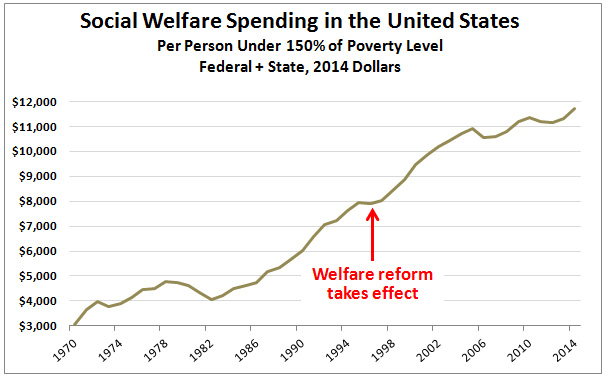
When government spending increases for social programs and welfare, then taxes must be raised to pay for it. When taxes rise, men keep too little of their salaries to hold onto the provider role.

*Please note that I am talking about unmarried (never married, divorced) women throughout this post.

Here’s the evidence for each point.

1. Feminism was behind no-fault divorce, according to this feminist, pro-no-fault-divorce writer.

Excerpt:

Households of 2010 don’t look quite like they did in 1969, when no-fault divorce actually was a controversial topic and these counter-arguments held some weight. The working dad/stay-at-home mom model of the middle class has been replaced by two-parent earner households and a growing number of working mom/stay-at-home dad arrangements. In working poor and impoverished families, the one-parent provider model was never the norm. No-fault divorce seemed scary when it had never before existed, but the truth is that its introduction was long overdue. Feminist groups at the time supported no-fault divorce, as it provided women an escape hatch from desperately unhappy marriages in a society where they were already disadvantaged on almost every level, regardless of their marital status. Imagine an abusive marriage in 1968, when the court-savvy abuser could actually force the victim to stay in the relationship forever. Imagine that now, and you know why domestic violence attorneys are in full support of introducing no-fault divorce to New York. And the judges aren’t the only problem.

Note that the author of this piece thinks that it is not women’s fault that they choose men who they then want to divorce. It’s not the woman’s fault that she is unhappy with the man she courted with and then chose and then made vows to – women need a no-fault escape hatch, and children do fine without fathers.

2. Easier divorces means more divorces.

Abstract:

This paper analyzes a panel of 18 European countries spanning from 1950 to 2003 to examine the extent to which the legal reforms leading to “easier divorce” that took place during the second half of the 20th century have contributed to the increase in divorce rates across Europe. We use a quasi-experimental set-up and exploit the different timing of the reforms in divorce laws across countries. We account for unobserved country-specific factors by introducing country fixed effects, and we include country-specific trends to control for timevarying factors at the country level that may be correlated with divorce rates and divorce laws, such as changing social norms or slow moving demographic trends. We find that the different reforms that “made divorce easier” were followed by significant increases in divorce rates. The effect of no-fault legislation was strong and permanent, while unilateral reforms only had a temporary effect on divorce rates. Overall, we estimate that the legal reforms account for about 20 percent of the increase in divorce rates in Europe between 1960 and 2002.

It seems obvious, but more evidence never hurts. About 70% of divorces are initiated by women, either because they chose to marry the wrong man, or because they are unhappy with the right man.

3. Marital instability causes women to vote for bigger government for security.

Excerpt:

Giving women the right to vote significantly changed American politics from the very beginning. Despite claims to the contrary, the gender gap is not something that has arisen since the 1970s. Suffrage coincided with immediate increases in state government expenditures and revenue, and these effects continued growing as more women took advantage of the franchise. Similar changes occurred at the federal level as female suffrage led to more liberal voting records for the state’s U.S. House and Senate delegations. In the Senate, suffrage changed voting behavior by an amount equal to almost 20 percent of the difference between Republican and Democratic senators. Suffrage also coincided with changes in the probability that prohibition would be enacted and changes in divorce laws.

[…]More work remains to be done on why women vote so differently, but our initial work provides scant evidence that it is due to self-interest arising from their employment by government. The only evidence that we found indicated that the gender gap in part arises from women’s fear that they are being left to raise children on their own (Lott and Kenny 1997). If this result is true, the continued breakdown of the family and higher divorce rates imply growing political conflicts between the sexes. 19

Bigger government must be paid for by higher taxes, of course, which makes it harder for one working man’s income to provide for a family. In fact, feminists wanted men to be displaced as sole-providers. They would prefer that women are “equal” to men, and that means making women get out and work like men. Feminists had every reason to want bigger government and higher taxes to make traditional single-earner families unfeasible financially. They did it for equality.

4. Women are in fact observed to vote for bigger government.

Excerpt:

On Tuesday, the nation made history. It made history in electing the first African American president; it made history in building a bigger margin for the first female Speaker of the House; it made history in delivering the biggest Democratic margin since 1964; it made history in sending a record number of people to the polls and the highest percentage turnout since the 1960 election. Analysts will spend the next few months sifting through the data, trying to figure out what happened and why. Historians will likely spend the next several years and decades studying this election, as well. But one thing is immediately clear. Unmarried women played a pivotal role in making this history and in changing this nation. They delivered a stunning 70 to 29 percent margin to Barack Obama and delivered similarly strong margins in races for Congress and the U.S. Senate. Although unmarried women have voted Democratic consistently since marital status has been was tracked, this election represents the highest margin recorded and a 16-point net gain at the Presidential level from 2004.

In fact, there was a recent (2011) study showing that unmarried women do in fact vote for higher taxes and more government as a substitute for a husband’s provider role.

Abstract:

The last three decades have witnessed the rise of a political gender gap in the United States wherein more women than men favor the Democratic party. We trace this development to the decline in marriage, which we posit has made men richer and women poorer. Data for the United States support this argument. First, there is a strong positive correlation between state divorce prevalence and the political gender gap – higher divorce prevalence reduces support for the Democrats among men but not women. Second, longitudinal data show that following marriage (divorce), women are less (more) likely to support the Democratic party.

What follows from voting Democrat?

Since the Democrats took the House and Senate in 2006, and then the Presidency in 2008, the national debt has more than doubled from about 8 trillion to 20 trillion. A lot of that money was spent in welfare for single mothers, which only makes the women and their fatherless children more dependent on government. Children raised in unmarried home are far less likely to marry themselves, and to be independent of government. Which means that they will vote for bigger government when they start to vote, since they can’t make it through life on their own strength.

If more people vote for Democrats then we will get higher taxes to pay for all the government spending. Higher taxes means that a married man can no longer retain enough of his earnings to support a family. And that means his wife has to work, and that means that his children will learn what the government schools decide they should learn – so that all the children will be equal and think the same (pro-government) thoughts. This should not be controversial, because it is what it is. But if we want to talk about the decline of marriage honestly, then we need to be talking to single women about how they choose men, when they have sex with men, and how they vote at election time. You really can’t have it all.

Why is it so hard for a working man to provide for a family these days?

Welfare spending
Welfare spending

Here’s my argument which answers the question:

  1. Feminism was behind no-fault divorce.
  2. Making it easier to divorce means that more divorces will occur.
  3. Marital instability causes women to vote for bigger government.
  4. Unmarried women vote mostly for Democrats.

*Please note that I am talking about unmarried (never married, divorced) women throughout this post.

Here’s the evidence for each point.

1. Feminism was behind no-fault divorce, according to this feminist, pro-no-fault-divorce writer.

Excerpt:

Households of 2010 don’t look quite like they did in 1969, when no-fault divorce actually was a controversial topic and these counter-arguments held some weight. The working dad/stay-at-home mom model of the middle class has been replaced by two-parent earner households and a growing number of working mom/stay-at-home dad arrangements. In working poor and impoverished families, the one-parent provider model was never the norm. No-fault divorce seemed scary when it had never before existed, but the truth is that its introduction was long overdue. Feminist groups at the time supported no-fault divorce, as it provided women an escape hatch from desperately unhappy marriages in a society where they were already disadvantaged on almost every level, regardless of their marital status. Imagine an abusive marriage in 1968, when the court-savvy abuser could actually force the victim to stay in the relationship forever. Imagine that now, and you know why domestic violence attorneys are in full support of introducing no-fault divorce to New York. And the judges aren’t the only problem.

Note that the author of this piece thinks that it is not women’s fault that they choose men who they then want to divorce. It’s not the woman’s fault that she is unhappy with the man she courted with and then chose and then made vows to – women need a no-fault escape hatch, and children do fine without fathers.

2. Easier divorces means more divorces.

Abstract:

This paper analyzes a panel of 18 European countries spanning from 1950 to 2003 to examine the extent to which the legal reforms leading to “easier divorce” that took place during the second half of the 20th century have contributed to the increase in divorce rates across Europe. We use a quasi-experimental set-up and exploit the different timing of the reforms in divorce laws across countries. We account for unobserved country-specific factors by introducing country fixed effects, and we include country-specific trends to control for timevarying factors at the country level that may be correlated with divorce rates and divorce laws, such as changing social norms or slow moving demographic trends. We find that the different reforms that “made divorce easier” were followed by significant increases in divorce rates. The effect of no-fault legislation was strong and permanent, while unilateral reforms only had a temporary effect on divorce rates. Overall, we estimate that the legal reforms account for about 20 percent of the increase in divorce rates in Europe between 1960 and 2002.

It seems obvious, but more evidence never hurts. About 70% of divorces are initiated by women, either because they chose to marry the wrong man, or because they are unhappy with the right man.

3. Marital instability causes women to vote for bigger government for security.

Excerpt:

Giving women the right to vote significantly changed American politics from the very beginning. Despite claims to the contrary, the gender gap is not something that has arisen since the 1970s. Suffrage coincided with immediate increases in state government expenditures and revenue, and these effects continued growing as more women took advantage of the franchise. Similar changes occurred at the federal level as female suffrage led to more liberal voting records for the state’s U.S. House and Senate delegations. In the Senate, suffrage changed voting behavior by an amount equal to almost 20 percent of the difference between Republican and Democratic senators. Suffrage also coincided with changes in the probability that prohibition would be enacted and changes in divorce laws.

[…]More work remains to be done on why women vote so differently, but our initial work provides scant evidence that it is due to self-interest arising from their employment by government. The only evidence that we found indicated that the gender gap in part arises from women’s fear that they are being left to raise children on their own (Lott and Kenny 1997). If this result is true, the continued breakdown of the family and higher divorce rates imply growing political conflicts between the sexes. 19

Bigger government must be paid for by higher taxes, of course, which makes it harder for one working man’s income to provide for a family. In fact, feminists wanted men to be displaced as sole-providers. They would prefer that women are “equal” to men, and that means making women get out and work like men. Feminists had every reason to want bigger government and higher taxes to make traditional single-earner families unfeasible financially. They did it for equality.

4. Women are in fact observed to vote for bigger government.

Excerpt:

On Tuesday, the nation made history. It made history in electing the first African American president; it made history in building a bigger margin for the first female Speaker of the House; it made history in delivering the biggest Democratic margin since 1964; it made history in sending a record number of people to the polls and the highest percentage turnout since the 1960 election. Analysts will spend the next few months sifting through the data, trying to figure out what happened and why. Historians will likely spend the next several years and decades studying this election, as well. But one thing is immediately clear. Unmarried women played a pivotal role in making this history and in changing this nation. They delivered a stunning 70 to 29 percent margin to Barack Obama and delivered similarly strong margins in races for Congress and the U.S. Senate. Although unmarried women have voted Democratic consistently since marital status has been was tracked, this election represents the highest margin recorded and a 16-point net gain at the Presidential level from 2004.

In fact, there was a recent (2011) study showing that unmarried women do in fact vote for higher taxes and more government as a substitute for a husband’s provider role.

Abstract:

The last three decades have witnessed the rise of a political gender gap in the United States wherein more women than men favor the Democratic party. We trace this development to the decline in marriage, which we posit has made men richer and women poorer. Data for the United States support this argument. First, there is a strong positive correlation between state divorce prevalence and the political gender gap – higher divorce prevalence reduces support for the Democrats among men but not women. Second, longitudinal data show that following marriage (divorce), women are less (more) likely to support the Democratic party.

What follows from voting Democrat?

Since the Democrats took the House and Senate in 2006, and then the Presidency in 2008, the national debt has more than doubled from about 8 trillion to 20 trillion. A lot of that money was spent in welfare for single mothers, which only makes the women and their fatherless children more dependent on government. Children raised in unmarried home are far less likely to marry themselves, and to be independent of government. Which means that they will vote for bigger government when they start to vote, since they can’t make it through life on their own strength.

If more people vote for Democrats then we will get higher taxes to pay for all the government spending. Higher taxes means that a married man can no longer retain enough of his earnings to support a family. And that means his wife has to work, and that means that his children will learn what the government schools decide they should learn – so that all the children will be equal and think the same (pro-government) thoughts. This should not be controversial, because it is what it is. But if we want to talk about the decline of marriage honestly, then we need to be talking to single women about how they choose men, when they have sex with men, and how they vote at election time. You really can’t have it all.

Stephen Baskerville: five myths about no-fault divorce

Marriage and family
Marriage and family

From the Catholic News Agency.

Introduction:

Almost four decades after the “no-fault” divorce revolution began in California, misconceptions abound. Even the many books about divorce, including myriad self-help manuals, are full of inaccurate and misleading information. No public debate preceded the introduction of no-fault divorce laws in the 1970s, and no debate has taken place since.

Yet divorce-on-demand is exacting a devastating toll on our children, our social order, our economy, and even our constitutional rights. A recent study estimates the financial cost of divorce to taxpayers at $112 billion annually. Recent demands to legitimize same-sex marriage almost certainly follow from the divorce revolution, since gay activists readily acknowledge that they only desire to marry under the loosened terms that have resulted from the new divorce laws. Divorce also contributes to a dangerous increase in the power of the state over private life.

Here are the five myths about no-fault divorce:

  • No-fault divorce permitted divorce by mutual consent, thus making divorce less acrimonious
  • We cannot force people to remain married and should not try
  • No-fault divorce has led men to abandon their wives and children
  • When couples cannot agree or cooperate about matters like how the children should be raised, a judge must decide according to “the best interest of the child”
  • Divorce must be made easy because of domestic violence

And the details about number three:

Myth 3: No-fault divorce has led men to abandon their wives and children.

Fact: This does happen (wives more often than children), but it is greatly exaggerated. The vast majority of no-fault divorces — especially those involving children — are filed by wives. In fact, as Judy Parejko, author of Stolen Vows, has shown, the no-fault revolution was engineered largely by feminist lawyers, with the cooperation of the bar associations, as part of the sexual revolution. Overwhelmingly, it has served to separate large numbers of children from their fathers. Sometimes the genders are reversed, so that fathers take children from mothers. But either way, the main effect of no-fault is to make children weapons and pawns to gain power through the courts, not the “abandonment” of them by either parent.

Al Mohler wrote about the history of no-fault divorce a while back, and I think it’s worth reviewing why we have this lousy law.

The story behind America’s love affair with no-fault divorce is a sad and instructive tale. As Baskerville documents, no-fault divorce laws emerged in the United States during the 1970s and quickly spread across the nation. Even though only nine states had no-fault divorce laws in 1977, by 1995, every state had legalized no-fault divorce.

Behind all this is an ideological revolution driven by feminism and facilitated by this society’s embrace of autonomous individualism. Baskerville argues that divorce “became the most devastating weapon in the arsenal of feminism, because it creates millions of gender battles on the most personal level.” As far back as 1947, the National Association of Women Lawyers [NAWL] was pushing for what we now know as no-fault divorce. More recently, NAWL claims credit for the divorce revolution, describing it as “the greatest project NAWL has ever undertaken.”

The feminists and NAWL were not working alone, of course. Baskerville explains that the American Bar Association “persuaded the National Conference of Commissioners on Uniform State Laws [NCCUSL] to produce the Uniform Marriage and Divorce Act.” Eventually, this led to a revolution in law and convulsions in society at large. This legal revolution effectively drove a stake into the heart of marriage itself, with inevitable consequences. In effect, no-fault divorce has become the catalyst for one of the most destructive cultural shifts in human history. Now, no-fault divorce is championed by many governments in the name of human rights, and America’s divorce revolution is spreading around the world under the banner of “liberation.”

And note that Democrats oppose any effort to reform laws that make it easy to break up marriages:

A basic dishonesty on the question of divorce pervades our political culture. Baskerville cites Michigan governor Jennifer Granholm as referring to divorce as a couple’s “private decision.” Granholm’s comments came as she vetoed a bill intended to reform divorce law in her state. The danger and dishonesty of referring to divorce as a couple’s “private decision” is evident in the fact that this supposedly private decision imposes a reality, not only on the couple, but also on children and the larger society. Indeed, the “private decision” is really not made by a couple at all–but only by any spouse demanding a divorce.

So, no-fault was pushed by two groups: feminists and trial lawyers.

There’s a lot of talk these days about gay marriage and how it undermines marital norms and normalizes raising children without either their biological father or biological mother. But before there was gay marriage, there was no-fault divorce, which deprives children of their biological father. There is no provision for no-fault divorce in the Bible, so it seems to me that Christians should be against frivolous divorce just like we are against same-sex marriage.