Tag Archives: Mother

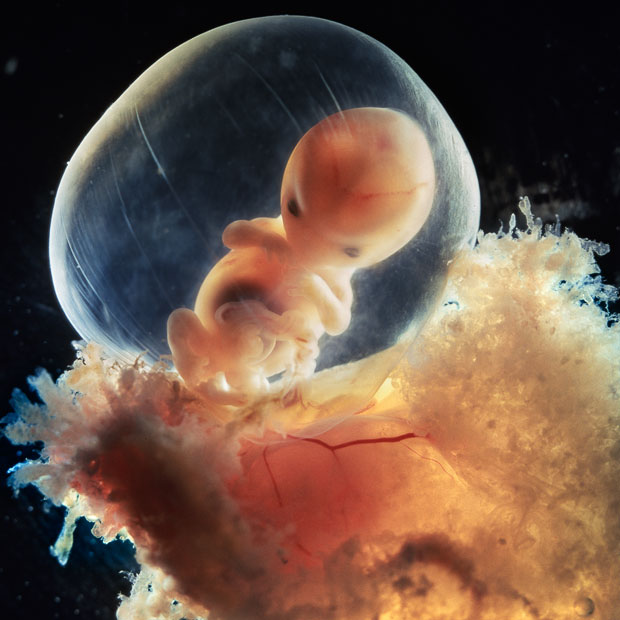
Unborn babies adapt their development based on cues from mom

Unborn baby scheming about the progress of science

From CNN:

When does learning begin? As I explain in the talk I gave at TED, learning starts much earlier than many of us would have imagined: in the womb.

I was surprised as anyone when I first encountered this notion. I’m a science writer, and my job is to trawl the murky depths of the academic journals, looking for something shiny and new — a sparkling idea that catches my eye in the gloom.

[…]What it all adds up to is this: much of what a pregnant woman encounters in her daily life — the air she breathes, the food and drink she consumes, the chemicals she’s exposed to, even the emotions she feels — are shared in some fashion with her fetus. They make up a mix of influences as individual and idiosyncratic as the woman herself. The fetus treats these maternal contributions as information, as what I like to call biological postcards from the world outside.

By attending to such messages, the fetus learns the answers to questions critical to its survival: Will it be born into a world of abundance, or scarcity? Will it be safe and protected, or will it face constant dangers and threats? Will it live a long, fruitful life, or a short, harried one?

The pregnant woman’s diet and stress level, in particular, provide important clues to prevailing conditions, a finger lifted to the wind. The resulting tuning and tweaking of the fetus’s brain and other organs are part of what give humans their enormous flexibility, their ability to thrive in environments as varied as the snow-swept tundra in Siberia and the golden-grassed savanna in Africa.

The recognition that learning actually begins before birth leads us to a striking new conception of the fetus, the pregnant woman and the relationship between them.

The fetus, we now know, is not an inert blob, but an active and dynamic creature, responding and adapting as it readies itself for life in the particular world it will soon enter. The pregnant woman is neither a passive incubator nor a source of always-imminent harm to her fetus, but a powerful and often positive influence on her child even before it’s born. And pregnancy is not a nine-month wait for the big event of birth, but a crucial period unto itself — “a staging period for well-being and disease in later life,” as one scientist puts it.

This crucial period has become a promising new target for prevention, raising hopes of conquering public health scourges like obesity and heart disease by intervening before birth. By “teaching” fetuses the appropriate lessons while they’re still in utero, we could potentially end vicious cycles of poverty, infirmity and illness and initiate virtuous cycles of health, strength and stability.

For those who would like to hear an excellent, formal academic debate on abortion, I will steer you towards this debate between the ACLU’s Nadine Strossen and Life Training Institute’s Scott Klusendorf. You’ve probably never heard anything like this debate – it features real arguments on both sides that will help you to decide whether abortion is moral or not. Over 50 million unborn children have been aborted in the United States since abortion was legalized. Is it time for us to be more careful about with sex? Maybe it’s not just another form of recreation.

For those of you who would like something to read, I recommend “The Case for Life” by Scott Klusendorf for beginners. Advanced students will benefit more from”Defending Life” by Francis J. Beckwith, published by Cambridge University Press.

How do donor-conceived children cope with not knowing their biological fathers?

Mary sends me this article from Life Site News. This is a must-read.

Excerpt:

There are only four things Alana Stewart knows about her father: he has blonde hair, blue eyes, a college degree, and his assigned number at the sperm bank where he sold half of Alana’s genetic code is 81.

She is one of an estimated 30,000 – 60,000 children conceived each year in the United States through sperm donation. A former egg donor herself, Alana is now a vocal critic of the practice, which she calls “the violent act of buying and selling a child.”

[…]Many of the children conceived through sperm donation are now adults, and some of them are speaking out against the practice that brought them into existence.

Their stories are revealing that the experience of being a donor conceived child is not what many proponents of the technology expected it would be. Such children were supposed to think of the man married to their mother as their father, and of their biological father as just the man who masturbated at a sperm bank and walked away with a $75 check. But according to Alana, it’s not that simple.

“The biological parent’s absence is impossible to ignore because their presence is impossible to ignore – when you’re living in a version of their body and thinking in a version of their brain,” she told LifeSiteNews. “I do very much feel separated from not only my father, but my entire paternal relatives.”

And more:

My Daddy’s Name is Donor, a report released last year by the Commission on Parenthood’s Future, surveyed young adults conceived through sperm donation and compared their responses to those of peers raised by adopted parents and biological parents.

The study found that 43% of donor offspring compared to 15% of adopted children and 6% who were raised by biological parents agreed with the statement: “I feel confused about who is a member of my family and who is not.”

Moreover, 48% of donor offspring compared to only 19% of adopted children agreed: “When I see friends with their biological fathers and mothers, it makes me feel sad.”

Strikingly, the report also found indications of a correlation between sperm donor conception and marriage failure.

27% of donor children parents are divorced compared to only 14% of parents of adopted children. The number of donor child marriages that fail is only slightly higher than the failure rate of a marriage with biological children – 25%. As the study points out, however, the comparison with adoptive parents is more significant because most couples do not consider fertility technology or adoption until later in life, when marriages tend to be more stable.

For Stewart, the finding is consistent with her own experience.  “Mothers can say things like, ‘Well it’s not your kid anyways.’ The father is left constantly insecure about his place and role in the family,” she said.

She added that turning to sperm or egg donation to conceive a child can be evidence of a “materialistic” attitude on the part of the couple.

“They are people that find it difficult to accept not having something and often put their own needs before others (i.e. their need to have a child before their child’s need to have its father/mother), and these personalities often fail in marriage.”

This is why Christians fight so hard against challenges to the parent-child bond. We oppose depriving children of a relationship with both of their biological parents. We do not want them to feel pain because of the selfishness of adults. When you make marriage fragile with no-fault divorce, or equate traditional marriage to same-sex marriage, you are weakening the standard of every child being born into a stable family where both biological parents are present, and committed to the child over the long-term. That’s the gold standard. And that’s what we should be celebrating and affirming as a society. Sometimes, you can cause harm to the little ones by trying to make the grown-ups feel better about breaking the standard. We have to err on the side of the children.

Related posts

Marriage researcher Brad Wilcox’s lecture on marriage and society

There are two parts. The lecture and then the Q&A.

Let’s learn a bit about Brad first:

W. Bradford Wilcox is Director of the National Marriage Project at the University of Virginia, Associate Professor of Sociology at the University of Virginia, and a member of the James Madison Society at Princeton University.

He earned his undergraduate degree at the University of Virginia and his Ph.D. at Princeton University. Prior to coming to the University of Virginia, he held research fellowships at Princeton University, Yale University and the Brookings Institution.

Mr. Wilcox’s research focuses on marriage, parenthood, and cohabitation, and on the ways that gender, religion, and children influence the quality and stability of American marriages and family life. He has published articles on marriage, cohabitation, parenting, and fatherhood in The American Sociological Review, Social Forces, The Journal of Marriage and Family and The Journal for the Scientific Study of Religion. His first book, Soft Patriarchs, New Men: How Christianity Shapes Fathers and Husbands (Chicago, 2004), examines the ways in which the religious beliefs and practices of American Protestant men influence their approach to parenting, household labor, and marriage. With Nicholas Wolfinger, Wilcox is now writing a book titled, Soul Mates: Religion, Sex, Children, & Marriage among African Americans and Latinos, for Oxford University Press. With Eric Kaufmann, Wilcox is finishing a book on the causes and consequences of low fertility in the West.

The MP3 file for the lecture is here.

The MP3 file for the Q&A is here.

This lecture covers marriage, cohabitation, single parenthood and divorce.