Tag Archives: Liberty

Dan Barker debates Casey Luskin on academic freedom

Two ninjas face off at sundown

The Michael Medved show is a national radio show broadcast out of Seattle, Washington. According to Talkers magazine, he has the fifth largest radio audience.

The MP3 file is available for download. (38 minutes)

The description is:

On this episode of ID the Future, the CSC’s Casey Luskin and atheist Dan Barker of the Freedom From Religion Foundation debate academic freedom and free speech on the Medved Show. This debate was inspired by the ongoing case of Professor Eric Hedin, a physicist at Ball State University who is being threatened by the Freedom From Religion Foundation for favorably portraying intelligent design in the classroom.

Topics: (note that I am paraphrasing Dan Barker for the sake of humor, and he will probably sue me, since that is his entire contribution to the search for truth in this debate)

  • Michael Medved: untenured Ball State University professor Eric Hedin is under fire for teaching both sides of intelligent design in a college course
  • Dan Barker: this complaint against professor Hedin came to our attention from Jerry Coyne not from students of Professor Hedin
  • Dan Barker: professors are not allowed to question the presuppositions atheism, materialism, naturalism in the physics classroom
  • Dan Barker: this is a science course and you cannot question the religion of naturalism in class or else it’s teaching religion
  • Dan Barker: we need to use the power of the courts to stifle any dissent from of my religion (naturalism)
  • Dan Barker: the classroom of a university is not the proper place for students to inquire about both sides of scientific disputes
  • Dan Barker: even if students are paying their money and choosing this course of their own free will, they can’t be allowed to hear both sides
  • Casey Luskin: this course is not a science course, it is open to non-science students
  • Casey Luskin: the course evaluations from students of all majors is overwhelmingly positive
  • Casey Luskin: the course features people on both sides
  • Casey Luskin: the course features brilliant scholars like Lennox and Penrose, both from Oxford University
  • Casey Luskin: the course features opponents of intelligent design like Francis Collins and Karl Gilberson
  • Casey Luskin: the course features non-Christians like Lee Spetner, Paul Davies, Roger Penrose and Gerald Schroeder
  • Dan Barker: (taking over the host) you cannot study scientists like Francis Collins who mapped the human genome, that is “creationism”
  • Michael Medved: academic freedom allows professors to put a slant on what they are teaching
  • Dan Barker: if the professor’s slant is against my religion of naturalism, then I have to put them in jail and inquisition them
  • Dan Barker: you cannot teach science like the Big Bang and fine-tuning  as if it is science because it contradicts naturalism
  • Casey Luskin: Even radical atheist PZ Myers says that professors have the right to academic freedom
  • Dan Barker: I’ll burn that creationist at the stake, too! And smash his filthy microscopes and telescopes!
  • Michael Medved: Casey, would you use state power to fire a professor who disagreed with you because you were offended?
  • Casey Luskin: no, I had to take tons of courses from professors who had a slant against my views and I learned a lot from different views
  • Dan Barker: you will address me as the Holy Father, please! Every professor who disagrees with my religion must burn!
  • Casey Luskin: Barker has no idea what is going on in the class, he never attended it
  • Casey Luskin: The atheists students who took his class gave him high ratings and said he graded fairly
  • Dan Barker: I don’t have to look through the telescope to know the Earth is flat – Hedin is a traitor! Off with his head!
  • Dan Barker: Creationist PZ Myers is wrong, and I’ll burn him at the stake for creationist heresy against my Holy Church!
  • Dan Barker: Oxford professors like John Lennox are creationists because his Big Bang religion is grounded on experimental data like the cosmic background radiation, the hydrogen/helium abundances and the redshifting of light from distant galaxies
  • Dan Barker: I have a degree in Religion and I write hymns, which makes me smarter than John Lennox since he is a “creationist”
  • Dan Barker: I haven’t published any scientific research myself, but I have written some atheist praise hymns, so I am qualified to burn the heretics!
  • Michael Medved: The course is taught by someone with a PhD in Physics, and the syllabus says that it investigates science and religion
  • Michael Medved: Why is it wrong to investigate the science that questions philosophical assumptions like naturalism and materialism?
  • Casey Luskin: The syllabus features amazing readings from all the latest science relevant to that question from both sides
  • Michael Medved: What will Ball State U do to the professor?
  • Casey Luskin: So far no action from Ball State U, but people need to sign the petition to protect the professor
  • Michael Medved: Isn’t academic freedom being applied inconsistently here?
  • Casey Luskin: Yes and science is supposed to move forward by disagreement and debate
  • Casey Luskin: How confident can intelligent design censors really be if their contribution to the debate is coercion and intimidation?
  • Michael Luskin: Is Dan Barker right to say that Oxford professor John Lennox is a “creationist”?
  • Casey Luskin: Creationism starts with the Bible, but intelligent design starts with scientific data

And there is a period of questions from the callers. This episode features a debate, so it is not to be missed.

Now Dan Barker sounded pretty confident in that debate, so you might be surprised by his academic background:

Dan became a teenage evangelist at age 15. At 16 he was choir librarian for faith-healer Kathryn Kuhlman’s Los Angeles appearances. He received a degree in Religion from Azusa Pacific University and was ordained to the ministry by the Standard Community Church, California, in 1975.

[…]Dan preached for 19 years. He maintained an ongoing touring musical ministry, including eight years of full-time, cross-country evangelism. An accomplished pianist, record producer, arranger and songwriter, he worked with Christian music companies such as Manna Music and Word Music. For a few years, Dan wrote and produced the annual “Mini Musicale” for Gospel Light Publications’ Vacation Bible School curriculum.

I’m not sure if Dan Barker has the right background for disputing whether intelligent design belongs in a classroom or not. Remember, the bulk of his life was spent writing and singing feel-good, happy-clappy songs. In his debates with Christians, it’s quite clear that he is totally unequipped to assess scientific evidence from the Big Bang, the fine-tuning, the origin of life, the Cambrian explosion, or habitability. It’s just not his thing, and I don’t think that musicians have what it takes to understand those arguments enough to feel comfortable using the courts to suppress people with actual PhDs in science.

You can read more about my opinion about how Dan Barker arrived at his atheism through a mistaken view of the Christian life.

I subscribe to the ID the Future podcast, and I really recommend that you do as well!
Why doesn’t God make his existence more obvious to people?

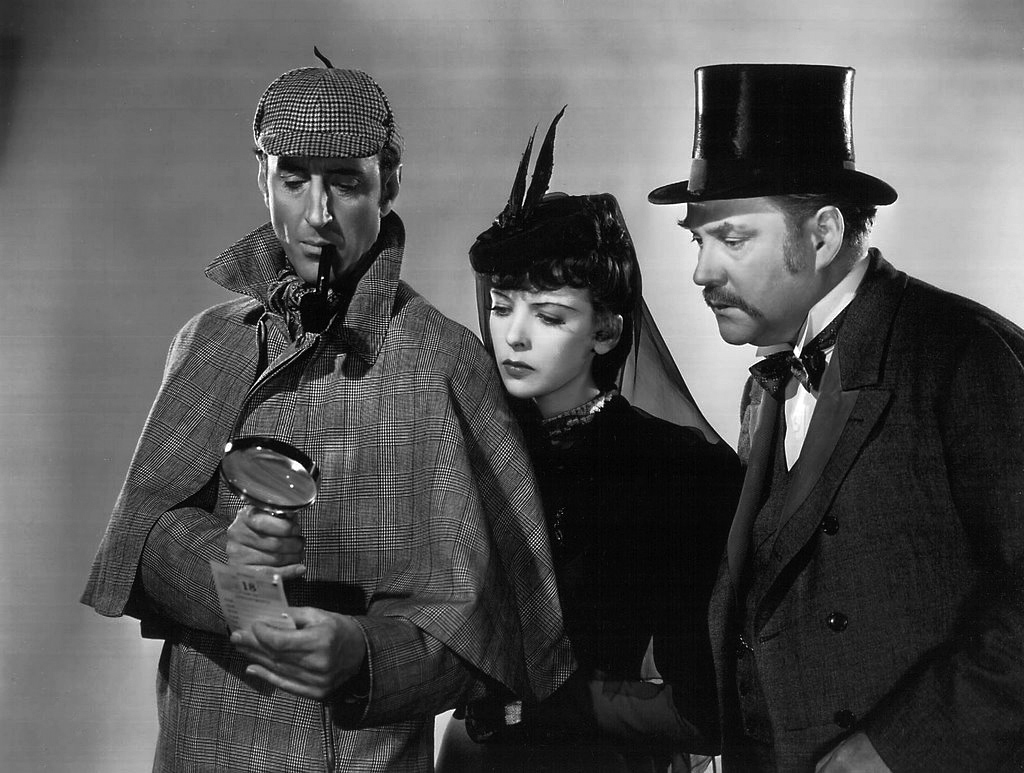
Sherlock Holmes and John Watson about to do philosophy

Have you ever heard someone say that if God existed, he would give us more evidence? This is called the “hiddenness of God” argument. It’s also known as the argument from “rational non-belief”.

Basically the argument is something like this:

  1. God is all powerful
  2. God is all loving
  3. God wants all people to know about him
  4. Some people don’t know about him
  5. Therefore, there is no God.

In this argument, the atheist is saying that he’s looked for God real hard and that if God were there, he should have found him by now. After all, God can do anything he wants that’s logically possible, and he wants us to know that he exists. To defeat the argument we need to find a possible explanation of why God would want to remain hidden when our eternal destination depends on our knowledge of his existence.

What reason could God have for remaining hidden?

Dr. Michael Murray, a brilliant professor of philosophy at Franklin & Marshall College, has found a reason for God to remain hidden.

His paper on divine hiddenness is here:
Coercion and the Hiddenness of God“, American Philosophical Quarterly, Vol 30, 1993.

He argues that if God reveals himself too much to people, he takes away our freedom to make morally-significant decisions, including responding to his self-revelation to us. Murray argues that God stays somewhat hidden, so that he gives people space to either 1) respond to God, or 2) avoid God so we can keep our autonomy from him. God places a higher value on people having the free will to respond to him, and if he shows too much of himself he takes away their free choice to respond to him, because once he is too overt about his existence, people will just feel obligated to belief in him in order to avoid being punished.

But believing in God just to avoid punishment is NOT what God wants for us. If it is too obvious to us that God exists and that he really will judge us, then people will respond to him and behave morally out of self-preservation. But God wants us to respond to him out of interest in him, just like we might try to get to know someone we admire. God has to dial down the immediacy of the threat of judgment, and the probability that the threat is actual. That leaves it up to us to respond to God’s veiled revelation of himself to us, in nature and in Scripture.

(Note: I think that we don’t seek God on our own, and that he must take the initiative to reach out to us and draw us to him. But I do think that we are free to resist his revelation, at which point God stops himself short of coercing our will. We are therefore responsible for our own fate).

The atheist’s argument is a logical/deductive argument. It aims to show that there is a contradiction between God’s will for us and his hiding from us. In order to derive a contradiction, God MUST NOT have any possible reason to remain hidden. If he has a reason for remaining hidden that is consistent with his goodness, then the argument will not go through.

When Murray offers a possible reason for God to remain hidden in order to allow people to freely respond to him, then the argument is defeated. God wants people to respond to him freely so that there is a genuine love relationship – not coercion by overt threat of damnation. To rescue the argument, the atheist has to be able to prove that God could provide more evidence of his existence without interfering with the free choice of his creatures to reject him.

Murray has defended the argument in works published by prestigious academic presses such as Cambridge University Press, (ISBN: 0521006104, 2001) and Routledge (ISBN: 0415380383, 2007). The book chapter from the Cambridge book is here. The book chapter from the Routledge book is here.

Positive arguments for Christian theism

Ronald Reagan’s 40th anniversary D-Day speech: the boys of Pointe du Hoc

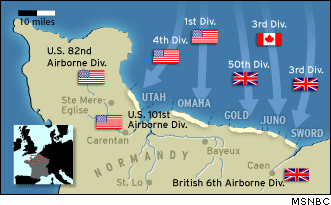
June 6, 1944 D-Day Normandy Invasion Map

It’s June 6th, today, and it’s the anniversary of D-Day: the Allied invasion of northern France – the beginning of the end of World War 2. One of the most pivotal events of that day was the assault on German gun emplacements by members of the Army Rangers at a fortified position called “Pointe du Hoc”.

President Ronald Reagan recognized the soldiers who attacked Pointe du Hoc back in 1984:

You can read the full transcript of that speech here.

Ronald Reagan also made the case for gratitude and vigilance:

Here’s the hymn that starts to play at the end:

The Boys of Pointe du Hoc

Here’s a summary of the Pointe du Hoc mission:

[Lt. Col. James Earl] Rudder took part in the D-Day landings as Commanding Officer of the United States Army’s 2nd Ranger Battalion. His U.S. Army Rangers stormed the beach at Pointe du Hoc and, under constant enemy fire, scaled 100-foot (30 meter) cliffs to reach and destroy German gun batteries. The battalion’s casualty rate for this perilous mission was greater than 50 percent. Rudder himself was wounded twice during the course of the fighting. In spite of this, they dug in and fought off German counter-attacks for two days until relieved. He and his men helped to successfully establish a beachhead for the Allied forces.

You can watch a three-clip documentary on it, too: part 1, part 2, part 3.

Although initially, the Rangers did not find the guns where they had expected them, they did find them further back behind the cliffs and destroyed them there, removing a threat to the forces that would be landing later.

What does D-Day mean to Christians in particular?

A Christian friend asked me what she should be thinking about when I sent her one of the videos above, and so I wrote her this to explain why I sent her the video:

To make you close your eyes and think in a more practical way about what it means for someone to sacrifice their lives to save you, of course. What it means to look up cliffs at machine guns, barbed wire and mortars raining death on you and to take a rope in your hands and to climb up a sheer cliff, under heavy fire, in order to save generations yet unborn and freedom itself.

To think about a concrete example helps us to be able to appreciate what Christ did for us in giving his life for us so that we could be free of sin, as well.

This is the insight that drives my entire interest in war and military history, in fact.

What does this mean: “Greater love has no man than this, that a man lay down his life for his friends.”

The more you know about D-Day, the more fearful what Jesus did appears, and the more you can be grateful.

Bullets and shrapnel are scary… and so are nails and lashes. Why on Earth would anyone endure either for me? And what should my response be to it?

I think it is helpful to explain Christianity to those who are not yet Christian, and for Christians to fully appreciate what Christianity is all about.

We were in peril. And now we have been saved. But at a cost.

I think that it’s important for Christians to look to history, art, poetry and music to help them to reflect and comprehend the sacrifice that Christ made for us in dying on the cross to protect us from peril. What must the cross have looked like to Jesus? It must have been something like what the Omaha beach looked like to the Americans landing in Normandy. Jesus saw whips, thorns and nails, and the heroes of Normandy saw 88 mm AT guns, 81 mm mortars and MG42 machine guns. How should you feel about people who face death on your behalf? Think about it.