
Tag Archives: Feminism

Abortion debate: a secular case against legalized abortion

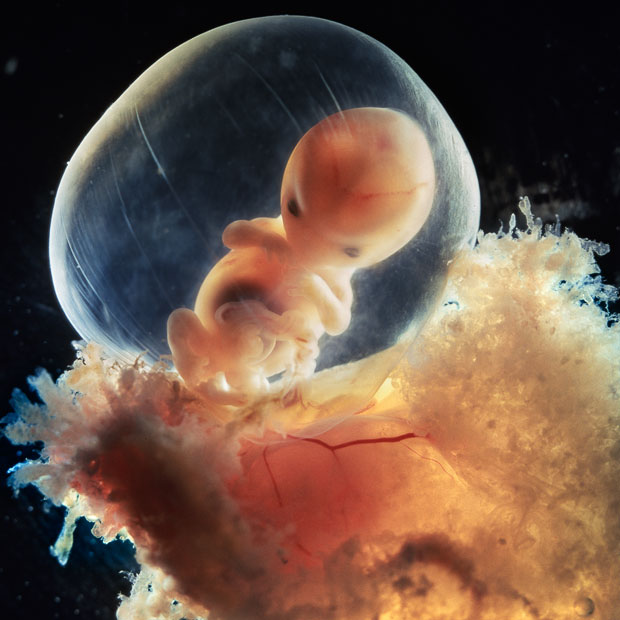
Unborn baby scheming about being only two months old

Note: this post has a twin! Its companion post on a secular case against gay marriage is here.

Now, you may think that the view that the unborn deserve protection during pregnancy is something that you either take on faith or not. But I want to explain how you can make a case for the right to life of the unborn, just by using reason and evidence.

To defend the pro-life position, I think you need to sustain 3 arguments:

  1. The unborn is a living being with human DNA, and is therefore human.
  2. There is no morally-relevant difference between an unborn baby, and one already born.
  3. None of the justifications given for terminating an unborn baby are morally adequate.

Now, the pro-abortion debater may object to point 1, perhaps by claiming that the unborn baby is either not living, or not human, or not distinct from the mother.

Defending point 1: Well, it is pretty obvious that the unborn child is not inanimate matter. It is definitely living and growing through all 9 months of pregnancy. (Click here for a video that shows what a baby looks like through all 9 months of pregnancy). Since it has human DNA, that makes it a human. And its DNA is different from either its mother or father, so it clearly not just a tissue growth of the father or the mother. More on this point at Christian Cadre, here. An unborn child cannot be the woman’s own body, because then the woman would have four arms, four legs, two heads, four eyes and two different DNA signatures. When you have two different human DNA signatures, you have two different humans.

Secondly, the pro-abortion debater may try to identify a characteristic of the unborn that is not yet present or developed while it is still in the womb, and then argue that because the unborn does not have that characteristic, it does not deserve the protection of the law.

Defending point 2: You need to show that the unborn are not different from the already-born in any meaningful way. The main differences between them are: size, level of development, environment and degree of dependence. Once these characteristics are identified, you can explain that none of these differences provide moral justification for terminating a life. For example, babies inside and outside the womb have the same value, because location does not change a human’s intrinsic value. More at Stand to Reason, here.

Additionally, the pro-abortion debater may try to identify a characteristic of the already-born that is not yet present or developed in the unborn, and then argue that because the unborn does not have that characteristic, that it does not deserve protection, (e.g. – sentience). Most of the these objections that you may encounter are refuted in this essay by Francis Beckwith. Usually these objections fall apart because they assume the thing they are trying to prove, namely, that the unborn deserves less protection than the already born.

Finally, the pro-abortion debater may conceded your points 1 and 2, and admit that the unborn is fully human. But they may then try to provide a moral justification for terminating the life of the unborn, regardless.

Defending point 3: I fully grant that it is sometimes justifiable to terminate an innocent human life, if there is a moral justification. Is there such a justification for abortion? One of the best known attempts to justify abortion is Judith Jarvis Thomson’s “violinist” argument. This argument is summarized by Paul Manata, one of the experts over at Triablogue:

Briefly, this argument goes like this: Say a world-famous violinist developed a fatal kidney ailment and the Society of Music Lovers found that only you had the right blood-type to help. So, they therefore have you kidnapped and then attach you to the violinist’s circulatory system so that your kidneys can be used to extract the poison from his. To unplug yourself from the violinist would be to kill him; therefore, pro-lifers would say a person has to stay attached against her will to the violinist for 9 months. Thompson says that it would be morally virtuous to stay plugged-in. But she asks, “Do you have to?” She appeals to our intuitions and answers, “No.”

Manata then goes on to defeat Thomson’s proposal here, with a short, memorable illustration, which I highly recommend that you check out. More info on how to respond to similar arguments is here.

The best book for beginners on the pro-life view is this book:

For those looking for advanced resources, Francis Beckwith, a professor at Baylor University, published the book Defending Life, with Cambridge University Press, 2007.

Learn about the pro-life case

And some posts motivating Christians and conservatives to take abortion seriously:

Younger evangelicals put happiness and popularity over morality

Here’s an interesting post by Mark Tooley in the American Spectator.

Excerpt:

A new generation of evangelical elites is imploring evangelicals to step back from the culture wars. Mostly they want to escape polarizing strong stances on same-sex marriage and abortion, and perhaps also contentious church-state issues, like the Obamacare contraceptive mandate.

Purportedly the evangelical church is failing to reach young, upwardly mobile professionals because evangelicals, who now broadly comprise perhaps one third of all Americans, are seen as reactionary and hateful. On their college campuses, at their coffee shops, and in their yoga classes, among other venues, some outspoken hip young evangelicals want a new public image for their faith.

[…]A popular young evangelical blogger echoing Merritt’s theme is Rachel Evans, who conveniently grew up in the Tennessee small town famous for the Scopes Monkey Trial. Her 2010 book was Evolving in Monkey Town: How a Girl Who Knew All the Answers Learned to Ask the Questions. “We are tired of the culture wars,” she explained in a recent interview. “We are tired of politics.” Lamenting the church’s preoccupation with “shame and guilt,” she urged evangelicals to reconsider their opposition to same-sex unions.

The post has a nice history of how evangelicals have always been involved in moral and political issues, and it’s worth reading. But I want to make a different point below.

What’s at the root of this movement to back away from moral issues? Here’s what I think is the problem. When you advocate for moral causes like protecting the unborn, or school choice, or freeing the slaves, a bunch of people are not going to like you. Christians in the time of Jesus knew that being bold about their Christian convictions would make a lot of people think bad things about them – they expected it. But young evangelicals have gotten the idea that being a Christian should not involve any sort of unhappiness and unpopularity. They wouldn’t have learned this from the Bible, because the Bible emphasizes suffering and unpopularity as part of the normal Christian life. It is their experience of church (and the hedonistic culture around them) that is likely to reinforce that view.

What young evangelicals learn in many churches is that religion is something that is centered on the Bible and the church building – it is not something that flows into real life. They learn that you can’t find out anything about God from the Big Bang, the DNA, the fossil record, or even from the peer-reviewed research on abortion, divorce, or gay marriage. They learn from the Bible that helping the poor is good, but then they never pick up an economic textbook to see which economic system really helps the poor. What you learn about in church is that religion is private and has no connection to reality whatsoever. This fits in with their view that Christianity should make them happy, because they’ve learned that it doesn’t involve any studying to connect the Bible to the real world.

What follows from having a view that Christianity only lives in the Bible and church, and not out there in the real world of telescopes and microscopes? Well, most young evangelicals interpret what their pastor is telling them as “our flavor of ice cream” or “our cultural preference”. They don’t link Christianity to the real world, they don’t think that it’s true for everyone. They think that you just accept what the Bible says on faith, and that’s all. No reasons can be given to non-Christians outside of just asking them to accept the Bible. Younger evangelicals believe that there are no facts that confirm or disprove Christianity – it’s just a blind belief. Young evangelicals think that their faith doesn’t have to be complemented with careful study of how things work in the real world.

What is the result of this anti-intellectual compartmentalization of faith? The result is that young evangelicals will balk at the idea of telling someone that they are going to Hell if they don’t believe in Jesus. They will balk at the idea that feminism is to blame for the destruction of the family. They will balk at the idea that the best way to help the poor is to push for free market capitalism. They will balk at the idea that it is wrong to kill unborn children. They will balk at the idea that disarmament and pacifism embolden terrorists and tyrants to attack peace-loving people. They will balk at the idea that traditional marriage is better for society and children. They will balk at the idea that man-made catastrophic global warming is not supported by science. They lack courage because they first lack knowledge. They don’t know how to make the case using hard evidence. They don’t learn that hard evidence is important in church.

If the purpose of religion is to have happy feelings and be liked, then studying the real world to find out whether the Bible is true is bad religion. If religion is divorced from reality, then it’s just a personal preference influenced by how a person was raised. No young evangelical is going to lift a finger to take bold moral stands if they think their worldview is just one option among many – like the flavors of ice cream in the frozen section of the grocery store. They have to know that what they are saying is true – then they will be bold. An example: there was a time when people believed that God did not create the first living cell, because it was just a simple lump of protoplasm that could easily come about by accident. Now we know better, and we can boldly make the case for intelligent design based on hard evidence – if we put in the time to study the evidence. And it is the same for everything – from theological claims, to moral claims, to social claims, to economic claims, to foreign policy claims. It doesn’t matter if people call you names when you have the facts to support unpopular claims, and that’s why public, authentic Christianity is built on facts. Non-Christians being offended by your claims doesn’t change the way the world is.

We have to turn away from our own ignorance, laziness and cowardice if we hope to have the ability to stand up for our beliefs in public. Christianity is not about being happy and feeling good and being liked by others. In a society that is increasingly secular and relativistic, studying outside the Bible necessarily precedes an authentic Christian life. There is no shortcut. We might have been able to get away with fideism 50 years ago, but not anymore. Not now.

Teen mother charged with dumping her 3-week-old daughter in remote area

The latest news in the glorious march of feminism to full equality.

Excerpt:

Illinois authorities arrested a 19-year-old woman after she allegedly admitted to dumping her 3-week-old daughter in a remote area.

Kendra Meaker, of Toulon, a city located about 30 miles northwest of Peoria, was charged in Stark County Circuit Court on Friday, with obstruction of justice and endangering the life or health of a child. Meaker, who also has an 11-month-old daughter, is being held on a $10,000 bond.

Meaker came to the attention of police on Sept. 27, when she reported someone had abducted her baby from the back seat of her car while she was mailing a package at a local post office. Illinois State Police immediately issued an Amber Alert for the missing toddler.

According to Stark County Sheriff Jimmie Dison, investigators were suspicious of Meaker’s story.

“I didn’t believe her,” Dison said in Stark County Circuit Court Friday.

When the FBI joined the search they questioned Meaker and she allegedly admitted she had abandoned her infant daughter along a rural roadside outside of town.

At 8 p.m., nearly 12 hours after the infant was placed alongside the road, a pair of search volunteers found the baby. She was alive and crying when they located her. The infant was transported to a local hospital for medical attention and is reportedly doing well.

Do you know who would agree with her?

Barack Obama voted for infanticide several times.

There really is no difference between abortion and what this woman tried to do to her baby. It’s the exact same thing. In both cases, it’s a strong person killing a weak person in order to avoid having their pursuit of happiness impacted by that other person’s needs. Babies don’t suddenly gain moral value because they change locations, or change size, or change how developed they are or change how dependent they are. A person is a person no matter how small. And abortion takes the life of an innocent human person.

Relate posts