Tag Archives: Feelings

Feminist single mother confused when daughter seeks male attention with sexy photos

Captain Capitalism shared this story about a single mother in radically-leftist French Canada. And she raised her fatherless daughter with all sorts of feminist propaganda, especially rejecting traditional femininity. But what happens when her fatherless girl has to choose between feminist theory and her need to get approval from men?

The story is from the CBC:

Last summer, I stumbled onto my teenage daughter’s social media account. What I found confirmed my worst fear: I had failed to raise a feminist.

There, among the pouty-faced selfies, was a photo of her posing, Sports Illustrated-style, on a jet ski in her bikini, brandishing her middle finger at the camera with a smirk on her face.

[…]All her life, I’ve tried to model feminism: taking her on marches for women’s rights, reading to her from books like Chimamanda Ngozi Adichie’s We Should all be Feminists and surrounding her with a community of strong, independent female friends.

I realize now that the wisdom of my mother’s “Women’s Lib” generation doesn’t cover the challenges of raising a feminist daughter in the 21st century.

[…]We want our girls to grow up brave, confident and assertive.

On this blog, I’ve written many times about the harm that feminism does to women. Basically, in the old days, women could be honest about what they really wanted. They wanted a husband to care for them, give them economic security, and they wanted to raise children and keep a home. They might get a degree and work while looking for a husband, but they really wanted a stable marriage, and to be needed by their husband and children most of all.

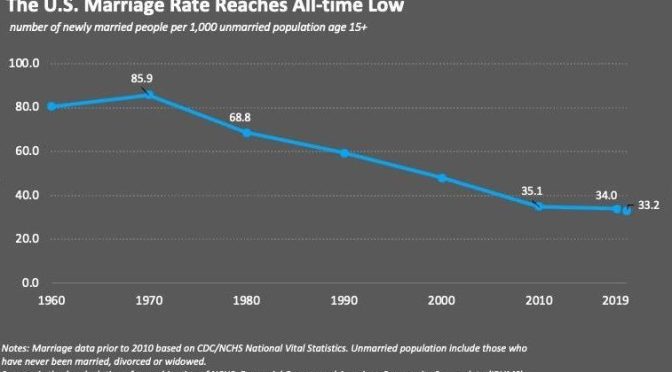
But feminism taught young women that traditional goals were “sexist” and therefore to be avoided. Instead of marrying early and having children, women were taught to delay marriage for their careers. Instead of  learning how to objectively evaluate a man for his ability as a provider, protector, moral leader and spiritual leader, women were taught to prefer men who gave them entertainment and excitement in the moment.

Well, this single mother obviously has feelings about how to achieve the goal of having a daughter who is brave confident and assertive. But what does the objective research say about how to achieve that goal?

Here’s an article from the pro-feminist Institute for Family Studies:

Today’s fathers also seem to be having a greater impact on their daughters’ academic and career choices than fathers in previous generations. For example, women who were born in the 1970s are three times more likely than those born at the beginning of the twentieth century to work in the same field as their fathers—a finding that researchers have attributed not just to society’s changing gender roles but also to daughters receiving more mentoring from their fathers.

Another question on many people’s minds is: how does a father influence his daughter’s romantic life—who she dates, when she starts having sex, and the quality of her relationships with men? Not surprisingly, a girl who has a secure, supportive, communicative relationship with her father is less likely to get pregnant as a teenager and less likely to become sexually active in her early teens. This, in turn, leads to waiting longer to get married and to have children—largely because she is focused on achieving her educational goals first.

The well-fathered daughter is also the most likely to have relationships with men that are emotionally intimate and fulfilling. During the college years, these daughters are more likely than poorly-fathered women to turn to their boyfriends for emotional comfort and support and they are less likely to be “talked into” having sex. As a consequence of having made wiser decisions in regard to sex and dating, these daughters generally have more satisfying, more long-lasting marriages. What is surprising is not that fathers have such an impact on their daughters’ relationships with men, but that they generally have more impact than mothers do.

Their better relationships with men may also be related to the fact that well-fathered daughters are less likely to become clinically depressed or to develop eating disorders. They are also less dissatisfied with their appearance and their body weight. As a consequence of having better emotional and mental health, these young women are more apt to have the kinds of skills and attitudes that lead to more fulfilling relationships with men.

An emerging body of research suggests one more way that dads may shape their daughters’ mental health and relationships in adulthood: scholars have found an intriguing link between the way daughters deal with stress as adults and the kind of relationships they had with their dads during childhood. For example, undergraduate women who did not have good relationships with their fathers had lower than normal cortisol levels. And people with low cortisol levels tend to be overly sensitive and overly reactive when confronted with stress. Indeed, the low cortisol daughters were more likely than the higher cortisol daughters (who had the better relationships with their dads) to describe their relationships with men in stressful terms of rejection, unpredictability or coercion.

If the single mother in our story really wanted her daughter to be brave, confident and assertive, then she should have 1) made herself into the kind of person that a commitment-minded man is attracted to, and 2) evaluated men for their commitment-ability and then chosen one to have babies with based on their ability to commit. For example, if she had chosen a Christian man who took the Bible seriously on morality and spirituality, then that man would have stuck around, modeled how to love his wife, and taken an interest in his children. Someone who is able to make commitments and keep his word. And according to the research, that (traditional, “sexist”) approach would have done a lot more to reach the goal of having a brave, confident and assertive daughter. The feminist approach to raising children is exactly what DOESN’T work.

The problem with the single mother feminist is that her feminist worldview is based on her feelings instead of on research. She probably had bad experiences with the hot bad boys she freely chose, and then drew the wrong conclusions from those experiences. E.g. – “I gave my body to a hot bad boy to make him like me, and he dumped me. I felt weak, but it wasn’t my fault for choosing him. It was his fault for not changing into a good man after I gave him premarital sex. Now I’m going to stop being a weak girl, and drink like a man, have sex like a man, and have a career like a man, and this will work to raise a strong daughter. Welfare, daycare and public schools are all I need!”

The priceless gift that mothers give their daughters when they marry a good man is the gift of teaching them how to make a man like them without appealing to them with exposed skin and commitment-free sex. When a man is present in the home, and is treated with respect by his wife, the daughters learn which male behaviors are best for marriage, and how to encourage and support good men who demonstrate those behaviors. Daughters who have fathers don’t feel the need to seek male attention with skin and sex, the way that many fatherless girls do. They get attention from their fathers for having good character, for developing useful skills and for caring for other people around them. They are attracted to men who give them attention for their character and achievements, just like their fathers did.
Judge: man must pay more than $50,000 a month to ex-girlfriend for 10 years

A friend of mine was asking me last night whether I had any regrets about never marrying, especially since I had such awesome Christian female friends like her. I thought about it, and I thought that maybe it is better to not have married, especially when I read stories about how family courts trample over the rights of men to favor women, regardless of what the law says.

The story is from one of Canada’s national newspapers, the National Post:

A wealthy businessman will have to pay more than $50,000 a month in spousal support for 10 years to a woman with whom he had a long-term romantic relationship even though they kept separate homes and had no children together, Ontario’s top court has ruled.

Under Ontario law, an unmarried couple are considered common-law spouses if they have cohabited — lived together in a conjugal relationship — continuously for at least three years. But that doesn’t necessarily mean living in the same home, the court found.

[…]When their 14-year relationship finally broke down in May 2015, Climans asked the courts to recognize her as Latner’s spouse and order him to pay her support. He argued she had been a travel companion and girlfriend, nothing more. As such, he said, they were never legally spouses and he owed no support. An eight-day trial ensued.

In her decision in February 2019, Superior Court Justice Sharon Shore sided with Climans. She ruled they were in fact long-time spouses, finding that despite their separate home, they lived under one roof at Latner’s cottage for part of the summer, and during winter vacations in Florida. Shore ordered him to pay her $53,077 monthly indefinitely.

They never married – this woman was not even his ex-wife.

Elsewhere in the article, we learn that he had asked her to sign a pre-nuptial agreement many times, and each time she refused. (Those are not even enforced fairly by the way) She wanted his money, and the judge made sure she got it. Because the law doesn’t matter in a family court. Men are just walking ATMs and women have a right to take men’s money, if it makes the woman happy. Literally just walking ATMs.

So, what I wanted to point out about this is the fact that a female judge decided to bend the law in order to favor a woman. And this sort of thing happens A LOT in Canada – where their female judges are notorious for progressive judicial activism, e.g. Beverley Mclachlin, Bertha Wilson, Claire L’Heureux-Dubé, etc. Ontario family courts are notoriously anti-male, and men know this.

But it’s not just Ontario. I have two Christian friends who married their Christian wives as virgins, and then their wives divorced them. I heard what happened to them in divorce court. Again, female lawyers and female judges disregarded the law in order to punish the man and favor the woman. And I think most men growing up today have a father or a brother or an uncle or someone who has been a victim of this.

When I talk to women about this, they all say things like this to me: “oh, you worry too much” or “you read too many books about divorce” or especially “when you meet the right girl, you’ll fall in love, and all this concern about atheistic feminist judges in the courts won’t stop you”. That last one is the most popular. And it’s always made me think that if this is how women see commitment – feelings-based – it’s no wonder that women initiate 70% of divorces.

I always thought it was a curse that I grew up poor and could not afford to show off my wealth in order to attract attention from women. Now I see that God actually gave me a great blessing. In order for a man to get married, it takes a lot more than finding the right girl. He needs to live in the right culture – a culture that tries to equip women to be content in committed relationships and treat men fairly.

I don’t think even women who claim to be pro-male and/or pro-marriage know or care how stories like this affect men. I’m very wealthy. I certainly do look at what is likely to happen if a woman goes to the courts expecting me to give her money. In fact, whenever I post stories on my wall about how the judges legislate from the bench to transfer money from men to women, there’s just silence or sometimes deflection by attacking men (except for my friend Dina who agrees with me). No one dares to speak up for men, it’s just expected that we be robbed by the government in order to make women happy. Because “marriage is for women”.

And as long as the message keeps being sent by judicial activists in the family courts, men will keep adjusting how they treat women. Women appear very unsafe to us, and nothing that’s going on in the courts is changing the trend towards avoidance. Men are very good at calculating risks vs rewards.

Christian woman finds a way to discuss her faith with non-Christians

I found an interesting article where a Christian woman explains how she used to share her testimony with non-Christians. But that wasn’t working. So she decided to try something different.

She writes:

I’ll never forget the first time I shared my personal testimony with a non-Christian.

When the opportunity arose and I shared my story with an unbelieving friend, she replied, “That’s so cool. I’m so happy you found something that works for you.”

For me?

“It’s not about what works for me,” I said, trying to hide my discouragement. “It’s about what’s true for everyone.”

“That doesn’t make sense,” she responded. “That’s your experience, not mine. I had a similar revelation when I realized I could leave the church, and I’ve become a better person for my decision. Just as you were freed from your heaviest burdens by finding God, I was freed from mine by leaving God behind.”

I was devastated but I chalked it up to my friend’s hardheartedness. I decided to shake the dust off my feet and look forward to the next opportunity.

But time after time of sharing my testimony resulted in similar responses. People expressed enthusiasm that I was happy, that Christianity worked for me, and that I had “found my niche.” Yet no one considered my experience as anything more than just that—my own personal experience.

[…]I had been taught that sharing what God had done in my life was the ideal way to witness to non-Christians. A personal testimony was interesting yet non-confrontational, compelling but inoffensive. And yet, despite having shared my testimony with dozens of unbelievers, not a single person felt challenged to consider the truth claims of Christianity.

She noticed that her approach wasn’t actually in the Bible. There was a different approach being demonstrated by Jesus, and later by his disciples.

She writes:

When Jesus called his first disciples, he taught truth and provided evidence (miracles) to support his claims, then he asked people to follow him (Luke 5:1–11). In fact, this was his method whenever he went into new regions (see Luke 4:14–44; John 4:7–26). People decided to follow Jesus not on blind faith or a subjective feeling, but based on the evidence they had seen and heard.[i]

Jesus also used evidence to assuage the doubts of even those who had been with him a long time. John the Baptist was Jesus’ cousin, who leapt in the womb during Mary’s visit (Luke 1:39–45), baptized Jesus in the Jordan River, heard God’s voice from heaven, and saw the Holy Spirit descend on Jesus in bodily form like a dove (Luke 3:21–22). Yet when John experienced unexpected suffering, he began to doubt.

Jesus didn’t respond as many do today, by insisting that John “just believe” or “have faith” or “prayer harder.” Rather, he responded with more evidence, saying, “Go and tell John what you hear and see: the blind receive their sight and the lame walk, lepers are cleansed and the deaf hear, and the dead are raised up, and the poor have good news preached to them. And blessed is the one who is not offended by me.” (Matt. 11:2–6).

[…]At Pentecost, the apostle Peter offered signs and wonders, fulfilled prophecy, and relayed eyewitness testimony to persuade people from all over the Roman Empire that the most reasonable explanation for what they were seeing was not morning drunkenness, but a risen Messiah (Acts 2:1–41).

On his missionary journeys, the apostle Paul reasoned with the Jews from the Scriptures, explaining and proving that Jesus was the Messiah who needed to suffer and rise from the dead (Acts 17:1–3, 17). And he reasoned with the Gentiles from outside the Scriptures, making a case with their own accepted beliefs to convince them (Acts 17:17–34).

In fact, in describing his mission, Paul told the Philippians, “I am put here for the defense of the gospel” (1:7, 16). This word translated defense is the same word from which we get our English word “apologetics,” meaning to make reasoned arguments or to provide evidence as justification. Using this same word, Peter commanded believers to “always [be] prepared to make a defense to anyone who asks you for a reason for the hope that is in you”(1 Pet. 3:15).

So, she decided to dump the testimony approach, and try the Biblical approach. But she had to change it a little bit, since she couldn’t perform miracles herself:

We are not eyewitnesses to Jesus’s life and resurrection, but we have the accounts of those who were. We don’t typically see miracles, but we have millennia of biblical scholarship and archaeology that provide reasons to believe the accounts are trustworthy. We don’t often hear God speaking audibly or see him parting seas, but we have significant scientific evidence that shows the universe had a beginning, and millennia of observation to confirm the scientific principle that everything that begins to exist has a cause.

I think a lot of Christians never move on from approach she described that wasn’t getting results. And there’s a reason for that – studying evidence is hard work. But I can tell you from my experience as a software engineer, there is no better way to convince other people to adopt your view than to show them working code that produces results. If they have a prototype, they will adopt your design. Similarly with Christianity. If you have evidence, then you will be persuasive.

When talking about spiritual things with non-Christians, always remember the joke about the two men walking in the woods who meet a bear. One man starts to put on his running shoes. The other man says “what are you doing? you can’t outrun a bear!” And the first man says “I don’t have to. I only have to outrun you”. It’s the same with apologetics. You don’t have to be William Lane Craig to talk about your faith to non-Christians. You just have to know more than your non-Christian opponent knows about evidence.

The way things are going these days with the public schools and the mainstream news media, this is actually pretty easy to do. One or two introductory books on the origin of the universe, the fine-tuning for intelligent life, the origin of biological information, the origin of body plans, the historical reliability of the New Testament, the minimal facts case for the resurrection, etc. will do the job. You might need another one on philosophical challenges like evil, suffering, divine hiddenness, etc. But we’re talking no more than 5 books, and you’ll be effective in the vast majority of your conversations. If you can only get one book, I like Sean McDowell and Jonathan Morrow’s “Is God Just a Human Invention?” best.