
Tag Archives: Debate

What is the best introductory book about pro-life apologetics?

I'm Scheming Unborn Baby, and I approve this decision
I’m Scheming Unborn Baby, and I approve this message

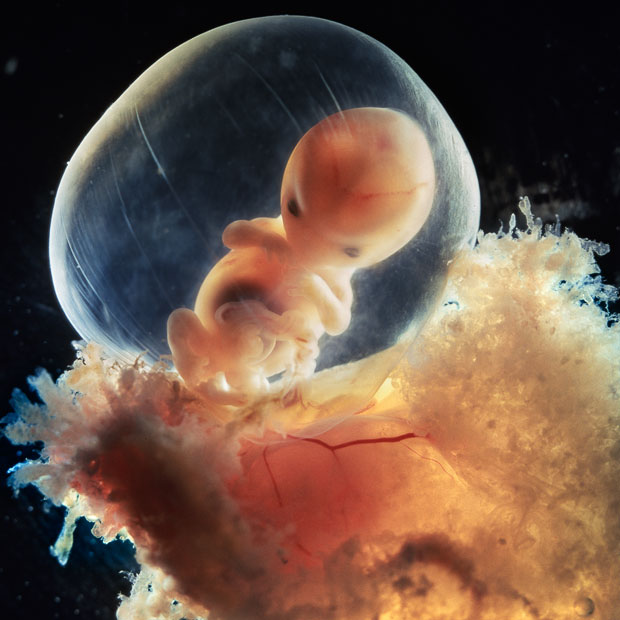
Do you like to argue about controversial things? Of course you do. And so does Scheming Unborn Baby.

Here’s an excellent book review of the best pro-life book for ordinary people. It’s by Scott Klusendorf of the Life Training Institute.

Excerpt:

The Case for Life by Scott Klusendorf is an absolutely outstanding defense of the pro-life position with regard to the abortion debate. Being familiar with Scott’s work through Stand to Reason I was looking forward to this book with much anticipation. Scott is one of the most able, articulate, persuasive, and winsome pro-life speakers in the country and his book does not fail to deliver.

He’s got chapter-by-chapter breakdowns, so let’s look at some of them:

In chapter five Scott addresses the nature of truth and the topic of moral relativism, a view of morality our culture is saturated with to the core. Addressing this topic becomes absolutely necessary given its prevalence and the fact that often the claims of pro-lifers are misunderstood. This is seen in such cliches as “Don’t like abortion? Don’t have one!” or “I’m personally opposed to abortion but I think it should remain legal.” In short, pro-lifers are not making subjective preference claims when they say abortion is morally wrong but rather objective truth claims. Scott lays out some fundamental problems with moral relativism as well as a brief history outlining the move from moral realism to moral non-realism.

In chapter six Scott exposes the myth of moral neutrality. Both sides of the abortion debate have views they want to legislate and it is impossible for the state to remain neutral. However, it is often pro-lifers who are accused of trying to “legislate morality” while pro-abortion choice advocates get a free pass. In short, pro-lifers are dismissed as “religious” because of an unwillingness by pro-abortion choice advocates to address the issues. This is intellectually dishonest. How bout we stick with science?

And more:

In chapters ten through fifteen Scott addresses some of the most common arguments put forth by pro-abortion choice advocates. These include “Women will die from illegal abortions,” “You shouldn’t force your view on others,” “Pro-lifers should broaden their focus,” “Rape justifies abortion,” “Men can’t get pregnant,” and “It’s my body, I’ll decide.” The fundamental problem with most of these objections is that they beg the question. They assume the unborn is not a human person.

One more chapter – I’ve never seen chapters like this before:

In chapter sixteen Scott outlines four essential tasks that pastors concerned with biblical truth need to accomplish:

First, Christian pastors need to emphasize a biblical view of human value and ensure their congregation understands that abortion unjustly takes the life of an innocent human being. Second, they need to equip their congregation with pro-life apologetics so they can compete in the marketplace of ideas. Third, they need to emphasize the healing power of the gospel of Jesus Christ and preach repentance and forgiveness for post-abortion men and women. Finally, Christian pastors need to overcome their fear that abortion is a distraction, their fear of driving people away who might otherwise hear the gospel, and their fear of offending people with abortion-related content.

If you want to see Scott speak, here’s a new-ish 42-minute lecture:

If you like that, consider getting the book. Scheming Unborn Baby recommends it, and so do I.

William Lane Craig debates Austin Dacey: Does God Exist?

Here is the video and summary of a debate between Christian theist William Lane Craig and Austin Dacey at Purdue University in 2004 about the existence of God.

The debaters:

The video: (2 hours)

The video shows the speakers and powerpoint slides of their arguments. Austin Dacey is one of the top atheist debaters, and I would put him second to Peter Millican alone, with Walter Sinnott-Armstrong in third place. This is the debate to show people who are new to apologetics. The debate with Peter Millican is better for advanced students, and that’s no surprise since he teaches at Oxford University and is familiar with all of Dr. Craig’s work. The Craig-Dacey debate is the one that I give to my co-workers.

By the way, you can get the DVDs and CDs for the first Craig-Dacey debate and the second Craig-Dacey debate and the second Craig-Sinnott-Armstrong debate. The Peter Millican debate is not available on DVD, but the link above (Peter Millican) has the video and my summary.

Dr. Dacey’s 5 arguments below are all good arguments that you find in the academic literature. He is also an effective and engaging speaker, This is a great debate to watch!

SUMMARY of the opening speeches:

Dr. Craig’s opening statement:

Dr. Craig will present six reasons why God exists:

  1. (Contingency argument) God is the best explanation of why something exists rather than nothing
  2. (Cosmological argument)  God’s existence is implied by the origin of the universe
  3. (Fine-tuning argument) The fine-tuning of the universe for intelligent life points to a designer of the cosmos
  4. (Moral argument) God is the best explanation for the existence of objective moral values and objective moral duties
  5. (Miracles argument) The historical facts surrounding the life, death and resurrection of Jesus
  6. (Religious experience) God’s existence is directly knowable even apart from arguments

Dr. Dacey’s opening argument:

There are two ways to disprove God’s existence, by showing that the concept of God is self-contradictory, or by showing that certain facts about ourselves and the world are incompatible with what we would expect to be true if God did exist. Dr. Dacey will focus on the second kind of argument.

  1. The hiddenness of God
  2. The success of science in explaining nature without needing a supernatural agency
  3. The dependence of mind on physical processes in the brain
  4. Naturalistic evolution
  5. The existence of gratuitous / pointless evil and suffering

One final point:

One thing that I have to point out is that Dr. Dacey quotes Brian Greene during the debate to counter Dr. Craig’s cosmological argument. Dr. Craig could not respond because he can’t see the context of the quote. However, Dr. Craig had a rematch with Dr. Dacey where was able to read the context of the quote and defuse Dr. Dacey’s objection. This is what he wrote in his August 2005 newsletter after the re-match:

The following week, I was off an another three-day trip, this time to California State University at Fresno. As part of a week of campus outreach the Veritas Forum scheduled a debate on the existence of God between me and Austin Dacey, whom I had debated last spring at Purdue University. In preparation for the rematch I adopted two strategies: (1) Since Dacey had come to the Purdue debate with prepared speeches, I decided to throw him for a loop by offering a different set of arguments for God, so that his canned objections wouldn’t apply. I chose to focus on the cosmological argument, giving four separate arguments for the beginning of the universe, and on the evidence for Jesus’ resurrection. (2) I reviewed our previous debate carefully, preparing critiques of his five atheistic arguments. In the process I found that he had seriously misunderstood or misrepresented a statement by a scientist on the Big Bang; so I brought along the book itself in case Dacey quoted this source again. I figured he might change his arguments just as I was doing; but I wanted to be ready in case he used his old arguments again.

[…]The auditorium was packed that night for the debate, and I later learned that there were overflow rooms, too. To my surprise Dr. Dacey gave the very same case he had presented at Purdue; so he really got clobbered on those arguments. Because he wasn’t prepared for my new arguments, he didn’t even respond to two of my arguments for the beginning of the universe, though he did a credible job responding to the others. I was pleased when he attacked the Big Bang by quoting the same scientist as before, because I then held up the book, specified the page number, and proceeded to quote the context to show what the scientist really meant.

Dr. Craig is always prepared!

Is the acceleration of the universe’s expansion compatible with Hinduism?

Science and Religion

First, a news story – and then we’ll see how the accelerating universe relates to the existence of God.

Excerpt:

Three astrophysicists who discovered that the universe’s expansion is accelerating rather than decelerating, as had been expected, win the Nobel Prize in physics.

Adam Riess was sure he’d spotted a blatant error in his results. It was 1997, and the young post-doc’s measurements of distant, exploding stars implied that the universe was expanding at a faster and faster rate, instead of slowing down, as he had expected.

It wasn’t an error at all. Instead, what was at fault were some basic assumptions about the workings of the universe.

On Tuesday, the Johns Hopkins University astrophysicist received the Nobel Prize in physics for the revolutionary discovery and its implications, along with team leader Brian Schmidt of Australian National University and astrophysicist Saul Perlmutter of UC Berkeley and Lawrence Berkeley National Laboratory, who had reached the same conclusion independently.

At the time of their work, astrophysicists believed that the rate of expansion of the universe — set in motion by the Big Bang 13.7 billion years ago — would be slowing down as matter was pulled together by gravity. The goal at the time was to figure out how rapid the deceleration was.

What the two teams found instead was that the expansion of the universe was accelerating — an observation that could best be explained by the existence of a mysterious “dark energy” that pushes matter farther and farther apart.

Many scientists had thought that, just as the universe started with the Big Bang, it would end with a Big Crunch — with gravity pulling all the matter in the universe inward.

Does anyone remember that week that I wrote those posts about “Why I am not a… <insert some religion here>”? I explained why I was not all kinds of different religions and denominations, including Roman Catholicism, Calvinism, Hinduism, Judaism, Islam, etc. Everyone was offended and we fought about it. Ah, I remember it well.

Now let’s apply science to the Hindu religion and see if they go together, especially this new discovery about the expansion of the universe.

Why I am not a Hindu

  1. Hindu cosmology teaches that the universe cycles between creation and destruction, through infinite time.
  2. The closest cosmological model conforming to Hindu Scriptures is the eternally “oscillating” model of the universe.
  3. The “oscillating” model requires that the universe exist eternally into the past.
  4. But the evidence today shows the the universe, and time itself, had a beginning at the big bang.
  5. The “oscillating” model requires that the expansion of the universe reverse into a collapse, (= crunch).
  6. In 1998, the discovery of the year was that the universe would expand forever. There will be no crunch.
  7. Therefore, the oscillating model is disconfirmed by observations.
  8. The oscillating model also faces theoretical problems with the “bounce” mechanism.

So that’s one reason why I am not a Hindu. And now we have more scientific confirmation that there is no cycle of universes coming into being and going out of being.

The absolute origin of the universe out of nothing is also incompatible with Buddhism and Mormonism and maybe other religions. They also require an eternally existing universe.

And modern cosmology disagrees with atheism, too

I think it’s important for all of you to be familiar with the scientific evidence for the Big Bang. It will help you with your cosmological argument, and it will help you to refute many, many other religions that require eternal universes, including atheism.

I wrote about how the Big Bang cosmology falsifies atheism before.

Excerpt:

According to the Secular Humanist Manifesto, atheism is committed to an eternally existing universe, (See the first item: “Religious humanists regard the universe as self-existing and not created.”). If something non-material brought all existing matter into being, that would be a supernatural cause, and atheists deny that anything supernatural exists. The standard Big Bang theory requires that all the matter in the universe come into being out of nothing. The Big Bang has been confirmed by experimental evidence such as redshift measurements, light element abundances and the cosmic microwave background radiation. This falsifies eternal models of the universe, which are required by atheist Scriptures.

The experimental evidence that confirms the Big Bang creation out of nothing falsifies many worldviews. Those who care about evidence will have to choose some other religion that is compatible with what we know from science today.