
Tag Archives: Children

Is it moral for a woman to conceive a child from an anonymous sperm donor?

I am opposed to any policy or program that increases the odds that a child will not have a relationship with their biological father as they grow up. This would include anything that makes it easier for parents to divorce or that facilitates single motherhood. Consequently, I oppose premarital sex, abortion, sex education in schools, no-fault divorce, and giving legal recognition to cohabitation or same-sex marriage. I want children to be able to have their biological father and biological mother close at hand, and to be able to rely on them and know them, so that they don’t feel alone and lost in the world. Although I am willing to permit other arrangements, I think society should celebrate traditional marriage – for the sake of the children.

Well, consider one challenge to this ideal situation where a child grows up with a mother and a father: conception via anonymous sperm donor.

Here’s a video that shows how children are hurt when they are denied a relationship with their biological father: (H/T Stacy McCain)

Robert Stacy McCain writes this:

The practice of anonymous sperm donors, and children fathered by them, is certainly legal and has a market. That would lead one to conclude that it is ethical, rather than unethical. In other words I’d say ethical means ‘not illegal’.

But is it moral? […]That is, does anyone think that the Almighty is pleased, and/or glorified by people thumbing their noses at the clear, simple, obvious, form-follows-function beauty of:

Therefore shall a man leave his father and his mother, and shall cleave unto his wife: and they shall be one flesh. Gen 2:24

There is vast capacity to use modern technology to tinker about with the natural order of things. I’d like to fall short of a sweeping judgement here, in the space of a blog post. It’s possible that there may exist a really good case for why using an anonymous sperm donor is not immoral. But it seems that protecting the father’s (or the mother’s in the case of an egg donor) privacy at the expense of dropping a sizable existential dilemma on the offspring is immoral. That is, the biological parents (i.e. DNA providers) are doing to the child emotionally what the government is doing economically: casting debts upon them without any sort of dialogue. A variation on taxation without representation, if you will. Progressivism seems to be about finding the least vocal victim.

I don’t think that it’s enough for the child to just know who their biological father is, or to just see a picture of their biological father. I think it’s important that we promote the best situation for children, where each child has a real relationship with their biological father. And we can do that, if we are serious, in several ways.

Promoting marriage

Here are few wild, shoot-from-the-hip ideas to help children to have access to their fathers:

  1. We can research how fatherlessness affects children
  2. We can research what decisions are likely to lead to stable marriage, e.g. – regular church attendance and chastity
  3. We can repeal laws that are hostile to lasting marriage, e.g. – no-fault divorce
  4. We can enact laws that are hostile to divorce, e.g. – shared custody laws
  5. We can stop paying unmarried women to have babies
  6. We can give tax deductions to married couples who have babies
  7. We can give tax deductions to couples planning on marrying if they undergo marital counseling from a program of their own choosing
  8. We can give tax deductions to married couples whose children earn incomes, e.g. – the parents get a tax deduction for 1% of income earned by each child for life
  9. We can give tax deductions to married couples whose children don’t collect government assistance, e.g. – the parents get a 1% tax deduction on their household income for every child who doesn’t collect government welfare during the year
  10. We ban IVF for women who have not been married for at least 5 years
  11. We ban all taxpayer funding of IVF treatments
  12. We ban ban all private insurance coverage for IVF treatments

And so on, like that. This communicates to women that it is not OK to have a baby with an anonymous sperm donor. It communicates that we as a society want fathers to be around their children. It communicates that cohabitation is not the same thing as marriage. It communicates that marriages are for life. We need to get tough if we want children to be spared from the harm of not knowing their biological fathers.
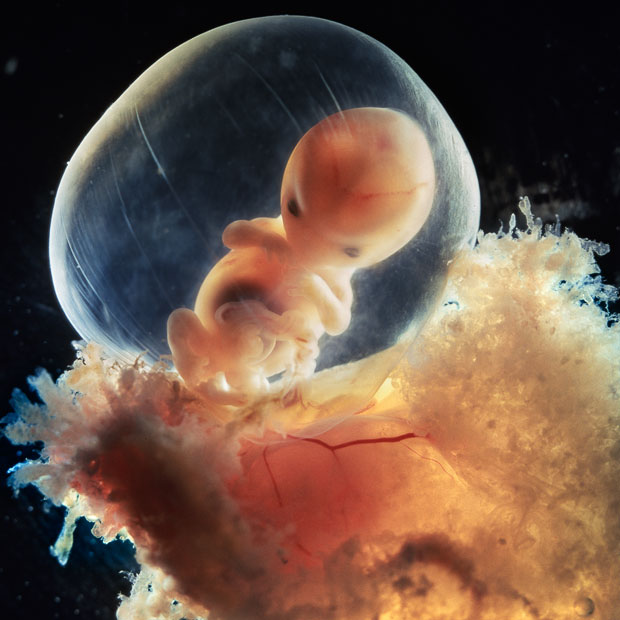
Unborn babies adapt their development based on cues from mom

Unborn baby scheming about the progress of science

From CNN:

When does learning begin? As I explain in the talk I gave at TED, learning starts much earlier than many of us would have imagined: in the womb.

I was surprised as anyone when I first encountered this notion. I’m a science writer, and my job is to trawl the murky depths of the academic journals, looking for something shiny and new — a sparkling idea that catches my eye in the gloom.

[…]What it all adds up to is this: much of what a pregnant woman encounters in her daily life — the air she breathes, the food and drink she consumes, the chemicals she’s exposed to, even the emotions she feels — are shared in some fashion with her fetus. They make up a mix of influences as individual and idiosyncratic as the woman herself. The fetus treats these maternal contributions as information, as what I like to call biological postcards from the world outside.

By attending to such messages, the fetus learns the answers to questions critical to its survival: Will it be born into a world of abundance, or scarcity? Will it be safe and protected, or will it face constant dangers and threats? Will it live a long, fruitful life, or a short, harried one?

The pregnant woman’s diet and stress level, in particular, provide important clues to prevailing conditions, a finger lifted to the wind. The resulting tuning and tweaking of the fetus’s brain and other organs are part of what give humans their enormous flexibility, their ability to thrive in environments as varied as the snow-swept tundra in Siberia and the golden-grassed savanna in Africa.

The recognition that learning actually begins before birth leads us to a striking new conception of the fetus, the pregnant woman and the relationship between them.

The fetus, we now know, is not an inert blob, but an active and dynamic creature, responding and adapting as it readies itself for life in the particular world it will soon enter. The pregnant woman is neither a passive incubator nor a source of always-imminent harm to her fetus, but a powerful and often positive influence on her child even before it’s born. And pregnancy is not a nine-month wait for the big event of birth, but a crucial period unto itself — “a staging period for well-being and disease in later life,” as one scientist puts it.

This crucial period has become a promising new target for prevention, raising hopes of conquering public health scourges like obesity and heart disease by intervening before birth. By “teaching” fetuses the appropriate lessons while they’re still in utero, we could potentially end vicious cycles of poverty, infirmity and illness and initiate virtuous cycles of health, strength and stability.

For those who would like to hear an excellent, formal academic debate on abortion, I will steer you towards this debate between the ACLU’s Nadine Strossen and Life Training Institute’s Scott Klusendorf. You’ve probably never heard anything like this debate – it features real arguments on both sides that will help you to decide whether abortion is moral or not. Over 50 million unborn children have been aborted in the United States since abortion was legalized. Is it time for us to be more careful about with sex? Maybe it’s not just another form of recreation.

For those of you who would like something to read, I recommend “The Case for Life” by Scott Klusendorf for beginners. Advanced students will benefit more from”Defending Life” by Francis J. Beckwith, published by Cambridge University Press.

Marriage researcher Brad Wilcox’s lecture on marriage and society

There are two parts. The lecture and then the Q&A.

Let’s learn a bit about Brad first:

W. Bradford Wilcox is Director of the National Marriage Project at the University of Virginia, Associate Professor of Sociology at the University of Virginia, and a member of the James Madison Society at Princeton University.

He earned his undergraduate degree at the University of Virginia and his Ph.D. at Princeton University. Prior to coming to the University of Virginia, he held research fellowships at Princeton University, Yale University and the Brookings Institution.

Mr. Wilcox’s research focuses on marriage, parenthood, and cohabitation, and on the ways that gender, religion, and children influence the quality and stability of American marriages and family life. He has published articles on marriage, cohabitation, parenting, and fatherhood in The American Sociological Review, Social Forces, The Journal of Marriage and Family and The Journal for the Scientific Study of Religion. His first book, Soft Patriarchs, New Men: How Christianity Shapes Fathers and Husbands (Chicago, 2004), examines the ways in which the religious beliefs and practices of American Protestant men influence their approach to parenting, household labor, and marriage. With Nicholas Wolfinger, Wilcox is now writing a book titled, Soul Mates: Religion, Sex, Children, & Marriage among African Americans and Latinos, for Oxford University Press. With Eric Kaufmann, Wilcox is finishing a book on the causes and consequences of low fertility in the West.

The MP3 file for the lecture is here.

The MP3 file for the Q&A is here.

This lecture covers marriage, cohabitation, single parenthood and divorce.