Tag Archives: Apologetics

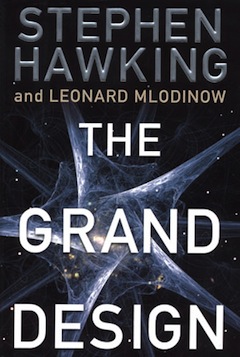
Book review of Stephen Hawking’s “The Grand Design” by Edgar Andrews

First, who is Edgar Andrews?

Professor Edgar H. Andrews (BSc, PhD, DSc, FInstP, FIMMM, CEng, CPhys.) is Emeritus Professor of Materials at the University of London and an international expert on the science of large molecules. In 1967 he set up the Department of Materials at Queen Mary College, University of London, and served both as its Head and later as Dean of Engineering. He has published well over 100 scientific research papers and books, together with two Bible Commentaries and various works on science and religion and on theology. His book From Nothing to Nature has been translated into ten languages.

Edgar Andrews was an international consultant to the Dow Chemical Company (USA) for over thirty years and to the 3M Company (USA) for twenty years. He was a non-executive director of Denbyware PLC throughout the 1970s and for five years a member of the Scientific Advisory Board of Neste Oy, the national oil company of Finland.

And now an excerpt from the book review: (H/T Apologetics 315)

Hawking and Mlodinow declare: ‘According to M-theory, ours is not the only universe. Instead, M-theory predicts that a great many universes were created out of nothing. Their creation does not require the intervention of some supernatural being or god. Rather, these multiple universes arise naturally from physical law. They are a prediction of science’ (p.9).

So what is this magical M-theory? The authors are rather coy about it. ‘M-theory’, they say, ‘Is not a theory in the usual sense. It is a whole family of different theories, each of which is a good description of observations only in some range of physical situations’ (p.8). Theoretical physicist Lee Smolin is more explicit: ‘… we still do not know what M-theory is, or whether there is any theory deserving of the name’ (The trouble with physics, Allen Lane, 2007, p.146).

The fact is that M-theory is an untestable mathematical construction which many scientists believe has no bearing on physical reality. But that doesn’t deter our authors because they don’t believe in ‘objective reality’ anyway. What we think is ‘real’, they say, is simply a model assembled in our brains from raw data input by our senses. But, confusingly, the authors then claim that the best models are those that reflect the way things really do happen in the real world — appealing to the very objective reality they say does not exist! Confused? Me too.

But it gets worse. They claim that M-theory (whatever it might be) predicts not one universe but a multiverse — a vast collection of universes which cannot be observed or known to us in any way. On their own criterion, this makes M-theory a very bad model indeed. So it’s hardly a useful replacement for God.

Here’s a better book to read if you want to understand how belief in God relates to experimental science.

My Dad just finished reading his book “Who Made God?” and called me up to tell me how much he liked the book. My Dad is not a scientist, yet he read the whole thing and learned a lot about science. This is the book for people who haven’t read a thing about science and religion. It’s easy to understand because he explains the same thing over and other giving more and more detail. Even a child can understand the first explanation, and then he keeps layering on details until he gets up to the state-of-the-art.

Remember Brian Auten of Apologetics 315 picked this book as his favorite of 2010. You can’t go wrong!

My Dad is now reading my copy of “Is God Just a Human Invention?” by Jonathan Morrow and Sean McDowell. I’m working on “Is God a Moral Monster?” by Paul Copan. I like books where difficult questions are asked and then careful answers are given. Then when people ask me the same questions, I can answer them using what I’ve learned – and often phrase the question even more clearly and forcefully than they did when they asked me.

Does the church prepare people for the difficulty of evangelism?

Battle-scarred means battle-ready

This post over at Reason to Stand is the kind of post that I wish I had written.

Excerpt:

There is an old saying that “war is hell”. That saying applies as much to ideological warfare as it does to physical warfare. Sure, the pain and consequences are often (though not necessarily) radically different, but the brutality is no less real.

I am constantly amazed by other Christians who oooh and ahhh when I relay stories of past exploits where I’ve engaged people from various ideological backgrounds. They are usually enamored by such tailes and some even form a desire to join in such exploits themselves among the people they encounter on a daily basis.

But for far too many, it ends there. I never see them later and hear their grand tales of past exploits. They never take the steps to become a warrior.

Why is that?

And then he quotes a quote from Dietrich Bonhoeffer which has a special meaning for me. I know that quote very well.

This post really struck at the core of my frustration with the church. Basically, the biggest problem with church is that it is all about having fun and having your emotions tickled. There is no part of church that suggests the idea that being an authentic Christian might require any work at all. And certainly nothing to make you think that being a Christian might involve any conflict – like opposing atheism in debates, or opposing abortion, or even secularized public schools that teach evolution and sex education with taxpayer money.

I was recently listening to an episode of Unbelievable where an atheistic female politician was debating Os Guinness, who I consider to be a functional atheist. But forget about the debate. The main thing that was interesting was that the woman was quite a high ranking politician and she attended church because she enjoyed the beautiful building, the community of nice people dressed up, and especially the nice music and singing. But, her actual beliefs were atheistic.

I actually know a few women who are pro-abortion, pro-same-sex-marriage, pro-big-government, who also enjoy attending church for the singing, and such. And my point is that church, as Wes noted in his post, does nothing to tell people that there is anything more to Christianity than singing, pageantry and community. What matters is the show. In Catholic and Orthodox churches, the show is the liturgy. In Protestant churches, the show is the dancing and the singing and the talking about life having meaning and someone looking out for us who will give us goodies no matter what we do.

Do you know who gets left out of the church in this picture? People who actually think that Christianity is true, and who know how to talk about it, and how to live it out. It’s disgusting. Read Wes’ post and think about it. We need to be celebrating our warriors, not the pastors and especially not the worship leaders. The people who actually talk about Christianity outside the church. That should be the marker of authentic Christianity – not singing, and not talking about things from a pulpit in a sing-song voice.

Do you ever wish that your co-workers took your faith seriously?

This is a problem that I used to have in the very beginning of my career, when I was still doing my undergraduate degree and working summer jobs and internships with software development companies. I was just in my early 20s, and was having to deal with being a Christian in the university and in the workplace. It’s very difficult to do it when you are young – everyone thinks that they know more than you do just because they are older – whether they have studied the issues or not. Not only that, but you have deal with the pre-conceptions that people have about Christianity from watching anti-Christian movies and televangelists, etc.

What a mess. So what is the way forward?

The way forward is for you to take Christianity OUT of the realm of private faith, Sunday singing, emotions and feelings, personal testimony, miraculous healings, apparations (if you’re Catholic), end times, Bible prophecies, and other stuff that scares non-Christians. And then you put Christianity INTO the realm of science, history, analytical philosophy, social science, economics, politics, law, and other public, testable, areas of knowledge.

After you’ve studied Chrsitianity and how it relates to public, testable areas of knowledge, it is easy to communicate your knowledge of things like the galactic habitability constraints, amino acid sequence specificity probabilities, minimal facts criteria for the historicity of the empty tomb, the grounding objection to middle knowledge, and the Laffer curve to other people. You are an expert at dumping the burden of proof on your opponent, every attempt by your opponent to make self-refuting statements is met with a whistle blow and a yellow card, and you wield Occam’s Razor like a samurai warrior.

Great! It all works great on people who will give you an hour at lunch to listen to your case. But what about the people who have heard through the grapevine that you are a Christian, identify you with Joel Osteen, and are snickering at you behind your back every time you walk by?

Decorating your cube at work

The solution is to decorate your cube at work.

Here is what you will need:

  1. a peer-reviewed paper on from a scientific journal (like this one, free version here)
  2. a peer-reviewed paper on from a social science journal (like this one)
  3. a news article on some foreign policy issue (like this one)
  4. a publication from a think tank on economic or social policy (like this one)
  5. a textbook on economics (like this one)
  6. a schedule of events from an apologetics event (like this one)
  7. a DVD of a William Lane Craig debate at a big university (like this one)
  8. a debate book from a big academic press (like this one)

Just print these out and read them, and then put them on your desk. That should get you some attention and end the snickering.