
News media freaks out over dead lion, ignores Planned Parenthood organ harvesting

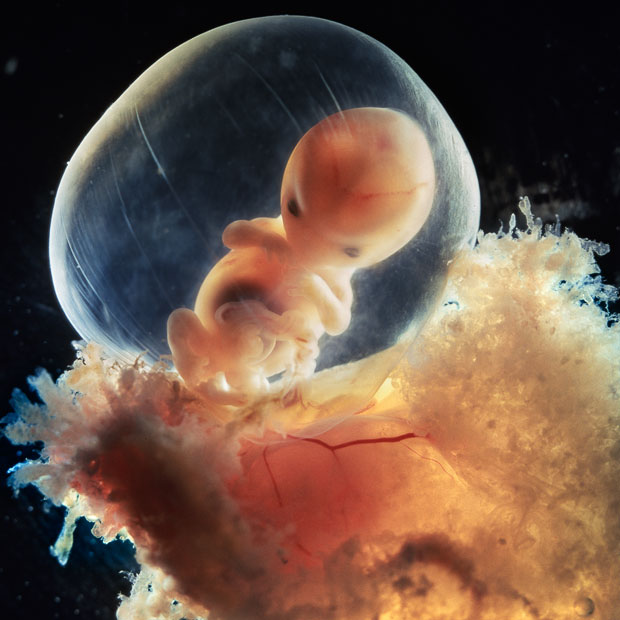
I'm Scheming Unborn Baby, and I approve of incrementalism
I’m Scheming Unborn Baby, and I have more value than a stupid lion

The best site for documenting media bias is Newsbusters. Let’s see what the mainstream news media reported about instead of reporting on the third Planned Parenthood organ harvesting video.

They reported on a stupid lion:

America’s anchors have spoken: the shooting of one lion vastly outweighs the trafficking of baby parts by a taxpayer-funded abortion giant.

In other words, the broadcast news shows spent more time in one day on Cecil the Lion than they did on the Planned Parenthood videos in two weeks.

The three broadcast networks, ABC, NBC and CBS censored the third video released Tuesday by the Center for Medical Progress (CMP) exposing Planned Parenthood’s practice of harvesting aborted baby parts — censored it at Planned Parenthood’s urging. But the news shows did find more than 14 minutes for a more important story: the “outrage” over the shooting of Cecil, a famed African lion, by an American dentist.

Tuesday, the networks spent 5 minutes, 44 seconds during their evening news shows on Cecil — and that’s not even counting the teasers. Wednesday morning, ABC, NBC and CBS lamented over the lion for 8 minutes, 17 seconds.

But they couldn’t do the same for a story of babies “picked” apart by tweezers.

The rest of that article outlines some of the extreme hand-wringing by the left-wing media over this MAN-EATING LION – and this is the same mainstream media that is ignoring the selling of the organs of babies pulled apart while they are still alive – for profit. It’s not a nice pet lion, it would eat you. And despite all their tears and concern for the lion, it would eat them, too. Really not sure where they are going with crying about this lion, and ignoring the unborn babies being chopped up and sold to ghouls for money. The latter seems worse.

Meanwhile, in the Obama administration, the Department of Health and Human Services says there is nothing to investigate about Planned Parenthood, because reasons.

Breitbart News:

In testimony before the House Education and the Workforce Committee Tuesday, Department of Health and Human Services (HHS) Secretary Sylvia Burwell said she had not viewed any of the videos regarding Planned Parenthood’s involvement in harvesting the body parts of aborted babies for sale, and that her office would not be conducting an investigation into the practices of the nation’s largest abortion provider.

Just remarkable to me that people on the left are freaking out about a stupid lion, but totally indifferent to 60 million unborn children being killed in this country alone, since Roe. v. Wade. Not to mention all the innocent victims of criminals. Why is it considered virtuous now to freak out over lions while ignoring innocent human beings who are dying? People are more important than lions, because they are made in the image of God, to know God. People are more important than lions.

Meanwhile, a California judge has ruled that no more videos that make Stem Express (the aforementioned ghouls) look bad may be released by the Center for Medical Progress.

Life Site News reports:

The California Superior Court has issued a narrow temporary restraining order preventing the Center for Medical Progress (CMP), a pro-life group, from releasing further undercover video footage taken of three top-level staff of StemExpress.

CMP is the organization behind the series of three videos released over the past three weeks exposing the alleged harvesting and sale of body parts from aborted babies by Planned Parenthood – body parts that are then purchased by StemExpress.

CMP has alleged that the fees paid by StemExpress to Planned Parenthood violate federal law prohibiting the sale and trafficking of human tissue.

While Planned Parenthood has claimed that the fees paid to them by StemExpress merely cover their costs, and fall within the bounds of the law, the video footage released so far has appeared to show Planned Parenthood employees seeking profit as part of the transaction.

In the most recent video, released Tuesday, a Planned Parenthood affiliate vice president was caught on video describing how the abortion organization can maximize profit. “I think a per-item thing works a little better, just because we can see how much we can get out of it,” Dr. Savita Sinde said of the aborted baby.

Nice First Amendment you have there, America. Shame if anything were to happen to it.

CMP should probably go ahead and release all the videos immediately, to stop the judges from silencing them.
How likely is it for blind forces to sequence a functional protein by chance?

Apologetics and the progress of science

How likely is it that you could swish together amino acids randomly and come up with a sequence that would fold up into a functional protein?

Evolution News reports on research performed by Doug Axe at Cambridge University, and published in the peer-reviewed Journal of Molecular Biology.

Excerpt:

Doug Axe’s research likewise studies genes that it turns out show great evidence of design. Axe studied the sensitivities of protein function to mutations. In these “mutational sensitivity” tests, Dr. Axe mutated certain amino acids in various proteins, or studied the differences between similar proteins, to see how mutations or changes affected their ability to function properly.10 He found that protein function was highly sensitive to mutation, and that proteins are not very tolerant to changes in their amino acid sequences. In other words, when you mutate, tweak, or change these proteins slightly, they stopped working. In one of his papers, he thus concludes that “functional folds require highly extraordinary sequences,” and that functional protein folds “may be as low as 1 in 10^77.”11 The extreme unlikelihood of finding functional proteins has important implications for intelligent design.

Just so you know, those footnotes say this:

[10.] Douglas D. Axe, “Estimating the Prevalence of Protein Sequences Adopting Functional Enzyme Folds,” Journal of Molecular Biology, 1-21 (2004); Douglas D. Axe, “Extreme Functional Sensitivity to Conservative Amino Acid Changes on Enzyme Exteriors,” Journal of Molecular Biology, Vol. 301:585-595 (2000).

[11.] Douglas D. Axe, “Estimating the Prevalence of Protein Sequences Adopting Functional Enzyme Folds,” Journal of Molecular Biology, 1-21 (2004).

And remember, you need a lot more than just 1 protein in order to create even the simplest living system. Can you generate that many proteins in the short time between when the Earth cools and the first living cells appear? Even if we spot the naturalist a prebiotic soup as big as the universe, and try to make sequences as fast as possible, it’s unlikely to generate even one protein in the time before first life appears.

Here’s Doug Axe to explain his research:

If you are building a protein for the FIRST TIME, you have to get it right all at once – not by building up to it gradually using supposed Darwinian mechanisms. That’s because there is no replication before you have the first replicator. The first replicator cannot rely on explanations that require replication to already be in place.

Fine-tuning the habitable zone: tidal-locking and solar flares

Circumstellar Habitable Zone

Here’s an article from Evolution News that talks about liquid water and tidal locking, but it has even more factors that need to be fine-tuned for habitability.

Excerpt:

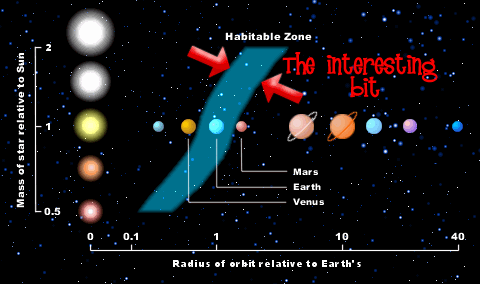
Stars with masses of 0.1-0.5 solar mass make up 75 percent of the stars in our Milky Way galaxy.6 These represent the red dwarfs, the M class. But these stars have low effective temperatures, and thus emit their peak radiation at longer wavelengths (red and near-infrared).7 They can have stable continuously habitable zones over long time scales, up to 10 billion years, barring other disruptions. It is also easier to detect terrestrial sized planets around them.8 But a serious problem with red dwarf stars in the K and M classes is their energetic flares and coronal mass ejection events. Potentially habitable planets need to orbit these stars closer, to be in these stars’ habitable zones. Yet the exposure to their stellar winds and more frequent and energetic flares becomes a serious issue for habitability. Because of these stars’ smaller mass, ejections get released with more violence.9 Any planet’s atmosphere would be subject to this ionizing radiation, and likely expose any surface life to much more damaging radiation.10 The loss of atmospheres in these conditions is likely, but the timescales are dependent on several factors including the planet’s mass, the extent of its atmosphere, the distance from the parent star, and the strength of the planet’s magnetic field.11 To protect its atmosphere for a long period, like billions of years, a planet with more mass and thus higher gravity could hold on to the gases better. But this larger planet would then hold on to lighter gases, like hydrogen and helium, and prevent an atmosphere similar to Earth’s from forming.12 Another consequence is that the increased surface pressure would prevent water from being in the liquid phase.13

So again, you need to have a huge, massive star in order to hold the planet in orbit over LONG distances. If it’s a short distance, you not only have the tidal-locking problem, but you also have this solar activity problem (flares, coronal ejections).

But wait! There’s more:

Another stellar parameter for advanced life has to do with UV (ultra-violet) radiation. The life-support star must provide just enough UV radiation, but not too much. UV radiation’s negative effects on DNA are well known, and any life support body must be able to sustain an atmosphere to shield them. Yet the energy from UV radiation is also needed for biochemical reactions. So life needs enough UV radiant to allow chemical reactions, but not so much as to destroy complex carbon molecules like DNA. Just this flux requirement alone requires the host star have a minimum stellar mass of 0.6 solar masses, and a maximum mass of 1.9 solar masses.14

So the ultra-violet radiation that is emitted has to be finely-tuned. (I’m guessing this assumes some sort of chemical origin-of-life scenario)

Still more:

Another requirement for habitable planets is a strong magnetic field to prevent their atmosphere from being lost to the solar winds. Planets orbiting a red dwarf star are also more affected by the star’s tidal effects, slowing the planet’s rotation rate. It is thought that strong magnetic fields are generated in part by the planet’s rotation.15 If the planet is tidally braked, then any potential for a significant magnetic field is likely to be seriously degraded. This will lead to loss of water and other gases from the planet’s atmosphere to the stellar winds.16 We see this in our solar system, where both Mercury and Venus, which orbit closer to the Sun than Earth, have very slow rotation rates, and very modest magnetic fields. Mercury has very little water, and surprisingly, neither does Venus. Even though Venus has a very dense atmosphere, it is very dry. This is due to UV radiation splitting the water molecules when they get high in the atmosphere, and then the hydrogen is lost to space, primarily, again, by solar wind.17

You have to hold on to your umbrella (atmosphere), or you get hit with dangerous rain (solar winds).

So a few more factors there, and remember, this is just the tip of the iceberg when it comes to circumstellar habitability constraints.