How do you respond to the conquests and wars in the Old Testament?

Lets take a closer look at a puzzle

John Berea has an article about it on his web site.

Here’s his overview:

In the Old Testament are the military campaigns of Israel inconsistent with being led by a just and loving God, and inconsistent with his own commands?  Here, I would like to make the case for consistency and justness.

1. The nations of Canaan were evil, harming others, and needed to be stopped.  They had carried out incest with children/grandchildren and performed child sacrifice by fire. (Lev 18:6-30, Deut 12:31, Deut 18:9-10, Psalm 106:35, 37-38)  They launched unprovoked attacks on Israel (Ex 17:8-9, Num 21:1, Num 21:2-23, 33) and even guerrilla attacks against Israel’s “stragglers in the rear of the march when you were exhausted and tired.” (Deut 25:18)

2. Warfare language was likely rhetorical.  There are five reasons to support the rhetorical nature of language such as “completely destroy” (Hebrew תחרימו, literally “ban”) in Deut 20:17.  It likely meant a destruction of armed soldiers, buildings, and religious icons.

  1.  Semitic language professor and NIV, NAB, and ESV bible translator Richard Hess argues that Hebrew “ban” is “stereotypical for describing all the inhabitants of a town or region, without predisposing the reader to assume anything further about their ages or even their genders” and “need not require that there really were children, senior citizens, or women there who were put to death” even when followed by the terms “men and women” (Joshua 8:25) or “young and old” (Joshua 8:25).
  2. In Israel’s destruction of enemies we see phrases like “left no survivor” and “utterly destroyed all who breathed” (Joshua 10:40, Judges 1:8).  But in Joshua 21:12-13 the author has no problem telling us these people were still there afterward: “if you ever turn away and make alliances with these nations that remain near you… God will no longer drive out these nations”.  In 1 Sam 15:3-4 Israel was to “strike down the Amalekites. Destroy everything that they have. Don’t spare them. Put them to death–man, woman, child, infant, ox, sheep, camel, and donkey alike.”  In 15:8 Saul “executed all Agag’s people” and Agag himself was killed in 15:33.  But later in  1 Sam 27:8 we’re told they’re still there and ” had been living in that land for a long time”.  Hundreds of years later in Esther 3:1 we’re even told Haman was an Agagite, a descendant of the Amalekite king Agag.
  3. Most verses on the subject speak of “driving out” and “dispossessing” the land rather than language suggestive of genocide.  E.g. Num 33:51-53, in “the land of Canaan, you must drive out all the inhabitants of the land before you. Destroy all their carved images, all their molten images,  and demolish their high places.  You must dispossess the inhabitants of the land and live in it, for I have given you the land to possess it.”  It’s the same story in Lev 18:25, Num 23:31-32, Deut 6:19, 9:4, 18:12, Joshua 3:10, and 23:9.
  4. Jer 4:20 suggests inhabitants fled before armies arrived:  “At the sound of the horseman and bowman every city flees; They go into the thickets and climb among the rocks”
  5. Deut 7:22 specifically says that Israel was forbidden to “destroy them all at once” and instead they would be expelled “little by little”.

So either all of these verses contradict one another, or the conquest language was rhetorical.

3. Many of the “cities” were probably military outposts.  For example with Jericho and Ai, Richard Hess argues there are no references to noncombatants (apart from Rahab), no archaeological evidence of non-military use, the term melek (Hebrew מלכי)  for “king” of the cities often meant mean a military leader in Canaan (e.g. in Joshua 2:2), they were located at defensive positions, and Jericho and Ai weren’t described as a large city as Gibeon and Hazor explicitly were.

4. A just God requires wrath.  It’s not possible to have a God who is just but not wrathful–otherwise wrongdoers continue unabated. Paranormal investigator James Randi wrote in Skeptic Magazine, “I accuse the Christian god of murder by allowing the Holocaust to take place” yet Dawkins and Hitchens condemn God for judgment against the Canaanites.  Which is it? Ultimately the the problem is we view death as the ultimate judgment, when in the theological context of the bible it’s only a graduation to what’s next with accountability for what we’ve done with what we were given.

The four points are developed with links for support. If you get this question a lot, it’s a good resource to bookmark.


The Democrat war on clean coal makes us all pay more for electricity

National Electricity Price Index vs CPI

This is from Investors Business Daily.

Excerpt:

Another coal giant in America, Peabody Energy Corp., declared bankruptcy this week. This bankruptcy filing follows similar actions by Arch Coal Inc., Alpha Natural Resources Inc., and other coal producers that have filed for Ch. 11 protection from creditors.

The ideologues in the White House must be uncorking the champagne. They wanted this to happen. It was the intended result of lawsuits and burdensome regulations by the Obama-era Environmental Protection Agency, which declared war on coal from the day Obama entered office.  This was a key component of the anti-carbon agenda of the climate change fanaticism that pervades this White House.

Ideas have consequences. Obama has succeeded in decimating whole towns across America — from Wyoming to Virginia to Pennsylvania — dependent on coal. An estimated 31,000 coal miners, truckers, engineers, construction workers and others have lost their jobs since 2009 as a result of this global warming jihad. Another 5,000 or so could be given pink slips at Peabody. To the left, these lives ruined is acceptable collateral damage for their utopian dream of saving the planet.

The victims here aren’t rich fat cats. They are middle class workers whose lives have been turned upside down by the Big Green Machine.

Investors have gotten crushed too as a result of coal’s demise. The ‎coal industry has lost more than $30 billion in stock value since 2009 — with many of these losses in pension funds and 401(k) plans.

What is maddening about these developments is that coal is much, much cleaner than ever before. EPA statistics show that emissions of sulfur, lead, carbon monoxide, and smog  from coal plants have been reduced by more than 50% in the last 40 years. Clean coal is a reality — but that never slowed the greens down.   The Natural Resources Defense Council now wants the EPA to slap $700 million in environmental fines on Peabody. These people just never stop.

America is the Saudi Arabia of coal. We have an estimated 500 years supply of that energy source. Our coal is cleaner and our environmental laws are much stricter than in other nations.  So for economic and ecological reasons, we should want American coal to dominate the world market.

The demise of coal could lead to major disruptions in America’s electric power supply. Before Obama entered office in 2009, America got half its electric power from coal.  Coal still supplies more than one-third of our electricity, because it is cheap and highly reliable, but that percentage continues to shrink.

Higher energy prices is no problem for Democrats:

They are pretty bold about wanting to bankrupt the coal industry, and push us all onto more expensive forms of energy like wind and solar:

Cost of renewable wind and solar energy

Do you need to be paying more for electricity? Could you find something else to spend it on? How much is there left over for charity if you have to pay more for electricity?

And do you know who else pays for higher electricity prices? Your employer. Attacking cheap, clean energy puts more economic stress on the person who employs you. Think about that.

What do ancient non-Christian sources tell us about the historical Jesus?

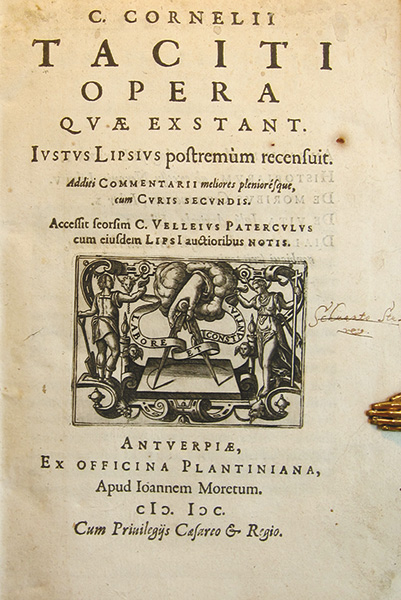
The Annals, by Roman historian Tacitus

This article from Biblical Archaeology covers all the non-Christian historical sources that discuss Jesus.

About the author:

Lawrence Mykytiuk is associate professor of library science and the history librarian at Purdue University. He holds a Ph.D. in Hebrew and Semitic Studies and is the author of the book Identifying Biblical Persons in Northwest Semitic Inscriptions of 1200–539 B.C.E. (Atlanta: Society of Biblical Literature, 2004).

Here are the major sections:

  • Roman historian Tacitus
  • Jewish historian Josephus
  • Greek satirist Lucian of Samosata
  • Platonist philosopher Celsus
  • Roman governor Pliny the Younger
  • Roman historian Suetonius
  • Roman prisoner Mara bar Serapion

And this useful excerpt captures the broad facts about Jesus that we get from just the first two sources:

We can learn quite a bit about Jesus from Tacitus and Josephus, two famous historians who were not Christian. Almost all the following statements about Jesus, which are asserted in the New Testament, are corroborated or confirmed by the relevant passages in Tacitus and Josephus. These independent historical sources—one a non-Christian Roman and the other Jewish—confirm what we are told in the Gospels:31

1. He existed as a man. The historian Josephus grew up in a priestly family in first-century Palestine and wrote only decades after Jesus’ death. Jesus’ known associates, such as Jesus’ brother James, were his contemporaries. The historical and cultural context was second nature to Josephus. “If any Jewish writer were ever in a position to know about the non-existence of Jesus, it would have been Josephus. His implicit affirmation of the existence of Jesus has been, and still is, the most significant obstacle for those who argue that the extra-Biblical evidence is not probative on this point,” Robert Van Voorst observes.32 And Tacitus was careful enough not to report real executions of nonexistent people.

2. His personal name was Jesus, as Josephus informs us.

3. He was called Christos in Greek, which is a translation of the Hebrew word Messiah, both of which mean “anointed” or “(the) anointed one,” as Josephus states and Tacitus implies, unaware, by reporting, as Romans thought, that his name was Christus.

4. He had a brother named James (Jacob), as Josephus reports.

5. He won over both Jews and “Greeks” (i.e., Gentiles of Hellenistic culture), according to Josephus, although it is anachronistic to say that they were “many” at the end of his life. Large growth
in the number of Jesus’ actual followers came only after his death.

6. Jewish leaders of the day expressed unfavorable opinions about him, at least according to some versions of the Testimonium Flavianum.

7. Pilate rendered the decision that he should be executed, as both Tacitus and Josephus state.

8. His execution was specifically by crucifixion, according to Josephus.

9. He was executed during Pontius Pilate’s governorship over Judea (26–36 C.E.), as Josephus implies and Tacitus states, adding that it was during Tiberius’s reign.

Some of Jesus’ followers did not abandon their personal loyalty to him even after his crucifixion but submitted to his teaching. They believed that Jesus later appeared to them alive in accordance with prophecies, most likely those found in the Hebrew Bible. A well-attested link between Jesus and Christians is that Christ, as a term used to identify Jesus, became the basis of the term used to identify his followers: Christians. The Christian movement began in Judea, according to Tacitus. Josephus observes that it continued during the first century. Tacitus deplores the fact that during the second century it had spread as far as Rome.

I remember reading the 1996 book by Gary Habermas entitled “The Historical Jesus: Ancient Evidence for the Life of Christ“. This book is a little before the time of most of you young Christian apologists, but back before the time of Lee Strobel and J. Warner Wallace, this is the stuff we all read. Anyway, in the book he makes a list of all that can be known about Jesus from external sources. And fortunately for you, you don’t have to buy the book because you can read chapter 9 of it right on his web site.

From Tacitus he gets this:

From this report we can learn several facts, both explicit and implicit, concerning Christ and the Christians who lived in Rome in the 60s A.D. Chronologically, we may ascertain the following information.

(1) Christians were named for their founder, Christus (from the Latin), (2) who was put to death by the Roman procurator Pontius Pilatus (also Latin), (3) during the reign of emperor Tiberius (14 37 A.D.). (4) His death ended the “superstition” for a short time, (5) but it broke out again, (6) especially in Judaea, where the teaching had its origin.

(7) His followers carried his doctrine to Rome. (8) When the great fire destroyed a large part of the city during the reign of Nero (54 68 A.D.), the emperor placed the blame on the Christians who lived in Rome. (9) Tacitus reports that this group was hated for their abominations. (10) These Christians were arrested after pleading guilty, (11) and many were convicted for “hatred for mankind.” (12) They were mocked and (13) then tortured, including being “nailed to crosses” or burnt to death. (14) Because of these actions, the people had compassion on the Christians. (15) Tacitus therefore concluded that such punishments were not for the public good but were simply “to glut one man’s cruelty.”

And from Josephus he gets this:

(1) Jesus was known as a wise and virtuous man, one recognized for his good conduct. (2) He had many disciples, both Jews and Gentiles. (3) Pilate condemned him to die, (4) with crucifixion explicitly being mentioned as the mode. (5) The disciples reported that Jesus had risen from the dead and (6) that he had appeared to them on the third day after his crucifixion. (7) Consequently, the disciples continued to proclaim his teachings. (8) Perhaps Jesus was the Messiah concerning whom the Old Testament prophets spoke and predicted wonders. We would add here two facts from Josephus’ earlier quotation as well. (9) Jesus was the brother of James and (10) was called the messiah by some.

So when you are reading the New Testament, these facts are the framework that you read within. It’s a good starting point when dealing with people who have never looked into who Jesus was and what he taught and what his followers believed about him, right from the start.