Correcting four myths about the history of the Crusades

Crusader
Crusader

Here is an interesting article from First Principles Journal.

Intro:

The verdict seems unanimous. From presidential speeches to role-playing games, the crusades are depicted as a deplorably violent episode in which thuggish Westerners trundled off, unprovoked, to murder and pillage peace-loving, sophisticated Muslims, laying down patterns of outrageous oppression that would be repeated throughout subsequent history. In many corners of the Western world today, this view is too commonplace and apparently obvious even to be challenged.

But unanimity is not a guarantee of accuracy. What everyone “knows” about the crusades may not, in fact, be true. From the many popular notions about the crusades, let us pick four and see if they bear close examination.

The four myths:

  • Myth #1: The crusades represented an unprovoked attack by Western Christians on the Muslim world.
  • Myth #2: Western Christians went on crusade because their greed led them to plunder Muslims in order to get rich.
  • Myth #3: Crusaders were a cynical lot who did not really believe their own religious propaganda; rather, they had ulterior, materialistic motives.
  • Myth #4: The crusades taught Muslims to hate and attack Christians.

Here’s the most obvious thing you should know. The Crusades were defensive actions:

In a.d. 632, Egypt, Palestine, Syria, Asia Minor, North Africa, Spain, France, Italy, and the islands of Sicily, Sardinia, and Corsica were all Christian territories. Inside the boundaries of the Roman Empire, which was still fully functional in the eastern Mediterranean, orthodox Christianity was the official, and overwhelmingly majority, religion. Outside those boundaries were other large Christian communities—not necessarily orthodox and Catholic, but still Christian. Most of the Christian population of Persia, for example, was Nestorian. Certainly there were many Christian communities in Arabia.

By a.d. 732, a century later, Christians had lost Egypt, Palestine, Syria, North Africa, Spain, most of Asia Minor, and southern France. Italy and her associated islands were under threat, and the islands would come under Muslim rule in the next century. The Christian communities of Arabia were entirely destroyed in or shortly after 633, when Jews and Christians alike were expelled from the peninsula.6 Those in Persia were under severe pressure. Two-thirds of the formerly Roman Christian world was now ruled by Muslims.

What had happened? Most people actually know the answer, if pressed—though for some reason they do not usually connect the answer with the crusades. The answer is the rise of Islam. Every one of the listed regions was taken, within the space of a hundred years, from Christian control by violence, in the course of military campaigns deliberately designed to expand Muslim territory at the expense of Islam’s neighbors. Nor did this conclude Islam’s program of conquest. The attacks continued, punctuated from time to time by Christian attempts to push back. Charlemagne blocked the Muslim advance in far western Europe in about a.d. 800, but Islamic forces simply shifted their focus and began to island-hop across from North Africa toward Italy and the French coast, attacking the Italian mainland by 837. A confused struggle for control of southern and central Italy continued for the rest of the ninth century and into the tenth. In the hundred years between 850 and 950, Benedictine monks were driven out of ancient monasteries, the Papal States were overrun, and Muslim pirate bases were established along the coast of northern Italy and southern France, from which attacks on the deep inland were launched. Desperate to protect victimized Christians, popes became involved in the tenth and early eleventh centuries in directing the defense of the territory around them.

If you asked me what are the two best books on the Crusades, I would answer God’s Battalions: The Case for the Crusades by Baylor professor Rodney Stark and The Concise History of the Crusades by Professor Thomas F. Madden. If you get this question a lot from atheists, then I recommend you pick these up. Anything by Rodney Stark is useful for Christians, in fact.

Can blacks and Hispanics blame their troubles on racism by whites?

Does government provide incentives for people to get married?
The success of children is due to their parents’ choices, not from outside racism

If the underperformance of blacks and Hispanics in America were caused by racism by whites, then it follows that Asian-Americans would be underperforming as well. But Asian-Americans are outperforming whites. Let’s look at three reasons why, and see if blacks and Hispanics can learn how to succeed by looking at the Asian example.

Here is the summary of this post:

  1. Asian Americans marry before they have children
  2. Asian Americans save more of what they earn
  3. Asian Americans monitor their children’s educational progress

Now let’s take a look at each of these in order.

Asians marry before they have children, so the kids have two parents

1. Asian Americans marry before they have children

This article is from Family Studies.

It says:

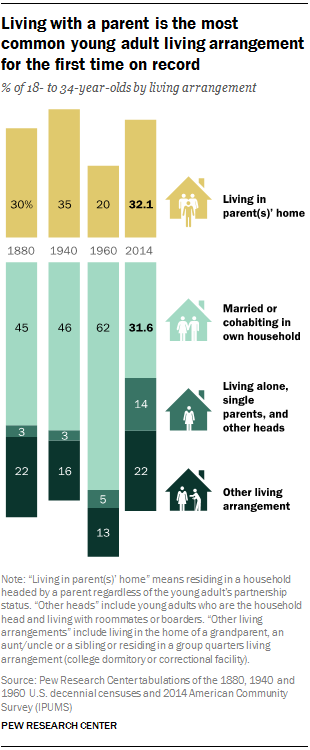
Eight in ten Asian-American kids live with married birth parents, compared with about seven in ten European-American kids, five in ten Hispanic-American kids, and only about three in ten African-American kids. Half of black children live with their mothers only, compared to three in ten Hispanic children, less than two in ten white children and less than one in ten Asian children.

Naturally, children who have two parents to look after them do better, because one parent alone cannot work and do household chores and monitor the children as easily as two parents can. The decision about whether to have sex before marriage is entirely under the control of the grown-ups. It cannot be blamed on racism, poverty and other non-moral pre-occupations of the secular left. Marriage is a moral issue, and Asian-Americans do the moral thing, and marry before they have children.

Asian household wealth set to surpass whites

2. Asian Americans save more of what they earn

This article from CNN Money explains:

Asians have had higher median incomes than their white counterparts, according to a new study by the Federal Reserve Bank of St. Louis. The typical Asian family has brought home more money for most of the past two decades.

[…][Asians] will surpass whites in net worth in the next decade or two, Fed researchers said.

[…]In 1989, the median Asian family had about half the net worth of its white peer. By 2013, they had more than two-thirds.

The gap between whites and blacks and Hispanics, meanwhile, remained little changed over that time period.

Asians have similar financial habits to whites, in terms of investing and borrowing. Both groups are more likely than blacks and Hispanics to invest in stocks and privately-owned businesses and to have more liquid assets, which serves as a buffer against financial shocks. And, on average, the former have about half as much debt as the later.

As a result, Asians and whites have more financial stability than blacks and Hispanics, which also allows the former to build more wealth.

Everyone has to earn and save money, but in some cultures, it becomes normal to not save part of what you earn. That needs to stop. But it has nothing to do with discrimination due to skin color. In Asian culture, there is no glorification of consumer spending on sparkles, bling and other ostentatious wealth. Asians don’t want to appear to be wealthy, they want to actually be wealthy – by saving money.

Composite SAT scores by race and income levels
Composite SAT scores by race and income levels: Asians outperform at every income level

3. Asian Americans monitor their children’s educational progress

This article from Investors Business Daily explains how Asian parents don’t just make demands on their kids to learn, they actively monitor their progress and talk to their kids’ teachers:

Asian-American parents tend to oversee their children’s homework, hold them accountable for grades and demand hard work as the ticket to a better life. And it pays off: Their children are soaring academically.

[…]As a group, Americans need to take a page from the Asian parents’ playbook. American teens rank a dismal 28th in math and science knowledge, compared with teens in other countries, even poor countries.

Singapore, Hong Kong, South Korea, Japan and Taiwan are at the top. We’ve slumped. For the first time in 25 years, U.S. scores on the main test for elementary and middle school education (NAEP) fell. And SAT scores for college-bound students dropped significantly.

[…]Many [Asian students]from poor or immigrant families, but they outscore all other students by large margins on both tests, and their lead keeps widening.

In New York City, where Asian-Americans make up 13% of overall students, they win more than 50% of the coveted places each year at the city’s eight selective public high schools, such as Bronx Science and Stuyvesant.

What’s at work here? It’s not a difference in IQ. It’s parenting. That’s confirmed by sociologists from City University of New York and the University of Michigan. Their study showed that parental oversight enabled Asian-American students to far outperform the others.

No wonder many successful charter schools require parents to sign a contract that they will supervise their children’s homework and inculcate a work ethic.

You can see an updated image with the latest scores here.

It’s not enough to just outsource the education of your children to a bunch of non-STEM education-degree-holding teachers. Teachers can be good, and some work very hard. But the Democrat teacher unions prevent the firing of teachers who underperform. This is especially true in non-right-to-work states (Democrat states). So, you cannot depend on teachers to educate your children, and Asian parents don’t. That’s why their kids learn. Performance of children in school is not affected by discrimination against skin color, it’s affected by the level of involvement of parents.

Conclusion

We have learned that the success of Asian-Americans in America is all earned. And this proves that there is no such thing as “racism” that holds back non-whites. If blacks and Hispanics imitated the behaviors of Asians (not whites, but Asians), then they would achieve just as well as Asians do. It’s not a race problem, it’s a behavior problem. It’s not a “racism” problem, it’s a behavior problem. It’s an us problem, it’s not a them problem.

Where to get help if you have a selfish, absent or abusive mother or father

Bible study that hits the spot

Today, I want to say something this article about lambs in Scotland, written by Sheila Walsh in the The Stream.

She writes:

I am very fond of sheep. I grew up on the west coast of Scotland with sheep all around me, field after field of white wool and incessant crying when things seemed a little off.

[…]Of all the lessons I have learned from these defenseless, gentle animals, the most profound is the most painful. Every now and then, a ewe will give birth to a lamb and immediately reject it. Sometimes the lamb is rejected because they are one of twins and the mother doesn’t have enough milk or she is old and frankly quite tired of the whole business. They call those lambs, bummer lambs.

Unless the shepherd intervenes, that lamb will die. So the shepherd will take that little lost one into his home and hand feed it from a bottle and keep it warm by the fire. He will wrap it up warm and hold it close enough to hear a heartbeat. When the lamb is strong the shepherd will place it back in the field with the rest of the flock.

“Off you go now, you can do this, I’m right here.”

The most beautiful sight to see is when the shepherd approaches his flock in the morning and calls them out, “Sheep, sheep, sheep!”

The first to run to him are the bummer lambs because they know his voice. It’s not that they are more loved — it’s just that they believe it.

I am so grateful that Christ calls himself the Good Shepherd.

“He calls his own sheep by name and leads them out. After he has gathered his own flock, he walks ahead of them, and they follow him because they know his voice.” (John 10:3-4 NLT)

My older brother and I grew up with a mother who was very much focused on her career and earning and saving money for her retirement. We were both stuck in daycare very early after being born, so that she could go back to work right away. My older brother has shown the ill effects of our parents (especially our mother) not having any plan for us, especially morally and spiritually. He dropped out of college after failing his first year, never had a career. Although he has normal intelligence and mental health, he never could stick in any real job.

Although there were early warning signs when his grades started to drop in Grade 5, my parents never took responsibility to make a plan to solve it. Oh, they would yell and scream at him at report card time, but just for a day or two, and after that, nothing constructive. My brother decided that he could just ride out the flak my parents gave him on report card night, and keep going with his plan of having fun and being popular. My parents just forgot about it until the next report card day, because they did not want to be distracted from their careers, hobbies and retirement planning.

I had the exact same upbringing as my older brother. He actually did pretty well until Grade 5 just like me, but then our paths diverged. From Grade 5 on, his grades deterioriated. He got tired of having to study and he was more interested in the opinions of his peers and conforming to pop culture. In my case, from Grade 5 on, my grades were always high-90s. I remember taking the same classes as he did, in the same high school, with the same teachers. He got a 44 in data processing, I got a 96 with the same teacher and won the award for the entire grade. Every class I went to, the teachers would speak fondly of my older brother – he was a nice guy, very popular with his peers, good at sports, but not a very good student. How was it that I was winning awards when he had scored so poorly. Was I really his brother? How could we be so different?

The difference is that in Grade 5, he got a Gideon’s New Testament and he read it and he didn’t put it into practice, and in Grade 5, I got a Gideon’s New Testament and I read it twice and I did put it into practice. That was the difference. I had the awareness of the moral law (i.e.- wisdom) that allowed me to judge my parents and judge my peers and judge my teachers and stand alone. When you cannot rely on anyone to lead you, judging others is critical. That is what allows you to maintain appropriate boundaries and minimize the influence of friends and family who do not have any plan to grow you. Awareness of the moral law is what allows you to stop trying to please people who do not want what is best for you. On the other hand, God is always willing to give you wisdom, and you can find out all about him because he has left plenty of evidence concerning his existence and character for you to find. It is in knowing God as he really is that you can find your sense of value, purpose and meaning.

For me, Christianity was a simple matter of being willing to go along with what was true, and not insisting having fun or conforming to peer expectations. The essential characteristic of my faith, in contrast to my older brother’s lack of faith, was this – I did not mind being different, so long as I never lost a debate about what was true. My obedience to Christ has never been conditional on things going my way, on being liked, or anything like that. The only thing that mattered was being factually correct. It never bothered me what other people were doing, or what other people expected me to do, so long as as I was acting on what I knew to be true. And God helped me to find out what was true my motivating me to study, and leading me to him with good evidence, and good mentors.

How has this affected me? Well, this is the second thing I wanted to say about the bummer lamb analogy. Since I was a victim of this hands-off, me-first style of parenting, it’s caused me to be extra sensitive about being a good spiritual leader to others in the same predicament.The people I mentor can see it in the way that I treat them the exact opposite of the way that my older brother and I were treated. I care what people read. I care what courses they choose. I care what they eat. I care how they feel. I care about their finances. I care about their plans to serve God. I care about their romantic relationships. I care whether they get recognition for doing good. I care whether their life is going in the right direction. One person I mentored who once considered taking her own life wrote to me when she graduated from a STEM program, and she said this: “I wish you could have been here at my graduation. My parents only paid for this degree. You were the one who got me through it”. We have never met in person, but she is going to continue to make a huge difference for Christ and His Kingdom going forward.

I think when you have been a bummer lamb, you are extra careful to make decisions that will enable you to be a good shepherd to other lambs. Being a good shepherd does not mean being pious, spiritual, mystical, etc. Being a good shepherd does not mean making the lambs feel good about making bad decisions. Being a good shepherd means understanding what God has done to lead you, and then reflecting that love back to others in practical, self-sacrificial actions that solve actual real-world problems for other people who want to know and serve God. If you are about to jump off a cliff, the last thing you need is someone with no wisdom or experience telling you that God is OK with you doing whatever feels good to you. What you need is someone practical and competent to give you good advice, however much that advice may make you feel bad, or block your pursuit of fun.

One of my friends proof-read the draft of this post told me that it made her think of 2 Cor 1:3-5:

Praise be to the God and Father of our Lord Jesus Christ, the Father of compassion and the God of all comfort,

who comforts us in all our troubles, so that we can comfort those in any trouble with the comfort we ourselves receive from God.

For just as we share abundantly in the sufferings of Christ, so also our comfort abounds through Christ.

Nothing else I do in life matters to me as much as taking care of the people I mentor, especially the ones who are lost and lacking guidance and care. I have good health, good education, good career, and great finances. But by far the most important thing I do is following the example of the Shepherd by caring for other lambs.