All posts by Wintery Knight

https://winteryknight.com/

ID critics do not read ID books before reviewing them

From Evolution News.

Excerpt:

As a friend of ours puts it, Jonathan Wells’s The Myth of Junk DNA is in the process of being “Ayala’ed.” To “Ayala” a book is to attack it in review without having bothered to read or even read much about it, simply on the basis of what you think it probably says given your uninformed preconceptions about the author. The term comes from the wonderful instance where distinguished biologist Francisco Ayala pompously “reviewed” Stephen Meyer’s Signature in the Cell for the Biologos Foundation website while giving clear evidence of not having cracked the book open or even looked at the table of contents.

Thus we have several posts from University of Toronto biochemist Larry Moran, criticizing Myth while being totally open about not having read it first. Moran wrote no fewer than four posts on the book in this fashion, claiming as an excuse that Myth would not be published in Canada until May 31. (In fact, the book was available for purchase from Amazon since early May.) And now, as Casey already noted, we have Forbes science writer John Farrell, citing Moran as his source — a “double Ayala,” so to speak, where you attack a book without reading it citing as justification a review by someone else who also hasn’t read it.

Farrell thinks the myth of junk DNA is itself a myth — that “scientists never dismissed junk DNA in the literature.” In other words, Wells has set up a straw man. Of course, not having looked at the book, Farrell can’t have consulted Dr. Wells’s fifty pages of notes documenting his argument. The notes may be downloaded for free here. (Also available in Canada.)

So this is what criticism of intelligent design amounts to… denouncing a book before reading it.

Biophysicist Cornelius Hunter explains why reading the book is not necessary for Darwinists – because Darwinism is impervious to evidential concerns.

Excerpt:

This centuries old framework for naturalism is key to understanding evolution today. Science writers such as Farrell report that scientists have discovered, for instance, “just how not-so-intelligently designed the human genome actually is,” but this is not a scientific conclusion. For unlike the target of his criticism (the ID theory) which refers to complexity rather than goodness of design, evolutionary thought and its underlying naturalism framework refer to the design’s metaphysics. As Farrell explains:

Many mutations are neutral, or can be easily overcome by technology. And some of them cause a great deal of psychological suffering, such as the mutation that causes trimethylaminuria, which is physically harmless but causes the victims to smell like rotten fish no matter how clean they are. But many other mutations are deadly or, worse yet, can cause a person to have a lifetime of suffering. Perhaps the most disturbing mutation is the one that causes Lesch-Nyhan syndrome. This one mutation, of a single amino acid in a protein, causes the victim to have an uncontrollable compulsion for self-mutilation: they chew their own lips and fingers, and find sharp objects to stab their faces and eyes. The victims are fully able to feel their pain and they know what they are doing, but cannot control it.

Obviously to argue such mutations are the product of intentional design is to suggest the deity or intelligence responsible, is something of a monster.

Indeed. Leibniz was concerned about the evil in the world, but he had no idea how deeply it runs. It is truly abominable, and it makes for a moving and powerful argument that no good creator who has the power to create a universe would ever create this one.

Whether by the Epicurean’s swerving atoms, or science’s natural laws, the world must have arisen on its own.

How could anyone deny this obvious conclusion? This and other metaphysical arguments leave no room for debate. Evolution must be true. We may not know how it occurred, but it is a fact.

The powerful theory of evolution hangs on this framework of thought that mandates naturalism. The science is weak but the metaphysics are strong. This is the key to understanding evolutionary thought. The weak arguments are scientific and the strong arguments, though filled with empirical observation and scientific jargon, are metaphysical. The stronger the argument, the more theological or philosophical.

(Emphasis is in the original)

And I recommend you read the whole post, especially if you’ve never read anything by Cornelius Hunter.

So the reason why Darwinists don’t care about evidence is because evidence is irrelevant once you pre-suppose the religion of naturalism. And you presuppose the religion of naturalism because of the problem of evil and suffering. I.e. – “based on my childhood caricature of God as the cosmic Santa Claus, I now see that evolution must be true, because my cosmic Santa Claus God cannot have any purpose for allowing the evil and suffering I see in nature.” Science has nothing to do with it. Nature is not nice, and so God didn’t make nature. And that’s the end of the discussion.

These Darwinian critics of ID are really just close-minded religious fundamentalists whose principal response to experimental science is uninformed religious bluster. You don’t get an education when you take classes from the Darwinbots – you get indoctrinated. And if you dissent you get failed or fired. It’s that simple. They don’t debate you – they censor you. They don’t produce evidence for their views, they insult you. How dare you call their religion into question by appealing to facts? Darwinists don’t like facts. They don’t like evidence.

Related posts

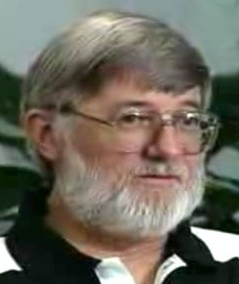
Video interview of Charles Thaxton on the origin of life

Charles Thaxton
Charles Thaxton

When I was a younger man, just starting full-time work with a hot Internet start-up in the big city, my biggest interest was in the origin of life. I liked to listen to debates about it (e.g. – Walter Bradley versus Robert Shapiro, etc.) and lectures and interviews. Two of my favorite interviews are from the University of California series on Origins, featuring Charles Thaxton and Dean Kenyon.

I found the one with Charles Thaxton in miniature form on Youtube.

About Charles Thaxton:

Charles Thaxton received his Ph.D. in physical chemistry from Iowa State University. He completed two post-doctoral programs, one in history of science at Harvard University and the second in the molecular biology laboratories of Brandeis University.

He has specialized in the origin of life and in science’s relationship with Christianity through history.

He is co-author of The Mystery of Life’s Origin and also The Soul of Science. He is Academic Editor of the high school biology book Of Pandas and People. He has contributed significant chapters to the books God and Culture and The Creation Hypothesis.

He has published technical articles in Journal of Inorganic Chemistry, Journal of Scientific Instruments, and Journal of Cell Biology.

He has lectured widely in American universities including Princeton University, Yale University, University of Michigan, University of Delaware, Rice University, Texas Universtiy, Johns Hopkins University, Vanderbilt University, and Harvard Law School.

He has lectured outside the country at the Korean Advanced Institute of Science, the Russian Academy of Science, and in various universities in Mongolia, Romania, Poland, Hungary, and the former Czechoslovakia.

He has held appointments at Slovak Technical University in Bratislava, Czechoslovakia, the Biomathematical Institute in Craiova, Romania, and at Charles University in Prague, where he was a Templeton scholar in the department of natural sciences.

He is a member of American Chemical Society, American Association for the Advancement of Science, and Fellow of American Institute of Chemistry, American Scientific Affiliation, and Discovery Institute.

He and his wife Carole homeschooled two sons, both of whom are college graduates. He is a survivor of two bouts of cancer, which left him with one leg and one lung. He and his wife reside near Atlanta, Georgia, where they teach homeschooled teens at Konos Academy. He also is writing two books, punctuated by speaking stints.

Here’s the lecture I liked so much featuring Charles Thaxton:

And here are the questions:

1. How did you first get interested in the origin of life?
2. How did you come to write The Mystery of Life’s Origin with Walter Bradley and Roger Olsen?
3. Was there an advantage to having the three of you collaborate on the project?
4. What is the primary argument of your book, The Mystery of Life’s Origin?
5. Have scientists come close to developing a plausible naturalistic explanation to the origin of life or do you still consider the origin of life to be a mystery?
6. Do you see a particular irony in the timing of Stanley Miller’s experiments and the discovery of DNA by Watson and Crick?
7. How does the emergence of modern genetics tie in with the Darwinian scenario of life going from simple to complex?
8. What are the major problems with origin of life simulation experiments?
9. Isn’t it rather impressive that amino acids were produced in the Miller experiments?
10. How close is the development of amino acids to the threshold of life?
11. What are the steps involved in producing proteins from amino acids?
12. Why are amino acids isolated during this process?
13. How can the investigator affect the outcome of a simulation experiment?
14. How did you evaluate the different chemical evolution experiments?
15. Are the initial conditions in the simulation experiments plausible?
16. What did the earth’s early atmosphere contain?
17. Will the simulation experiments work with this atmosphere?
18. There seems to be an underlying assumption that the origin of life resulted without any intelligent input whatsoever yet the simulation experiments appear to rely upon intelligent guidance. Could you comment on this irony?
19. Are there any natural processes that would have filtered out destructive ultraviolet light?
20. What additional steps beyond creating amino acids would be required to develop life?
21. What is so difficult about making proteins or nucleic acids?
22. In addition to the energy problem in protein synthesis isn’t there a sequencing problem?
23. Are DNA sequences analogous to a written language?
24. Has Hubert Yockey made similar claims?
25. In The Mystery of Life’s Origin you refer to order, randomness, and specified complexity. Could you give us an overview of these concepts?
26. What do you think the presence of specified complexity in a living system indicates about its origin?
27. In inferring the necessity of intelligence to produce life haven’t you ventured from the realm of science to religion?
28. Could you summarize the reasons why you believe intelligence was involved in the origin of life?
29. What are the major objections to your current point of view?
30. How was The Mystery of Life’s Origin received by the scientific community?
31. What was Dean Kenyon’s response to your critiques of his book, Biochemical Predestination?
32. What was Dean Kenyon’s response to The Mystery of Life’s Origin?
33. Were you a bit apprehensive about meeting Kenyon after writing a book which was quite critical of his views in Biochemical Predestination?
34. Are self-organizational theories plausible?
35. Would you comment on the work done by Prigogine and Eigen?
36. What is your assessment of RNA scenarios?
37. What other problems do you see with an RNA world?

This is an argument you never hear in William Lane Craig debates, but it’s worth knowing well.

Related posts

New poll finds one third of young New Yorkers plan to leave state

Eastern United States Map

From CBS News.

Excerpt:

A New York poll provides grim evidence of a continuing exodus from the state, once the national leader in manufacturing and other high-paying jobs.

The NY1-YNN-Marist College poll released Thursday night finds 1 in 3 New Yorkers under age 30 plans to move to another state at some time, while 1 in 4 adults overall plans an exodus from the Empire State within five years.

“Right now, many young people do not see their future in New York state,” said Marist pollster Lee Miringoff. “Unchecked, this threatens to drain the state of the next generation.”

According to the survey, most of those who plan to move will do so because of economic reasons including jobs, the cost of living, and taxes. Although the recession has been officially over for months, many New Yorkers still feel the worst is yet to come.

Thirty-seven percent of New Yorkers polled feel the economy is getting worse, up from 31 percent in February’s poll. The number who feels the economy is improving dropped to 16 percent, from 19 percent in February.

[…]The American Legislative Exchange Council reported that New York lost 1.9 million residents from 1998 to 2007, most of them young and educated.

Why is this happening?

Mary sent me this article from the Manhattan Institute, which gives some clues.

Excerpt:

For one thing, according to a recent survey in Chief Executive, New York State has the second-worst business climate in the country. (Only California ranks lower.) People go where the jobs are, so when a state repels businesses, it repels residents, too. It’s also telling that in the Marist poll, 62 percent of New Yorkers planning to leave cited economic factors—including cost of living (30 percent), taxes (19 percent), and the job environment (10 percent)—as the primary reason.

In upstate New York, a big part of the problem is extraordinarily high property taxes. New York has the 15 highest-taxed counties in the country, including Nassau and Westchester, which rank first and second nationwide. Most of the property tax goes toward paying the state’s Medicaid bill—which is unlikely to diminish, since the state’s most powerful lobby, the political cartel created by the alliance of the hospital workers’ union and hospital management, has gone unchallenged by new governor Andrew Cuomo.

[…]Parts of the country are seeing a revival of manufacturing—traditionally a source of upward mobility for immigrants—but not New York City, whose manufacturing continues to decline. The culprits here include the city’s zoning policies, business taxes, and declining physical infrastructure.

Then there’s the cost of living in New York City. A 2009 report by the Center for an Urban Future found that “a New Yorker would have to make $123,322 a year to have the same standard of living as someone making $50,000 in Houston. In Manhattan, a $60,000 salary is equivalent to someone making $26,092 in Atlanta.” Even Queens, the report found, was the fifth most expensive urban area in the country.

In completely unrelated news, the Democrats just won another seat in New York state due to the incompetence of the state Republican party.