Moral relativism is the view that moral values and moral duties do not exist in reality, but only exist as opinions in people’s minds. When you ask a moral relativist where the belief that stealing is wrong comes wrong, he may tell you that it is his opinion, or that it is the opinion of most people in his society. But he cannot tell you that stealing is wrong independent of what people think, because morality (on moral relativism) is just personal preference.
So what’s wrong with it?
I found this list of the seven flaws of moral relativism at the Australian site Faith Interface.
Here’s the summary:
Moral relativists can’t accuse others of wrongdoing.
Relativists can’t complain about the problem of evil.
Relativists can’t place blame or accept praise.
Relativists can’t make charges of unfairness or injustice.
Relativists can’t improve their morality.
Relativists can’t hold meaningful moral discussions.
Relativists can’t promote the obligation of tolerance.
Here’s my favorite flaw of relativism (#6):
Relativists can’t hold meaningful moral discussions. What’s there to talk about? If morals are entirely relative and all views are equal, then no way of thinking is better than another. No moral position can be judged as adequate or deficient, unreasonable, acceptable, or even barbaric. If ethical disputes make sense only when morals are objective, then relativism can only be consistently lived out in silence. For this reason, it is rare to meet a rational and consistent relativist, as most are quick to impose their own moral rules like “It’s wrong to push your own morality on others”. This puts relativists in an untenable position – if they speak up about moral issues, they surrender their relativism; if they do not speak up, they surrender their humanity. If the notion of moral discourse makes sense intuitively, then moral relativism is false.
I sometimes get a lot of flack from atheists who complain that I don’t let them make any moral statements without asking them first to ground morality on their worldview. And that’s because on atheism morality IS NOT rationally grounded, so they can’t answer. In an accidental universe, you can only describe people’s personal preferences or social customs, that vary by time and place. It’s all arbitrary – like having discussions about what food is best or what clothing is best. The answer is always going to be “it depends”. It depends on the person who is speaking because it’s a subjective claim, not an objective claim. There is no objective way we ought to behave.
The whole point of atheism is to pursue pleasure without the bonds of morality – there is no other reason to do anything on atheism except for the pleasure it gives you. You do fashionable things to feel good getting praise from your neighbors, and you do unfashionable things in private to make yourself feel good and you hope that no one who is powerful enough to hold you accountable ever finds out. There’s no way you were made to be.
This is from the leftist Brookings Institute, a respected think tank I usually disagree with.
They write about a new study:
Attachment theory is founded on the idea that an infant’s early relationship with their caregiver is crucial for social and emotional development. It is an old theory, born during the 1950s. But it can bring fresh light on issues of opportunity and equality today, as a three-decade longitudinal study of low-income children from Alan Sroufe, Byron Egeland, Elizabeth Carlson, and W. A. Collins, all University of Minnesota psychologists, demonstrates.
[…]Small infants are heavily dependent on caregivers, who must respond to their needs. But counter-intuitively, the infants who have a reliable caregiver are also most likely to become self-efficacious later.
Infants (aged 9 to 18 months) with responsive parents learn how their own behavior can impact their environment. This “call and response” process builds the infant’s sense of self-efficacy— one reason parents should pick up the sippy cup, especially for the hundredth time! But this virtuous learning cycle breaks down if the caregiver fails to respond adequately.
Here are the definitions:
Secure attachment: When the caregiver (mom, in this study) is present, the infant explores the room and interacts with the experimenter, occasionally returning to the caregiver for support. When the caregiver leaves, the child becomes sad and hesitates to interact with the experimenter, but upon their return, is visibly excited.
Anxious/resistant attachment: Regardless of the caregiver’s presence, the infant shows fear of the experimenter and novel situations—these infants cry more and explore the room less. They become upset when the caregiver leaves, and while they approach upon return often resist physical contact, as a form of “punishment”.
Anxious/avoidant attachment: No preference is shown between a caregiver and a stranger— infants play normally in the presence of the experimenter and show no sign of distress or interest when their caregiver leaves and returns. The experimenter and the caregiver can comfort the infant equally well.
And here the results:
The Minnesota study found that attachment makes a difference later in life. Without knowing students’ attachment history, preschool teachers judged those who had secure attachments to have higher self-esteem, to be more self-reliant, to be better at managing impulses, and to recover more easily from upsetting events. When teachers were asked which students, among those with serious struggles in class, nonetheless had “a core of inner self-worth, an indication that… maybe they could get better,” they picked students that had secure attachments as infants.
In contrast, children with anxious/resistant attachments:
tended to hover near teachers
became easily frustrated
were more likely to be seen as “dependent” by blinded observers
were less competent and patient with puzzles and other cognitive challenges
Children with anxious/avoidant attachments:
tended to be apathetic towards other children
failed to ask for adult help when stressed
were “often self-isolating”
Both groups had higher rates of anxiety and depression as teenagers.
So again, we are seeing that when it comes to parenting, you have to think about what you are doing. That doesn’t mean that you have to be slaves to your kids, or spoil them or hover over them. It means that what you are doing with your kids matters. It means that you need to make a plan to have enough time and money to be able to care for them. I think that the right time to talk about such things is during the courtship.
Also, one more point. If you meet people with some of these short comings, (I had most of the anxious/avoidant ones growing up), then try not to draw lines in the sand where you reject them over these shortcomings. Instead, do what I do. Recognize that these people have value and that if you take responsibility to care for them and supply for their needs, you might be able to guide them to do some pretty amazing things. Don’t be so self-centered that you expect people to be perfect so they don’t need anything from you. Nobody is perfect. Everybody has a story. If you want to be like Jesus, why not start by recognizing the effects of a disrupted childhood through study, and then make a plan to grow people – even difficult ones like me.
This is a striking story from Life Site News. It talks about how the school system gets pro-same-sex-marriage speakers to teach the children to support same-sex-marriage.
It says:
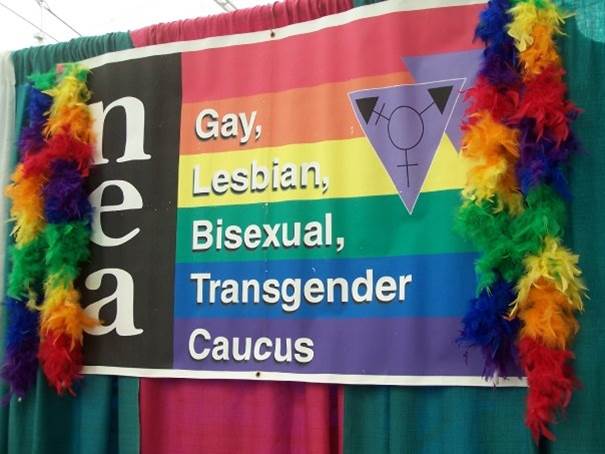
A primary grade lesbian teacher from an Ontario public school revealed in a workshop at a homosexual activist conference for teachers earlier this month how she uses her classroom to convince children as young as four to accept homosexual relationships.
“And I started in Kindergarten. What a great place to start. It was where I was teaching. So, I was the most comfortable there,” Pam Strong said at the conference, attended by LifeSiteNews.
The conference, hosted by the homosexual activist organization Jer’s Vision, now called the Canadian Centre for Gender and Sexual Diversity, focused on the implementation of Bill 13 in Ontario classrooms. Bill 13, called by critics the ‘homosexual bill of rights,’ passed in June 2012 and gave students the right to form pro-gay clubs in their school, including Catholic ones, using the name Gay-Straight Alliance (GSA).
Strong, who is in an open relationship with another woman and who has been a teacher for about five years, focused her workshop on what she called the “power of conversation” for promoting LGBTQ issues in an elementary classroom. She began her talk by relating how she reacted the first time one of her students called another student ‘gay’ as a putdown.
“With [the principal’s] encouragement, we decided that I would go from class to class and talk about what ‘gay’ means, what does ‘LGBTQ’ mean, what do ‘I’ mean,” she told about 40 attendees, all educators, at her workshop.
There are some examples of how she manipulates the children, but I want to focus on one in particular:
Strong related an incident that happened last fall involving a new boy who had recently entered her grade 5 classroom. The new boy had not yet been made aware of Strong’s sexual preference for other women.
“All my class is very used to who I am. My family picture is very proudly in my room now. On Mondays they quite often will say, ‘What did you do with your wife?’ It’s normal in my classroom.”
Strong said that a conversation between herself and the students came up one day where it was mentioned that she was a lesbian. The new boy put his hands over his mouth and said, according to Strong: “Oh, my God, I think I’m going to puke.”
“As I took the abuse — personally, as an individual – of those words, I also saw half of my class look at me with incredible concern. One student who was right in front of me already had tears in her eyes. And I noticed several other students who were looking at him. They were just very, very upset with this kid,” she related.
Strong said the boy instantly became aware that “something he had said had just created this unbelievable tension in the room.” She related how she addressed the boy, telling him: “I think that what you might not be aware of is that I am gay, and I am married to a woman, and my family has two moms.’”
“His eyes just started darting around, and he was incredibly uncomfortable,” she related.
“I looked at the other kids and I said: ‘Ok guys, what I want to ask you is: Am I upset with him?’ And the one little girl in my class put up her hand — that doesn’t usually get into these conversations very much in my classroom — and she said, ‘Mrs Strong, I know you’re not upset with him, because he hasn’t had the benefit of our conversations.”
“And I looked at my little friend, my ‘new’ friend, and I said: ‘But, we’re going to have one now,’” she related.
Strong said that she then directed her class to the board and asked them to write everything she had told them related to LGBTQ.
“And my class all of a sudden popped up. ‘LGBTQ’ was on the board, ‘lesbian,’ and all the different words coming out there. And I sat back and said, ‘Let’s review.’ So, the last year and a half of ‘inclusive’ education came alive in my classroom.”
Strong told her workshop attendees that her “new little friend” is now a devoted champion of diversity. She boasted how he was the one in her class to count down the days to the pro-homosexual Day of Pink that took place earlier this month. When Strong took a photo of all the children wearing pink shirts in her classroom, she said the boy requested to be in the front.
She isn’t interested in presenting both sides of the argument, or persuading grown adults like Dr. Ryan T. Anderson. She wants to go after children with stories that make her side look a certain way, stories that cannot be challenged or refuted by children. And with no opt-out or notification for parents, because parents have to be kept in the dark. Parents just get to pay to feed and clothe and shelter the children – but what they think is decided by teachers with an agenda. This indoctrination against the values of parents is taxpayer-funded. With no opt-out. This is the “big government” that so many young evangelicals support.
This is why I am concerned about finding a wife who understands these things and takes them seriously enough to make a plan to deal with it. I have had Christian women who responded to this challenge from the schools by telling me that they intended to entrust the children to daycare and secular schools so they could focus on careers, travel, buying bling, etc. I try to show them studies showing how children are affected by daycare, homeschooling, etc. Usually, it’s like banging your head against a brick wall. It’s almost as if they have to get their way on these things even though they have not studied these things themselves. They have to find a way to escape from any responsibilities to others so they can be free to do what feels good to them. But I need a partner who will take these concerns seriously and think of our children, not of her own happiness.
Keep in mind that even if you homeschool or private-school your kids, that they have live next door to the brainwashed kids. The brainwashed kids are taught to hold to their views at a brittle, non-rational, emotional level. This is why children who are indoctrinated by the secular left are so offended by “triggering” behaviors that they have to take refuge in “safe spaces” free of opposing views. Our kids (raised by us) might agree with us, but they are not free of the influence from a much larger group of brainwashed kids. Our kids have to work for them. Our kids have to go to school with them. Our kids have to live under the laws that these other kids will pass, as they are shuffled through the best schools because they have the “right” views. The brainwashed kids vote and we will have to live under the laws they pass. Do you have a plan to deal with this? It seems to me that if women want to get married and have kids “some day”, then they should have thought about this some and be willing to talk about what to do about it, and be open to the fact that they may have to make some adjustments to prepare for it.

 WINTERY KNIGHT