Tag Archives: Sex Role

Jennifer Roback Morse: Father’s Day is also Husband’s Day

Jennifer Roback Morse is one of my favorite writers on family issues, because she is just so positive about men and the roles that men play in the family, and the challenges that men face while performing those roles.

She wrote this article in appreciation of her husband, and it’s a must-read, especially for men looking for some appreciation and encouragement.

Excerpt:

The feminist movement introduced an unbelievable amount of tension into the relationships between men and women. Feminism gave us women permission to nag and criticize our husbands, which most women can do just fine without any special permission. The legacy of the feminist movement has been to turn the home, which should be the place of cooperation, into a sphere of competition between men and women. And ironically, feminism, which was supposed to be about getting beyond stereotypes, supported the most negative of stereotypes about men.

I have my own pet theory about the stereotype of men dragging their feet about getting married. The socio-biologists claim that men want to invest their seed in as many women as possible, and therefore do not want marriage. I think this is only a dim shadow of the whole truth. The whole truth must include this great fact about men: They are capable of heroic loyalty. When men finally do marry, they are capable of committing themselves to the care of their wives and children. Many men spend a lifetime working at jobs they don’t like very much, for the love of their families. When men marry, they take it very seriously. It is women who initiate most divorces. It is divorced men who commit suicide at twice the rate as married men, while divorce has little impact on the suicide propensities of women.

When women marry, we get things that we want and value. We get the opportunity to become mothers. We get a home, our nest for our little ones. What do men get? They get the right to throw themselves on a live grenade for the protection of their families. Or, as St. Paul suggested to the Ephesians, husbands get the right to be crucified.

Most men, with an insignificant number of exceptions, are capable of this heroic loyalty. We women can call this out of our men. We don’t achieve this by nagging. We certainly don’t achieve it by competing with them over who makes the most money, or by keeping score with them on who does the most household chores. We need to build them up, as St. Paul says. Watch them sit up straighter and taller when we appreciate and admire them.

We need to build up our marriages because our children suffer from broken relationships or non-relationships. We now know that father absence inflicts a wound on children that social science can measure, but only partially fathom. We are finding that even the children conceived by artificial means long for a relationship with their fathers.

So if we are going to honor fathers, we women have to honor our husbands, as husbands. And sometimes, just sometimes, we will find that they will honor and build us up as well.

A woman cannot go wrong by studying what men do, why men matter, and what men want from women and children. Creating the conditions for a married man to thrive in his roles is an important goal for women, after their goal of pleasing God. To get the man to perform, a woman has to create the ideal conditions for him to perform. And that means providing the right environment and loving him as if she had never been hurt. Dr. Morse knows what men are supposed to do, and she knows what she has to do to create the conditions where her husband can perform. Wives need to create the right incentives for husbands to performing their roles, and to fill them up with love by encouraging, acknowledging, recognizing, affirming, accepting and desiring them. If men don’t get the things that they need from their wives, then they won’t be able to perform. They’ll just go silent and withdraw.

Dr. Morse’s podcasts are here, and the recent interview with Warren Farrell is worth listening to for those who would like to understand men a little better.

Do children do better when raised by married fathers?

A study from the Heritage Foundation explains the roles that married fathers play in raising children.

Excerpt:

As Father’s Day 2011 approaches, it’s a good time to reconsider the evidence as to why. Decades of academic research show that the father’s role in the family has a powerful and long-term impact on the future of the next generation.

In terms of economic well-being, children who grow up in homes where both parents are present are 82 percent less likely to live in poverty. Intact families tend to fare better in a wide range of economic measures; on average they have a higher net worth, higher income, more household assets, and greater savings.

A father’s role goes far beyond that of breadwinner, however, influencing his children’s well-being, behavior, and futures, which can have a profound impact on the health of civil society. Married fathers especially can have life-long influences on their children.

Youths growing up with both a mother and father in the home are less likely to engage in high-risk behavior. They are also less likely to become sexually active or to give birth in high school or outside of marriage. In addition, with both a mom and a dad in the home, adolescents are less likely to be involved with substance abuse such as drug and alcohol use and binge drinking.

The two-parent family, likewise, provides a safeguard against delinquent and anti-social behavior. On average, youths living with both parents are less likely to engage in violent behavior, commit a property crime, or be incarcerated.

In addition, teens with both moms and dads at home tend to fare better on a range of emotional and psychological outcomes: They tend to experience better emotional health and have higher levels of self-esteem and social competence, and they are less likely to experience psychological distress and anxiety.

Given all of the above, it is not surprising that children raised by married fathers tend to have greater academic achievement and higher levels of educational attainment, and they tend to score higher in math and reading in even the earliest grades.

And fathers’ impact goes beyond the effects of family structure. Dads’ involvement and relationship with their children is associated with greater psychological well-being, lower levels of behavioral problems, greater educational attainment, and a decrease in the likelihood of teen substance use.

I removed all the links to their sources, you have to click through to their site for the linked research.

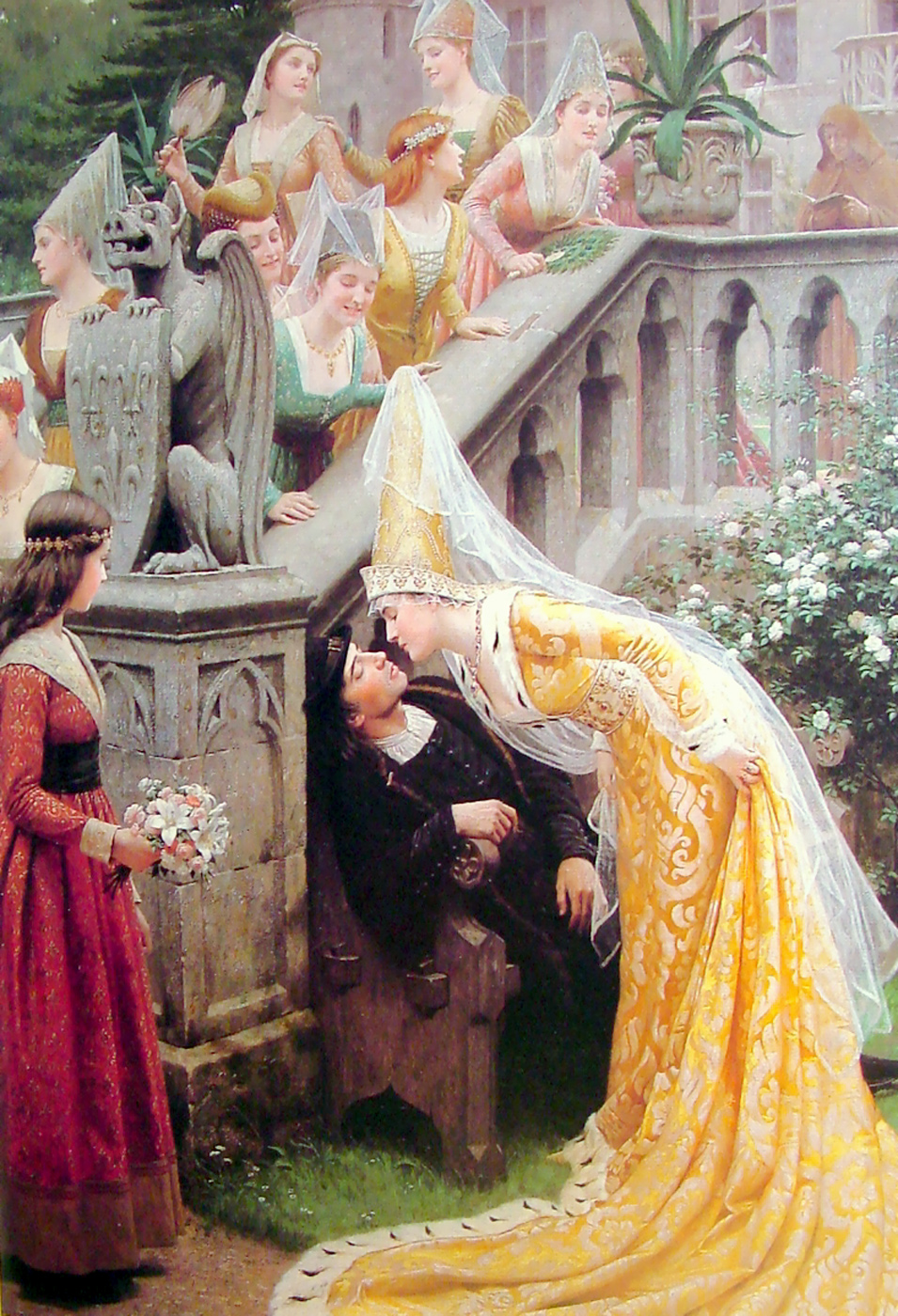
What Christian men want from Christian women… in paintings!

Chivalry and chastity are two important factors in my life. Both of these ideas are rooted in Christianity, and they give men tools for expressing themselves to women using words or gifts, instead of using touch. Both are complex disciplines to learn. Reading literature is the best way to learn, or by watching your parents get along, if you have a good father and mother (I did not!). But another way to learn is by studying the great works of art. You can learn a lot about the differences between men and women by looking at great art – and you can get some ideas on how to treat them, too.

Below are just a few of my favorite paintings. (I like the Pre-Raphaelite era especially) Each of these paintings expresses something that men want from women in a chaste and chivalrous relationship. These behaviors are great as part of a formal courtship.

Click the small images for MUCH larger images!

RECOGNITION:

Godspeed - Edmund Blair Leighton - 1900

Men should be judged by godly women based on whether they are doing what God wants them to do. Those men who are willing to put God first in their planning should be recognized as special. Standard procedure is to give committed Christian men a token with the lady’s colors that he can carry into battle.

APPROVAL:

The Accolade - Edmund Blair Leighton - 1901

Men need to be encouraged to fulfill their obligations to God by receiving the approval of godly women. Men who accomplish great things for God should receive rewards from women. Notice that the painting is portraying a public accolade.

ATTENTION:

Alain Chartier - Edmund Blair Leighton - 1903

Along with her relationship with God, godly women should make time for relating to godly men, especially to her husband if she is married. This is even more important than parenting! I am a big believer in eye contact and long written essays.

UNDERSTANDING/RESPECT:

Call to Arms - Edmund Blair Leighton - 1888
Duty - Edmund Blair Leighton - 1883

Women need to understand that a man’s duty to her comes second to a man’s duty to God. Part of loving a man is letting him do the activities that he needs to do in order to flourish as a man. Treating a man as a little boy by trying to control him is a sure way to make him disengage from the relationship.

DEFERENCE/GRATITUDE:

St. George Fighting the Dragon - Raphael Sanzio - 1505

A woman should be able to drive a stick shift, fire a Springfield Arms XD accurately, do the family tax return, throw a football 20 yards, and barbecue steaks. However, when men are around, she should allow men to do things for her, even if she can do them better herself. Men should always be asked to do dangerous tasks (shoveling snow, killing spiders, etc.), and they should never be criticized by women about their performance in front of other people, only in private – and even then with gentleness.

Related posts