Tag Archives: Science

Theologian R.C. Sproul asks: “If there’s a God, why are there atheists?”

Brian Auten has a book review posted up at Apologetics 315.

The book is “If There’s A God, Why Are There Atheists?”, by theologian R.C. Sproul. R.C. Sproul is one of my favorite theologians. The book in question has a very, very special place in my heart, because I think that it is one of the major reasons why I was able to resist pernicious ideas like religious pluralism and postmodernism for so long. Once you put on the glasses of Romans 1 and see for the first time what man is really doing with respect to God, you can never see things the same again. I’ll say more about this at the end, but let’s see what Brian wrote first.

The review

So often, you hear atheists complaining about religion is nothing but wish-fulfillment or some sort of crutch for people who are frightened by a variety of things. They think that God is invented to solve several problems. 1) how does the world work?, 2) is there meaning to suffering and evil?, 3) why should I be moral?, and 4) what will happen to me and my loved ones when I die?. On the atheistic view, God is just a crutch that people cling to out of weakness and ignorance. But is this really the case?

Sproul starts the book by investigating three atheists who sought to explain religious belief as a result of psychological factors.

Brian writes:

Before tackling the psychology of atheism, Sproul spends a chapter on the psychology of theism, from the perspective of Freud’s question “If there is no God, why is there religion?” What follows is an overview of various psychological explanations of theistic belief: Feuerbach’s “religion is a dream of the human mind.” Marx’s belief that religion is “due to the devious imagination of particular segment of mankind.” And Nietzche’s idea that “religion endures because weak men need it.” The author properly reiterates: “We must be careful to note that the above arguments can never be used as proof for the nonexistence of God. They can be useful for atheists who hear theists state that the only possible explanation for religion is the existence of God.” That being said, Sproul also reveals what these arguments presume:

Their arguments already presupposed the nonexistence of God. They were not dealing with the question, Is there a God? They were dealing with the question, Since there is no God, why is there religion?16

Sproul points out the weaknesses of each of these approaches and says “there are just as many arguments showing that unbelief has its roots in the psychological needs of man.”

Wow, could that really be true? What are the real reasons why people reject God? Does the Bible have anything to say about what those reasons are?

Brian cites Sproul’s contention:

The New Testament maintains that unbelief is generated not so much by intellectual causes as by moral and psychological ones. The problem is not that there is insufficient evidence to convince rational beings that there is a God, but that rational beings have a natural hostility to the being of God.

[…]Man’s desire is not that the omnipotent, personal Judeo-Christian God exist, but that He not exist.

In Romans 1:18-23, the apostle Paul explains what is really going on:

18The wrath of God is being revealed from heaven against all the godlessness and wickedness of men who suppress the truth by their wickedness,

19since what may be known about God is plain to them, because God has made it plain to them.

20For since the creation of the world God’s invisible qualities—his eternal power and divine nature—have been clearly seen, being understood from what has been made, so that men are without excuse.

21For although they knew God, they neither glorified him as God nor gave thanks to him, but their thinking became futile and their foolish hearts were darkened.

22Although they claimed to be wise, they became fools

23and exchanged the glory of the immortal God for images made to look like mortal man and birds and animals and reptiles.

On this blog, I regularly present many, many arguments for theism in general, and Christian theism in particular:

Sproul explains why atheists cannot allow themselves to live according to the evidence that is presented to them:

The cumulative effect of this knowledge that is clearly seen is to leave men ‘without excuse.’ Herein lies the basis of the universal guilt of man. No one can claim ignorance of the knowledge of God. No one can cite insufficient evidence for not believing in God. Though people are not persuaded by the evidence, this does not indicate an insufficiency in the evidence, but rather an insufficiency in man.

[…]The basic stages of man’s reaction to God can be formulated by means of the categories of trauma, repression, and substitution.

[…]If God exists, man cannot be a law unto himself. If God exists, man’s will-to-power is destined to run head-on into the will of God.

And this is the force that is animating atheists today. They don’t want to be accountable to God in a relationship, no matter what the evidence is. They have to deny it, so that they can be free to get the benefits of a universe designed for them, without having to give any recognition or acknowledgement back. If they have to lie to themselves to deny the evidence, they will do it. Anything to insulate themselves from the Creator and Designer who reveals himself in Jesus Christ.

The rest of the book review, and the book, deals with explaining in detail how atheists respond to an all-good, all-powerful, all-knowing Creator/Designer. I encourage you to click through and read the whole book review. You can read the review, and the book, and then investigate for yourself whether atheists really are like that.

Dr. Walter Bradley lectures on scientific evidence the creation and design of the universe

This lecture is special to me, because I bought a VHS tape of it just after I started working full-time, and watched it a million times. A lot of people come to their convictions about God’s existence because of parents or church or intuitions, but for me it’s all about the scientific evidence. This lecture changed my life. I wish more people taught their children about this evidence! This lecture was delivered at the University of California, Santa Barbara.

About the speaker:

Dr. Bradley received his B.S. in Engineering Science and his Ph.D. in Materials Science from the University of Texas in Austin.

Dr. Bradley taught for eight years at the Colorado School of Mines before assuming a position as Professor of Mechanical Engineering at Texas A&M University (TAMU) in 1976.

During his 24 years at Texas A&M, Dr. Bradley served as Head of the Department of Mechanical Engineering at Texas A&M University and as Director of the Polymer Technology Center, and received five College of Engineering Research Awards. He has received over $4,500,000 in research grants and has published over 140 technical articles and book chapters. He has also co-authored “The Mystery Of Life’s Origin: Reassessing Current Theories. He is a Fellow of the American Society for Materials and of the American Scientific Affiliation and serves as a consultant for many Fortune 500 companies.

He currently serves as Distinguished Professor of Engineering at Baylor University.

The lecture: (63 minutes lecture, 25 minutes audience Q&A)

Summary slide:

This slide summarizes the content of the lecture

Introduction:

  • At the beginning of the 20th century, people believed that the progress of science was pointing away from an intelligent Creator and Designer, and towards naturalism
  • A stream of new discoveries has shifted the support of science towards theism, and away from naturalism
  • Richard Dawkins, an atheist, says that nature only has the appearance of design, but that if you look closer, naturalistic mechanisms can account for the appearance of design
  • When deciding between design and apparent design (“designoid”), it matters whether you think there is an intelligence there to do the designing

Evidence #1: The Big Bang:

  • an eternal “steady state” universe is more compatible with naturalism, but a created universe is more compatible with a Creator
  • In 1929, Hubble used telescopes to observe that the light from distant galaxies was redshifted. The further away galaxies were, the faster they were moving away. Therefore, space is expanding in all directions, suggesting an explosive origin of the universe
  • In 1965, the discovery of the cosmic microwave background radiation matched a prediction of the Big Bang cosmology, and of the creation event
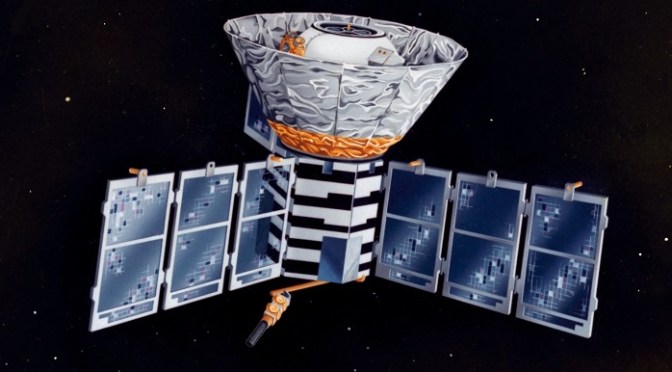
  • In 1992, the COBE space telescope allowed us to test four specific predictions of the Big Bang model, especially the predictions for light element abundances (hydrogen and helium), which matched the predictions of the creation model

Evidence #2: Simple mathematical structure of the physical laws

  • the simple mathematical structure of natural laws allows us to understand these laws, make discoveries, and engineer solutions to problems
  • early scientists saw the mathematical structure of the universe to mean that nature was designed by an intelligent to be understood
  • the fundamental equations of the laws of the universe can be easily written on one side of one sheet of paper
  • Eugene Wigner’s famous paper, “The Unreasonable Effectiveness of Mathematics in the Physical Sciences” makes the point that this simple structure is an unexpected gift that allows is to do science

Evidence #3: fine-tuning of the physical constants and quantities

  • in order for any kind of complex life to survive, we need stars that provide energy within specific ranges for long periods of time
  • in order for any kind of complex life to survive, we need planets with stable orbits that will not suffer from extreme temperature swings as it varies in distance from its star
  • in order for any kind of complex life to survive, we need stable atomic structure
  • in order for any kind of complex life to survive, we need to have chemical diversity and correct relative abundances of each element
  • organic life has minimum requirements: process energy, store information, replicate, and you can’t fulfill those functions if there is only one element, e.g. – hydrogen
  • the energy level from the photons from the sun have to match the energy levels of the different elements in order to drive the chemical bonding needed for life
  • These requirements for life of any imaginable type depend on the values of the constants and quantities. The constants and quantities cannot vary much from what they are, or the universe will lose the characteristics (above) that allow it to support complex life of any imaginable time
  • For example, ratio of strong force to electromagnetic force:
    – if 2% larger, then no stable hydrogen, no long-lived stars, no compounds containing hydrogen, e.g. – water
    – if 5% smaller, no stable stars, heavy hydrogen would be unstable, few elements other than hydrogen

Evidence #4: initial conditions for habitability

  • Universe: expansion rate of the universe must be fast enough to avoid a re-collapse, but slow enough to allow matter to clump together and form stars and planets for complex life to live on
  • Planet: right distance from the star to get the right climate
  • Planet: right mass to retain the right atmosphere

Evidence #5: origin of life and information theory

  • It’s possible to explain every process in an automobile engine using plain old naturalistic mechanisms – no supernatural explanation is necessary to understand the processes
  • But the existence of engine itself: engineering all the parts has to be explained by the work of an intelligence
  • Similarly, we can understand how living systems work, but the existence of the living systems requires an intelligence
  • Even the simplest living system has to perform minimal function: capture energy, store information and replicate
  • Living systems are composed of objects like proteins that are composed of sequences of components complex such that the order of the components gives the overall structure function
  • Developing the components for a simple living cell is very improbable – even given the large number of galaxies, stars and planets in the universe, it is unlikely that complex, embodied life would exist anywhere in the universe

Evidence #6: more initial conditions for habitability

  • Location within the galaxy: you need to be away from the center of the galaxy, because the explosions from dying stars, and excessive radiation will kill life
  • Location within the galaxy: you need to be close enough to the center in order catch the heavy elements you need for life from the explosions of other stars
  • Location within the galaxy: the best location is between two arms of  a spiral galaxy, where you can get the heavy elements you need from dying stars, but without being hit with explosions and harmful radiation
  • Star mass: determines rate at which the sun burns, determines the energy level of photons that are used to drive chemical bonding reactions, determines the length of time the star will be stable
  • Star mass: star mass must be the correct value in order to allow liquid water on the planet’s surface, while still preserving stable orbit

I wish there was more curiosity about science in churches, and young Christians understood how critical science is for grounding the rationality of the Christian worldview. We need to be training up more scientists who think about the big questions, like Dr. Walter Bradley.

Luke Barnes on the fine-tuning of the strong force and fine structure constant

By now, anyone who has had discussions about scientific evidence for the existence of God knows about the fine-tuning argument. In a nutshell, if the fundamental constants and quantities given in the Big Bang were even slightly other than they are, then the universe itself would not be hospitable for complex, embodied intelligent life.

Here is an article from The New Atlantis written by Australian cosmologist Luke Barnes.

Excerpt:

Today, our deepest understanding of the laws of nature is summarized in a set of equations. Using these equations, we can make very precise calculations of the most elementary physical phenomena, calculations that are confirmed by experimental evidence. But to make these predictions, we have to plug in some numbers that cannot themselves be calculated but are derived from measurements of some of the most basic features of the physical universe. These numbers specify such crucial quantities as the masses of fundamental particles and the strengths of their mutual interactions. After extensive experiments under all manner of conditions, physicists have found that these numbers appear not to change in different times and places, so they are called the fundamental constants of nature.

[…]A universe that has just small tweaks in the fundamental constants might not have any of the chemical bonds that give us molecules, so say farewell to DNA, and also to rocks, water, and planets. Other tweaks could make the formation of stars or even atoms impossible. And with some values for the physical constants, the universe would have flickered out of existence in a fraction of a second. That the constants are all arranged in what is, mathematically speaking, the very improbable combination that makes our grand, complex, life-bearing universe possible is what physicists mean when they talk about the “fine-tuning” of the universe for life.

Let’s look at an example – the strong force. Not only must the strong force be fine-tuned so we have both hydrogen and helium, but the ratio of the strong force must also be fine-tuned with the fine structure constant.

Barnes writes:

The strong nuclear force, for example, is the glue that holds protons and neutrons together in the nuclei of atoms. If, in a hypothetical universe, it is too weak, then nuclei are not stable and the periodic table disappears again. If it is too strong, then the intense heat of the early universe could convert all hydrogen into helium — meaning that there could be no water, and that 99.97 percent of the 24 million carbon compounds we have discovered would be impossible, too. And, as the chart to the right shows, the forces, like the masses, must be in the right balance. If the electromagnetic force, which is responsible for the attraction and repulsion of charged particles, is too strong or too weak compared to the strong nuclear force, anything from stars to chemical compounds would be impossible.

Here’s the chart he’s referencing:

Fine-tuning of the strong nuclear force and the fine structure constant

As you can see from the chart, most of the values that the constants could take would make complex, embodied intelligent life impossible.

We need carbon (carbon-based life) because they form the basis of the components of life chemistry, e.g. proteins, sugars, etc. We need hydrogen for water. We need chemical reactions for obvious reasons. We need the light from the stars to support plant and animal life on the surface of a planet. And so on. In almost every case where you change the values of these constants and quantities and ratios from what they are, you will end up with a universe that does not support life. Not just life as we know it, but life of any conceivable kind under these laws of physics. And we don’t have any alternative laws of physics in this universe.

By the way, just to show you how mainstream these examples of fine-tuning are, I thought I would link to a source that you’re all going to be familiar with: The New Scientist.

The fine-tuning of the force of gravity

So here is an article from the New Scientist about a different constant that also has to be fine-tuned for life: the force of gravity.

Excerpt:

The feebleness of gravity is something we should be grateful for. If it were a tiny bit stronger, none of us would be here to scoff at its puny nature.

The moment of the universe‘s birth created both matter and an expanding space-time in which this matter could exist. While gravity pulled the matter together, the expansion of space drew particles of matter apart – and the further apart they drifted, the weaker their mutual attraction became.

It turns out that the struggle between these two was balanced on a knife-edge. If the expansion of space had overwhelmed the pull of gravity in the newborn universe, stars, galaxies and humans would never have been able to form. If, on the other hand, gravity had been much stronger, stars and galaxies might have formed, but they would have quickly collapsed in on themselves and each other. What’s more, the gravitational distortion of space-time would have folded up the universe in a big crunch. Our cosmic history could have been over by now.

Only the middle ground, where the expansion and the gravitational strength balance to within 1 part in 1015 at 1 second after the big bang, allows life to form.

Notice how the article also mentioned “the universe’s birth”, which is part of mainstream science.

When I’m writing to you about things like the origin of the universe, or the cosmic fine-tuning, I’m not talking to you about things that pastors found in the Bible. These discoveries are known and accepted by mainstream scientists. It’s amazing that people are constructing their worldviews without having to account for the birth of the universe and this cosmic fine-tuning. We all, as rational individuals, have to bound our view of the universe with the findings of science. Right now, those findings support the existence of a Creator and a Designer. So why am I seeing so many atheists who are just plain ignorant about these facts? Maybe we should tell them about this evidence. Maybe we should ask them why they don’t account for scientific evidence when forming their beliefs.

Positive arguments for Christian theism