
Tag Archives: Pay Gap

Wage gap: are women paid less than men because of discrimination?

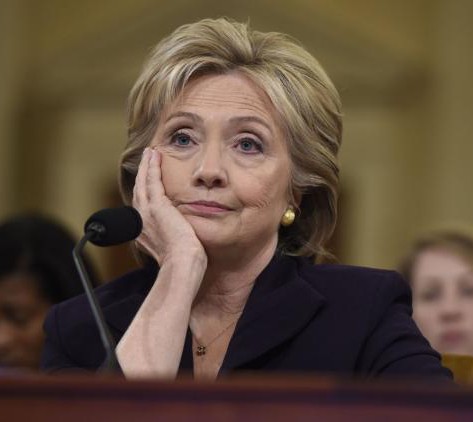
Hillary Clinton look bored about the deaths of 4 Americans who asked for her help
Hillary Clinton thinks that women are not paid fairly compared to men: is it true?

Liberal feminist Hanna Rosin takes a look at this question in the far-left Slate, of all places.

Excerpt:

The official Bureau of Labor Department statistics show that the median earnings of full-time female workers is 77 percent of the median earnings of full-time male workers. But that is very different than “77 cents on the dollar for doing the same work as men.” The latter gives the impression that a man and a woman standing next to each other doing the same job for the same number of hours get paid different salaries. That’s not at all the case. “Full time” officially means 35 hours, but men work more hours than women. That’s the first problem: We could be comparing men working 40 hours to women working 35.

How to get a more accurate measure? First, instead of comparing annual wages, start by comparing average weekly wages. This is considered a slightly more accurate measure because it eliminates variables like time off during the year or annual bonuses (and yes, men get higher bonuses, but let’s shelve that for a moment in our quest for a pure wage gap number). By this measure, women earn 81 percent of what men earn, although it varies widely by race. African-American women, for example, earn 94 percent of what African-American men earn in a typical week. Then, when you restrict the comparison to men and women working 40 hours a week, the gap narrows to 87 percent.

But we’re still not close to measuring women “doing the same work as men.” For that, we’d have to adjust for many other factors that go into determining salary. Economists Francine Blau and Lawrence Kahn did that in a recent paper, “The Gender Pay Gap.”.”They first accounted for education and experience. That didn’t shift the gap very much, because women generally have at least as much and usually more education than men, and since the 1980s they have been gaining the experience. The fact that men are more likely to be in unions and have their salaries protected accounts for about 4 percent of the gap. The big differences are in occupation and industry. Women congregate in different professions than men do, and the largely male professions tend to be higher-paying. If you account for those differences, and then compare a woman and a man doing the same job, the pay gap narrows to 91 percent. So, you could accurately say in that Obama ad that, “women get paid 91 cents on the dollar for doing the same work as men.”

I believe that the remainder of the gap can be accounted for by looking at other voluntary factors that differentiate men and women.

The Heritage Foundation says that a recent study puts the number at 95 cents per dollar.

Excerpt:

Women are more likely than men to work in industries with more flexible schedules. Women are also more likely to spend time outside the labor force to care for children. These choices have benefits, but they also reduce pay—for both men and women. When economists control for such factors, they find the gender gap largely disappears.

A 2009 study commissioned by the Department of Labor found that after controlling for occupation, experience, and other choices, women earn 95 percent as much as men do. In 2005, June O’Neil, the former director of the Congressional Budget Office, found that “There is no gender gap in wages among men and women with similar family roles.” Different choices—not discrimination—account for different employment and wage outcomes.

A popular article by Carrie Lukas in the Wall Street Journal agrees.

Excerpt:

The Department of Labor’s Time Use survey shows that full-time working women spend an average of 8.01 hours per day on the job, compared to 8.75 hours for full-time working men. One would expect that someone who works 9% more would also earn more. This one fact alone accounts for more than a third of the wage gap.

[…]Recent studies have shown that the wage gap shrinks—or even reverses—when relevant factors are taken into account and comparisons are made between men and women in similar circumstances. In a 2010 study of single, childless urban workers between the ages of 22 and 30, the research firm Reach Advisors found that women earned an average of 8% more than their male counterparts. Given that women are outpacing men in educational attainment, and that our economy is increasingly geared toward knowledge-based jobs, it makes sense that women’s earnings are going up compared to men’s.

When women make different choices about education and labor that are more like what men choose, they earn just as much or more than men.

Now back to Hillary Clinton. How much does she pay the women on her staff?

The Washington Times reports:

During her time as senator of New York, Hillary Rodham Clinton paid her female staffers 72 cents for every dollar she paid men, according to a new Washington Free Beacon report.

From 2002 to 2008, the median annual salary for Mrs. Clinton’s female staffers was $15,708.38 less than what was paid to men, the report said. Women earned a slightly higher median salary than men in 2005, coming in at $1.04. But in 2006, they earned 65 cents for each dollar men earned, and in 2008, they earned only 63 cents on the dollar, The Free Beacon reported.

[…]Mrs. Clinton has spoken against wage inequality in the past. In April, she ironically tweeted that “20 years ago, women made 72 cents on the dollar to men. Today it’s still just 77 cents. More work to do. #EqualPay #NoCeilings.”

Think of this next time Hillary Clinton talks about “the wage gap”. She is talking about the women on her staff, and no one else.
Mitt Romney: Hillary’s Clinton Foundation Uranium One scandal “looks like bribery”

What looks like bribery? Well, read this story from the radically leftist New York Times, of all places. It should be the end of Hillary’s campaign.

Excerpt:

The headline in the website Pravda trumpeted President Vladimir V. Putin’s latest coup, its nationalistic fervor recalling an era when its precursor served as the official mouthpiece of the Kremlin: “Russian Nuclear Energy Conquers the World.”

The article, in January 2013, detailed how the Russian atomic energy agency, Rosatom, had taken over a Canadian company with uranium-mining stakes stretching from Central Asia to the American West. The deal made Rosatom one of the world’s largest uranium producers and brought Mr. Putin closer to his goal of controlling much of the global uranium supply chain.

But the untold story behind that story is one that involves not just the Russian president, but also a former American president and a woman who would like to be the next one.

At the heart of the tale are several men, leaders of the Canadian mining industry, who have been major donors to the charitable endeavors of former President Bill Clinton and his family. Members of that group built, financed and eventually sold off to the Russians a company that would become known as Uranium One.

Beyond mines in Kazakhstan that are among the most lucrative in the world, the sale gave the Russians control of one-fifth of all uranium production capacity in the United States. Since uranium is considered a strategic asset, with implications for national security, the deal had to be approved by a committee composed of representatives from a number of United States government agencies. Among the agencies that eventually signed off was the State Department, then headed by Mr. Clinton’s wife, Hillary Rodham Clinton.

As the Russians gradually assumed control of Uranium One in three separate transactions from 2009 to 2013, Canadian records show, a flow of cash made its way to the Clinton Foundation. Uranium One’s chairman used his family foundation to make four donations totaling $2.35 million. Those contributions were not publicly disclosed by the Clintons, despite an agreement Mrs. Clinton had struck with the Obama White House to publicly identify all donors. Other people with ties to the company made donations as well.

And shortly after the Russians announced their intention to acquire a majority stake in Uranium One, Mr. Clinton received $500,000 for a Moscow speech from a Russian investment bank with links to the Kremlin that was promoting Uranium One stock.

At the time, both Rosatom and the United States government made promises intended to ease concerns about ceding control of the company’s assets to the Russians. Those promises have been repeatedly broken, records show.

[…]The path to a Russian acquisition of American uranium deposits began in 2005 in Kazakhstan, where the Canadian mining financier Frank Giustra orchestrated his first big uranium deal, with Mr. Clinton at his side.

The two men had flown aboard Mr. Giustra’s private jet to Almaty, Kazakhstan, where they dined with the authoritarian president, Nursultan A. Nazarbayev. Mr. Clinton handed the Kazakh president a propaganda coup when he expressed support for Mr. Nazarbayev’s bid to head an international elections monitoring group, undercutting American foreign policy and criticism of Kazakhstan’s poor human rights record by, among others, his wife, then a senator.

Within days of the visit, Mr. Giustra’s fledgling company, UrAsia Energy Ltd., signed a preliminary deal giving it stakes in three uranium mines controlled by the state-run uranium agency Kazatomprom.

[…][T]he company’s story was hardly front-page news in the United States — until early 2008, in the midst of Mrs. Clinton’s failed presidential campaign, when The Times published an article revealing the 2005 trip’s link to Mr. Giustra’s Kazakhstan mining deal. It also reported that several months later, Mr. Giustra had donated $31.3 million to Mr. Clinton’s foundation.

[…][T]he ultimate authority to approve or reject the Russian acquisition rested with the cabinet officials on the foreign investment committee, including Mrs. Clinton — whose husband was collecting millions of dollars in donations from people associated with Uranium One.

Romney, in his interview with Hugh Hewitt, explained that because Bill and Hillary are married, their assets are co-mingled.

So what’s the problem with this deal?

The national security issue at stake in the Uranium One deal was not primarily about nuclear weapons proliferation; the United States and Russia had for years cooperated on that front, with Russia sending enriched fuel from decommissioned warheads to be used in American nuclear power plants in return for raw uranium. Instead, it concerned American dependence on foreign uranium sources. While the United States gets one-fifth of its electrical power from nuclear plants, it produces only around 20 percent of the uranium it needs, and most plants have only 18 to 36 months of reserves, according to Marin Katusa, author of “The Colder War: How the Global Energy Trade Slipped From America’s Grasp.”

“The Russians are easily winning the uranium war, and nobody’s talking about it,” said Mr. Katusa, who explores the implications of the Uranium One deal in his book. “It’s not just a domestic issue but a foreign policy issue, too.”

It’s a national security issue. We shouldn’t be selling uranium companies to countries like Russia who not only invade their neighbors, but also sell long-range missiles to Iran – and a host of other nasty things, too. This country is not friendly to us.

Hillary Clinton: secretive, entitled, hypoctritical

What was Hillary’s response? It’s a distraction invented by the vast right-wing conspiracy:

That’s some vast right-wing conspiracy that makes its way onto the nation’s most respected leftist national newspaper.

So, does this explain why Hillary Clinton deleted tens of thousands of e-mails and then wiped her private e-mail server clean? We’ll never know, because she destroyed all the evidence. But one thing is for sure – there is no reason to vote for this candidate for President, although some people will:

That’s the only “reason” that people will vote for her, because on the merits, she’s a stinker.

Related posts

As senator, Hillary Clinton paid women 72 cents for every dollar she paid men

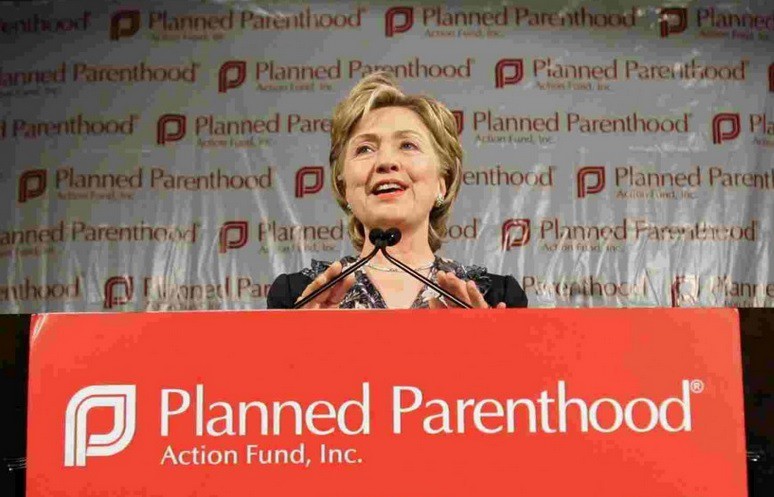
Hillary Clinton and Planned Parenthood

I already knew that Hillary Clinton was pro-gay-marriage, and radically pro-abortion, but it turns out that she is a hypocrite on women’s issues, as well.

The Washington Times reports:

During her time as senator of New York, Hillary Rodham Clinton paid her female staffers 72 cents for every dollar she paid men, according to a new Washington Free Beacon report.

From 2002 to 2008, the median annual salary for Mrs. Clinton’s female staffers was $15,708.38 less than what was paid to men, the report said. Women earned a slightly higher median salary than men in 2005, coming in at $1.04. But in 2006, they earned 65 cents for each dollar men earned, and in 2008, they earned only 63 cents on the dollar, The Free Beacon reported.

[…]Mrs. Clinton has spoken against wage inequality in the past. In April, she ironically tweeted that “20 years ago, women made 72 cents on the dollar to men. Today it’s still just 77 cents. More work to do. #EqualPay #NoCeilings.”

Meanwhile, she is making “equal pay for women” her top priority.

CBS News reports:

Hillary Clinton lamented the number of women in the fields of science, technology, engineering and math at a Silicon Valley women’s conference on Tuesday, and called for more action to close the wage gap.

[…]In advocating for closing the pay gap, Clinton also endorsed the impassioned plea for wage equality made by Patricia Arquette in her Oscars acceptance speech for Best Supporting Actress.

“Up and down the ladder many women are paid less for the same work, which is why we all cheered at Patricia Arquette’s speech at the Oscars — because she’s right, it’s time to have wage equality once and for all,” Clinton said.

All right, let’s take a look at the facts on the so-called “pay gap” between men and women.

The facts

This article is from the very left-wing Slate, of all places.

Excerpt:

The official Bureau of Labor Department statistics show that the median earnings of full-time female workers is 77 percent of the median earnings of full-time male workers. But that is very different than “77 cents on the dollar for doing the same work as men.” The latter gives the impression that a man and a woman standing next to each other doing the same job for the same number of hours get paid different salaries. That’s not at all the case. “Full time” officially means 35 hours, but men work more hours than women. That’s the first problem: We could be comparing men working 40 hours to women working 35.

How to get a more accurate measure? First, instead of comparing annual wages, start by comparing average weekly wages. This is considered a slightly more accurate measure because it eliminates variables like time off during the year or annual bonuses (and yes, men get higher bonuses, but let’s shelve that for a moment in our quest for a pure wage gap number). By this measure, women earn 81 percent of what men earn, although it varies widely by race. African-American women, for example, earn 94 percent of what African-American men earn in a typical week. Then, when you restrict the comparison to men and women working 40 hours a week, the gap narrows to 87 percent.

But we’re still not close to measuring women “doing the same work as men.” For that, we’d have to adjust for many other factors that go into determining salary. Economists Francine Blau and Lawrence Kahn did that in a recent paper, “The Gender Pay Gap.”.”They first accounted for education and experience. That didn’t shift the gap very much, because women generally have at least as much and usually more education than men, and since the 1980s they have been gaining the experience. The fact that men are more likely to be in unions and have their salaries protected accounts for about 4 percent of the gap. The big differences are in occupation and industry. Women congregate in different professions than men do, and the largely male professions tend to be higher-paying. If you account for those differences, and then compare a woman and a man doing the same job, the pay gap narrows to 91 percent. So, you could accurately say in that Obama ad that, “women get paid 91 cents on the dollar for doing the same work as men.”

I believe that the remainder of the gap can be accounted for by looking at other voluntary factors that differentiate men and women.

The Heritage Foundation says that a recent study puts the number at 95 cents per dollar.

Excerpt:

Women are more likely than men to work in industries with more flexible schedules. Women are also more likely to spend time outside the labor force to care for children. These choices have benefits, but they also reduce pay—for both men and women. When economists control for such factors, they find the gender gap largely disappears.

A 2009 study commissioned by the Department of Labor found that after controlling for occupation, experience, and other choices, women earn 95 percent as much as men do. In 2005, June O’Neil, the former director of the Congressional Budget Office, found that “There is no gender gap in wages among men and women with similar family roles.” Different choices—not discrimination—account for different employment and wage outcomes.

A popular article by Carrie Lukas in the Wall Street Journal agrees.

Excerpt:

The Department of Labor’s Time Use survey shows that full-time working women spend an average of 8.01 hours per day on the job, compared to 8.75 hours for full-time working men. One would expect that someone who works 9% more would also earn more. This one fact alone accounts for more than a third of the wage gap.

[…]Recent studies have shown that the wage gap shrinks—or even reverses—when relevant factors are taken into account and comparisons are made between men and women in similar circumstances. In a 2010 study of single, childless urban workers between the ages of 22 and 30, the research firm Reach Advisors found that women earned an average of 8% more than their male counterparts. Given that women are outpacing men in educational attainment, and that our economy is increasingly geared toward knowledge-based jobs, it makes sense that women’s earnings are going up compared to men’s.

When women make different choices about education and labor that are more like what men choose, they earn just as much or more than men.