

Tag Archives: Moral Relativism

Debating forgiveness: must a person admit wrongdoing before being forgiven?

Two horses fight it out, may the best horse win!

I’ve listened to this debate three times because I liked it so much. I even ordered Chris’ book for my friend Dina. She has listened to the debate, and is currently split between the two debaters. I am in firm agreement with the pastor Chris, although Remy has some useful things to say that I agree with.

Here’s a link to the debate page on Moody Bible Institute’s “Up For Debate” program with Julie Roys.

Details:

Should Christians Forgive No Matter What?

Should Christians forgive someone even if he’s not sorry?  Or does true forgiveness require repentance and a desire to reconcile?  This Saturday, on Up For Debate, Julie Roys will explore this issue with Chris Brauns, a pastor who believes forgiveness requires repentance, and Remy Diederich who believes it does not.

Although I disagree with Remy, I only disagree with him about whether the guilty person must admit guilt and feel remorse and make restitution (depending on the severity of the offense). I agree with him on other things like no revenge, attitude of love, expressing willingness to forgive and be reconciled, etc. I also disagree with Remy on “forgiving God”, which I think is just crazy, because when God is engineering a person’s salvation, he never fails. I think that God is the Great General, and his strategies never fail to achieve the outcomes he desires (while still respecting free will). Whatever suffering or inadequacy or longing that you experience as a Christian is not some sort of mistake, horrible as it may be for you at the time. God is not your cosmic butler, although a lot of people these days seem to think that he is, and then they get disappointed.

Anyway, please listen to that debate and comment on it about who you think is right. I think my view (and Chris’ view) is in the minority in the church, because the church is so utterly dominated by feelings and radical feminism. I think my view (and Chris’ view) is the masculine view – the view that upholds moral standards, sets moral boundaries and defends the rightness of making moral judgments.

Below, I have pasted in some of my other thoughts on forgiveness from a previous post.

I think this is the key passage – Luke 17:3-4:

Be on your guard! If your brother sins, rebuke him; and if he repents, forgive him.

And if he sins against you seven times a day, and returns to you seven times, saying, ‘I repent,’ forgive him.”

That’s Jesus speaking, there.

Also, I was having a debate with someone who disagrees with all this, and while debating with her, I thought of another example.

Luke 18:9-14:

And He also told this parable to some people who trusted in themselves that they were righteous, and viewed others with contempt:

10 “Two men went up into the temple to pray, one a Pharisee and the other a tax collector.

11 The Pharisee stood and was praying this to himself: ‘God, I thank You that I am not like other people: swindlers, unjust, adulterers, or even like this tax collector.

12 I fast twice a week; I pay tithes of all that I get.’

13 But the tax collector,standing some distance away, was even unwilling to lift up his eyes to heaven, but was beating his breast, saying, ‘God, be merciful to me, the sinner!’

14 I tell you, this man went to his house justified rather than the other; for everyone who exalts himself will be humbled, but he who humbles himself will be exalted.”

So again, no forgiveness without repentance.

Forgiveness is what happens when someone who is sinned against treats the sinner as if he had never sinned. It is not on the balance sheet. It is not brought to mind. It is not held against them in the future. The forgiver trusts the sinner again as if the previous sin had never happened.

In divine (vertical) forgiveness, there is no forgiveness without repentance. There are Bible verses above to show that.

My argument is twofold. First, there is a clear teaching of Jesus explaining the sequence of sin and forgiveness. Repentance precedes forgiveness, between humans (Luke 17:3). The verses cited by the forgive without repentance crowd don’t show the mechanics of how to forgive, they are making the point that if you want God to forgive you, you should forgive others. The parable in Luke 18:9-14 affirms this again – repentance always precedes forgiveness.

Second, we have an obligation to imitate God, and that means imitating the way he forgives those who sin against him. When I raise that with the unconditional forgiveness crowd, they want to insist that there is a difference, that the word “forgive” means different things. I’m not convinced.

Finally, I do think that forgiving someone is obligatory if they sincerely repent, and even if they screw up again and again. So long as the repentance is sincere, (like if there is restitution and a genuine effort to show an understanding how the sin affected the wronged party in writing), then forgiveness should be automatic. Depending on how bad the sin is, there maybe be more to do than just say “I’m sorry”. If the repentance is genuine, then I think the person who is sinned against must forgive, if they expect to be forgiven by God for the things they repent of.

Alan E. Kurschner adds one final point about the unconditional forgiveness view. He argues that there is serious textual doubt about the originality of Luke 23:34a, a text used by the pro-unconditional-forgiveness crowd. He has a journal article coming out on it, but a synopsis of his argument is here.

He also wrote this in a comment on this blog:

Second, on Matt 6:15, this is what I have to say. Notice the then-clause: “neither will your Father forgive your sins.” This would require universalism on the Father’s part according to the unconditional interpretation given the first half: “But if you do not forgive others their sins.” Since everyone has wronged the Father is the Father required to forgive everyone even if they are not seeking forgiveness?

So I think the case for the forgiveness being conditional on repentance is pretty strong, especially when serious harm has been caused.

Abortion debate: a secular case against legalized abortion

Unborn baby scheming about being only two months old

Note: this post has a twin! Its companion post on a secular case against gay marriage is here.

Now, you may think that the view that the unborn deserve protection during pregnancy is something that you either take on faith or not. But I want to explain how you can make a case for the right to life of the unborn, just by using reason and evidence.

To defend the pro-life position, I think you need to sustain 3 arguments:

  1. The unborn is a living being with human DNA, and is therefore human.
  2. There is no morally-relevant difference between an unborn baby, and one already born.
  3. None of the justifications given for terminating an unborn baby are morally adequate.

Now, the pro-abortion debater may object to point 1, perhaps by claiming that the unborn baby is either not living, or not human, or not distinct from the mother.

Defending point 1: Well, it is pretty obvious that the unborn child is not inanimate matter. It is definitely living and growing through all 9 months of pregnancy. (Click here for a video that shows what a baby looks like through all 9 months of pregnancy). Since it has human DNA, that makes it a human. And its DNA is different from either its mother or father, so it clearly not just a tissue growth of the father or the mother. More on this point at Christian Cadre, here. An unborn child cannot be the woman’s own body, because then the woman would have four arms, four legs, two heads, four eyes and two different DNA signatures. When you have two different human DNA signatures, you have two different humans.

Secondly, the pro-abortion debater may try to identify a characteristic of the unborn that is not yet present or developed while it is still in the womb, and then argue that because the unborn does not have that characteristic, it does not deserve the protection of the law.

Defending point 2: You need to show that the unborn are not different from the already-born in any meaningful way. The main differences between them are: size, level of development, environment and degree of dependence. Once these characteristics are identified, you can explain that none of these differences provide moral justification for terminating a life. For example, babies inside and outside the womb have the same value, because location does not change a human’s intrinsic value.

Additionally, the pro-abortion debater may try to identify a characteristic of the already-born that is not yet present or developed in the unborn, and then argue that because the unborn does not have that characteristic, that it does not deserve protection, (e.g. – sentience). Most of the these objections that you may encounter are refuted in this essay by Francis Beckwith. Usually these objections fall apart because they assume the thing they are trying to prove, namely, that the unborn deserves less protection than the already born.

Finally, the pro-abortion debater may conceded your points 1 and 2, and admit that the unborn is fully human. But they may then try to provide a moral justification for terminating the life of the unborn, regardless.

Defending point 3: I fully grant that it is sometimes justifiable to terminate an innocent human life, if there is a moral justification. Is there such a justification for abortion? One of the best known attempts to justify abortion is Judith Jarvis Thomson’s “violinist” argument. This argument is summarized by Paul Manata, one of the experts over at Triablogue:

Briefly, this argument goes like this: Say a world-famous violinist developed a fatal kidney ailment and the Society of Music Lovers found that only you had the right blood-type to help. So, they therefore have you kidnapped and then attach you to the violinist’s circulatory system so that your kidneys can be used to extract the poison from his. To unplug yourself from the violinist would be to kill him; therefore, pro-lifers would say a person has to stay attached against her will to the violinist for 9 months. Thompson says that it would be morally virtuous to stay plugged-in. But she asks, “Do you have to?” She appeals to our intuitions and answers, “No.”

Manata then goes on to defeat Thomson’s proposal here, with a short, memorable illustration, which I highly recommend that you check out. More info on how to respond to similar arguments is here.

Here is the best book for beginners on the pro-life view.

For those looking for advanced resources, Francis Beckwith, a professor at Baylor University, published the book Defending Life, with Cambridge University Press, 2007.

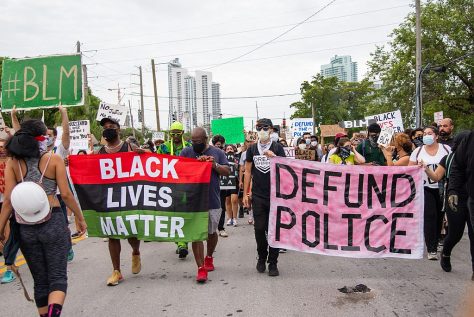
Why do progressives make heroes out of criminals, and call the police villains?

How do Democrats respond to riots, vandalism and arson?

OK so in this post, I’ll summarize the facts concerning the latest shooting of an “unarmed black man” by the police in Kenosha, Wisconsin. Then I have a lecture given by David Sayet at the Heritage Foundation to explain why secular leftists and Never-Trumpers are so anxious to side with convicted criminals against the police, and the law-abiding people the police protect.

This is from Julie Kelly over at American Greatness:

According to news reports, Kenosha police were responding to a 911 call related to an existing warrant on Jacob Blake for felony sexual assault, trespassing, and domestic abuse before Blake was shot on August 23.

[…]Blake allegedly broke into the bedroom of the victim, an ex-girlfriend, in the early morning of May 3 and sexually assaulted her while one of her children slept beside her. The victim told police that Blake attacks her “around twice a year when he drinks heavily,” the New York Post reported August 28. A 911 call from that same residence triggered Blake’s encounter with police, which sparked looting and rioting in Kenosha, a city located on the border of Illinois and Wisconsin, that spread to other cities across the county.

Police also confirmed that Blake had a knife in his possession; video taken during the incident supports that claim. Blake resisted arrest and ignored officers’ commands before he was shot in the back. He remains in stable condition at a Milwaukee hospital.

Some reactions of prominent Democrats:

Political leaders, celebrities, and athletes have rallied to Blake’s defense. In a video message taped at his home, Joe Biden said Blake’s shooting was another example of “systemic racism” and fretted about what Blake’s children watched unfold.

[…]Biden’s running mate spoke with Blake’s family this week. Sen. Kamala Harris said she did not think the shooting was justified.

[…]LeBron James is outraged at the Blake incident; he has referred to the serial sexual abuser as a “gentleman” and encouraged his fellow NBA players to boycott the playoffs in Blake’s honor.

[…]NFL quarterback Drew Brees taped Blake’s name on his helmet.

Blake’s father and other family members spoke at Friday’s March on Washington in honor of the 57th anniversary of Martin Luther King Jr’s “I Have a Dream” speech.

Hope you’re not watching sports any more. At least don’t pay anything for it. These are not good people.

Anyway, it seems like the expectation on police is that they allow criminals to commit crimes against blacks, just in the case that the criminals are also black themselves. Because apparently black lives don’t matter if the criminal threatening those lives is also black. Only the lives of black criminals matter. We can’t ask people of every race to behave morally. That’s racist. We have to allow some criminals of certain races to break the law and not be punished.

Anyway, I thing it’s a good time to re-post this old lecture featuring Jewish comedian Evan Sayet, who walked away from the left. He has an inside view of what is going on in the heads of the Democrats who march on behalf of criminals like George Floyd, Jacob Blake, etc.

Video:

The part I want you to see (full transcript):

The Modern Liberal will invariably side with evil over good, wrong over right, and the behaviors that lead to failure over those that lead to success.

[…]What I discovered is that the Modern Liberal looks back on 50,000 years, 100,000 years of human civilization, and knows only one thing for sure: that none of the ideas that mankind has come up with–none of the religions, none of the philos­ophies, none of the ideologies, none of the forms of government–have succeeded in creating a world devoid of war, poverty, crime, and injustice. So they’re convinced that since all of these ideas of man have proved to be wrong, the real cause of war, pov­erty, crime, and injustice must be found–can only be found–in the attempt to be right.

If nobody ever thought they were right, what would we disagree about? If we didn’t disagree, surely we wouldn’t fight. If we didn’t fight, of course we wouldn’t go to war. Without war, there would be no poverty; without poverty, there would be no crime; without crime, there would be no injustice. It’s a utopian vision, and all that’s required to usher in this utopia is the rejection of all fact, reason, evi­dence, logic, truth, morality, and decency–all the tools that you and I use in our attempts to be better people, to make the world more right by trying to be right, by siding with right, by recognizing what is right and moving toward it.

[…]What you have is people who think that the best way to eliminate rational thought, the best way to eliminate the attempt to be right, is to work always to prove that right isn’t right and to prove that wrong isn’t wrong.

[…]What happens is, they are indoctrinated into what I call a “cult of indiscriminateness.” The way the elite does this is by teaching our children, start­ing with the very young, that rational and moral thought is an act of bigotry… the only way to eliminate bigot­ry is to eliminate rational thought.

There’s a brilliant book out there called The Clos­ing of the American Mind by Professor Allan Bloom. Professor Bloom was trying to figure out in the 1980s why his students were suddenly so stupid, and what he came to was the realization, the recog­nition, that they’d been raised to believe that indis­criminateness is a moral imperative because its opposite is the evil of having discriminated.

[…]Since nothing can deemed good, nothing can be deemed evil. That which society does recognize as good must be the beneficiary of some sort of prejudice. That which society recognizes as evil must be the victim of that prejudice. So, again, the mindless foot soldier will invariably side with whatever policy, mindlessly accept whatever policy seeks to tear down what is good… and elevate what is evil until everything meets in the middle and there is nothing left to fight about.

There’s a 10-year-anniversary redo of it here:

The first lecture was the most popular lecture ever given at Heritage Foundation, my favorite think tank. And it changed my life. The second lecture was even meaner, and had some up to date material.