Tag Archives: Meaning

Famous pick-up artist Roosh V urges men not to act like clowns for casual sex

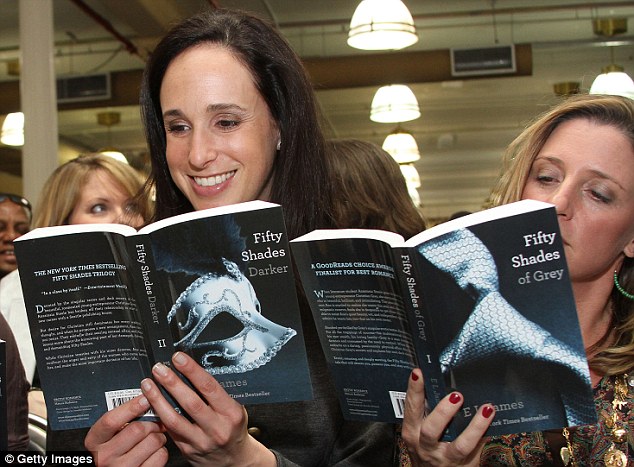
Fifty Shades of Grey was very popular with women
Fifty Shades was popular with women, including “Christian” women – why?

Is it meaningful and rewarding for men to spend their time and money pursuing casual sex? I would expect that men who tried and failed to obtain casual sex to say that it’s a waste of time and money. But what about a man who was so successful at obtaining casual sex that he wrote bestselling books about it? Did he find his achievements meaningful in the end?

Roosh V is a well-known pick-up artist who is a master at seducing women. He’s traveled all over the world and seduced many women from many countries.

In a post from April 2019, he reaches a startling conclusion about his success:

I began pursuing women for mostly sexual reasons in 2001. I must’ve logged tens of thousands of hours into the task. I’ve been also traveling or living abroad near continuously since 2007. I’ve spent a lot of time trying to fornicate, fornicating, traveling to more effectively fornicate, and writing over a million words about fornication. What did I learn from all that? It’s an experience that gets more dull with repetition, like any other experience. However, it also leaves you with a massive hangover where you find yourself at a loss. What was the point of all that? Is there anything I’ve truly gained? What lasting glory have I achieved? If I wasn’t a writer, I would have nothing to “show” for my efforts besides memories that are as likely to make me cringe as give me happiness.

If society were healthy, and if women were more traditional, most of my time would have been spent writing different kinds of books, maybe concerning religion or history. I would have a family, and spend much of my time nurturing the love between them without degenerate interference from the government or cultural elites. […]While there is nothing in life that is solid, my family and community would give me a stronger feeling of continuity. Tomorrow, things that are likely to be here would still be there, compared to the easy-come-easy-go modern lifestyle where putting your penis inside a girl is not even close to a guarantee you’ll see her again, and where any job you have, or apartment you live in, is as transitory as the next bus that rolls down the street.

[…]As I approach 40 years of age, I see most of my hedonistic and travel pursuits as expensive life lessons than a source of meaning. My nature, and I believe the nature of most masculine men I meet, is one of creation, strength, and provision for family, things we’re increasingly not allowed to do, or allowed to do only at impossible cost.

Indeed. Speaking for myself, one of the main reasons that I’ve avoided casual sex (or premarital sex of any kind) is because from earliest days, I could not stomach the idea of a woman that I had sex with walking away. So, my education, career and finance decisions were oriented to winning the heart of one woman who would commit to me for life, so that we could built something nice for the Lord together.

In another post, from March 2014, Roosh explains why casual sex didn’t provide him with validation:

There is definitely not a single woman alive in the Western world who needs a man. While in the past a woman had to put forth effort to obtain a husband who would help her survive, today she is protected by a welfare state that ensures she will never go hungry or spend one night on the street.

[…]From a young age, girls are brainwashed to believe that they don’t need men and that the key to their happiness is self-empowerment by sleeping around and becoming a corporate wage slave. It’s hard to dispute the notion that a woman who believes she doesn’t need a man won’t make as good of a relationship partner as one who does. She will treat you as a distraction to her more important job, girls’ nights out, and social networking validation happy time. Men have become an utterly replaceable and expendable commodity in a girl’s life. Her interest in a man is not unlike her interest in a new television show or Apple product, and your only hope is to have sex with her as many times as possible until her attraction diminishes and she moves on to the next guy in line.

Women don’t seek out comfort or stability in men anymore—they seek entertainment. They seek distraction. They seek hedonistic pleasure. […]Once the entertainment or novelty you provide her declines—and it inevitably will—she moves on to something or someone else. In essence, the only way you can keep a girl is if you adopt the mentality of a soap opera writer, adding a cliffhanger to the end of each episode that keeps a woman interested when being a good man no longer does.

When I look at myself in the mirror, I don’t see a man who has improved himself over the years to be the best that his genes allow—I see a glittery skirt that a girl encounters in the mall. Is the skirt too expensive or is it on sale? Is there only one left of her size or is the rack full of them? Does she already have something similar or is it totally novel? Does her friends think it’s cute or just alright? After trying it on, does it flatter her body or make her look fat? Either she makes the impulsive decision to buy the skirt or not, because odds are she won’t come back for it. There are so many stores with so many skirts that she will soon forget it, forever. We are like glittery pieces of fashion to women—items that she truly doesn’t need. Not only has she already collected so many of them, but she can easily obtain more within walking distance from where she lives. She can even browse online from home while in her pajamas through a nearly unlimited selection.

We are not men in the traditional sense—we are clowns.

Well, I’m a virgin who never spent money or time pursuing casual sex, and precisely because I refuse to be any woman’s clown. It’s very easy for a man to not be a woman’s clown. All he has to do is choose a woman who will let him lead her, instead of a woman who wants him to entertain her. Women use the offer of premarital sex in order to get men to stop trying to lead them. Men who don’t mind acting like clowns in order to get sex will take this bargain. Men who expect women to rise up to the roles of wife and mother will reject the bargain. A Christian man’s goal is to lead a woman away from her self-centeredness, feelings, desires and need for peer-approval, so that she can perform the roles of wife and mother.

How to avoid becoming a clown for casual sex

So, let me give some advice for men about how to get into relationships where they can lead a woman upward, and avoid becoming her clown. It begins and ends with the woman you choose, because some women will let you lead, while others will not.

Research (here, here) shows that women who are virgins are more likely to be content in their marriages, and therefore less likely to financially ruin you with a frivolous divorce. Therefore, women who are virgins are to be preferred. Women who abstain from alcohol, drugs and tattoos should be preferred. Women who have a conservative father who they have respected should be preferred. Women who have STEM degrees should be preferred. Women who are debt-free should be preferred. Women who have challenging STEM careers in the private sector should be preferred. Women who don’t want to outsource the education of their children to daycare, public schools, etc. should be preferred. Women who want three or more children should be preferred. Women who think that a man’s earnings should not be taxed to pay for husband-substitute social programs should be preferred. Women who have demonstrated public opposition to no-fault divorce, premarital sex, abortion and same-sex marriage should be preferred. Women who blame and shame other women for choosing hot bad boys should be preferred. Women who can demonstrate knowledge of intermediate-level science apologetics (e.g. Stephen C. Meyer, Michael Behe, Hugh Ross, etc.) should be preferred. (Philosophical and historical apologetics are useful, but are not forceful enough in a debate). Women who avoid fun and thrills (beaches, FOMO travel, reading fiction, thrill-seeking, etc.) should be preferred. Women who serve others (elderly, disabled, etc.) should be preferred.

Basically, you’re looking for someone who is comfortable with responsibilities, expectations and obligations. You’re looking for someone who respects your demonstrated ability in areas like education, career and finance. (You have led other people to do well in education, career, finances, ministry, etc. right?) You’re looking for someone who lets her logical reasoning override her feelings and intuitions when she makes decisions.

The retreat from male leadership

It used to be the case that you could count on pastors to warn Christian men about wasting their time and money on women who wanted them to be clowns instead of leaders. Even the progressive fideist John Piper wrote against women rebelling against male leadership way back in 1983. Men used to be wary of this desire of women to usurp the leadership role from men. But today, it seems like men are anxious to dance to a woman’s tune – reducing themselves to spineless commodities, like a pair of shoes or a handbag. But men were not designed to be women’s accessories, men were designed to lead. When you tell a woman no to premarital sex, there is the possibility of leading her out of the pig sty of feminism and socialism. But if you say yes to her, you become her clown. If you waste all your 20s and 30s clowning for casual sex, you will have no meaningful legacy.  To any man who works for the Lord, this is unacceptable. Christian men, you were bought at a price, and you are expected to produce a return.

Therefore, focus your attention on an early marriage to a good woman, and avoid the hot bad girls who just want to pump and dump you for their own pointless entertainment. If you can’t find a decent wife, then it’s better to remain a virgin and put points on the board some other way.


John Lennox and Paul Davies discuss aliens and the origin of life

Christianity and the progress of science

An amazing debate about the origin of life and the cosmic fine-tuning between a Christian and a materialist agnostic. John Lennox is AWESOME in this debate, and he only talks for a tiny part of the debate. He’s very gracious, and focused the discussion on the areas that we care about. Paul Davies is an EXCELLENT scientist and well aware of what Christians believe. This is a great debate, very easy to listen to. Justin, the moderator, does a great job controlling a fantastic discussion.

Details

What does it take for life to get going in our universe? Is there intelligence in the stars or right under our nose? Renowned astrophysicist Paul Davies chats to Oxford Professor of Mathematics John Lennox.

A popular science author, Davies is also the Chair of the SETI post detection task force. His latest book “The Eerie Silence” which marks SETI’s 50th anniversary examines the likelihood of the universe producing life elsewhere.

John Lennox is a Christian Mathematician and philosopher. He is the author of “God’s Undertaker: has science buried God?” and has debated Richard Dawkins on several occasions.

Davies’ work on the fine tuning of the universe for life has been sympathetic to theism. In this programme Lennox challenges Davies to look to design not just in cosmology but in the cell. They also chat about what the discovery of ET would mean for Christian theology.

Summary

Justin:

  • Is there meaning in the universe?

Paul:

  • We have no evidence for or against intelligent life elsewhere in the universe
  • The vastness of the universe makes me think there is life elsewhere
  • Humans are capable of observing and understanding the universe
  • It seems the universe has the ability to create observers to understand it
  • If one species has this ability, then we should expect others to do it

John:

  • The fact that we can observe the universe and do science has cosmic significance
  • Our rare habitable planet and our ability to do science is suggestive of purpose
  • So science itself points to an extra-terrestrial intelligence: GOD
  • The complexity of life and consciousness itself points away from atheism
  • Monotheism gave birth to science
  • Human minds capable of doing science are not compatible with atheistic materialism

Justin:

  • Why do you say that either we are the only life or there are many different kinds of life?

Paul:

  • There are lots of factors that have to be met to have a site for simple life
  • These are related to the fine-tuning of cosmic constants, e.g. gravitational force
  • But there are also factors that have to be met for originating intelligent life
  • Things like convergence, self-organization, etc.
  • So the cosmic requirements and evolutionary requirements are different
  • Darwinian evolution doesn’t solve the problem of the origin of life
  • 50 years ago, skepticism about alien life existing anywhere was excessive
  • Today, credulity about alien life exiting everywhere is excessive
  • The naturalist is searching for a process that creates life easily

John:

  • Paul agrees that there is no theory for a naturalistic origin of life
  • This is fatal for the idea that life can emerge elsewhere in the universe
  • We have not discovered any law that produces life without an intelligence
  • Consider the method used by SETI used to detect an alien intelligence
  • Why can’t this method be applied to the origin of life on Earth?
  • Why can’t an intelligence created specified complexity (functional information)?
  • Why can’t an intelligence created epigenetics and protein folding?

Paul:

  • Darwinian evolution can add new biological information after life begins

John:

  • Darwinian evolution assumes a mutating replicating life form to act on

Paul:

  • You can’t generate specified complexity by using physical laws
  • You can’t generate specified complexity by chance
  • At this point we are guessing as to how life might have formed

John:

  • Why do we have to rule out an intelligent cause a priori
  • If you can recognize an intelligence in outer space, why not in living systems?

Paul:

  • I don’t mind the word “intelligence”, it’s the word “signal”
  • I oppose the idea that God or aliens manipulated physical stuff to create life
  • It’s an “ugly explanation and very unappealing both theologically and scientifically”
  • I prefer the idea that the universe has processes to self-organize and create complexity
  • When it comes to supernatural meddling by God, “I don’t want that”
  • If I were God, I would create the universe so that I would not have to intervene
  • I think God would be more clever if he did not have to intervene
  • My preferences about what is “clever” determines what scientific conclusions are allowed

John:

  • Humans already have experience with their non-material minds to move atoms (matter)
  • If God is a mind, then there is no reason why he cannot move atoms (matter)

Paul:

  • My mind is physical, so are you saying that God is physical?
  • If God intervenes in the universe, then what is he doing now?

John:

  • There is a distinction between acts of creation and providential upholding the universe
  • God is also speaking to people and drawing humans toward him
  • God is spirit, not material

Paul:

  • How can a non-physical entity cause effects on the physical world?

John:

  • What science reveals that there is information needed for the origin of life
  • Information requires an intelligence to create it, just as with human who write books
  • That’s not God of the gaps – it’s an inference based on what we know today

Paul:

  • We may be able to explain the origin of life later, using matter, law and chance
  • What you’re saying is that God tinkers with the genome
  • If you say that God intervened once, then he intervenes all the time, everywhere!
  • I don’t want a God who tinkers in the genome
  • if God could intervene in the universe that would remove its intelligibility

John:

  • Look at the cover of this book – when I read words, I infer an intelligence
  • There are bad gaps that the progress of science closes
  • There are good gaps that science opens, showing the need for intelligence
  • On the one hand, you say we have no theory of the origin of life
  • On the other hand, you know that an intelligent designer wasn’t involved
  • If we don’t know how life began, why do you rule God out a priori?

Paul:

  • What scientists want to do is to explain the universe without involving God
  • naturalists want to use science to discover only materialist explanations
  • The purpose of SETI is to prove that there is other life in the universe
  • This would then show that there is a naturalistic way of making life
  • I agree that information in living systems is real hard to explain materialistically
  • I believe in the power of emergence
  • We might discover laws that prove that complexity can emerge without intelligence
  • The discovery of alien life would help to show that no intelligence is needed to make life

Justin:

  • What sort of cosmic fine-tuning is needed at the Big Bang for life to occur?

Paul:

  • It’s true that the universe appears extremely fine-tuned for life to exist
  • The typical answer from naturalists is that there is a multiverse
  • But the multiverse “falls far short” of providing a good answer to the fine-tuning
  • It’s irrational to appeal to massive numbers of unseen universes to explain fine-tuning
  • The design and purpose seen in the universe may be due to God or it may be emergent

John:

  • The fine-tuning is real and the multiverse is a desperate attempt to evade the creator
  • Sir Martin Rees (an atheist) says he “prefers” the multiverse to a designer
  • Scientists are not supposed to prefer anything except what is true

Justin:

  • Would the discovery of aliens hurt Christianity, because of the belief in the uniqueness of humans?

Paul:

  • Christians believe that Jesus came to save HUMANS specifically, not animals or aliens
  • If we were to discover intelligent aliens, it would challenge traditional religions
  • What will God do with alien races? Multiple incarnations? Or just preach the gospel to them?

John:

  • We don’t know if the aliens exist, first of all – it’s speculative
  • The Bible teaches that humans bear the image of God
  • We just don’t know whether alien species are also made in God’s image

What got me started on apologetics? William Lane Craig debate transcripts

William Lane Craig lecturing to university students

Yes, William Lane Craig debate transcripts. In fact, I still read them from time to time to keep up my skills.

Here’s one of my favorites, the Craig-Nielsen debate on grounding morality without God

Summary:

THE CRAIG-NIELSEN DEBATE: GOD, MORALITY, AND EVIL
William Lane Craig and Kai Nielsen
with annotations by William Lane Craig
February 1991, University of Western Ontario

Best part:

Finally, he raises the issue of immortality and says, “Death doesn’t undermine moral values. In fact, things that we value become all the more precious.” Well, in one sense he’s right. It’s the absence of God that undermines the objectivity of moral values, not death. But let’s suppose that there are objective moral values. What would be undermined by the lack of immortality? I think two things.

First, I think there would be no reason to adopt the moral point of view. Since you’re going to die, everyone ends up the same. It doesn’t make any difference whether you live as a Hitler or a Mother Teresa. There is no relationship between your moral living and your ultimate fate. And so in that sense, death undermines the reason for adopting the moral point of view rather that just being an egoist and living for self.

Second, there’s no basis for self-sacrifice on this point of view. Why should an atheist, who knows everything is going to end in death, do things that are morally right that go against self-interest? For example, a few years ago there was a terrible mid-winter air disaster in Washington, DC, as a plane crashed into a bridge spanning the Potomac River, spilling its passengers into the icy waters. And as the helicopters came to rescue these people, attention focused on one man who again and again passed by the rope ladder rather than be pulled to safety himself. Seven times he did this, and when they came again, he was gone. The whole nation turned its eyes to this man in respect and admiration for the noble act of self-sacrifice that he did. And yet on the atheistic view, that man wasn’t noble. He did the stupidest thing possible. He should have gone for the rope ladder first, pushed others away, if necessary, in order to survive! But to give up all the brief existence he will ever have for others he didn’t even know? Why? It seems to me, then, that it’s not simply the absence of God that undermines objective moral values, but ethical living is also undermined by the atheistic point of view because you then have no reason to adopt the moral point of view and you have no basis for acts of self-sacrifice.

By contrast, on the Christian view, where you have both God and immortality, you have the necessary presuppositions for the affirmation of objective moral values and for consistent living of the ethical life.

And another of my favorites, the Craig-Taylor debate on the ontological grounding of morality.

Summary:

Is The Basis Of Morality Natural Or Supernatural?
Richard Taylor and William Lane Craig
October 1993, Union College, Schenectady, New York

Sample Craig:

(2) I argued that moral accountability also exists under the supernaturalist view, and Professor Taylor didn’t deny the point.

(II) What about my critique, then, of naturalism? I said that naturalism doesn’t provide a sound foundation for morality, and here I made two points:

(1) On the naturalist view, objective right and wrong do not exist. Again, Professor Taylor doesn’t deny this point; he just says, “Well, to say that they’re conventional doesn’t mean they’re contemptible.” Well, granted; but it does mean they’re arbitrary, they’re non–objective. There’s no more difference between moral right and wrong than driving on the right–hand side of the road versus the left–hand side of the road. It’s simply a societal convention. And the modern evolutionist thinks these conventions are just based in socio–biological evolution. According to Michael Ruse, a professor of the philosophy of science,

The position of the modern evolutionist…is that humans have an awareness of morality…because such an awareness is of biological worth. Morality is a biological adaptation, no less than are hands and feet and teeth…. Considered as a rationally justifiable set of claims about an objective something, [ethics] is illusory. I appreciate that when somebody says, ‘Love thy neighbor as thyself,’ they think they are referring above and beyond themselves…. Nevertheless…such reference is truly without foundation. Morality is just an aid to survival and reproduction and…any deeper meaning is illusory….{26}

This is essentially the same view as Professor Taylor’s. Moral values are simply rooted in socio–biological evolution, that have passed down as certain taboos and certain commands, but they have no objective validity in terms of their moral rightness or wrongness. Professor Taylor says, “But I have a high regard for people who are truly moral and decent.” I don’t deny that. Of course he does! But the point is that in his ethics, in his philosophy, he has no basis for that affirmation. What I bring is not a new set of values—I think we pretty much hold those in common—but I’m offering a secure foundation for those values that we all want to hold dear.

You see, on Professor Taylor’s view, there really isn’t any objective morality. I think every one of us here tonight would agree that it’s wrong to kill babies and that the holocaust was morally wrong. But in his book Professor Taylor says, “The infanticide practiced by the Greeks of antiquity did not violate their customs. If we say it was nevertheless wrong, we are only saying that it is forbidden by our ethical and legal rules. And the abominations practiced by the Nazis…are forbidden by our rules, and not, obviously, by theirs.”{27} I submit that that is simply a patently false view of moral values and that naturalism, therefore, can’t provide any objective basis for right and wrong.

And another of my favorites, the Craig-Tooley debate on the problem of evil.

Summary:

A Classic Debate on the Existence of God
Dr. William Lane Craig & Dr. Michael Tooley
November 1994, University of Colorado at Boulder

Sample Craig:

(2) Christian doctrines increase the probability of the coexistence of God and the evils in the world. Let me just mention a couple of these.

(i) On the Christian view, the purpose of life is not happiness as such in this life. Rather it is the knowledge of God—which will ultimately produce true and everlasting happiness. What that means is that many evils occur in this life which might be utterly pointless with respect to producing human happiness. But they might not be pointless with respect to producing the knowledge of God. Dr. Tooley assumes when he talks about changes that would make this world a better place, that the purpose of life is basically to be happy in this life. And I certainly admit that you could make changes that might appear to make this life a better place, make it happier. But that’s not God’s purpose. So if you understand that the purpose of life is not happiness as such, I think that you can see that the existence of evil doesn’t necessarily cast any improbability upon God’s existence.

(ii) It’s also the Christian view that God’s purpose spills over into eternal life. In the afterlife God will bestow a glory and happiness upon us that is incomparable to what we’ve suffered here on earth. And the longer we spend in eternity with Him, the more the sufferings in this life shrink by comparison to an infinitesimal instant. Dr. Tooley admits in his article that it is possible that immortality could justify such evils. But, he says, it’s “very unlikely” that there is life after death. Well, I have two comments. First, I’d like him to prove that it’s unlikely that there is life after death.{26} Second, I suggest that the resurrection of Jesus gives us grounds for hoping in life after death, and I’ve attempted to justify that historically. So given these Christian doctrines, I think you can see that the existence of God and evil is not so improbable after all.

[…]

(4) Finally, I think that there is actually an argument for God from evil. It would go like this:

(i) If God does not exist, objective moral values do not exist. If there is no God, moral values are either socio-biological by-products or just expressions of personal preference.

(ii) Evil exists. That’s the premise of the atheist. There is real evil in the world.

(iii) Therefore, objective values do exist. Some things are really wrong.

(iv) Therefore, God exists.

Thus the presence of evil in the world actually demonstrates God’s existence because in the absence of God, there wouldn’t be any distinction objectively between good and evil, between right and wrong. So although evil in one sense calls into question God’s existence, in a much deeper sense, I think, it actually requires God’s existence.

So in the light of these four responses, I think that the argument from evil, as difficult and emotionally pressing as it might be, in the end doesn’t constitute a good argument against the existence of God. So I think the four arguments given against the existence of God by Dr. Tooley are inconclusive. You’ve still got my six arguments for God’s existence, and therefore I still think that on balance the evidence favors theism as the more rational worldview.

There are more debate transcripts on Craig’s Reasonable Faith web site.