Tag Archives: Marriage

Matthew Vines and Michael Brown debate homosexuality and the Bible on Moody radio

Details:

Can you be gay and Christian? Matthew Vines says you can and he’s created a viral video and best-selling book defending his view. This Saturday on Up for Debate, Vines joins host Julie Roys to debate author and leading evangelical apologist, Dr. Michael Brown. Is gay monogamy an option for Christians? Is it unloving to reject gay marriage? Listen and join the discussion this Saturday at 8 a.m. Central Time on Up for Debate!

Audio:

The audio of the Matthew Vines vs Michael Brown debate is streamed here on the Moody site.

Summary key: Julie Roys (JR), Matthew Vines (MV), Michael Brown (MB)

Summary:

Opening speeches:

  • JR: Why should Christians be open to reinterpreting the Bible on homosexuality?
  • MV: Consider the lives and testimonies of gay Christians. Here is my personal story.
  • MV: According to the Bible, a person with same-sex attractions would have to embrace lifelong celibacy. I refuse to do that.
  • MV: There are 6 passages in the Bible that are relevant to the goodness of homosexuality. All are negative.
  • MV: None of these passages address gay relationships that are “long-term” and “faithful” that are based on “commitment” and “love”.
  • JR: You say that it is “damaging” for Christians to disagree with you views, is that true?
  • MV: Yes. One of my friends declared his homosexuality and he did not feel safe to come home. He felt pain because Christians disagreed with him.
  • MV: You cannot ask a person with same-sex attractions to be celibate, it causes too much harm to ask gays to abstain from sexual relationships.
  • JR: Respond to Matthew.
  • MB: The Bible only permits heterosexual sexuality and in every case condemns homosexual acts.
  • MB: Matthew is taking his sexual preferences and activities as given, and reinterpreting the Bible to fit it.
  • MB: Genesis talks about women being made to help men, and to fulfill God’s commandment to procreate and fill the Earth.
  • MB: The Bible speaks about the complementarity of the sexes when talking about how two become one in marriage.
  • MB: I am very sensitive to the stories of people who are gay who experience discrimination as “gay Christians”.
  • MB: You can feel sad for people who have two conflicting commitments, but that doesn’t mean we should redefine what the Bible says.
  • JR: Stop talking, we have a break.

JR takes a caller for the next topic:

  • Caller 1: I had same-sex attractions and I was able to change my sexuality.
  • JR: Matthew, respond to that.
  • MV: Alan Chambers of Exodus International says that 99.9% of people he worked with had not changed their gay orientation.
  • MV: Lifelong celibacy is not acceptable to gays, so the Bible must be reinterpreted to suit gays.
  • MB: Matthew thinks that God himself did not understand the concept of sexual orientation and inadvertently hurt gays because of his lack of knowledge.
  • MB: There is a solution in the Bible for people who cannot be celibate, and that solution is heterosexual marriage
  • MB: If a person is only attracted to pre-teen girls, do we then have to re-write the Bible to affirm that so they won’t be “harmed”?
  • MB: Alan Chambers was speaking for his own group, and his statement does not account for the fact that thousands of people DO change.
  • JR: What about the Jones/Yarhouse study that found that 38% of reparative therapy subjects were successful in changing or chastity?
  • MV: (no response to the question)
  • MV: (to Brown) do you accept that the Bible forces gays to live out lifelong celibacy

Another break, then Brown replies:

  • MB: Yes. But change is possible.
  • MV: Do you know of any Christian who acknowledged that this was the consequence of the Bible’s teaching for gays?
  • MB: Paul’s explanation that the options for ALL Christians are 1) celibacy or 2) heterosexual marriage. For 2000 years.
  • MV: Paul (in Romans 1) is talking about people who are not “long-term”, “faithful” gay relationships.
  • MV: Paul was not aware of “long-term”, “faithful” gay relationships at the time he wrote his prohibitions in Romans 1.
  • JR: How do you know that fixed sexual orientation is true? And that the Biblical authors would written different things if they knew?
  • JR: Are there any references in the first century to “long-term”, “faithful” gay relationships?
  • MB: Yes, in my book I quote prominent historian N. T. Wright who documents that those relationships were known.
  • MB: Matthew’s view requires that God did not know about sexual orientation when ordaining the Bible’s content.
  • MB: Leviticus 18 is for all people, for all time. This was not just for the Jews, this was for everyone.
  • MV: I am not saying that Paul was wrong because he was ignorant.
  • MV: Paul was writing in a context where “long-term”, “faithful” gay relationships were unknown.
  • MV: NT Wright does not cite first century texts, he cites a problematic 4th century text.
  • MV: Absence of 1st-century references to “long-term”, “faithful” gay relationships means that God did not intend to prohibit them.
  • MB: Whenever the Bible speaks about homosexuality, it is opposed to it – Old Testament and New Testament.

Another break, then the conclusion:

  • JR: Respond to the Leviticus prohibition, which prohibits homosexuality for everyone, for all time.
  • MV: It is a universal prohibition on male same-sex intercourse, but it does not apply to Christians.
  • MV: For example, Leviticus prohibits sex during a woman’s menstrual period. And Christians are not bound by that.
  • MV: What is the reason for this prohibition of male-male sex in Leviticus? It’s not affirm the complementarity of the sexual act.
  • MV: The Bible prohibits male-male sex because it is written for a patriarchal culture.
  • MV: In a patriarchal culture, women are viewed as inferior. That’s why the Bible prohibits a man from taking the woman’s role in sex.
  • MB: The prohibition in Leviticus is a universal prohibition against male-male sex, applicable in all times and places.
  • MB: Homosexual sex is a violation of the divine order.
  • MB: We can see already the consequences of normalizing this: gay marriage, and supports for polygamy and polyamory.
  • MV: So the earliest reference there is to a “long-term”, “faithful” gay relationship is a 4th century text.
  • MV: But that gay relationship is not like modern gay relationships.

I have a few comments about Vines’ points below.

My comments:

Even heterosexuals who have not married are called upon to embrace lifelong celibacy. I am in my early 40s and am a virgin because I have not married. I wouldn’t seek to reinrepret the Bible to allow premarital sex just because what I am doing is difficult. I would rather just do what the Bible says than reinterpret it to suit me. And it’s just as hard for me to be chaste as it would be for him to be. In short, it’s a character issue. He takes his right to recreational sex as non-negotiable, and reinterprets the Bible to suit. I take the Bible as non-negotiable, and comply with it regardless of whether it seems to make me less happy. With respect to the purposes of God for me in this world, my happiness is expendable. If I don’t find someone to marry, I’m going to be “afflicted” with the lifelong celibacy that Vines seems to think is torture, but let me tell you – God is happy with the contributions I am making for him, and if I have to be chaste through my whole life, I am 100% fine with that. I serve the King. And not the reverse.

Notice that he talks about “long-term” but not permanent relationships, and “faithful” but not exclusive. This is important because the statistics show that gay relationships (depending on whether it is female-female or male-male) are prone to instability and/or infidelity. I just blogged on that recently, with reference to the published research on the subject. Vines is talking about a situation that does not obtain in the real world – according to the data. Gay relationships do not normally value permanence and exclusivity in the way that opposite-sex marriage relationships do, especially where the couple regularly attends church. The divorce rate and infidelity rate for religious couples is far below the rates for gay couples, depending on the sexes involved. Vines is committed to the idea that marriage is about feelings, e.g. – “love”, but that’s not the public purpose of marriage. Marriage is not about love, it’s about complementarity of the sexes and providing for the needs of children. We have published studies like this one showing that there are negative impacts to children who are raised by gay couples, which dovetails with studies showing that children need a mother and that children need a father. We should not normalize any relationship that exposes children to harm. We should prefer to inconvenience adults than to harm children.

Matthew Vines made an argument that Christians have to stop saying that homosexuality is wrong, because it makes gay people feel excluded. I wrote previously about the argument that gay activists use where they say “if you don’t agree with me and celebrate me and affirm me, then I’ll commit suicide”. In that post, I quoted a prominent gay activist who made exactly that argument. I don’t find the threats to self-destruction to be a convincing argument for the truth of the view that gay marriage being the same as heterosexual marriage. In fact, this is confirmed by a recent study which showed that features of gay relationships themselves, and not social disapproval, is to blame for high rates of suicide in the gay community.

Vines seems to want to argue that the context in which the Bible authors were writing did not allow them to address the problem of gays in “long-term”, “faithful” relationships. Well, we have already seen that statistically speaking, those relationships are in the minority. One British study mentioned in the post I linked to above found that only 25% of gay couples were intact after 8 years. The number is 82% for heterosexual marriages, and that doesn’t filter by couples who abstain from premarital sex and who attend church regularly. If you add those two criteria, the number is going to be well above 82% in my opinion. Studies show that premarital chastity and church attendance vastly improve the stability and quality of marriages.

In addition, Vines is trying to argue that 1) the Bible authors were not aware of “long-term”, “faithful” gay relationships and 2) their failure to explicitly disqualify these “long-term”, “stable” gay sexual relationships means that the Bible actually condones them. A friend of mine pointed out that this is a textbook case of the argument from silence, where someone asserts that because something is not explicitly condemned, then it must be OK. Carried through to its logical end, that would mean that things like identity theft are OK, because they are not mentioned explicitly. Brown asserted that there was a blanket prohibition on homosexual acts. He is arguing from what we know. Vines says that “long-term”, “faithful” homosexual relationships are not mentioned, and are therefore OK. He is arguing from what we don’t know. And he is trying to reverse the burden of proof so that he doesn’t have to show evidence for his view. Brown wouldn’t take the bait. The fact of the matter is that no one for the last 2000 years of church history have taken Vines’ view. Every single Christian before Vines, who were closer to Jesus’ teachings than Vines, understood the verses that Brown cited to be providing a blanket prohibition on homosexual sex acts. If Vines wants to claim that the Bible condones what he wants it to condone, he has to produce some positive evidence from the text or from church history or church fathers. He has nothing to support his case that could convince anyone that this is what Christians have believed, and ought to believe.

Finally, if you are looking for another debate, I blogged about a debate between Michael Brown and Eric Smaw. There’s a video and summaries of the opening speeches in that post.

Don’t dismiss best practices for Christian living as “legalism” and “denying grace”

Telling a woman how to make wise decisions protects her

On Sunday, I listened to a very interesting discussion between Sean McDowell and Jessica van der Wyngaard on Justin Brierley’s Unbelievable show. The topic was on the pros and cons of purity culture. I didn’t know a thing about “purity culture”, and had never read any books about it. I didn’t really disagree with anyone on the podcast, but I did want to say something about it in a blog post.

Description:

20 years ago Joshua Harris was the poster boy of the evangelical ‘purity movement’ having authored the bestselling book ‘I Kissed Dating Goodbye’. Today, Harris regrets writing the book, and has also recently changed his mind about Christianity.

Justin is joined by Jessica van der Wyngaard, director of the documentary film ‘I Survived I Kissed Dating Goodbye’, and Christian apologist Sean McDowell, to discuss purity culture, singleness and the Joshua Harris story.

The MP3 file is here.

First, here’s a brief summary of what everyone said on the podcast:

  • JW: the book urged people to give up dating in favor of courting and suggested other rules that would guarantee a successful marriage to your soul-mate
  • JW: some of the rules proposed by the book were not Biblical
  • JW: I’m not a virgin and I’m in early-30s, but I accept that we should teach what the Bible says about abstinence
  • SM: purity culture is the idea that if you remain sexually pure, God will give you a spouse and bless you in the future
  • SM: purity culture is the idea that if you have premarital sex, you will be tainted forever
  • SM: I’m afraid that those reacting against purity culture will build a sexual ethic solely based on their shame, their hurt, their concern about legalism, and this will not help the next generation
  • SM: let’s have a balanced Biblical approach to sexuality instead
  • SM: there is scientific data to back up the Bible’s teaching that marriages work better when sex occurs only within a marriage
  • SM: it’s a mistake to define your spiritual standing based on whether you are a virgin or not
  • SM: following the Bible’s rules for sexuality is an important part of discipleship
  • SM: the Bible is replete with examples of people restoring their standing before God through forgiveness and redemption

Right now, we are living in a secular culture where people are hooking up, having premarital sex, living together, and breaking up far more often than in the past. There is this pattern of choosing partners based on secular criteria: outward appearance and ability to entertain. And this approach to dating – choosing people for the wrong reasons, and trying to force a commitment using premarital sex – is now common practice, even among Christians.

I think people should have a plan to counter this trend that’s realistic and guided by studies and evidence. For example, studies show that people who have no sexual partners before marriage are more likely to still be married 10 years later. Studies show that cohabitation negatively impacts the stability of a future marriage. It’s difficult to accept that this is the way the world is, but if a stable marriage is a goal for you, then you should care about the best practices for having a stable marriage.

Take a different example. Suppose you have a lot of shame and bad feelings over having run up $90,000 of student loans. Now your retirement will be much more difficult. The answer to these feelings of shame is not to say that you can invoke “grace” and that will make everything OK. It won’t. It might help you to make better decisions going forward, but that debt is going to affect your future spouse, your future marriage and your future children.

There are real costs to these behaviors for your future, and being forgiven through Jesus’ atonement isn’t going to instantly make the effects of those choices disappear. It’s good to warn young people about these costs. It’s also good to help people who have made mistakes undo the damage by investing in them. I don’t want us to throw out evidence-based best practices as “legalism”, because they help us to reach the discipleship goals specified for us in the Bible.

The goals of the Bible (e.g. – not aborting, not divorcing) are good goals. If we find out from science that premarital promiscuity or cohabitation reduce our odds of achieving that goal, then it’s a mistake to dismiss that evidence because it make us feel bad about our past. It’s not legalism to investigate evidence and consult wise advisors in order to choose how best to achieve goals like marriage. That’s actually being wise.  Making good decisions doesn’t give you the right to be proud and compare yourself to others, but it is good to make good decisions for yourself, and to share your reasoning with those who ask you.

I agree with the speakers that purity culture is wrong to promise people a happy marriage if they only keep their virginity. That’s just the prosperity gospel, and it really is not a Biblical view of the Christian life.

People who choose to have premarital sex haven’t separated themselves from marriage. But studies indicate that they have damaged the stability of their future marriage if they do nothing to counteract the effects of their choices. And I think there is more to counteracting these bad effects than just stating to your partner “Jesus forgives me, so you can’t judge me”. The focus of the “no-rules because I feel ashamed” crowd doesn’t seem to be on taking the damage seriously and fixing it. Their focus seems to be on not being judged.

I don’t think that a cursory response (“don’t judge me!”) is adequate to undo the damage from premarital sex. But if a person is willing to be honest about their past, and put in the work to understand the effects of premarital sex on their future marriage, renew their minds, and re-establishing their bonding ability, then they should be able to fully counteract the damage. I have met people who have done this, and you can see in their choices and lifestyle that there’s been a complete turning against their former use of sex for fun and attention and self-esteem. It’s not “idolizing virginity and idolizing marriage” to look at the data, and make choices that are likely to lead to a stable marriage.

What the nomination of Amy Coney Barrett communicates to secular left feminists

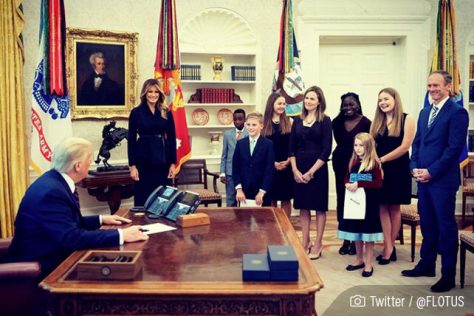
Amy Coney Barrett, her husband and her 7 children
Amy Coney Barrett, her husband and her 7 children in the Oval Office

Here’s an article from The Federalist by my favorite Federalist writer, Joy Pullmann, where she lists 9 feminist lies that were smashed by the nomination of Amy Coney Barrett:

  • Women Need Abortion to Succeed
  • Children Make You Unhappy
  • Women Must Repress Their Fertility to Succeed
  • Religious People and Conservatives Are Anti-Sex
  • Women Don’t Need Men
  • Christianity Oppresses Women
  • Conservatives Hate Women
  • Women Should Prioritize Career Over Family
  • Women Are Oppressed

The article is excellent. I will just focus on the one part that I thought was the most interesting:

Marriage is the epitome of the cooperation of the sexes, yet the left treats it as unnecessary at best and harmful at worst. The Black Lives Matter organization, for example, which has been supported by millions in donations and thousands of endorsements from CEOs and Democrat politicians, in its policy platform openly attacked “heteronormative” “nuclear families.”

Gloria Steinem, the apostle of feminism, popularized the phrase “A woman needs a man like a fish needs a bicycle.” Leftism and feminism pit the sexes against each other, while conservatism and Christianity recognize that the sexes are interdependent. This recognition brings humankind joy instead of hatred.

Fathers are crucial to the happiness and well-being of every child, a need that only intensifies with the addition of each child. Barrett’s husband Jesse is a full partner in their marriage with his own significant career. Barrett recognized her husband’s major contributions to their family and her happiness in her nomination acceptance speech Saturday night.

I couldn’t manage this very full life without the unwavering support of my husband Jesse. At the start of our marriage, I imagined that we would run our household as partners. As it has turned out, Jesse does far more than his share of the work. To my chagrin, I learned at dinner recently that my children consider him to be the better cook. For 21 years, Jesse has asked me every single morning what he can do for me that day. And though I almost always say ‘Nothing,’ he still finds ways to take things off my plate. And that’s not because he has a lot of free time—he has a busy law practice. It’s because he has a superb and generous husband, and I am very fortunate.

Given her description, I think it’s accurate to guess Barrett and her husband’s interdependence is a source of strength and joy to them both, as well as to their children and community. They have undoubtedly achieved much more together than they could have separately, as many highly successful women will also tell you of their marriages. Our husbands are our sometimes-secret weapon.

Feminists don’t like any of Joy’s 9 points, though.

Feminism is what a woman believes after she has smashed herself up by having sex with bad boys. Bad boy failures makes her think that all men are unreliable. She likes abortion because it allows her to chase the bad boys she is attracted to. When she learns how bad boys are unreliable, she intentionally delays marriage to focus on her career and pay off all her student loans. But, if a woman avoids bad boys, and instead chooses a good husband who supports her, she can have 5 kids and adopt 2 more and not have all that bitterness. With a good husband, and a network of supportive relatives, she can even get on the Supreme Court.

I prefer that young women study for a STEM degree, and try to avoid student loans with community college, scholarships, living at home, summer jobs, etc. I recommend they work until their first child arrives. After that, they should stay home with the children, at least for the first 3 years of each child’s life. And obviously, having more children leads to a bigger legacy than fewer children. I’m also a strong supporter of homeschooling. I don’t have much confidence in Christian schools, private schools and especially public schools.

However, in the special case of women like Amy Coney Barrett, who can make a huge difference in the world for the good of conservatives and Christians, then it may be possible, with an excellent husband and many willing relatives, to have a safety net for the children that allows her to do something that will protect us all from the secular left. This is not the ordinary case, of course. This is 1% of the 1% of the 1%. There is no doubt that her children will suffer from her decision to have a career. But if she makes a Supreme Court decision that protects the unborn, or safeguards self-defense rights, or preserves religious liberty, it will be worth it. I don’t think this is the ordinary case. I don’t support mothers of young children having ordinary careers just to make money, because usually the young children have to be placed with strangers.

My goal for my wife was that she be a stay at home wife and mother, at least while we have any children under 3, and preferably under 5. I wouldn’t have liked to have a wife who served on the Supreme Court. I wouldn’t want to share my wife with co-workers, because of the way I was raised. But I can understand why it is a good thing for me (and for conservatives and Christians) that she is the nominee.